
Results
-
 £10.00
Swedish Festival Music (Study Score)
This three-movement suite was commissioned by the Swedish Brass Band Association as the test piece for the Championship Section of their 2008 National Contest. The first movement is inspired by the magnificent Swedish hymn 'How Great Thou Art'. Indeed the influence of that hymn can be traced in all three movements. The declamatory style of the opening gives way to other, more reflective expressions of awe and wonder. A more animated section develops before a final, triumphant statement of the 'How Great' idea returns to finish the movement. The slow second movement features another much-loved Swedish hymn. The music provides plenty of scope for expressive playing, and a feeling of intimacy should be created by the use of several short solo passages. The third movement Allegro brings a totally different, dance-like mood with frequent references to a reel from the region of Uppland. This eventually brings a return to the opening subject and a final, triumphant reference to 'How Great Thou Art'.
Estimated dispatch 7-14 working days
-
 £16.00
Three Haworth Impressions (Brass Band - Score only)
A wonderful three movement suite which conjures up fabulous musical imagery of the lands of northern England. Well worth including as a concert item in your next programme, but this great original composition should really should be set again as a test-piece soon - rewarding musically for audience and bandsmen alike.Includes:TOP WITHENS - A GENERAL EVOCATION OF THE ATMOSPHERE OF WUTHERING HEIGHTS The sinister opening motif symbolises the influence of the evil Heathcliffe, Soon this motif experiences several changes of character in order to portray emotions other than those of hatred and jealousy. The overall mood is, however, one of gloom and foreboding.THE THREE BELLS This is a reference to the pseudonyms adopted by Ann, Charlotte and Emily Bronte. The music begins with three "bell"-notes; Ab for Acton Bell, Cb for Currer Bell and Eb for Ellis Bell, and these three notes form the basis of a wistful waltz tune. Again the mood is rather sombre -- save for a brighter middle section -- and the opening motif from "Top Withens" is to be heard, again symbolising the frustrations and ill-fortune by which their lives were plagued.THE WORTH VALLEY RAILWAY The Brontes were not the only people in Haworth and not all is desperation and gloom. The third impression is a celebration of the victory of the people of Haworth in their fight to retain their railway. The nine-eight rhythm of a slow train is prominent, and our once-sombre motif is transformed into a triumphant fanfare.Duration: 12.00Please note that there are only 3 solo cornet parts included in this set
Estimated dispatch 7-14 working days
-
 £82.95
Vivat! (Score and Parts)
VIVAT! was commissioned by Kapitol for the 2012 National Championship of Great Britain first section final as a celebration of the Queen's Diamond Jubilee. The work is split into three contrasting sections that run continuously, with music derived from elements of Parry's coronation anthem I Was Glad. In Memoriam evokes the noble but gentle personality of the Queen's father, George VI. Opening with an atmospheric baritone solo (and later featuring solo horn, flugel, euphonium & solo cornet), the music explores themes of grief, sentimentality and hope. Coronation, a fanfare and subsequent theme, is grandiose in style capturing the spirit and excitement of British pomp and ceremony.The closing Jubilate is a celebration of life and family values, Vivat being the Latin for life or long live. The music passes through moments of tension, virtuosity, humour and jubilance before a finale constructed from connected musical fragments drawn from throughout the work, forming (for the first time) Parry's majestic I was Glad theme.
Estimated dispatch 7-14 working days
-
 £22.50
Petite Suite de Ballet (Score Only)
This composition consists of four 'miniatures', simple in construction, yet not without technical demands upon the players.The music is for a ballet which so far exists only in the imagination! Like most ballet, it has a touch of the fantastic, and must be interpreted with a light, deft touch.The first movement, Parade, brings many characteristics on to the stage, marching perkily, leggily, with almost puppet-like movements.In the next movement, Pas Seul (Solo Dance), one lone figure holds the stage, with a mixture of grace and sauciness. At the end he (or she) runs off with a snap of the fingers.The third movement is a Minuet. A chosen few, richly garbed, perform this stately, courtly dance, while the rest of the company look on at some ritual in which they are not allowed to join.The final Ensemble commencing with the return of the lone figure, gradually brings the whole company to the stage. Various groups come forward for a few moments, and then rejoin the general pattern of the dancing. Towards the end a stately procession is formed, but this finally breaks up in a sudden flurry of leaping and capering, and in a moment, as though at some magic call, the dances have disappeared, whilst the sonorous tones of the final bars of music follow them with a rather disapproving air.Our little fantasy in over.
Estimated dispatch 7-14 working days
-
 £25.00
Meditation - John Stainer
Based on "God So Loved The World" from John Stainer's "Crucifixion".In the 19th century, the English composer John Stainer wrote an oratorio named "The Crucifixion". It contains a beautiful a capella setting of the Biblical text from John chapter 3 verses 16 & 17. Although I have added a few obligati and counter subjects, and a short fugal link, for the most part, I have not tried to add too much to a beautiful piece of traditional harmony. What I have done, is to try to emphasise the subtle changes of tone colour in the unique sound of the brass band. "Meditation" is on the latest CD from Weston Brass. Order from [email protected] price �6.95."..a beautiful concert item that reflects the title of the work perfectly." Robert Childs
In Stock: Estimated dispatch 3-5 working days
-
 £30.00
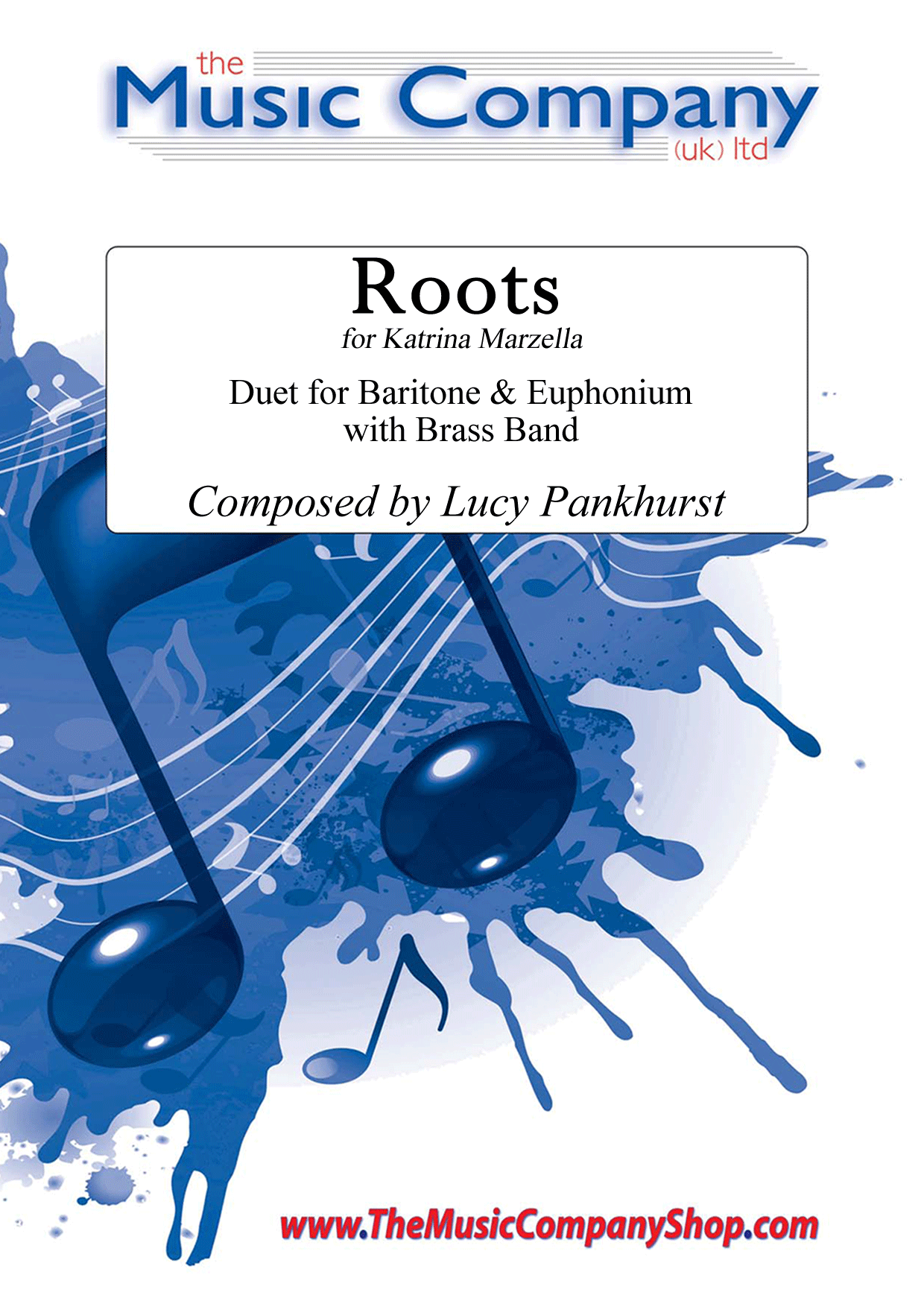
Roots - Lucy Pankhurst
Commissioned by Katrina Marzella in 2008, this modern 'duet' for Baritone and Euphonium soloists with brass band accompaniment has been inspired by 'nature and environment' as its primary muse. The music takes the listener through 7 stages of environmental atmosphere, in its combination of sounds and effects. It is a very uplifting work and with the back-story in mind (see programme notes below), it makes for an incredibly effective concert feature.Programme notes from the composer, Lucy Pankhurst:There are 7 main sections in the piece :RainGerminationGrowthTransionSunshineRainstormRestThe work begins with Rain, symbolised by the rainstick and 'rain sounds' in the brass , which allows the themes to germinate. The 'roots' of the music themselves, are firmly established in the tonic (root Eb) and 5ths in the low brass, from which the solo lines eventually grow, using triads and 5ths.During Growth, the solo baritone and euphonium begin with separate melodies which begin to twist around each other (much like tree roots), interlocking to produce harmonies and counterpoint, complimenting one another and firmly keeping the music in Eb major. Muted cornets and trombones continue to play overlapping semiquavers, reflecting the raindrops as they fall from the trees and leaves.A brief interlude, featuring brass sextet drives the music back to its Germination stage - here, named Transion, as it grows once more, evolving into something new. The Sunshine section is a dance. Moving rapidly through different keys, the warm sunlight catches on the dewy foliage, creating dazzling moments of clarity and beauty.However, the change in conditions also lead to brief moments of uncertainty, as the various creatures tentatively reappear from their shelter to bask as the earth is warmed. Birdsong can be heard in the solo lines as the entire band join in the celebrations.The jollity does not last long, however, as a Rainstorm, more violent than the last , ensues - stopping the dance in its tracks. The tam-tam and bass drum signify thunder, crashing into the music abruptly. However, the music still survives and re-emerges from the storm, delicately but securely establishing itself into a new key (C major), before softly concluding with the two soloists in rhythmic unison as the rain subsides and the world is at Rest.
In Stock: Estimated dispatch 3-5 working days
-
 £77.00
General Series Brass Band Journal, Numbers 2269 - 2272, August 2026
2269: Intrada - Christians Awake (Stephen Gibson)This intrada heralds the happy morning when Christians celebrate the birth of Jesus. Fanfares surround the traditional Christmas Day hymn, Christians Awake (C.C. 20), where we are encouraged to 'awake, salute the happy morn'. Written in a processional style, this music was composed as a concert opener to be performed in a large church setting.2270: Jesus loves me (Stanley Kelley)Jesus loves me! (S.A.S.B. 807) is a song many church-goers learn as children. While written for children, its message is for everyone. John 15:9 says, 'As the Father has loved me, so have I loved you.'2271: Prelude on 'Deep Harmony' (Geoffrey Nobes)This piece was written for the Blendworth Band of Hampshire. The hymn tune, by Handel Parker, is one of the most beautiful and iconic melodies ever written, with lovely harmony supporting the rise and fall of a simple but perfect melodic line.2272: To the hills (Paul Sharman)The inspiration for this arrangement came during a walking holiday in the Lake District. Looking towards the hills brought to mind the words of Psalm 121 and Ernest Rance's setting of that passage, I Lift Up My Eyes (S.A.S.B. 208), with its lovely tune Ochills. This arrangement was written shortly after the composer's return home.
Estimated dispatch 7-14 working days
-
 £59.95
Fantasia on an Old Dutch Hymn Tune (Brass Band - Score and Parts)
Kevin Norbury writes:This tune has always been a favourite of mine. It was first published in Holland in 1624 and then appeared in a later collection called David's Psalmen in 1685. In many hymnals it is still known by its original name, Vruechten. In the vast majority of cases, the melody is associated with the lyrics by George Ratcliffe Woodward, an ordained minister of the Church of England, who lived from 1848 to 1934.At no time in this piece do I envisage any heaviness of style. Even in slow movement, whilst predominantly homophonic, the music should flow and be transparent. The music seeks to capture the essence of joy in both the melody and words (S.A.S.B. 234).
Estimated dispatch 7-14 working days
-
 £39.95
Impulse (Brass Band - Score and Parts)
This work represents a brief, musical study of the practical expression of faith by Salvationists. Why do we do what we do? The beginning of the piece reflects the busyness and drive of those who feel called to Rescue the perishing (S.A.S.B. 927). Motivated by compassion, there is a constant, insistent urgency to accomplish this mission, and referenced is Albert Orsborn's song Except I am moved with compassion (S.A.S.B. 626). From here, the piece builds to a climactic, full statement of Rescue the perishing.
Estimated dispatch 7-14 working days
-
 £15.99
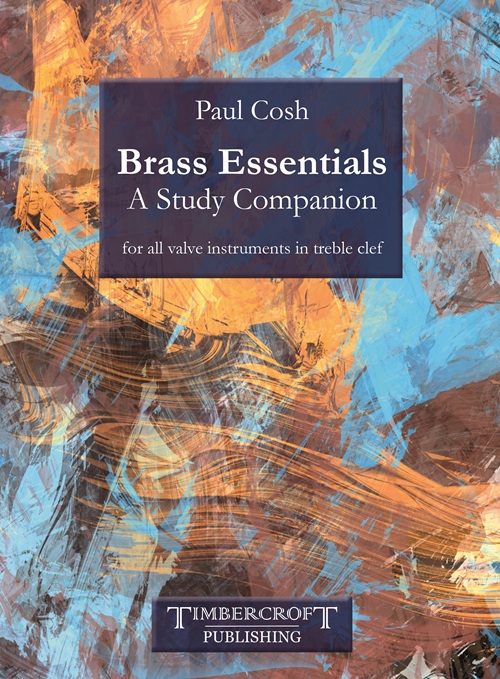
Brass Essentials - An Study Companion (for all valve instruments in treble clef)
This book of 32 studies has been drawn from those Paul Cosh used as a student at the Royal Academy of Music, throughout his years as a professional player and as a teacher at the Guildhall School of Music & Drama.The studies are divided into four main sections: Articulation, Finger Technique, Lyrical & Flexibility and Stamina & Technique and are drawn from those written by Arban, Charlier, Boehme, Brandt, Kopprasch and Sachse. Some of the studies have been re-imagined and edited to include new tempi and expression.There are helpful tips at the start of each section with most of the studies given suggested practice and performance tempi, although these are just a guide. Slow practise of the highly technical passages is vital to adhere to the overriding principle that every note counts.The Brass Essentials Study Companion can also work in conjunction with both the Brass Essentials: Arban Companion and the Brass Essentials: Practice Companion to vary your practice diet.
Estimated dispatch 7-14 working days