
Results
-
 £85.00
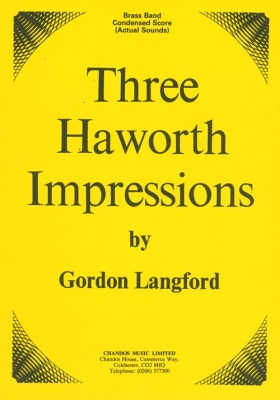
Three Haworth Impressions (Brass Band - Score and Parts)
A wonderful three movement suite which conjures up fabulous musical imagery of the lands of northern England. Well worth including as a concert item in your next programme, but this great original composition should really should be set again as a test-piece soon - rewarding musically for audience and bandsmen alike.Includes:TOP WITHENS - A GENERAL EVOCATION OF THE ATMOSPHERE OF WUTHERING HEIGHTS The sinister opening motif symbolises the influence of the evil Heathcliffe, Soon this motif experiences several changes of character in order to portray emotions other than those of hatred and jealousy. The overall mood is, however, one of gloom and foreboding.THE THREE BELLS This is a reference to the pseudonyms adopted by Ann, Charlotte and Emily Bronte. The music begins with three "bell"-notes; Ab for Acton Bell, Cb for Currer Bell and Eb for Ellis Bell, and these three notes form the basis of a wistful waltz tune. Again the mood is rather sombre -- save for a brighter middle section -- and the opening motif from "Top Withens" is to be heard, again symbolising the frustrations and ill-fortune by which their lives were plagued.THE WORTH VALLEY RAILWAY The Brontes were not the only people in Haworth and not all is desperation and gloom. The third impression is a celebration of the victory of the people of Haworth in their fight to retain their railway. The nine-eight rhythm of a slow train is prominent, and our once-sombre motif is transformed into a triumphant fanfare.Duration: 12.00Please note that there are only 3 solo cornet parts included in this set
Estimated dispatch 7-14 working days
-
 £64.95
The Dark Side Of The Moon (Score and Parts)
This piece was commissioned by Dr. Nicholas Childs and Black Dyke Band on behalf of Rotary International and received its world premire performance at St. David's Hall, Cardiff on Saturday 27th January 2007. It is dedicated to the composer's father, Harry Cooper.The music was selected by the National Contesting Council as the 3rd section test piece for the 2008 Regional Brass Band Championships of Great Britain. A Note from the Composer...Have you ever thought of a holiday destination, tourist attraction, event, place, site or period in history and thought 'I wonder what it would be like?' - somwhere you have never been and can only let your imagination run wild on. What would the place be like, and all the things surrounding it such as the mood, feelings you get experiencing it, the temperature? Who would be there and what you would see? This piece is my musical imagination of the dark side of the moon. I know from news reports, the internet and other footage that the moon is a very desolate place, very barren and rugged. So from the start the piece gives the listener a musical picture of the rugged landscape with little light and warmth.However, the one place that has had me thinking about is the side of the moon that we don't see in our night skies, the side of the moon with no sun and no light pollution from civilisation. I can only imagine the eeriness one would feel being stood in complete darkness on the moon's surface looking around.As you slowly explore the surroundings and your eyes drift up to the night sky, there is an awesome sight unfolding in front of you - countless stars and galaxies, planets and different solar systems and all right in front of you glistening from the light of the sun beaming from the other side of the moon. The Dark Side of the Moon portrays a musical picture of the whole experience as seen in my imagination taking the listener from the rugged landscape to the awesome beauty that sits endlessly in front of you.Paul Lovatt-Cooper, September 2007
Estimated dispatch 7-14 working days
-
 £31.95
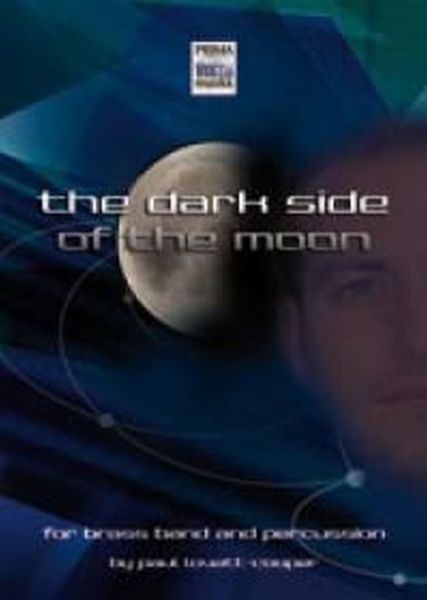
The Dark Side Of The Moon (Score Only)
This piece was commissioned by Dr. Nicholas Childs and Black Dyke Band on behalf of Rotary International and received its world premire performance at St. David's Hall, Cardiff on Saturday 27th January 2007. It is dedicated to the composer's father, Harry Cooper.The music was selected by the National Contesting Council as the 3rd section test piece for the 2008 Regional Brass Band Championships of Great Britain. A Note from the Composer...Have you ever thought of a holiday destination, tourist attraction, event, place, site or period in history and thought 'I wonder what it would be like?' - somwhere you have never been and can only let your imagination run wild on. What would the place be like, and all the things surrounding it such as the mood, feelings you get experiencing it, the temperature? Who would be there and what you would see? This piece is my musical imagination of the dark side of the moon. I know from news reports, the internet and other footage that the moon is a very desolate place, very barren and rugged. So from the start the piece gives the listener a musical picture of the rugged landscape with little light and warmth.However, the one place that has had me thinking about is the side of the moon that we don't see in our night skies, the side of the moon with no sun and no light pollution from civilisation. I can only imagine the eeriness one would feel being stood in complete darkness on the moon's surface looking around.As you slowly explore the surroundings and your eyes drift up to the night sky, there is an awesome sight unfolding in front of you - countless stars and galaxies, planets and different solar systems and all right in front of you glistening from the light of the sun beaming from the other side of the moon. The Dark Side of the Moon portrays a musical picture of the whole experience as seen in my imagination taking the listener from the rugged landscape to the awesome beauty that sits endlessly in front of you.Paul Lovatt-Cooper, September 2007
Estimated dispatch 7-14 working days
-
£16.00
Three Haworth Impressions (Brass Band - Score only)
A wonderful three movement suite which conjures up fabulous musical imagery of the lands of northern England. Well worth including as a concert item in your next programme, but this great original composition should really should be set again as a test-piece soon - rewarding musically for audience and bandsmen alike.Includes:TOP WITHENS - A GENERAL EVOCATION OF THE ATMOSPHERE OF WUTHERING HEIGHTS The sinister opening motif symbolises the influence of the evil Heathcliffe, Soon this motif experiences several changes of character in order to portray emotions other than those of hatred and jealousy. The overall mood is, however, one of gloom and foreboding.THE THREE BELLS This is a reference to the pseudonyms adopted by Ann, Charlotte and Emily Bronte. The music begins with three "bell"-notes; Ab for Acton Bell, Cb for Currer Bell and Eb for Ellis Bell, and these three notes form the basis of a wistful waltz tune. Again the mood is rather sombre -- save for a brighter middle section -- and the opening motif from "Top Withens" is to be heard, again symbolising the frustrations and ill-fortune by which their lives were plagued.THE WORTH VALLEY RAILWAY The Brontes were not the only people in Haworth and not all is desperation and gloom. The third impression is a celebration of the victory of the people of Haworth in their fight to retain their railway. The nine-eight rhythm of a slow train is prominent, and our once-sombre motif is transformed into a triumphant fanfare.Duration: 12.00Please note that there are only 3 solo cornet parts included in this set
Estimated dispatch 7-14 working days
-
 £124.95
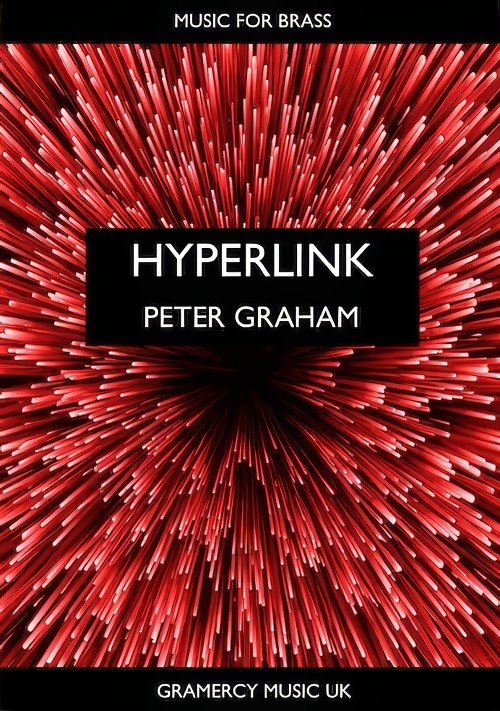
Hyperlink (Brass Band - Score and Parts) - Graham, Peter
Hyperlink was commissioned by the National Youth Brass Band of Great Britain (funded by Arts Council England and the Department for Education) for its 70th Anniversary Year. Since the anniversary coincided with other significant celebrations in 2022 (including the Royal Albert Hall/Ralph Vaughan Williams 150th and the Platinum Jubilee of Elizabeth II) it was requested that these also be recognised in some way.Where better to begin this challenging brief but with a computer search for the NYBBGB founder Dr Denis Wright (coincidently born in Kensington, home of the RAH). The subsequent rabbit warren of hyperlinks led me to structure the work through a series of associations:Movement I - The Voice of Jupiter. Alongside the discovery that Denis Wright had been a church organist was the realisation that while the RAH has hosted thousands of musical events the fabric of the building actually incorporates a musical instrument, the famous Henry Wills organ (aka The Voice of Jupiter). Organ and J S Bach are synonymous (e.g. Toccata in D min) and so both become fundamental to the content of the movement. An opening 7 note quote from the Toccata leads to a mammoth sound cluster, as if every note on the huge RAH organ is sustained. The material which follows is based upon the notes BACH (in German notation). The notes are manipulated in various ways in a 12 tone matrix; reversed, inverted and so on. Other techniques employed in the movement are ones of which Bach was master, including ground bass and fugue.Movement II - Remember Me. The lives of Salvationist composer Ray Steadman-Allen (born 1922) and Ralph Vaughan Williams are remembered here, with RSA in musical notation and fragments of RVWs famous Tuba Concerto providing the source material. While writing the movement my father passed away and to close his funeral service the family chose the uplifting Robert Lowry hymn They'll sing a welcome home. It seemed fitting to conclude the movement with a reflective setting of the chorus, the repeated phrase 'Welcome, welcome home' eventually disappearing into the ether.Movement III - Vivat. The finale takes the form of a short fantasy upon Hubert Parry's marvellous coronation anthem I Was Glad, truly a celebratory note with which to conclude. The first performance of Hyperlink was given by the NYBBGB conducted by Martyn Brabbins at the Royal College of Music, London on August 6th 2022.- Peter Graham
Estimated dispatch 7-14 working days
-
£44.95
Hyperlink (Brass Band - Score only) - Graham, Peter
Hyperlink was commissioned by the National Youth Brass Band of Great Britain (funded by Arts Council England and the Department for Education) for its 70th Anniversary Year. Since the anniversary coincided with other significant celebrations in 2022 (including the Royal Albert Hall/Ralph Vaughan Williams 150th and the Platinum Jubilee of Elizabeth II) it was requested that these also be recognised in some way.Where better to begin this challenging brief but with a computer search for the NYBBGB founder Dr Denis Wright (coincidently born in Kensington, home of the RAH). The subsequent rabbit warren of hyperlinks led me to structure the work through a series of associations:Movement I - The Voice of Jupiter. Alongside the discovery that Denis Wright had been a church organist was the realisation that while the RAH has hosted thousands of musical events the fabric of the building actually incorporates a musical instrument, the famous Henry Wills organ (aka The Voice of Jupiter). Organ and J S Bach are synonymous (e.g. Toccata in D min) and so both become fundamental to the content of the movement. An opening 7 note quote from the Toccata leads to a mammoth sound cluster, as if every note on the huge RAH organ is sustained. The material which follows is based upon the notes BACH (in German notation). The notes are manipulated in various ways in a 12 tone matrix; reversed, inverted and so on. Other techniques employed in the movement are ones of which Bach was master, including ground bass and fugue.Movement II - Remember Me. The lives of Salvationist composer Ray Steadman-Allen (born 1922) and Ralph Vaughan Williams are remembered here, with RSA in musical notation and fragments of RVWs famous Tuba Concerto providing the source material. While writing the movement my father passed away and to close his funeral service the family chose the uplifting Robert Lowry hymn They'll sing a welcome home. It seemed fitting to conclude the movement with a reflective setting of the chorus, the repeated phrase 'Welcome, welcome home' eventually disappearing into the ether.Movement III - Vivat. The finale takes the form of a short fantasy upon Hubert Parry's marvellous coronation anthem I Was Glad, truly a celebratory note with which to conclude. The first performance of Hyperlink was given by the NYBBGB conducted by Martyn Brabbins at the Royal College of Music, London on August 6th 2022.- Peter Graham
Estimated dispatch 7-14 working days
-
 £89.95
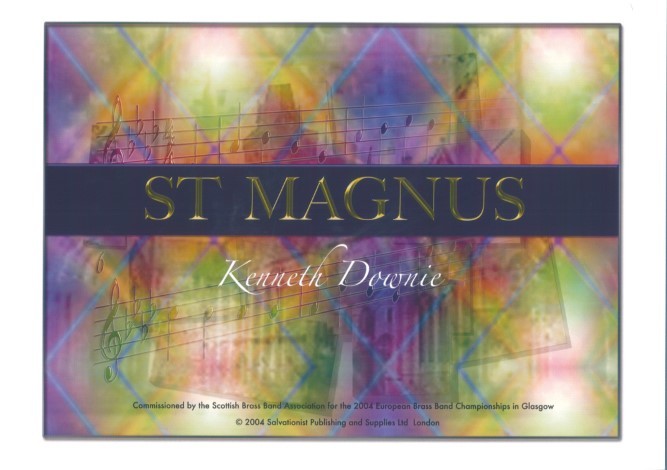
St Magnus (Brass Band - Score and Parts) - Downie, Kenneth
Commissioned by the Scottish Brass Band Association for the 2004 European Brass Band Championships in Glasgow. This music is a set of variations on the tune known as St Magnus, which is attributed to Jeremiah Clarke. Most people will associate it with Thomas Kelly's hymn which begins: "The Head that once was crowned with thorns is crowned with glory now". The tune is very simple, consisting of just two, four-bar phrases. Neither is there much in the way of rhythmic variety, every note being a crotchet with the exception of two quavers, and the last note in each phrase. Within such a simple structure, however, lies considerable strength.
Estimated dispatch 7-14 working days
-
£44.95
St Magnus (Brass Band - Score only) - Downie, Kenneth
Commissioned by the Scottish Brass Band Association for the 2004 European Brass Band Championships in Glasgow. This music is a set of variations on the tune known as St Magnus, which is attributed to Jeremiah Clarke. Most people will associate it with Thomas Kelly's hymn which begins: "The Head that once was crowned with thorns is crowned with glory now". The tune is very simple, consisting of just two, four-bar phrases. Neither is there much in the way of rhythmic variety, every note being a crotchet with the exception of two quavers, and the last note in each phrase. Within such a simple structure, however, lies considerable strength.
Estimated dispatch 7-14 working days
-
 £10.00
St Magnus (Brass Band - Study Score) - Downie, Kenneth
This music is a set of variations on the tune known as St Magnus, which is attributed to Jeremiah Clarke. Most people will associate it with Thomas Kelly's hymn which begins: "The Head that once was crowned with thorns is crowned with glory now". The tune is very simple, consisting of just two, four-bar phrases. Neither is there much in the way of rhythmic variety, every note being a crotchet with the exception of two quavers, and the last note in each phrase. Within such a simple structure, however, lies considerable strength.
Estimated dispatch 7-14 working days
-
 £168.50
Music of the Spheres (Brass Band - Score and Parts) - Sparke, Philip
Music of the Spheres was commissioned by the Yorkshire Building Society Band and first performed by them at the European Brass Band Championships in Glasgow, May 2004. The piece reflects the composers fascination with the origins of the universe and deep space in general. The title comes from a theory, formulated by Pythagoras, that the cosmos was ruled by the same laws he had discovered that govern the ratios of note frequencies of the musical scale. ('Harmonia' in Ancient Greek, which means scale or tuning rather than harmony - Greek music was monophonic). He also believed that these ratios corresponded to the distances of the six known planets from the sun and thatthe planets each produced a musical note which combined to weave a continuous heavenly melody (which, unfortunately, we humans cannot hear). In this work, these six notes form the basis of the sections Music of the Spheres and Harmonia. The pieces opens with a horn solo called t = 0, a name given by some scientists to the moment of the Big Bang when time and space were created, and this is followed by a depiction of the Big Bang itself, as the entire universe bursts out from a single point. A slower section follows called The Lonely Planet which is a meditation on the incredible and unlikely set of circumstances which led to the creation of the Earth as a planet that can support life, and the constant search for other civilisations elsewhere in the universe. Asteroids and Shooting Stars depicts both the benign and dangerous objects that are flying through space and which constantly threaten our planet, and the piece ends with The Unknown, leaving in question whether our continually expanding exploration of the universe will eventually lead to enlightenment or destruction.Duration: 18:00
Estimated dispatch 7-14 working days
 View Music