
Results
-
 £84.99
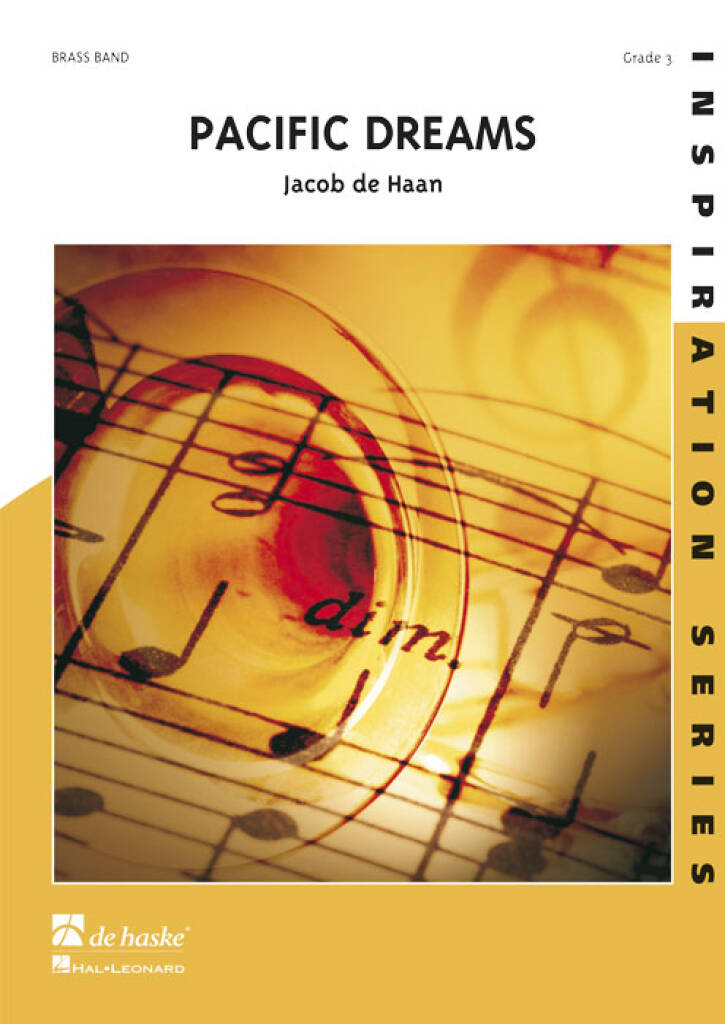
Pacific Dreams - Jacob de Haan
Pacific Dreams describes the experience of Miguel, a traveling composer from Spain who, feeling somewhat alienated from his homeland, is wandering through an area of Sydney known as The Rocks. At a small outdoor market in a typical street of this oldcolonial neighbourhood, he discovers a print of William DeShazos painting "Pacific Dreams" Portrayed in the painting is the surf of one of the exotic islands in the Pacific. Next, with the impressive Sydney Harbour Bridge looming over the narrowstreets of The Rocks, he envisions sultry Pacific beaches. Suddenly a theme he once composed about the lakes in Japan comes to him. Is it the Asian influences present in cosmopolitan Sydney that bring this theme to mind? Or perhaps the waters aroundSydney, over which he could sail to Tahiti? He is uncertain. Could this same theme be used to create a new composition about his feelings for the metropolis Sydney? How then to work his Pacific Dreams into the mix? Miguel is certainly no fan ofHawaiian music. Mayby he could use the vocabularies of islands like Hawaii and Tahiti, their beautiful vowel combinations being sung ad libitum by a mixed choir.With these ideas and his newly purchased print of "Pacific Dreams", he boards the Metroat Circular Quay. He has a final glimpse of the harbour and the Sydney Opera House as the train races into the ground. On to the hotel! To work! He must compose!Maestoso : Miguel is impressed as he gazes upon the Sydney Harbour Bridge. And yet, hewants to go away from this city. Away, to an exotic island in the Pacific.Steady Rock : In the Rocks, musicians are playing at a square. Miguel basks in the atmosphere but at the same time he is fantasizing about Hawaii and Tahiti.Andante Lamentoso :In his hotel room, Miguel is feeling sad and lonely in this big city. He takes comfort in his "Pacific Dreams".Allegro : Miguel boards the boat that takes him from Darling Harbour to Circular Quay. In his mind he is traveling on to Hawaii. Or is ithome, where the bolero is playing? He is pulled back to reality by the skyline of Sydney.
Estimated dispatch 5-14 working days
-
£60.99
Cantique de Noel - Roland Kernen
The French composer Adolphe Charles Adam's (1803- 1856) carol Cantique de No l (better known in France as Minuit, Chretiens, and also widely known as O Holy Night) was initially criticised by church authorities who observed a lack of musical taste and the absence of religious perception. How wrong they were is now clear as the song is popular worldwide and is often performed in churches as well as carol concerts. Roland Kernen has produced this beautiful version of Cantique de Noel for brass band.
Estimated dispatch 5-14 working days
-
 £54.99
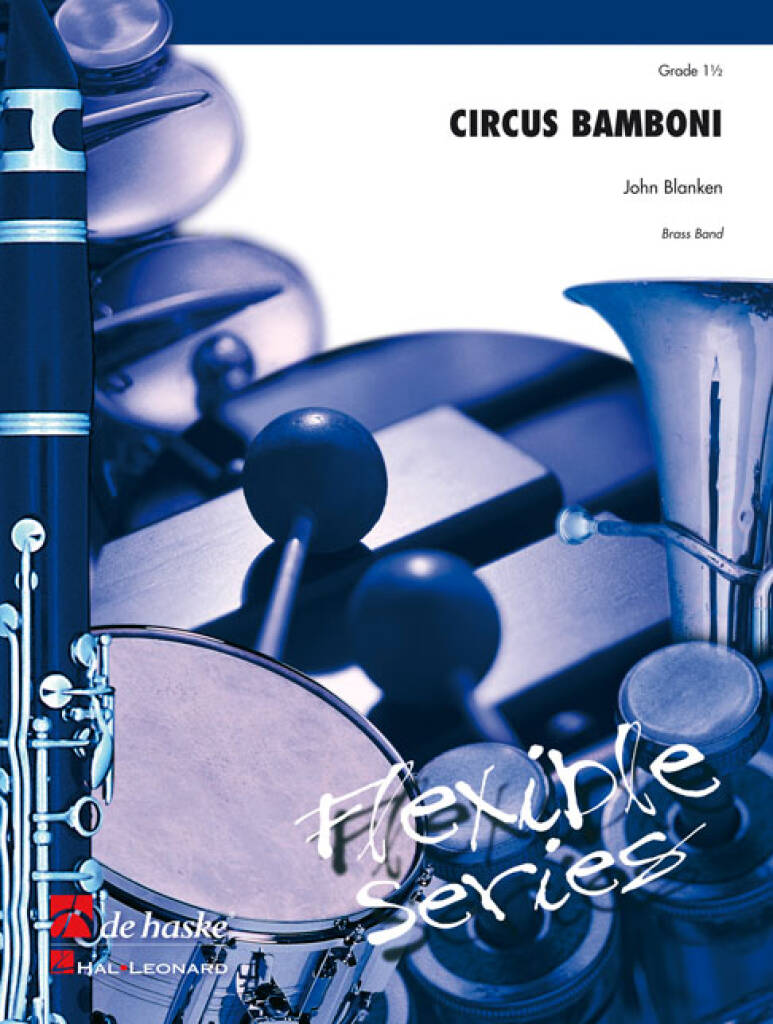
Circus Bamboni - John Blanken
COME ONE AND ALL! Come see the great Circus Bamboni! This four movement work, with flexible four-part instrumentation (+ drum set), will amaze and charm you like no other. The fi rst movement features the band as it tunes up and prepares for the show. Then the talented trapeze artists make an appearance as they fly through the sky high above the audience. The elephants parade around the ring with their very own Elephant Samba and the clowns follow leaving you in stitches! A thunderous chord and lots of applause bring the show to a breathtaking finale.
Estimated dispatch 5-14 working days
-
 £104.99
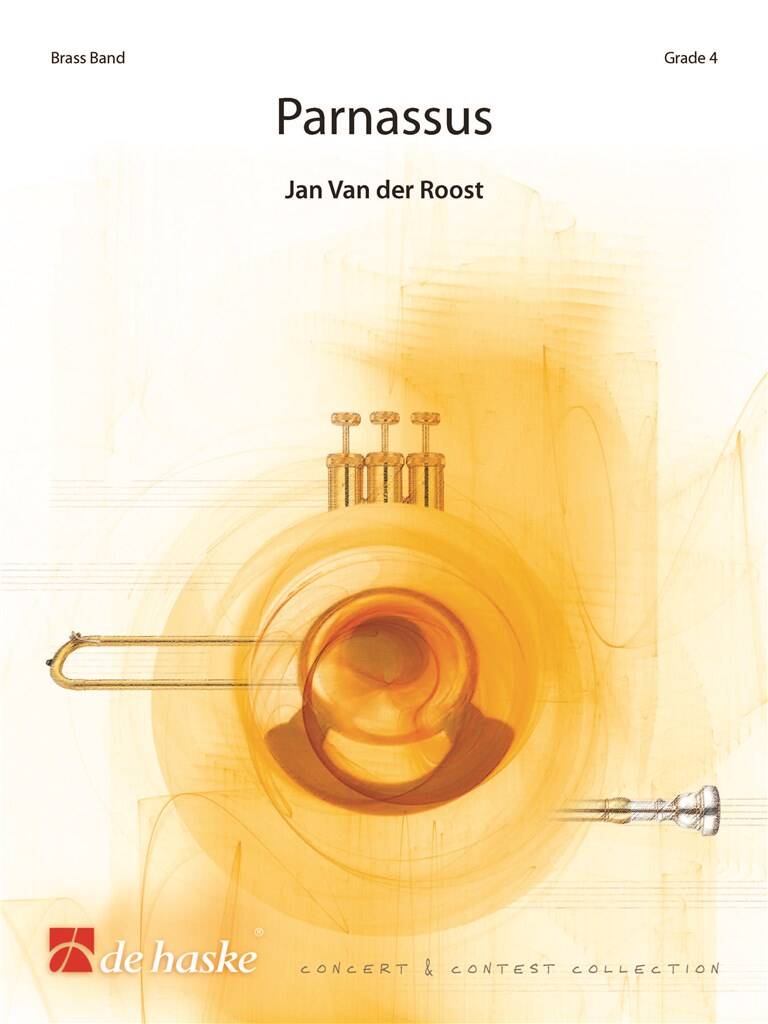
Parnassus - Jan Van der Roost
Since most of the bands competing in the 4th Section of the Dutch National Championships have many young players, this piece is stylistically youthful-- especially in the opening and closing sections. An arpeggio pattern appears numerous times in all registers and is the basic musical element of the main melody, alternating with a second theme that has a slightly different melodic character. The middle section is conceived like a chorale, introduced and developed stepwise: firstly with short patterns and gradually in increasingly long snippets, until it's played in its glorious entirety at measure 216. No real solo passages are included but rather small chambercombinations, thus offering the opportunity to various players to display their technical and performance skills. The finale recaptures musical material from the first section of the piece and provides a majestic conclusion.
Estimated dispatch 5-14 working days
-
 £55.00
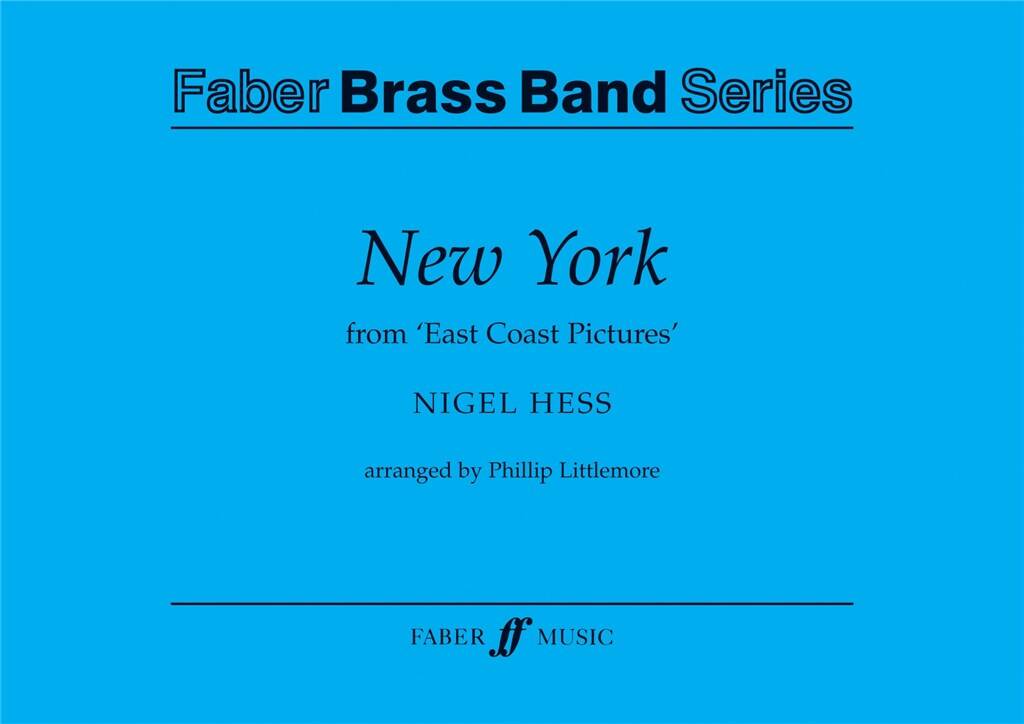
New York. - Nigel Hess
'New York'... or to be more precise, Manhattan. For anyone who is familiar with this bizarre and wonderful city, this piece needs no explanation. This brass band transcription has been made by Phillip Littlemore and provides adriving and punchy 4 minute work for brass band. 'New York' is the third movement of 'East Coast Pictures', originally written for wind band, commissioned in 1985 by the British Youth Wind Orchestra with funds from NationalWestminster Bank plc. These three short 'pictures' were inspired by several visits by the composer to a small part of the USA's East Coast, an area that provides great extremes in the geography and thepeople.This work has recently been recorded on the CD 'East Coast Pictures' by the Leyland Band, conducted by Michael Fowles, and is available from this site (catalogue number: 0-571-52109-6).
Estimated dispatch 5-14 working days
-
 £125.00
Titan's Progress - Hermann Pallhuber
Commissioned by Austria's leading brass band, Brass Band Oberoesterreich, Titan's Progress is a series of descriptive, virtuoso episodes based on the principal character of the novel by Jean Paul. This was also theoriginal subject of Mahler's Symphony No. 1, from which Hermann Pallhuber derives much of his material. The work has proved an exceptionally popular test piece all over the world. Titan's Progress wasthe selected test piece for the British Open Brass Band Championship, held at Symphony Hall, Birmingham on Saturday 12th September 2009. Brass Band Grade 6: Championship Duration: 17 minutes Thescoreprovided with this set is a larger format, B4 size.
Estimated dispatch 5-14 working days
-
 £102.99
Introduction & Punk - Torstein Aagaard-Nilsen
Torstein Aagaard-Nilsen's (1964) way of composing can be described as: uncompromising, wilful and contemporary. It is not surprising, therefore, that this occasionally causes a stir. In the middle of the Seventies a trend arose in youth culture, which was characterized by provocation, distrust of the great ideologies, and the autonomy of the individual. Punk is playful, aggressive, often humorous, and anti-everything, which inevitably leads to self-irony. The first part of Aagaard-Nielsen's composition (Introduction) is a texture based mainly on one short theme. This pompous theme breathes a spirit of cold empty plains, where icy winds sigh around yourhead. In the vehement Punk (Presto barbaro!) there is no longer any question of a theme. The basis for this part is formed by a repetitive motif (a descending minor third). This motif is alternated with very powerful percussion beats and later on shrill harmonies. De wijze van componeren van Torstein Aagaard-Nilsen (1964) laat zich omschrijven als: compromisloos, eigenzinnig en eigentijds. Niet verwonderlijk dat dit af en toe wat stof doet opwaaien. Midden zeventiger jaren ontstaat er een stroming binnen de jongerencultuur, die provocatie, wantrouwen tegen de grote ideologieen en de autonomie van het individu centraal stelt. Punk is speels, agressief, veelal humoristisch en anti-alles, wat onvermijdelijk leidt tot zelfspot. Het eerste deel (Introduction) is een weefsel, gebaseerd op voornamelijk een kort thema. Het pompeuze thema ademt de sfeer van kille lege vlakten, waar de ijzige wind je om de oren suist. Tijdens de 'heftige' Punk (Presto barbaro!) is van een thema geen sprake meer. De basis voor dit deel is een steeds herhalend motief (dalende kleine terts). Dit motief wordt afgewisseld met zeer krachtige percussie slagen en later schrille samenklanken. Dit alles zorgt voor een bombastisch geheel. Aan het slot van de Punk horen we het intoductie-thema tussen het punkgeweld door terugkomen.
Estimated dispatch 5-14 working days
-
 £60.99
Only One Glimpse - Agathe Backer-Grøndahl - Tom Brevik
A gem from the Norwegian folk music. No difficult and complicated matter but music based on sounds and atmosphere. The melody is one of pure beauty and mystical characteristic of the tranquil scenery of Norway. Solo for 2 B-flat instruments. Een juweeltje uit de Noorse volksmuziek. Geen moeilijke, ingewikkelde materie maar muziek gebaseerd op klank en sfeer. De melodie is er een van pure schoonheid en karakteristiek voor het mystieke verstilde Noorse landschap. Solo voor 2 bes instrumenten.
Estimated dispatch 5-14 working days
-
 £104.99
High Flyers - Andrew R. Mackereth
From the composer: High Flyers are regarded as people with promise and potential.They are winners. This is music for winners.The title, as well as being a play-on-words, implies the nature of the work. It is a bright, optimistic, and upbeat piece attempting to depict an exhilarating ride on flying carpet. The opening rising chords immediately suggest the gentle elevation of the carpets' ascent towards unknown heights, leading to a hint of a first theme in the horns at Fig. B. The first four notes provide the thematic material for the whole work: C F G A.A perpetual sense of movement is achieved through accented quaver chords punctuating the melodicmaterial of the first main theme. Fig. E sees the music of the opening bars fully realised, with flourishes from the euphonium and baritones representing swirling clouds, shooting stars, or passing birds in flight.The same subject is developed into a lyrical second theme with a new lush harmonic treatment, evocative of gliding over an expanse of sparse countryside.This section ends with a note of serenity but is shattered by the urgent insistence of the percussion rhythms.The third section introduces a new idea with a slightly distorted fanfare in the cornets and trombones. This figure suggests for the first time that there may be trouble ahead. In fact, there is no need to fear and the journey can continue without aggravation. This fanfare returns near the end to signal a final note of triumph.A new rhythmic variant of the cell motif emerges as the third theme now transformed by the addition of a triplet figure. The music steadily gains momentum before moving inexorably towards the climactic return of the music and tonality of the opening bars of the piece.
Estimated dispatch 5-14 working days
-
 £83.60
Los Hermanos de Bop - Mark Taylor - Sandy Smith
Los Hermanos De Bop is a composition by Mark Taylor (arr. Sandy Smith). In the Obrasso webshop are the Sheet Music for Brass Band with the article no. 16198 available. The sheet music is classified in Difficulty level C (medium). More Music for entertainment for Brass Band can be found using the flexible search function. Use the free trial score for Los Hermanos De Bop and get a musical impression from the audio samples and videos available for the Brass Band piece. With the user-friendly search function in the Obrasso webshop, you can find in just a few steps more sheet music from Mark Taylor for Brass Band. So that you can complete your concert program, show all music sheets can be displayed with one click on Music for entertainment in Difficulty level C (medium) . Los Hermanos De Bop is one of many brass music compositions that have been published by Musikverlag Obrasso. Next to Mark Taylor over 100 composers and arrangers work for the Swiss music publishing house. In addition to the notes for Brass Band you will also find literature in other formats such as Brass Band, Concert Band, Junior Band, Brass Ensemble, Woodwind Ensemble, Symphony Orchestra as well as CDs and Music Education. A large part of the publisher's own literature from top brass bands such as the Black Dyke Band, Cory Band, Brighouse & Rastrick Band or the Oberaargauer Brass Band was recorded on Obrasso Records. All sound carriers are also available digitally on the popular portals of Apple, Amazon, Google, Spotify and other providers worldwide. All Obrasso sheet music is produced on high quality paper. The slightly yellowish note paper offers a good contrast and is easy on the eyes in difficult lighting conditions. Delivery to private customers worldwide is free of shipping costs. Order your sheet music now directly from Obrasso Verlag.
Estimated dispatch 5-14 working days
 View Music