Searching for Wind Band Music? Visit the Wind Band Music Shop
We've found 1000 matches for your search. Order by

Results

  • £59.99
  • £59.99

    Scherzo from Symphony No.10 - Dimitri Shostakovich - Andrew Duncan

    The Scherzo is the 2nd movement from Shostakovich's 10th Symphony; a short, brutally fierce movement which is constantly loud and uses some of Shostakovich's most violent musical language. This arangement for Brass Band is a wonderful way to celebrate the centenary of Shostakovich's birth.

    Estimated dispatch 5-14 working days

     PDF View Music

  • £82.10

    Christmas No 1, March of the three Kings - Cattin

    Estimated dispatch 5-14 working days
  • £81.80

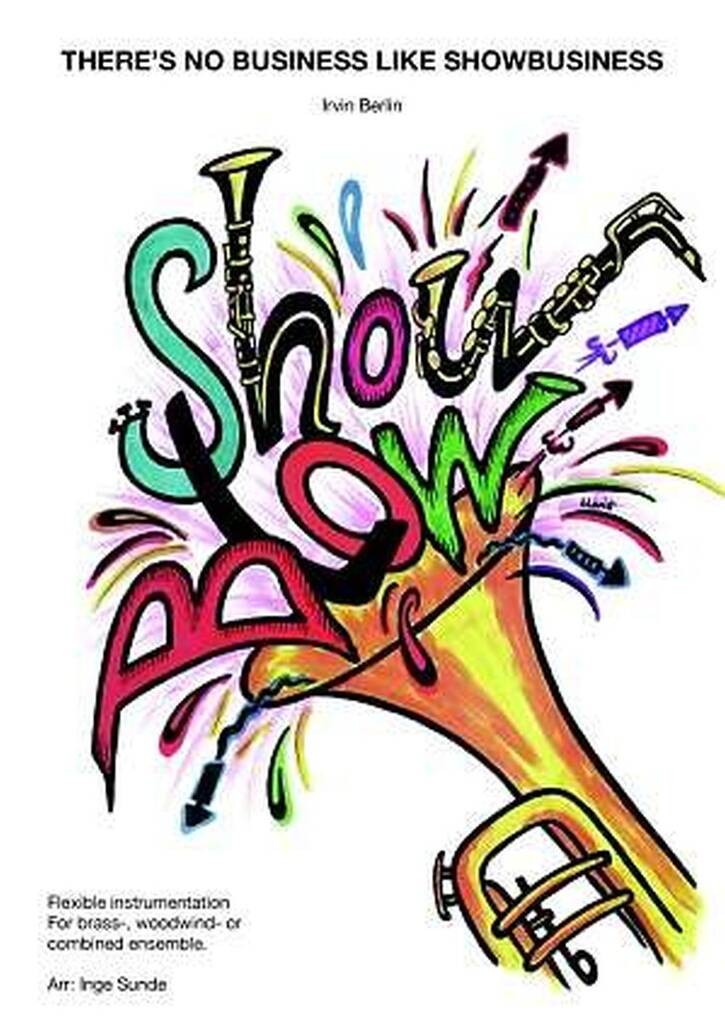
    There'S No Business Like Show Business

    Estimated dispatch 5-14 working days
  • £69.95

    Little Suite for Brass No 2 - Malcolm Arnold

    Estimated dispatch 5-14 working days
  • £39.95

    Beatles Medley No. 1 - Edrich Siebert

    Estimated dispatch 5-14 working days
  • £65.40
  • £39.00

    Rudolf er rod pa nesen - Johnny Marks - Arne Bendiksen - Jan Utbult

    "Rudolph, the Red-Nosed Reindeer" is a song written by Johnny Marks based on the 1939 story Rudolph the Red-Nosed Reindeer published by the Montgomery Ward Company. Gene Autry's recording hit No. 1 on the U.S. charts the week of Christmas 1949.The song was first sung by crooner Harry Brannon on New York City radio in early November 1949, before Gene Autry's recording hit No. 1 in the U.S. charts during Christmas 1949. Autry's version of the song also holds the distinction of being the only chart-topping hit to fall completely off the chart after reaching No. 1. The official date of its No. 1 status was for the week ending January 7, 1950, making it the first No. 1 song of the 1950s.

    Estimated dispatch 7-14 working days
  • £25.00

    Canzona XIII

    DescriptionCanzona XIII, also known as Canzon Septimi Octavi Toni a 12, was first published in 1597 as part of a collection entitled 'Symphoniae Sacrae' - this collection was a mixture of instrumental and choral pieces, and also included the famous Sonata Pian'e Forte, probably his best known work.Gabrieli was born in Venice sometime between 1554 and 1557 and studied with the renowned Dutch composer Orlando di Lassus. He also studied with his uncle, Andrea Gabrieli, and eventually succeeded him as the organist and composer at St Mark's Basilica in Venice. Already renowned as a musical centre, Venice became a magnet for composers wishing to study with Gabrieli after 'Symphoniae Sacrae' was published.Like many of his works, this Canzona was written to take advantage of the unique layout of St Mark's, which had galleries on three sides where the musicians could be placed to create novel spatial effects - utterly new and exciting for sixteenth century listeners. Canzona XIII has three different antiphonal 'choirs' and in this arrangement the band is split into three groups to reflect Gabrieli's innovative idea. Ideally the three groups should be clearly separated so the the antiphonal effect comes across clearly, although this will of course depend on the performance space. On no account should the band remain in its normal seated formation!As Gabrieli didn't have any percussionists (and percussion was widely thought inappropriate for music performed in church anyway) there are no percussion parts in this music.This arrangement was first performed by the Coppull and Standish Band conducted by Andrew Baker in 2009.You can follow a preview of the score while listening to an audio export of the music below!

    Estimated dispatch 7-14 working days
  • £16.00

    Sonata Pian'e Forte

    DescriptionSonata Pian'e Forte means an instrumental piece using soft and loud dynamics. A "Sonata" (at this time) meant a piece for instruments (as opposed to voices). It was probably written to be played as part of a service at St Mark's, Venice. This is the earliest known piece to specify both the instruments to be played AND the dynamics in the written music.Gabrieli was born in Venice sometime between 1554 and 1557 and studied with the renowned Dutch composer Orlando di Lassus. He also studied with his uncle, Andrea Gabrieli, and eventually succeeded him as the organist and composer at St Mark's Basilica in Venice. Already renowned as a musical centre, Venice became a magnet for composers wishing to study with Gabrieli after 'Symphoniae Sacrae' was published.Like many of his works, Sonata Pian'e Forte was written to take advantage of the unique layout of St Mark's, which had galleries on three sides where the musicians could be placed to create novel spatial effects - utterly new and exciting for sixteenth century listeners. Sonata Pian'e Forte has two different antiphonal 'choirs' and in this arrangement the band is split into two groups to reflect Gabrieli's innovative idea. Ideally the two groups should be clearly separated so the the antiphonal effect comes across clearly, although this will of course depend on the performance space. On no account should the band remain in its normal seated formation!As Gabrieli didn't have any percussionists (and percussion was widely thought inappropriate for music performed in church anyway) there are no percussion parts in this music.This arrangement is available for full brass band or 8-piece brass ensemble andwas first performed by the Blackley Band conducted by Andrew Baker in 2004.Listen to a computer realisation and follow the score in the video below:Duration approximately 4'20".

    Estimated dispatch 7-14 working days