
Results
-
 £45.00
 -
 £42.95
YOU'LL NEVER WALK ALONE (Bb Solo with Brass Band - Score and Parts) - Rodgers, Richard - Ellerby, Martin
more difficult that the Darrol Barry version. Recorded on Polyphonic QPRL229D Ovation!
Estimated dispatch 7-14 working days
-
£37.95
YOU'LL NEVER WALK ALONE (Brass Band - Easy) - Rodgers, Richard - Barry, Darrol
easier than the Martin Ellerby version
Estimated dispatch 7-14 working days
-
 £50.90
YOU'LL NEVER WALK ALONE (Brass Band) - Wormald, Christopher
From the Musical Carousel. Grade: Easy.
Estimated dispatch 7-14 working days
-
 £154.99
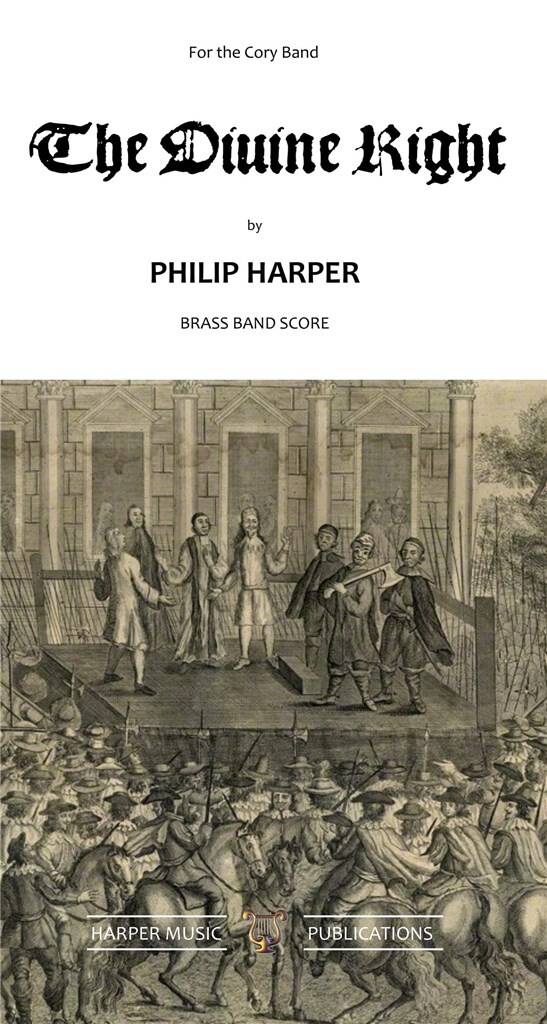
The Divine Right - Philip Harper
At the time of composing this piece, the Arab Spring was sweeping through the Middle East. It seemed that almost every week a new countrys people had risen up against the regimes and dictatorships which had prevailed for generations, leaving manynations at a defining crossroads in their history. There were so many possible ways ahead: so many hopes, yet so many uncertainties.My music is a depiction of these revolutionary times, and several musical themes are in turn presented, discussed, considered, fought over, altered, rejected or accepted. Most nations have had, or probably will have, their own Arab Spring, including my own, the United Kingdom. Events of 17th Century Britain provide the context for this piece, particularly those following the execution of the tyrant King Charles I on30 January 1649. The regicide was in part due to Charless steadfast belief in the Divine Right of Kings, and led to a tumultuous interregnum, where England stood at its own defining crossroads.The music begins turbulently, before King Charles appears and is led to the gallows outside Banqueting House in central London where he is brutally decapitated. From the assembled crowd rose, according to one observer, a moan as I never heard before and desire I may never hear again.The music descends to emptiness. The musical argument which follows is not strictly programmatic, but a number of musical themes are all thrown into the melting pot, representing ideas such as: religion; military force; reasoned Parliamentary debate; and the chattering,irrepressible voice of the people. Additionally, there are some quotations from the music of royalist composer Thomas Tomkins (1572-1656), who was often in tune with the feeling of the times. This defining episode in Englands history was brought to a close with the Restoration of the monarchy in 1660, and as the exiled King Charles II rode back into London the diarist John Evelyn wrote: Never was so joyful a day seen in this nation. I stood in the Strand and beheld it, and blessed God.At the end of the piece the bells ring out, and the musical appearance of the King has transformed from turbulent to triumphant. Philip Harper, 2013
Estimated dispatch 5-14 working days
-
 £105.20
Infinity Forest - Haakon Esplo
The concert overture "Infinity Forest" draws inspiration from an ancient forest, standing majestically, enveloped in mystery and secrets. Venturing into this forest, one never knows what awaits. It lies dark and quiet, interrupted by clearings where the sunlight breaks through."Infinity Forest" serves as a magnificent opening for any concert and is equally an excellent choice for competition repertoire. The music presents challenges of both technical and musical nature for all instrument groups, offering great opportunities to focus on precision, timbres, and intonation. While the lower parts are designed for easier difficulty, the lead parts present greater challenges.
Estimated dispatch 5-14 working days
-
 £69.99
Highlights from Frozen 2 - Michael Brown
The highly anticipated follow-up to the original Frozen movie features an equally powerful collection of songs. This marvelous concert setting includes the haunting 'Vuelie' chant melody along with the songs 'All Is Found', 'Some Things Never Change', 'Into the Unknown', 'Lost in the Woods' and 'Show Yourself'.
Estimated dispatch 5-14 working days
-
 £154.99
Cantabile - Philip Harper
"As long as we live there is never enough singing." - Martin Luther Philip Harper composed this piece in response to his personal concern about the direction of new music for brass band. His goal with this 5 movementCantabile, was to compose a piece which fully complied with all that is asked of a top-level test in the 21st Century, but also to reconnect with more traditional values such as lyricism in melody and richness of blendedbrass sound. Each of the 5 parts seek to capture this idea.
Estimated dispatch 5-14 working days
-
 £174.99
Tales & Legends - Etienne Crausaz
This three-movement work by the Swiss composer Etienne Crausaz reflects three true stories and fascinating legends from the Middle Ages. The first movement tells the dramatic story of the 'witch' Catherine 'Catillon' Repond (1662 1731). She was the last woman ever to be executed for sorcery. In the second movement, the famous court jester Girard Chalamala occupies centre stage. This jester, the last one at the castle of Count Greyerz, could make everyone laugh. The third movement tells the story of Count Michael. He went down in history as a spendthrift bon-vivant. His burden of debt became so high that he did a moonlight flit and never came back!
Estimated dispatch 5-14 working days
-
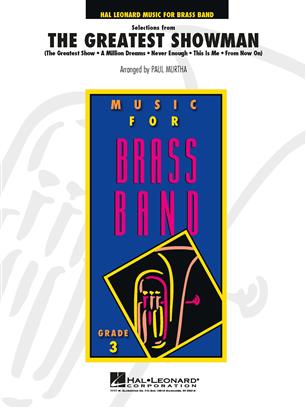 £69.99
Selections from The Greatest Showman - Paul Murtha
From the powerful soundtrack of the hit movie The Greatest Showman, here is a dramatic and exciting medley for the concert stage. Includes: 'The Greatest Showman', 'Never Enough', 'A Million Dreams', 'This Is Me' and 'From Now On'.
Estimated dispatch 5-14 working days
 View Music