
Results
-
 £60.99
Centennial Prelude (Brass Band - Score and Parts) - Van der Roost, Jan
This short opening music was composed on commission of the symphonic band of Jan Van der Roost's village (= Kontich near Antwerp / Belgium). In 1991, this community band celebrated its 100th anniversary. After composing commissioned pieces from different countries (even from Japan), this was the most 'near' commission he ever received indeed! It is a short but varied piece, featuring all sections of the band. After a short introduction, played by the brass instruments, a crisp rhythm starts and boxes the main theme. After a second theme, played by brass and percussion, a short melodical passage brings some 'rest'. At the end, the fanfare of the introduction reoccurs. Although this "Centennial Prelude" isn't a really demanding piece, it sounds colourful and energetic. It has been recorded on CD by the band of the 'Royal Dutch Airforce' and the 'Desford Colliery Brass band'.Duration: 3:30
Estimated dispatch 7-14 working days
-
 £42.50
Martini (Brass Band - Score and Parts) - De Haan, Jacob
This swinging march by Jacob de Haan was commissioned by the foundation "Vrienden van de Groningse Politie-muziek" (Friends of the Police Music of Groningen), on occasion of the 950 year anniversary of the "Martini-city" Groningen. The trio in this piece features the anthem of the province of Groningen.Duration: 2:45
Estimated dispatch 7-14 working days
-
 £60.99
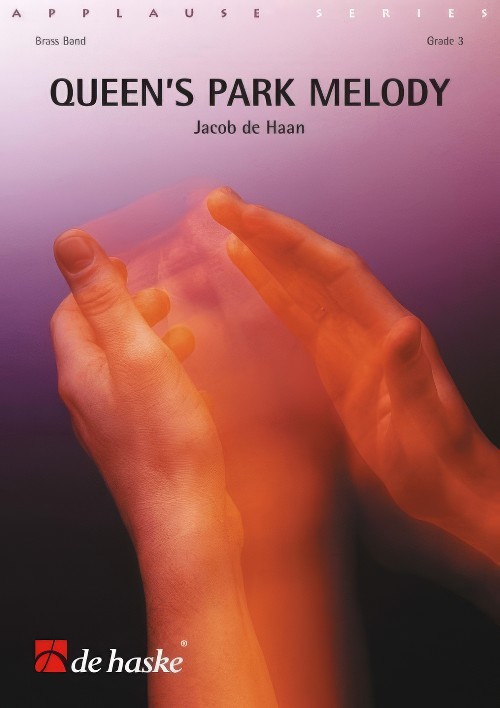
Queen's Park Melody (Brass Band - Score and Parts) - De Haan, Jacob
The atmosphere in a busy town park in the spring provided me with the inspiration for this piece. The style of this piece can be described as light music with baroque influences. These baroque influences directly point to the richly ornamental statues, which can be found in the park.Duration: 4.20
Estimated dispatch 7-14 working days
-
 £60.99
Glasnost (Brass Band - Score and Parts) - Stratford, Dizzy
This composition by Dizzy Stratford symbolises the birth of the new Russia in the time of Mikhail Gorbachev with its new openness in public affairs (glasnost) accompanied by political and economic reform (perestroika). Glasnost is a work offering a modern vision of Russian music. Dizzy Stratford has chosen to combine the national hymn of the Soviet Union with two traditional melodies which, with a steady, energetic rhythm portray the wind of change and freedom in Russian society.Duration: 4:15
Estimated dispatch 7-14 working days
-
 £40.00
Trittico (Brass Band - Score only) - Curnow, James
Trittico was commissioned by the Swiss Brass Band Association for their national championships in 1988.A trittico is a triptych or group of three paintings or musical compositions based on a common theme and presented or performed together. The present work is a set of three extended variations on the American shaped-note hymn Consolation.The work opens in grand style with motives based on intervals of the hymn tune. The opening motif, and smaller fragments of it reappear throughout the piece and serve as an underlying element alongside the theme itself.The first variation is essentially a scherzo which echoes the minor mood of the theme. The hemiolic opposition of compound and duple time is used to good effect and, again, the main motif is never far away. This is music with energy and forward movement.The second variation gives the soloists a chance to shine. The mood is tranquil, yet there is always some activity and the musical material pre-echoes the third variation.The third variation is another scherzo-like section, the main theme accompanied by a rhythmic ostinato. Toward the conclusion there is a short aleatoric passage - a variation within a variation allowing half the band to make their own variations in a cacophony of sound. An energetic coda draws together several elements to round off a work brim full of drive, energy, and self-propelled enthusiasm.Recorded on Polyphonic QPRL044D Brass from the ValleysDuration: 13:30
Estimated dispatch 7-14 working days
-
£90.00
Trittico (Brass Band - Score and Parts) - Curnow, James
Trittico was commissioned by the Swiss Brass Band Association for their national championships in 1988.A trittico is a triptych or group of three paintings or musical compositions based on a common theme and presented or performed together. The present work is a set of three extended variations on the American shaped-note hymn Consolation.The work opens in grand style with motives based on intervals of the hymn tune. The opening motif, and smaller fragments of it reappear throughout the piece and serve as an underlying element alongside the theme itself.The first variation is essentially a scherzo which echoes the minor mood of the theme. The hemiolic opposition of compound and duple time is used to good effect and, again, the main motif is never far away. This is music with energy and forward movement.The second variation gives the soloists a chance to shine. The mood is tranquil, yet there is always some activity and the musical material pre-echoes the third variation.The third variation is another scherzo-like section, the main theme accompanied by a rhythmic ostinato. Toward the conclusion there is a short aleatoric passage - a variation within a variation allowing half the band to make their own variations in a cacophony of sound. An energetic coda draws together several elements to round off a work brim full of drive, energy, and self-propelled enthusiasm.Recorded on Polyphonic QPRL044D Brass from the ValleysDuration: 13:30
Estimated dispatch 7-14 working days
-
 £60.99
Signature (Brass Band - Score and Parts) - Van der Roost, Jan
This opener was written for the 10th anniversary of Brass Band Midden Brabant (BBMB), the composer's own band. A soft and lyrical middle section follows on the powerful opening fanfare which, if the technical equipment is available, can be used as background music for a spoken text or presentation. The finale is distinctly rhythmical in character, and develops into a somewhat unusual ending. Here, the composer piles ten different notes on top of each other, representing the BBMB anniversary in a musical way. At a later date the composer made two new versions of Signature, namely for wind band and fanfare.Duration: 3:30
Estimated dispatch 7-14 working days
-
 £74.95
Endeavour (Brass Band - Score and Parts) - Sparke, Philip
Commissioned by the Festival of Bands, Brisbane 1988, for the Bicentennial World Brass Band Championship held there on 29th July.Endeavour takes its title from the name of the ship in which Captain James Cook circumnavigated the world and attempts to depict in music some aspects of the history of the great continent which he discovered.The Unknown Continent tells the story of the many fruitless voyages undertaken to find the mysterious Terra Australis and conjures up something of the awe and excitement its discovery engendered. Early struggles and hardships of the first settlers are described in The New Challenge but the true story of Australia over the last 200 years is one of success and Celebration ends the piece in triumph.Duration: 11.30 mins
Estimated dispatch 7-14 working days
-
£37.95
Endeavour (Brass Band - Score only) - Sparke, Philip
Commissioned by the Festival of Bands, Brisbane 1988, for the Bicentennial World Brass Band Championship held there on 29th July.Endeavour takes its title from the name of the ship in which Captain James Cook circumnavigated the world and attempts to depict in music some aspects of the history of the great continent which he discovered.The Unknown Continent tells the story of the many fruitless voyages undertaken to find the mysterious Terra Australis and conjures up something of the awe and excitement its discovery engendered. Early struggles and hardships of the first settlers are described in The New Challenge but the true story of Australia over the last 200 years is one of success and Celebration ends the piece in triumph.Duration: 11.30 mins
Estimated dispatch 7-14 working days
-
 £60.99
Patsy (Brass Band - Score and Parts) - Stratford, Dizzy
Dizzy Stratford's name has become synonymous with concert band music of the highest quality. Stratford's characteristically simple, accessible harmonies and zesty melodies guarantee exciting musical entertainment. Patsy is no exception and also provides ample opportunity to feature individual sections or soloists.Duration: 3.00
Estimated dispatch 7-14 working days
 View Music