
Results
-
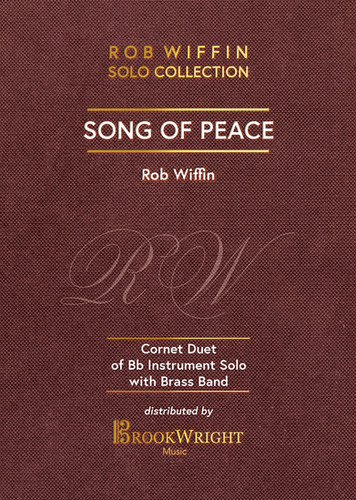 £33.62
Song of Peace (Cornet Duet or Bb Instrument Solo with Brass Band) Rob Wiffin
A reflective piece featuring two cornets and band, but also playable as a solo for cornet, trombone or euphonium. Song of Peace was written just after a close friend of the composer died suddenly - a cathartic piece, reflecting the release from pain to peace. It fits the expressive style and power of the solo brass instruments. Audio demo: https://soundcloud.com/user-565396545/song-of-peace-cornet-duet-or Duration: Approx. 3.40 minutes Difficulty Level (Band): Easy Soloist(s): Medium This PDF download includes the full score and parts. Sheet music available at www.brassband.co.uk (UK) or https://satradecentral.org (USA)
In Stock: Estimated dispatch 1-3 working days
-
 £29.88
Sweet Hour of Prayer (Brass Band) William Bradbury arr. Kenneth Downie
Arranged with sensitivity and reverence, this beautiful brass band setting by Kenneth Downie of Sweet Hour of Prayer captures the gentle, reflective spirit of William Bradbury's beloved hymn. Inspired by the heartfelt lyrics of William W. Walford's original text, the arrangement seeks to emulate its winsome quality - offering performers and audiences alike a moment of calm, spiritual reassurance. Set for a medium sized band, this arrangement will be accessible to bands with as few as 16 players, but equally as effective for full band. To view a rolling score video of the piece please visit https://www.youtube.com/watch?v=jLsVMW4E7LM Difficulty Level: 4th Section + PDF download includes parts and score. Sheet music available at www.brassband.co.uk (UK) or https://satradecentral.org (USA) Instrumentation: Soprano Cornet Eb 1st Cornet Bb 2nd Cornet Bb Flugel Horn Bb 1st Horn Eb 2nd Horn Eb 1st Baritone Bb 2nd Baritone Bb 1st Trombone Bb 2nd Trombone Bb Bass Trombone Euphonium Bb Bass Eb Bass Bb (Percussion Tacet)
In Stock: Estimated dispatch 1-3 working days
-
 £37.35
The Huron Carol - Brass Band (Canadian Traditional arr. Andrew Wainwright)
A magical arrangement of the beautiful Canadian Christmas hymn (Canada's oldest Christmas song), which is also known as 'Twas in the Moon of Wintertime. 'In The Huron Carol, Andrew responds to the ethereal quality and wintery mood of Canada's oldest Christmas song, setting this beautifully simple tune in an ambiguous, Downie-Himes inspired landscape. The layering of texture is magical.' Paul Hindmarsh - Music critic To view a video of the work please visit: www.youtube.com/watch?v=gB7DhDTWBCA Sheet music available from: UK - www.brassband.co.uk USA - www.solidbrassmusic.com Difficulty Level: 4th Section + Instrumentation: Soprano Cornet Eb Solo Cornet Bb 2nd Cornet Bb 3rd Cornet Bb Flugel Horn Bb Solo Horn Eb 1st Horn Eb 2nd Horn Eb 1st Baritone Bb 2nd Baritone Bb 1st Trombone Bb 2nd Trombone Bb Bass Trombone Euphonium Bb Bass Eb Bass Bb Timpani Percussion 1-2
In Stock: Estimated dispatch 1-3 working days
-
 £33.62
The Risen King (Brass Band) Getty & Townend arr. Andrew Wainwright
VIEW SCORE PDF This scintillating work will be an ideal opener to your band's concert programme. Written at the request of Bandmaster Christopher Ward and the Eastern Michigan Divisional Band of The Salvation Army (USA), it was premiered at the 2019 Autumn Praise Festival in Rochester, Michigan which featured the Eastern Michigan Divisional Band and Choir, and the Chicago Staff Band. The piece is based on the popular modern hymn by Keith and Kristin Getty and Stuart Townend, Come People of the Risen King. To view a video of the New York Staff Band performing the work please visit: https://www.youtube.com/watch?v=o1w7qY2dyvY&t=3s Sheet music available from: UK - www.brassband.co.uk USA - www.solidbrassmusic.com Difficulty Level: 2nd Section + Instrumentation: Soprano Cornet Eb Solo Cornet Bb Repiano Cornet Bb 2nd Cornet Bb 3rd Cornet Bb Flugel Horn Bb Solo Horn Eb 1st Horn Eb 2nd Horn Eb 1st Baritone Bb 2nd Baritone Bb 1st Trombone Bb 2nd Trombone Bb Bass Trombone Euphonium Bb Bass Eb Bass Bb Timpani Percussion 1-3
In Stock: Estimated dispatch 1-3 working days
-
 £33.62
The Twelve Days of Christmas - Brass Band (Trad. arr. Andrew Wainwright)
This innovative arrangement by Andrew Wainwright of 'The Twelve Days of Christmas' features all 12 verses and will work well either as a standalone brass band piece, or with audience participation. To view a video of The Illinois Brass Band performing the work please visit www.youtube.com/watch?v=VPhk60_6E0U Includes score and full set of parts. Difficulty Level: 2nd Section + Length: 4.45 minutes Sheet music available from World of Brass - www.worldofbrass.com Instrumentation: Soprano Cornet Eb Solo Cornet Bb Repiano Cornet Bb 2nd Cornet Bb 3rd Cornet Bb Flugel Horn Bb Solo Horn Eb 1st Horn Eb 2nd Horn Eb 1st Baritone Bb 2nd Baritone Bb 1st Trombone Bb 2nd Trombone Bb Bass Trombone Euphonium Bb Bass Eb Bass Bb Timpani Percussion 1-2
In Stock: Estimated dispatch 1-3 working days
-
 £37.35
The Vow (Brass Band) Andrew Wainwright
VIEW SCORE PDF A majestic processional in the spirit of Elsa's Procession to the Cathedral, this powerful work blends the heartfelt beauty of William Himes' worship song All That I Am with an original theme by Andrew Wainwright. The piece was originally written for the composer's wedding. The piece features expressive interplay between solo lines and rich accompaniment, offering performers a dynamic canvas to shape and build the music. Gradually expanding in depth and intensity, it culminates in a stirring and triumphant conclusion - ideal for sacred ceremonies, concert halls, or moments of solemn celebration. PDF download includes score and full set of parts. Sheet music available from: UK - www.brassband.co.uk USA - www.solidbrassmusic.com To view a video of the Southern Territorial Band performing the work please visit: www.youtube.com/watch?v=h2VUSKHMbho Difficulty Level: Second Section + Instrumentation: Soprano Cornet Eb Solo Cornet Bb 1st Cornet Bb 2nd Cornet Bb Flugel Horn Bb Solo Horn Eb 1st Horn Eb 2nd Horn Eb 1st Baritone Bb 2nd Baritone Bb 1st Trombone Bb 2nd Trombone Bb Bass Trombone 1st Euphonium Bb 2nd Euphonium Bb Bass Eb Bass Bb Timpani Percussion 1-3
In Stock: Estimated dispatch 1-3 working days
-
 £57.50
Music From Stranger Things - Christopher Bond
The popular TV series Stranger Things has reminded us of some of the great songs from the 1980s! With songs supporting key moments in the storyline, here is an emotion-packed medley of classic rock hits along with the iconic theme. Includes: Stranger Things Main Theme Should I Stay or Should I Go Master of Puppets Separate Ways (Worlds Apart) and Running Up That Hill.
Estimated dispatch 10-14 working days
-
 £59.99
Second Star to the Right, The - Christopher Bond
This famous tune from the iconic Peter Pan movie has been arranged many times, but never for brass band. This arrangement for solo trombone and band is ideal for putting one of the trombones in the spotlight, with a solo part and accompaniment suitable for bands of third section standard and higher.
Estimated dispatch 10-14 working days
-
 £49.99
The Mandalorian - Christopher Bond
This popular Star Wars series follows the exploits of a bounty hunter in the post-Return of the Jedi era. Featuring a stunning soundtrack by Ludwig Goransson, here is the iconic main theme in a dramatic and powerful setting for the concert stage. Note: whilst the demo video demonstrates the concert band arrangement, the version available to purchase on this website is the brass band transcription by Christopher Bond.
Estimated dispatch 10-14 working days
-
 £34.95
Fire & the Phoenix, The - Christopher Bond
The Fire & the Phoenix (2015) was commissioned by Brett Baker in early 2015 as the opening track to his solo CD 'Myths & Legends'. Whilst structurally a single-movement work, it is presented so that it can link directly into the next work on the CD, adding to a continuous theme comprising a number of pieces from a number of composers. Opening with huge strident chords in the full band, the representation of the phoenix is instantly reflected; bold, powerful and a bird of great intensity. This makes way for a more mystical section marked 'distant' which reflect the beauty of the Phoenix and it's mythical nature where the trombone soars up into its higher register with a sweeping melody. Soon after, the music takes a sharp turn, becoming dramatic and instantly moving away from the mystical mood created previously. Here, we imagine the Phoenix catching fire, burning intensely with huge flames as it gradually turns into ash. We reach a tonic pedal point in the music, over which chord progressions subtly weave in and out of the texture. Here, we imagine the Phoenix rising from the ashes, with the dynamics gradually increasing to reflect this, slowly taking shape as it is born again. A return to earlier material follows, this time manipulated to reflect the Phoenix in its new form - the same bird; the same animal; but at the same time different. A beautiful chorale-like passage is heard before the music transports us back into a magical land, where delicate rhythmic ideas are juxtaposed against bolder lower chords; both ideas together transporting the listener forward into the next piece.
Estimated dispatch 10-14 working days
 Watch video