
Results
-
 £159.99
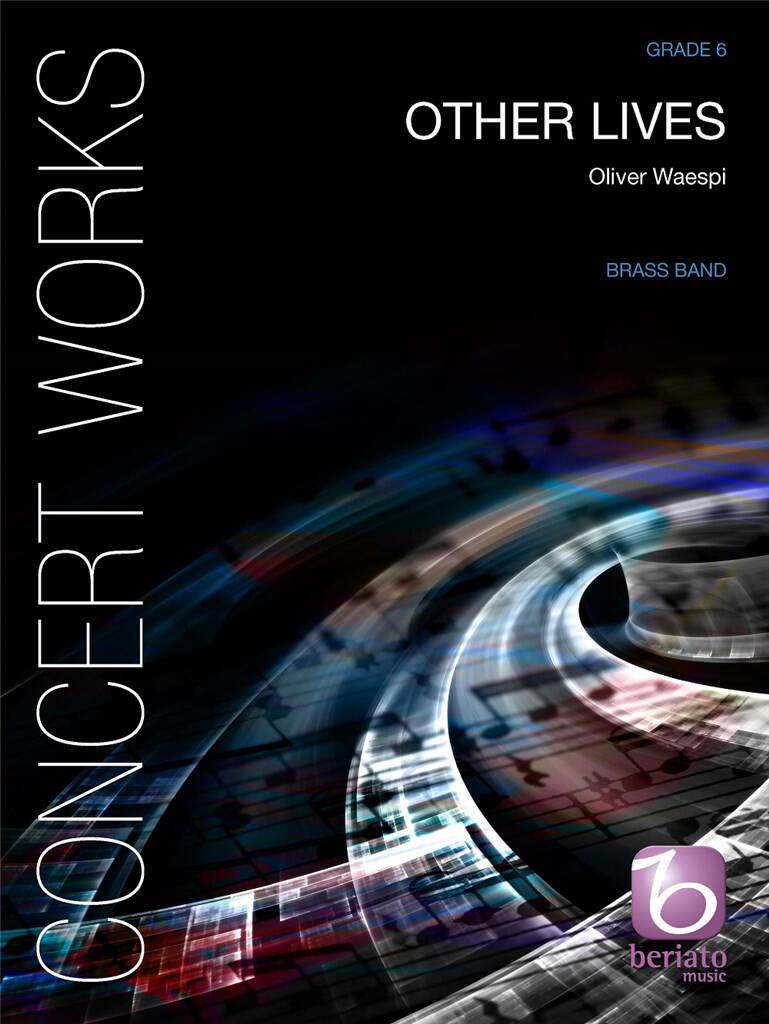
Other Lives - Oliver Waespi
Other Lives is works perfectly for a competition but can also be programmed as concert work. The dark chords at the beginning of the piece are derived from "Der Doppelganger", one of Franz Schubert's late songs. After a short development the music begins to accelerate and find its own shape, gradually moving away from the introduction. The entire first part, "Rage", has an intensely agitated character. The ensuing "Reflection" turns back to the initial chord progression, before a series of interspersing solos explore time and space at a slower pace. After another musical surge, the music is brought close to silence and then gives way to the third part, "Redemption".Here, a widely spaced sound field contains a remote allusion to another work by Schubert "Ruckblick". After this farewell, an abstract musical transformation triggers an emotional change, as the initial motifs are now presented in their inversed form in order to create a much brighter harmonic landscape. Moreover, in the last part of the piece, "Renewal", the grim, tense atmosphere of the first part is transformed into a great energy. Other Lives was commissioned by the Valaisia Brass Band.
Estimated dispatch 5-14 working days
-
 £60.99
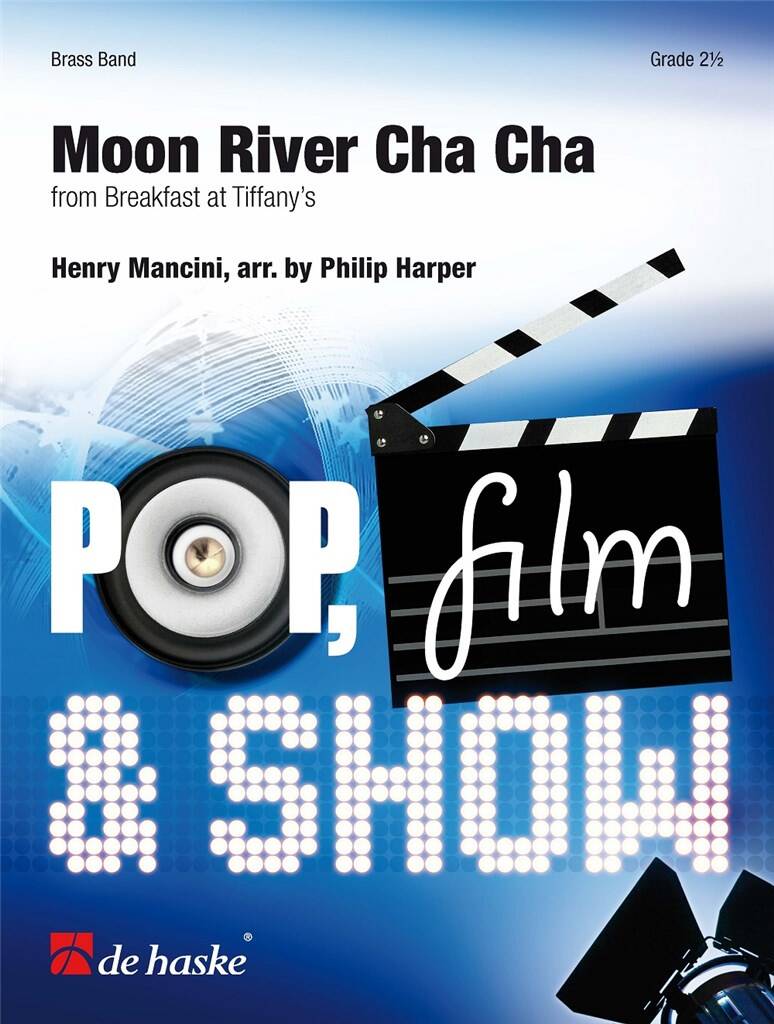
Moon River Cha Cha - Henry Mancini - Philip Harper
Moon River Cha Cha was arranged to be part of Cory Band's winning set from Brass in Concert 2016 which was entitled; 'The Remarkable Life of Roald Dahl'. The centenary of Dahl's birth in Wales was celebrated in 2016, and this piece comes from the 1961 film Breakfast at Tiffany's which starred Dahl's first wife, Patricia Neal. The easy-listening style of the music portrays the glamour and glitz of Roald Dahl's immediate post-war life in the USA.
Estimated dispatch 5-14 working days
-
 £60.99
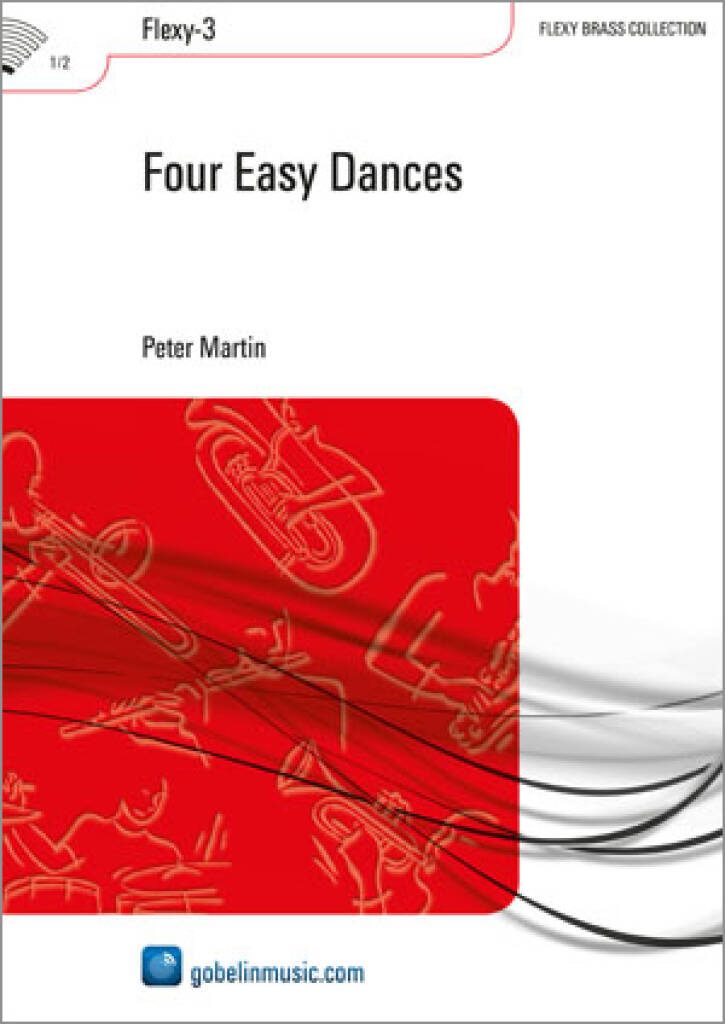
Four Easy Dances - Peter Martin
'Four Easy Dances' is a four-part suite from Gobelin's 'Flexy Band Collection'. This series is meant for starter ensembles, i.e. youth orchestras which may not have the full range of instruments available yet. Therefore, it is possible to combine various instruments. 'Four Easy Dances' comes from the 'Flexy 3 Series' and can in principle be played by only three instruments, completed with three percussion instruments. 'Four Easy Dances' consists of: 1. Hop, Skip and Jump, 2. Little Polka, 3. Spanish Dance (castanets are obligatory) and finally 4. Tango.
Estimated dispatch 5-14 working days
-
 £65.00
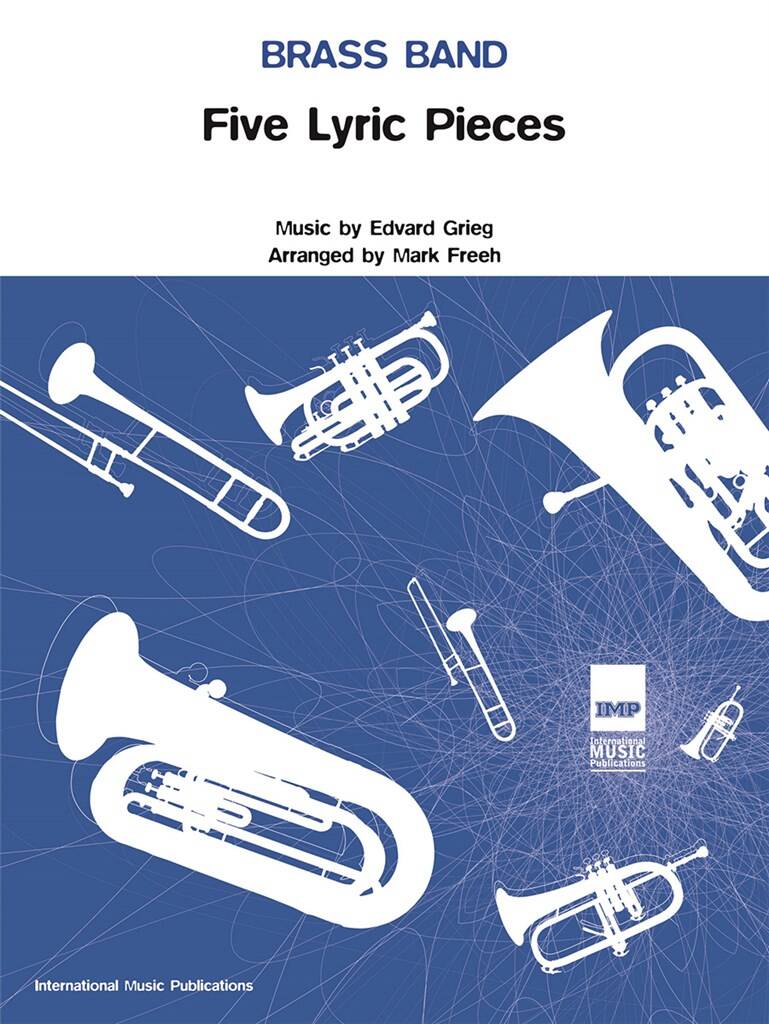
Five Lyric Pieces - Edvard Grieg
Mark Freeh's arrangement of five of Grieg's Lyric Pieces are taken from the orchestral adaptations from the composer himself. Grieg wrote 66 piano miniatures, all referred to as lyric pieces.Brass Band Grade 5: 1st SectionDuration: 12 minutes
Estimated dispatch 5-14 working days
-
 £76.99
Invocation - Marc van Delft
In this work the Dutch composer Marc van Delft attempts to bring together two parties (former friends), after they have grown inexplicably apart. For this reason he calls in the help (Invocation) from the medium of music.At first, 'Invocation' radiates a sense of serene calme, from which the composer gradually creates an atmosphere resembling a conversation.Half-way there is an increase of suspense, ending once again in calm.The listener remains uncertain, however, regarding the finish. In dit werk probeert de Nederlandse componist Marc van Delft twee partijen samen te brengen (vroegere vrienden), nadat ze op onverklaarbare wijze uit elkaar zijn gegroeid. Daaromroept hij de hulp in (Invocation) van het medium muziek. In het begin straalt 'Invocation' een gevoel van serene rust uit, waaruit de componist geleidelijk een sfeer creeert die lijkt op een gesprek. Halverwege is er een toename van de spanning, die weer in rust eindigt. De luisteraar blijft echter onzeker over de afloop.
Estimated dispatch 5-14 working days
-
 £127.30
Sommernatt ved fjorden - Ketil Bjørnstad - Haakon Esplo
"By the Fjord" is written by the Norwegian composer Kjetil Bjornstad and is the most famous song from the musical work "Leve Patagonia" which was published in 1978. The work is written as a modern suite about the Oslo Bohemians Hans Jaeger and OdaLasson sitting in a pram on the fjord a summer night. Odas sister sees the couple on the sea from her window and tells us the story.Kjetil Bjornstad wrote "By the Fjord" in his house outside Tvedestrand early spring 1978. He was initially notfully satisfied and considered disposing it. The beautiful music has luckily made the song a classic in Norwegian music.To the conductorThis arrangement can be used with both vocal andinstrumental soloist. Its always a challenge toarrange songs with many verses that tells a story if it is to be played by an instrumental soloist instead of a singer. Because of that, please cut the repeats if it's performed without lyrics.Solo-parts included in the set: Vocal Flugelhorn Euphonium - Trombone
Estimated dispatch 5-14 working days
-
 £106.50
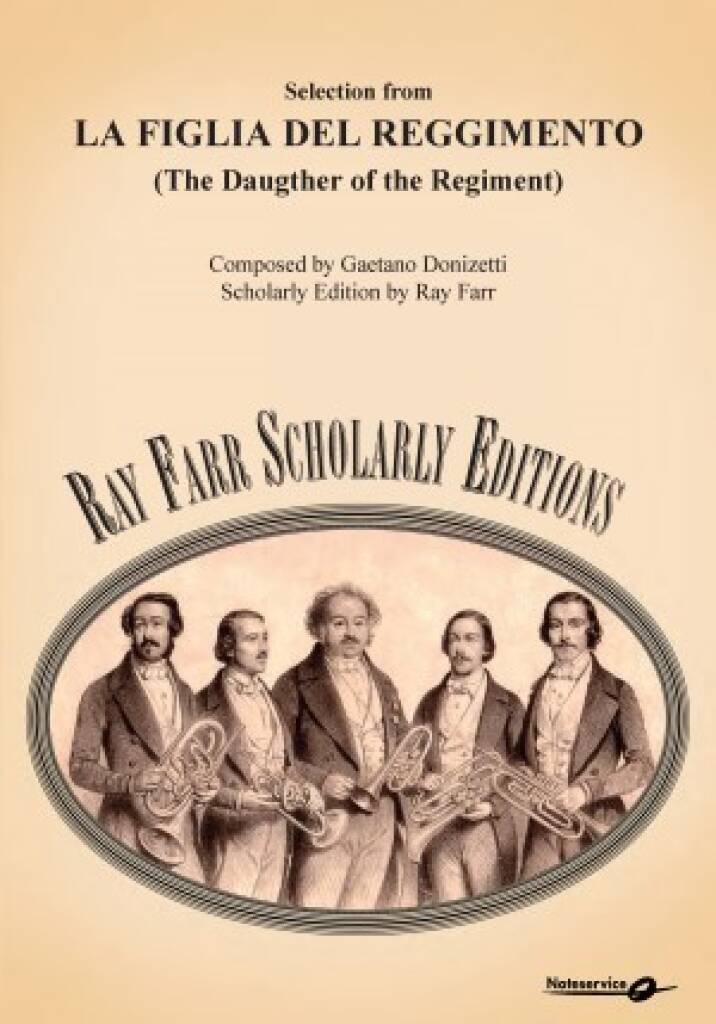
La Figlia del Reggimento - Gaetano Donizetti - Ray Farr
The Selection from La Figlia del Reggimento (The Daughter of the Regiment) by Gaetano Donizetti comes from the second of a series of works (No. 6 in the advertisement below) called Distin's Brass Band Scores published in 1855 by Henry Distin. These publications represent an important stage in the history of bands in Britain. The popular music of the day was mostly opera extracts, and the music of Donizetti was particularly popular.The purpose of this scholarly edition is to produce a performing version, clearing ambiguities and errors, that can be enjoyed by today's performers and listeners, bearing in mind the original function and context. At the same time the edition is an analytical, musicological study of one of the rare treasures of the brass band repertory.
Estimated dispatch 5-14 working days
-
 £60.99
Antonin's New World - Antonín Dvorák - Dizzy Stratford
Antonin's New World is an excellent piece of musical theatre featuring a comedy act for triangle soloist and band. The music itself does not sound comical, being based on Anton Dvorak's Symphony in E Minor (From the New World), but the right mix of seriousness and humour brings a surprising effect. With a bit of acting talent from your triangle soloist, this interpretation of the well known classical melody will be a major hit. Whether you choose Antonin's New World as a "triangle solo" novelty piece or simply as a delightful adaptation of Dvorak's immensely popular Ninth Symphony, both the band and the audience will love it!
Estimated dispatch 5-14 working days
-
 £60.99
Lascia ch'io pianga (Let Me Weep) - Georg Friedrich Händel - Jacob de Haan
Let Me Weep ('Lascia ch'io pianga') is an aria from Handel's opera 'Rinaldo'. According to reports he composed the music for the complete opera in just 14 days, using many melodies from earlier works. The melody of this wonderful aria is known all over the world and this arrangement by Jacob de Haan retains all the passion of the original.
Estimated dispatch 5-14 working days
-
 £104.99
Cambridgeshire Impressions - Rieks van der Velde
In a four-part composition Rieks van der Velde takes us to the richly varied area surrounding the university city of Cambridge. The Dutch composer was especially inspired by the atmosphere of Cambridgeshire, the county which lies north ofLondon. 1. The Journey. Although on arrival the area looks peaceful and friendly, the ruggedness of its inhabitants and landscape have an unmistakable influence on the music. In the course of the tour, which starts with an Allegromovement, we are shown the vitality, energy and freshness of the Cambridgeshire countryside. Short themes, swift and sudden motifs and rhythmical patterns supported by the drive of percussion instruments give expression to this image. Thefirst part is concluded by two Calmo movements in which the music expresses how the cathedral in the city of Ely comes into sight and is gradually approached. 2. Visit to Ely Cathedral. The famous Norman cathedral church of Ely, whichwas built in 1109, has attracted tourists from all over the world apart from being a place of worship and heritage site. A cornet solo introduces the contemplative mood of the composition at this point. The mystical atmosphere of thecathedral runs through this lyrical part like a continuous thread. 3. The Pub. The thirst caused by this intensive journey makes a visit to the local pub a definite must. These "public houses", which may be open until the earlyhours of the morning, offer all kinds of entertainment. Drinks are served liberally and the atmosphere is lively. 4. The Journey Back. Time has flown: In other words, the moment of departure has come sooner than one would havewished. In a flashback which recaptures elements of the first part of the composition we say goodbye to Cambridgeshire in a fitting manner. Two scintillating final measures bring us abruptly back to the present.
Estimated dispatch 5-14 working days
 View Music