
Results
-
 £3.95
£3.95On the Face! (Trombone/Euphonium TC)
On the Face is a complete repertoire (warm-ups and 23 pieces) for beginner brass ensemble. Perfect material for school assemblies and music centres, it includes folk songs, famous classical themes, and exciting new jazz and pop numbers. Each piece is score for a basic trio of two trumpets/cornets and one trombone/euphonium (TC or BC). However, optional independent parts can also be added for horn in E flat or F; high trombone or euphonium (tenor part); tuba; and drum kit. The pieces work equally well either with one player to a part, or in larger group settings. With its appealing variety of musical styles and textures, On the Face is sure to make the young brass player's first experience of group playing both rewarding and fun.
Estimated dispatch 7-14 working days
-
 £3.95
£3.95On the Face! (Tuba BC)
On the Face is a complete repertoire (warm-ups and 23 pieces) for beginner brass ensemble. Perfect material for school assemblies and music centres, it includes folk songs, famous classical themes, and exciting new jazz and pop numbers. Each piece is score for a basic trio of two trumpets/cornets and one trombone/euphonium (TC or BC). However, optional independent parts can also be added for horn in E flat or F; high trombone or euphonium (tenor part); tuba; and drum kit. The pieces work equally well either with one player to a part, or in larger group settings. With its appealing variety of musical styles and textures, On the Face is sure to make the young brass player's first experience of group playing both rewarding and fun.
Estimated dispatch 7-14 working days
-
 £49.99
The Bandwagon (Brass Band - Score and Parts)
Band director and radio presenter Yutaka Nishida hails from Tokyo and is the Frank Renton of the Japanese brass band world. He presents a weekly two-hour music programme on the Japanese national radio station, Digital Radio Musicbird. The programme is called The Bandwagon and the station commissioned Philip Sparke to compose a march, which could be used as the theme tune. The result is this bright and breezy march in simple ABA form. A great lively item for any concert.
Estimated dispatch 7-14 working days
-
 £79.99
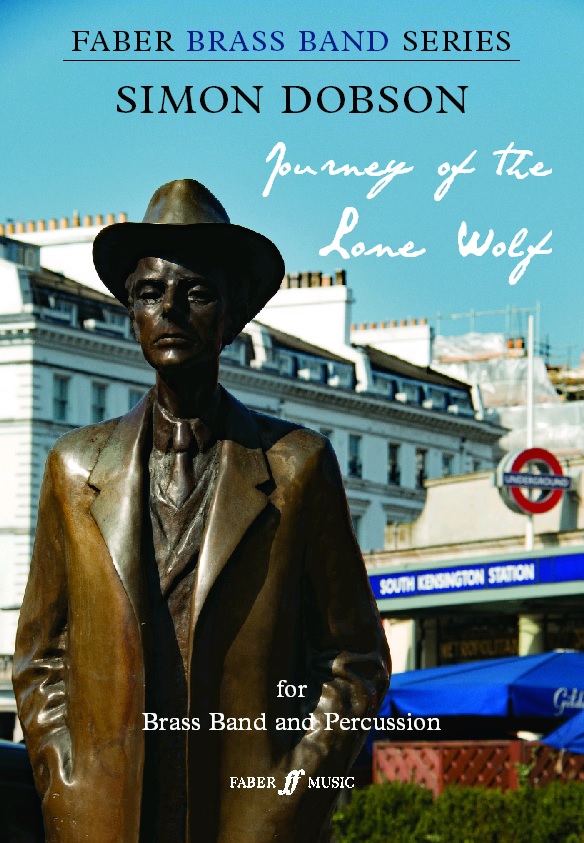
Journey of the Lone Wolf (Score and Parts)
Championship Section Finals Test Piece for National Brass Band Championships of Great Britain 2016Journey of the Lone Wolf tells the story of the hungarian composer Bla Bartk. It was commissioned by Dr. Nicholas Childs for Black Dyke Band, who gave the first performance on Sunday 26 January 2014 at the Bridgewater Hall, Manchester as part of the Royal Northern College of Music Festival of Brass.The composer's programme notes for each movement:1. Capturing the Peasants' SongAfter the upheaval of moving to Budapest the young Bla Bartk meets Zoltn Kodly and the pair embark on summertime adventures throughout the Hungarian countryside to collect and catalogue the astonishing variety (both harmonically and rhythmically) of gypsy and folk music heard in the Balkans. The arrival of WW1 plunges Bartk's beloved Hungary into chaos.2. Night MusicBartk was at times a cold man, aloof and lonely. The odd moments of tenderness he showed are portrayed here in a series of evocative solos. His brief but intense affairs speak of a love he could only long for. Jazz is my night music and here there are hints of what Bartk may have heard in the USA later in his life.3. Flight and FightHaving been forced by the world's evils to leave his homeland of Hungary for America, Bartk, the anti-fascist, felt isolated and angry. In this movement we hear his longing for a simpler time of gypsy folk dances as well as his maturity and depth as a composer finally exploring deeper colours and darker themes.
Estimated dispatch 7-14 working days
-
 £32.95
Variations for Brass Band (Score Only)
The great British brass band tradition has been fostered since 1860 by an annual competition for bands. Held in the Crystal Palace until that edifice burned in the 1930s, it is a major event at the Royal Albert Hall in London. Each year there is a new test piece, required of all bands and in 1957, Ralph Vaughan Williams (by then a revered, grandfatherly figure in British music) was finally persuaded to write a composition for that purpose.The 12-minute composition comprises a theme and 11 variations. The brief variations are in a variety of moods and styles, including a waltz, a polonaise, a chorale, a canon, an arabesque, and a fugue. It tests ensemble coordination, command of and flexibility concerning styles, and richness of sound.
Estimated dispatch 7-14 working days
-
 £65.00
A New World Overture. Andrew Duncan
Recommended - Championship & 1st Section A New Concert Overture by Andrew Duncan featuring popular tunes from the USA, including The Stars and Stripes, Oh When The Saints, Battle Hymn of the Republic, Yankee Doodle and even a touch of Dvorak! New World Overture would make a rousing and spirited start to a concert if Pizzazz and Razzamatazz are required! Includes Score & Parts Scroll down for a MP3 of the arrangement.
-
Foyle's War Theme - Jim Parker - Len Jenkins
Foyle's War was a TV crime drama created by screenwriter Anthony Horowitz, and tells the story of Detective Chief Superintendent Christopher Foyle, played by Michael Kitchen, fighting a personal war against crime amidst the turmoil of World War Two. The music for the series was composed by 4 time BAFTA winning Jim Parker and has an ethereal minor key melody, sparsely orchestrated and Wobbleco Music has attempted to capture this atmosphere in its arrangement for Brass Band. An arrangement for a Brass Ensemble is also available. The last episode of the Foyle's War was written in 2014 but such is its popularity that there have been many requests for it to return to the screens, particularly as the writer says that one of the wartime years has yet to be covered. We shall see. Meantime enjoy this beautiful theme.
-
 £65.00
Rise of the Phoenix (Brass Band - Score and Parts)
As the title suggests, the phoenix was a fabulous mythical bird, who every morning at dawn, sang a song so enchanting that even the sun God, Apollo, would stop and listen. The bird would live for a hundred years, and at the end of its life, would build a pyre, set it on fire and be consumed by the flames. After three days, the phoenix would be reborn from the ashes, to sing once more.This work was commissioned by Clifton and Lightcliffe Band and reflects the difficulties and rebirth of the band to make music once more.Suitable for second section bands and above.
Estimated dispatch 7-14 working days
-
 £44.95
Deliverance (from War of the Worlds Suite) (Soprano Cornet or Tenor Horn Solo with Brass Band)
Deliverance is the fourth movement of the suite War of the Worlds which was commissioned by the Senzoku Gakuen College of Music Saxophone Orchestra and first performed by them in the Maeda Hall, Japan on June 29 2012, the composer conducting. The music is dedicated to Professor Shin-ichi Iwamoto. The transcription for brass band was first performed by the Brighouse & Rastrick Band, conductor David King, in the Bridgewater Hall Manchester on September 8 2012.The suite takes inspiration from the 1953 film script adaptation of the famous HG Wells novel and key scenes from the film are set as individual movements: Deliverance - survivors seek sanctuary in the Church of Santa Maria, still standing among the burning ruins of Los Angeles, and pray for deliverance from the invaders.Each movement of War of the Worlds is available separately allowing for a variety of "mini-suite" combinations eg: Movements 1,2 and 5 or 3,4 and 5 etc.
Estimated dispatch 7-14 working days
-
 £29.95
Judd: Before The Cross
Written at the request of David Daws for his solo album The Sound of David Daws, this meditation for cornet and brass band uses the composer's own song Before the cross (The Musical Salvationist, April 1965), the first lines of which are "Before the cross I stand in fear and wonder, and see that all my sins on Thee are laid". The song was written at an early stage of the composer's career, just before commencing study at The Royal Academy of Music, London. After a brief introduction the melody is heard twice, first played by the soloist, then on euphonium and flugel horn with the soloist adding ornate counterpoint before taking up the melody once again, this time leading to a quiet and reflective conclusion.
Estimated dispatch 7-14 working days