
Results
-
 £65.00
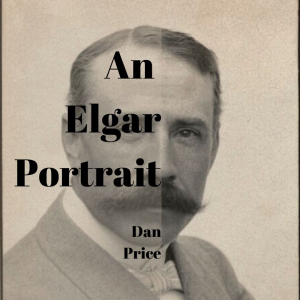
AN ELGAR PORTRAIT - D.Price
This work was composed in commemoration of the 150th Anniversary of the birth English Composer Sir Edward Elgar. The suite is in three movements: 'Introduction', 'Elegy' and 'March', each of which have been inspired by three of Elgar's most celebrated works; Chanson de Matin, Nimrod ('Variation IX' from the Enigma Variations) and Pomp and Circumstance No.1.'Introduction' - Hollybush HillHollybush Hill is the name of one of the peaks of the Malvern Hills in Worcestershire. The Malverns were a favourite walking area for Elgar and his wife, and their panoramic views inspired much of Elgar's music.'Elegy' - BroadheathBroadheath is the small village at the foot of the Malvern Hills where Elgar was born (and lived at various times throughout his life). Elgar is buried not far from Broadheath at St Wulstan's in Little Malvern. 'March' - Worcester CathedralMany of the Worcestershire ensembles and music festivals played an important role in Elgar's early musical education. He was heavily involved in The Three Choirs Festival and either conducted or played in many of the light orchestras and vocal groups that performed at venues across Worcester. A statue of Elgar overlooks the Cathedral at the end of Worcester High Street.An Elgar Portrait has been used regularly as an own-choice test-piece for Section 4 bands, and was also selected as the set work for the Swiss National Championships in 2007 as well as the Pontins Championships in 2008. The composer has slightly reworked this piece for the Section 4 Final of the National Brass Band Championships of Great Britain 2020 and it's this version that should be performed at the contest. If bands currently have an older version in their libraries, please contact us directly for more information.
In Stock: Estimated dispatch 3-5 working days
-
 £38.95
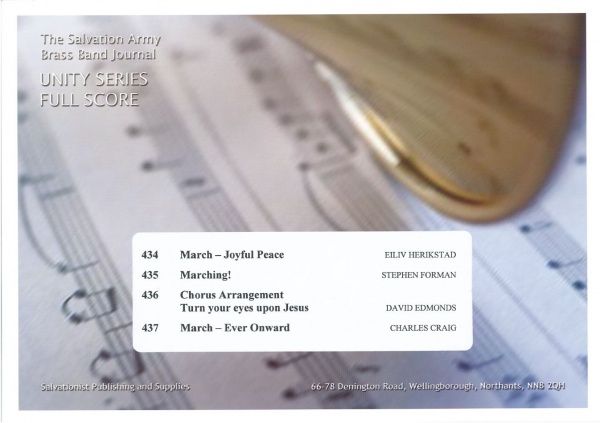
Unity Series Band Journal October 2015 Number 434 - 437
No. 434 March - Joyful Peace (Eiliv Herikstad)This march will pose few technical difficulties to most Unity Series bands. Keep the playing light and distinct throughout. Although the music is simple, please warn against carelessness!No. 435 Marching! (Stephen Forman)This bright energetic work from Major Stephen Forman features the well-known song 'We are marching' as its main theme. This South African song, called 'Siyahamba' in the original Zulu language, became popular in North American churches in the 1990s and soon spread internationally becoming a much featured song within many churches.No. 436 Chorus Arrangement - Turn your eyes upon Jesus (David Edmonds)A very simple, yet effective arrangement of this much-loved chorus, the words of which simply say:Turn your eyes upon Jesus,Look full in his wonderful face;And the things of earth will grow strangely dimIn the light of his glory and graceNo. 437 March - Ever Onward (Charles Craig)The Devonshire Corps of Tiverton celebrated its 140th birthday in 2014. Although small in number, it is highly regarded and respected for its Christian witness and work throughout the community.The march is written in a traditional style and should present no difficulties to the average band.
Estimated dispatch 7-14 working days