
Results
-
£40.00
Chorale Prelude
This stately work is very loosely based on the opening chords from 'The Lamb', although there are no direct quotations from that work. The opening chorale is played as gradually more themes are added above in a dignified and legato subject where instruments sustain notes to give a lingering echo effect. Players need to be aware of their role in this to maximise the effect. The second subject increases the intensity until the time signature change introduces a second chorale. Then, a short imitative passage leads to a rising appogiatura theme and the climax of the work, which re-introduces the original chorale in a major tonality. With versions for brass ensemble, brass band, wind orchestra and woodwind orchestra, this work has been placed in concerts when a meaningful, reflective moment is required.
-
 £34.95
With His First Breath - Paul Lovatt-Cooper
"With His First Breath" is the lovely slow melody taken from the middle movement of my larger work Breath of Souls. It has been composed for performance by any B-flat soloist within the ensemble - Cornet, Euphonium, Baritone, Flugel or Trombone.
Estimated dispatch 10-14 days
-
Galloping Home (The theme from TV's Black Beauty) - Dennis King - Len Jenkins
"The Adventures of Black Beauty" was a British children's television drama series produced by London Weekend Television and shown by ITV in the United Kingdom between 1972 and 1974. The theme tune, "Galloping Home", written by Denis King and performed by the London String Chorale, was released as a single and peaked at number 31 in the UK charts in the week of 2 February 1974. It was later used at the climax of the first series of Absolutely Fabulous, with Edina Monsoon dreaming of running through a field as Black Beauty does in the series' title sequence. The piece has been arranged for both Full Brass Band and Brass Ensemble, in this case a Quintet with optional percussion. Both arrangements are well within the capabilities of most bands.
-
 £42.00
Hymn at Sunrise (Score only) - Ray Steadman-Allen
The idea for this work was prompted by a poem - Hymn Before Sunrise - which describes the majesty of a mountain in darkness, the sounds of a nearby waterfall and so on. Nothing came of the exposure to these pictures except for general thoughts about the dawn of day and a series of movements expressing a personal response to the wonder of creation in an imaginary moment in time. The movement titles, which were added later, are intended to underline a prevailing sense of worship, wonder and exaltation. The music is pure, not pictoral, though listeners may conjure their own images. An actual hymn - Tallis' Cannon - is incorporated. There are five movements: 1. Thanksgiving: A short prelude in two parts. First a brief passage of 'dawn music' before things become more vigorous: fanfare-like music ushers in the trombone section's presentation of the Tallis tune. A broad band version concludes the movement. 2. De Profundis: A slow movement shot through with anxious questionings featuring flugel and trombone. The mood lightens a little in the centre where the soprano cornet is featured and the movement ends serenely. 3. Celebration is characterised by rhythmic drive, this is buoyant with plenty of incident pointed up by the percussion. 4. Invocation: Melodic in nature and sober in mood, the first section is a series of short solos mingled with chorale-like statements. Central to the movement is a chorale-prelude style presentation of the Tallis tune. The third section reintroduces the earlier solo music by the full ensemble. Dissolving, the music enters the last movement without a break. 5. Paean: Marked allegro con spirito there is, quite rightly, a fair amount of fun in the rejoicing. Snatches of Tallis are heard, then comes a gentle passage with a cornet solo leading to fanfare music and recapitulation. Two recitatives are succeeded by a coda which brings the work to a sonorous and exultant conclusion.
Estimated dispatch 7-9 working days
-
 £52.00
Hymn at Sunrise (Parts only) - Ray Steadman-Allen
The idea for this work was prompted by a poem - Hymn Before Sunrise - which describes the majesty of a mountain in darkness, the sounds of a nearby waterfall and so on. Nothing came of the exposure to these pictures except for general thoughts about the dawn of day and a series of movements expressing a personal response to the wonder of creation in an imaginary moment in time. The movement titles, which were added later, are intended to underline a prevailing sense of worship, wonder and exaltation. The music is pure, not pictoral, though listeners may conjure their own images. An actual hymn - Tallis' Cannon - is incorporated. There are five movements: 1. Thanksgiving: A short prelude in two parts. First a brief passage of 'dawn music' before things become more vigorous: fanfare-like music ushers in the trombone section's presentation of the Tallis tune. A broad band version concludes the movement. 2. De Profundis: A slow movement shot through with anxious questionings featuring flugel and trombone. The mood lightens a little in the centre where the soprano cornet is featured and the movement ends serenely. 3. Celebration is characterised by rhythmic drive, this is buoyant with plenty of incident pointed up by the percussion. 4. Invocation: Melodic in nature and sober in mood, the first section is a series of short solos mingled with chorale-like statements. Central to the movement is a chorale-prelude style presentation of the Tallis tune. The third section reintroduces the earlier solo music by the full ensemble. Dissolving, the music enters the last movement without a break. 5. Paean: Marked allegro con spirito there is, quite rightly, a fair amount of fun in the rejoicing. Snatches of Tallis are heard, then comes a gentle passage with a cornet solo leading to fanfare music and recapitulation. Two recitatives are succeeded by a coda which brings the work to a sonorous and exultant conclusion.
Estimated dispatch 7-9 working days
-
 £42.00
Sinfonietta (Score only) - James Curnow
Sinfonietta for Brass Band is basically a short symphony in three movements. The maestoso opening of the first movement introduces the melodic, harmonic, and rhythmic material from which the entire work is structured. The first movement, allegro vivace, is a brilliant capriccio built upon two contrasting melodic lines that are developed throughout the movement. The form is sonata-allegro and it creates an atmosphere of energy and drive. The percussion section opens the second movement and presents the underlying rhythmic ostinato on which this brief but expressive siciliano (pastorale) is developed. Movement three is a rollicking rondo that challenges the technical and rhythmic control of the whol;e ensemble. The brilliant closing fanfare is based on material which has been developed in all three movements.
Estimated dispatch 7-9 working days
-
 £52.00
Sinfonietta (Parts only) - James Curnow
Sinfonietta for Brass Band is basically a short symphony in three movements. The maestoso opening of the first movement introduces the melodic, harmonic, and rhythmic material from which the entire work is structured. The first movement, allegro vivace, is a brilliant capriccio built upon two contrasting melodic lines that are developed throughout the movement. The form is sonata-allegro and it creates an atmosphere of energy and drive. The percussion section opens the second movement and presents the underlying rhythmic ostinato on which this brief but expressive siciliano (pastorale) is developed. Movement three is a rollicking rondo that challenges the technical and rhythmic control of the whol;e ensemble. The brilliant closing fanfare is based on material which has been developed in all three movements.
Estimated dispatch 7-9 working days
-
 £33.89
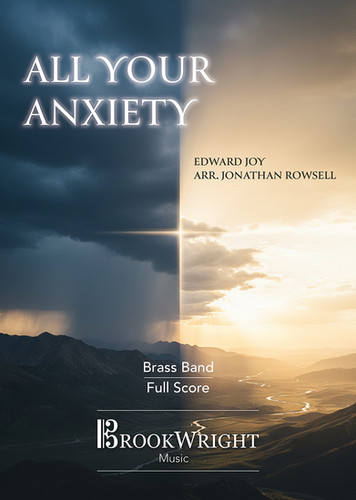
All Your Anxiety (Brass Band) Edward Joy arr. Jonathan Rowsell
All Your Anxiety is a reflective and expressive work for brass band inspired by Edward Joy's sacred song of the same name. Drawing deeply from the hymn's text and message, the piece explores the tension between human unease and the promise of peace found in faith.The work opens with a distinctive eighth-note figure in the euphonium that immediately establishes an unsettled character. Wide intervallic leaps and atypical slur groupings evoke a sense of fragility and uncertainty, musically portraying the weight of sorrow and care described in the opening verse of the hymn. This motivic material becomes the foundation of the entire arrangement, reappearing in varied forms as counter-melody, accompaniment, and featured solo lines across the ensemble.As the piece unfolds, the music gradually broadens and warms, reflecting the invitation of the text to "come to the cross" and leave one's burdens behind. Moments of lyricism and calm contrast with the earlier unease, leading toward a more settled and hopeful conclusion that mirrors the refrain's assurance: "Never a burden He cannot bear, never a friend like Jesus."To view a video of the Canadian Staff Band playing the piece please visit https://www.youtube.com/watch?v=5Ms8ubug4yASheet music available from www.brassband.co.uk or https://satradecentral.orgDifficulty Level: 3rd Section +Length: 3.30 minutesInstrumentation:Soprano Cornet EbSolo Cornet Bb1st Cornet Bb2nd Cornet BbFlugel Horn BbSolo Horn Eb1st Horn Eb2nd Horn Eb1st Baritone Bb2nd Baritone Bb1st Trombone Bb2nd Trombone BbBass TromboneEuphonium BbBass EbBass BbTimpaniPercussion
In Stock: Estimated dispatch 1-3 working days
-
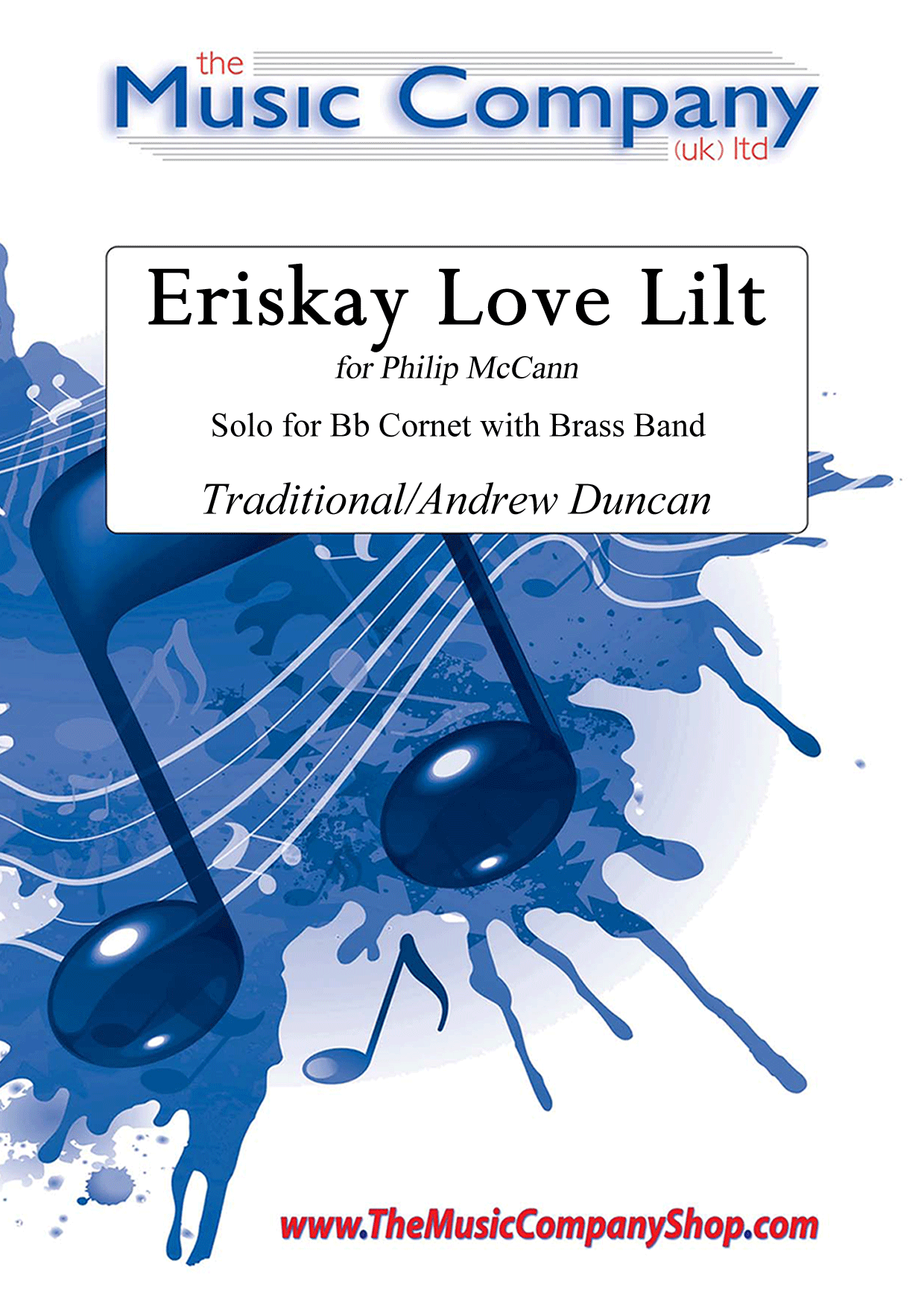 £30.00
Eriskay Love Lilt (with brass band) - Trad
Eriskay Love Lilt is a traditional Gaelic melody from the Western Isles of Scotland, sensitively arranged here by Andrew Duncan as a cornet solo with brass band accompaniment.This arrangement was written in 2001 for Phillip McCann and was first played by him with the Hepworth Band at the 2002 Leek Music Festival in Derbyshire, England. It has also since been recorded by Eleanor Ferguson with the Whitburn Band on Reflections of Freedom.Andrew Duncan comments: The Isle of Eriskay (Eirisgeigh) lies forty miles off the North West coast of Scotland in the North Atlantic. It is a small island, only two kilometres square and lies between the larger islands of South Uist and Barra. Eriskay is one of the islands which form the archipelago known as the Western Isles or Na h-Eileanan an Air. The Eriskay Love Lilt is a hauntingly beautiful tune which is typical of the greater number of traditional Gaelic melodies in that it is largely based on the Aeolian mode, the black notes on the piano.Also available with piano accompanimentor as a solo with brass ensemble (10-piece).
In Stock: Estimated dispatch 3-5 working days
-
 £41.42
Kolo (Brass Band) Derek Jenkins
'A kolo,' which translates to round or circle, is a fast and lively traditional folk dance that originated in the Balkans. The music accompanying a kolo dance is characteristically quite repetitive. The primary melodic material is introduced at the beginning, and it continues to appear and reappear throughout the duration of the dance. Several composers, including Antonin Dvorak, have adapted the kolo into concert pieces for orchestra. These are often fast and exhilarating showpieces that portray the virtuosity of the entire ensemble.This work entitled Kolo, by Derek Jenkins, continues this concert adaption tradition, and it follows the basic structure of the traditional dance with the exception of the middle section.The composer writes: 'I was fortunate to spend about two weeks in Zagreb and several days in Dubrovnik during the spring of 2009. Looking out upon the Adriatic Sea atop of Dubrovnik's historic city wall, I was struck by an overwhelming sense of tranquility, and that feeling has become the strongest association I have with my time in Croatia.'In order to depict this musically, I forewent the continuation of the fast and lively character of the middle section of my Kolo and instead replaced it with music that is peaceful and reflective. The melody used in this slow section comes from a folk song, "Oj, mladano mlado mom(ce)," in Bela Bartok and Albert B. Lord's folksong collection Serbo-Croatian Folk Songs. This middle section was my chance to return, if only in my mind, to the Adriatic coast.'The original concert band version was commissioned by Lee Hartman and the Mid America Freedom Band.Sheet music available from:UK - www.brassband.co.ukUSA - www.solidbrassmusic.comDifficulty Level: 3rd Section +Instrumentation:Soprano Cornet EbSolo Cornet BbRepiano Cornet Bb2nd Cornet Bb3rd Cornet BbFlugel Horn BbSolo Horn Eb1st Horn Eb2nd Horn Eb1st Baritone Bb2nd Baritone Bb1st Trombone Bb2nd Trombone BbBass TromboneEuphonium BbBass EbBass BbTimpaniGlockenspielPercussion 1-2
In Stock: Estimated dispatch 1-3 working days
 Watch video