
Results
-
 £34.95
Molinnis Park - Paul Saggers
Contest March Written for the 2026 West of England Bandsmen's Festival.https://soundcloud.com/paulsaggers/molinnis-park
-
 £35.00
A Suffolk Prelude. Andrew Duncan
Recommended - Championship to 2nd Section Written for the Ipswich & Norwich Co-Op Band, A Suffolk Prelude is based around five traditional folk tunes from Suffolk in England. Nutting Time, Blackberry Fold, Cupid's Garden, A Seaman's Life and The Bold Richard. A Suffolk prelude is ideal as an opening item in a concert. Includes score & Parts
-
£35.00
Song (from Milestone) - Peter Meechan
Song (from Milestone) is the middle movement of a concerto for cornet, titled Milestone. Commissioned by Mark Wilkinson, with funds provided by the Arts Council England, this song allows the soloist to demonstrate their lyrical skills.
Estimated dispatch 12-14 working days
-
 £30.00
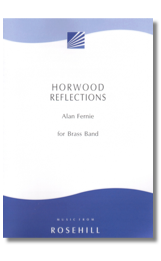
Horwood Reflections (Score only) - Alan Fernie
Horwood Reflections is a Scotsman's impression of England's 'green and pleasant land', and was written as both an affectionate tribute, and an acknowledgement of their influence, to the great English 'Pastoral' school of composers including Bridge, Holst, and Vaughan Williams. Perfect for concerts and own-choice contest situations.
Estimated dispatch 7-9 working days
-
 £40.00
Horwood Reflections (Parts only) - Alan Fernie
Horwood Reflections is a Scotsman's impression of England's 'green and pleasant land', and was written as both an affectionate tribute, and an acknowledgement of their influence, to the great English 'Pastoral' school of composers including Bridge, Holst, and Vaughan Williams. Perfect for concerts and own-choice contest situations.
Estimated dispatch 7-9 working days
-
 £49.95
Bestowal of a Century - Christopher Bond
Bestowal of a Century (2014) was commissioned by Lowenna Taylor, and funded through her Harry Mortimer Trust award which she was presented with at the 2013 British Open Championship following the completion of her studies at the Royal Welsh College of Music in Cardiff. The 15-minute work received its world premiere at the Cornwall Youth Brass Band Christmas concert in 2014 with solosit, Lowenna, working alongside the band under the baton of Les Neish. The 'Bestowal' refers to the presentation of the Royal Trophy by the then Prince of Wales to the famous West of England Bandsman's Festival in Bugle in 1913. Over the years it has been won by some of the greatest names in brass banding, including Black Dyke and Munn & Feltons - although more recently it has become a wonderful open festival that includes sections for local bands as well as visitors from all over the banding globe. 2014 marked the one-hundredth anniversary of the presentation of the trophy, which is the only brass band trophy to have the official seal of royal patronage. The work, in three distinct sections, opens in a mysterious way, building progressively with interjections from the horn. The composer notes its as though one can imagine different part of the trophy being put together, piece by piece, until the trophy is complete and a climax is reached. Following this, a playful theme is presented which is developed throughout the first section and interacting between soloist and band. The second movement, in complete contrast, is a lyrical melody; heart-wrenching throughout, and sits well both as part of the concerto and also as a stand-alone solo item. The third movement is light-hearted and virtuosic, demonstrating the technical capabilities of the instrument with fast and virtuosic playing, and a cadenza towards the end of the work.
Estimated dispatch 10-14 working days
-
 £34.95
Real Northern Powerhouse, The - Jonathan Bates
DURATION: 4'00". DIFFICULTY: Championship. Commissioned by the NASUWT Riverside Band for their 2019 appearance at the Brass in Concert Championships, held at The Sage in Gateshead, 'The Real Northern Powerhouse' is a musical representation of the huge impact various forms of industrial life had on the history, and indeed future of the North East of England. Defined into 3 clear sections - By Sea, By Land, and By Rail, the music paints a picture of the various scenes in the dockyards, coalfields and rail stations as the industrial revolution boomed. .
In Stock: Estimated dispatch 1-3 working days
-
 £36.30
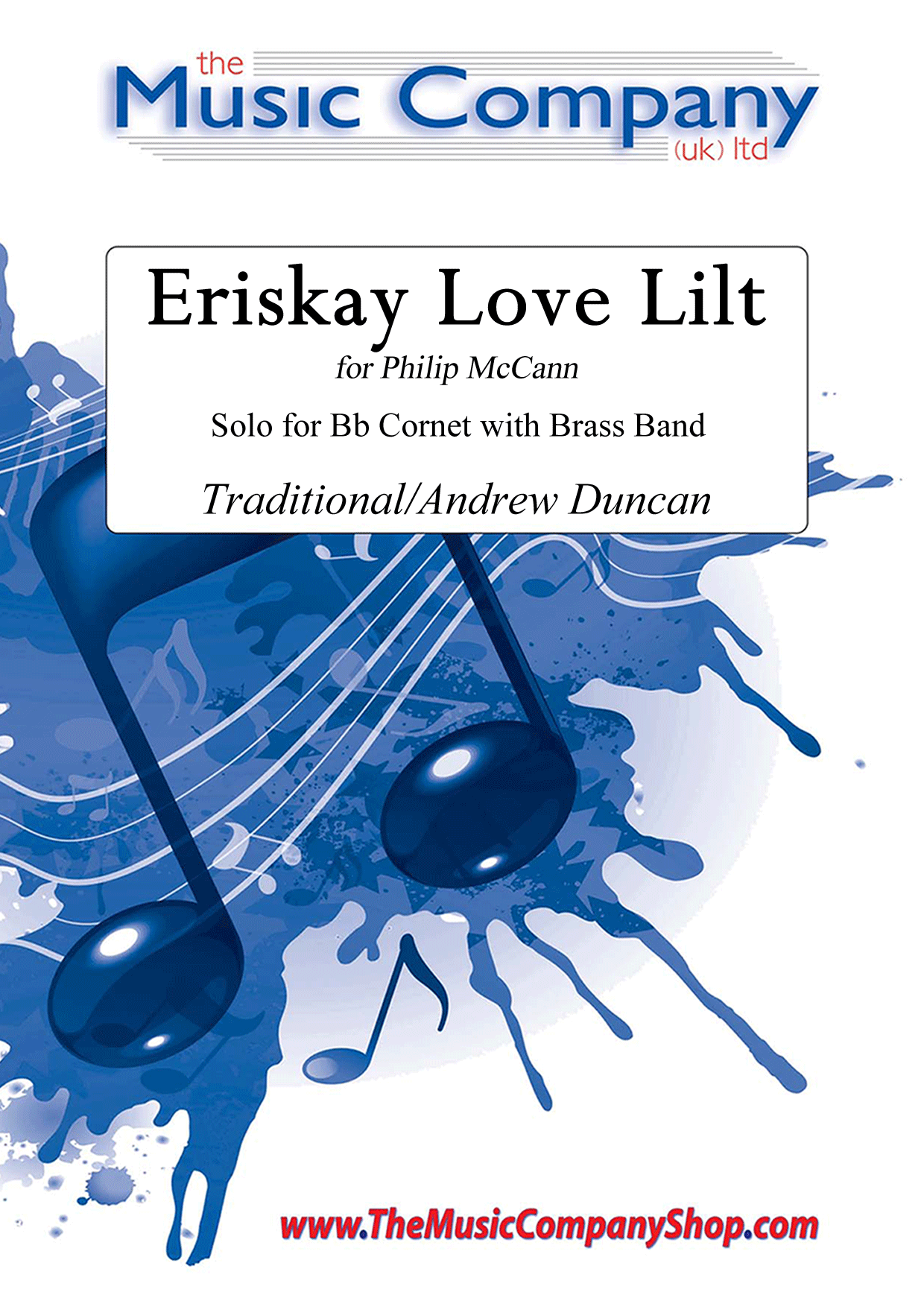
Eriskay Love Lilt (with brass band) - Trad
Eriskay Love Lilt is a traditional Gaelic melody from the Western Isles of Scotland, sensitively arranged here by Andrew Duncan as a cornet solo with brass band accompaniment.This arrangement was written in 2001 for Phillip McCann and was first played by him with the Hepworth Band at the 2002 Leek Music Festival in Derbyshire, England. It has also since been recorded by Eleanor Ferguson with the Whitburn Band on Reflections of Freedom.Andrew Duncan comments: The Isle of Eriskay (Eirisgeigh) lies forty miles off the North West coast of Scotland in the North Atlantic. It is a small island, only two kilometres square and lies between the larger islands of South Uist and Barra. Eriskay is one of the islands which form the archipelago known as the Western Isles or Na h-Eileanan an Air. The Eriskay Love Lilt is a hauntingly beautiful tune which is typical of the greater number of traditional Gaelic melodies in that it is largely based on the Aeolian mode, the black notes on the piano.Also available with piano accompanimentor as a solo with brass ensemble (10-piece).
In Stock: Estimated dispatch 3-5 working days
-
 £36.30
My Little Welsh Home - Traditional
A beautiful arrangement by Tim Paton of a Welsh song by W S Gwynne Williams. Created in memory of his mother, Tim has produced a wonderful version for brass band and has also included an optional vocal solo or unison choir line.Comments from the arranger:I have arranged [My Little Welsh Home] in memory of my mother. [She] was born, Doreen Davies, on 27th November 1918, in Haverfordwest, Pembrokeshire, a small town in South West Wales. She had a beautiful voice, and met my father, Bill Paton, during World War II, whilst she was singing in a troop concert at the County Theatre in her home town, and my father was the MC.Throughout her life, my mother and father entertained, and she was singing right up until the final months of her life. She spent many years in Weston-super-Mare, Somerset, a seaside town in South West England, and it was here that she passed away on 20th September 2004. During the last several months of her life, she often referred to the song My Little Welsh Home:Here are the words.I am dreaming of the mountains of my homeOf the mountains where in childhood I would roamI have dwelt 'neath southern skiesWhere the summer never diesBut my heart is in the mountains of my homeI can see the little homestead on the hillI can hear the magic music of the RhyllThere is nothing to compareWith the love that once was thereIn the lonely little homestead on the hillI can see the quiet churchyard down belowWhere the mountain breezes wander to and froAnd when God my soul will keepIt is there I want to sleepWith those dear old folks that loved me long agoLooking at the words, I can see why it meant so much to her. Haverfordwest is at the foot of the Preseli Mountains, and her home and church were at the top of a hill. My mothers' ashes were taken back to her own little Welsh home, and laid to rest in the grounds of the church where she had been Christened, Confirmed and Married.Look and Listen (Score-reading digital sound-sample):
In Stock: Estimated dispatch 3-5 working days
-
 £29.88
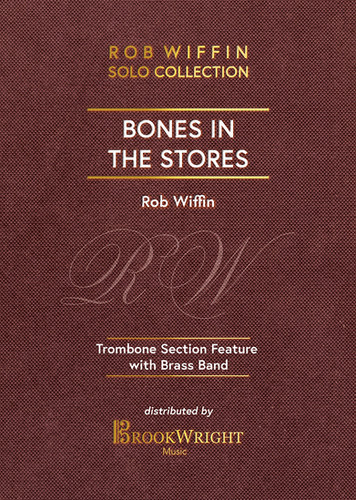
Bones in the Stores (Trombone Feature with Brass Band) Rob Wiffin
This arrangement for trombone section and band combines two well-known wartime songs, The Quartermaster's Store and Bless 'em All, giving the trombone section a thorough workout as well as a lot of fun. The Quartermaster's Store is a traditional song from England; the origins of both tune and words are uncertain and may date back as far as the English Civil War. The origins of Bless 'Em All are also unclear - the words have been credited to Fred Godfrey in 1917, set to music composed by Robert Kewley, though earlier versions of the song may have existed among British military personnel in the 1880s in India. It was first recorded by George Formby Jr in 1940 and became a patriotic song. Audio demo: https://soundcloud.com/user-565396545/bones-in-the-stores-trombone Duration: Approx. 2.50 minutes Difficulty Level: Medium This PDF download includes the full score and parts. Sheet music available at www.brassband.co.uk (UK) or https://satradecentral.org (USA)
In Stock: Estimated dispatch 1-3 working days