
Results
-
 £59.99
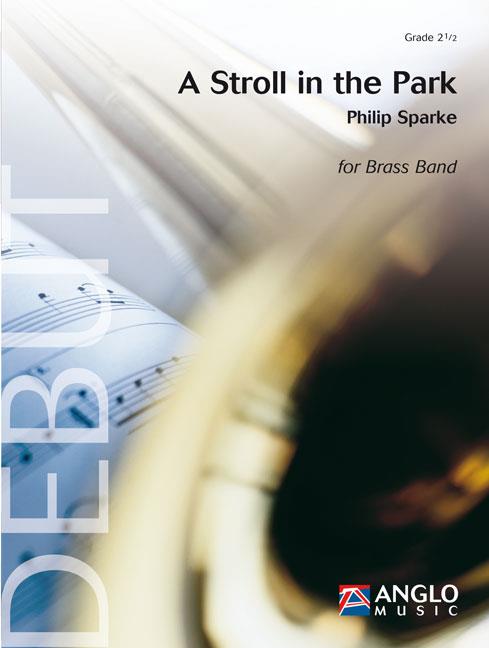
A Stroll in the Park (Brass Band - Score and Parts) - Sparke, Philip
A Stroll in the Park is a piece in the tradition of "walking" music (such as the Promenade from Mussorgsky's Pictures at an Exhibition or Gershwin's Walking the Dog from Shall we Dance). It strives to describe the joyful benefits of a relaxing walk in a city park on a summer Sunday afternoon and should be played in a relaxed, carefree and laidback manner.Duration: 4:15
Estimated dispatch 7-14 working days
-
 £59.99
Cornet Rock (Cornet Section Feature with Brass Band - Score and Parts) - Sparke, Philip
Cornet Rock takes a look back at the history of pop music in the 1950's and gives the young band a chance to rock and roll with the cornets taking the lead. Treat your cornets to this lively solo section feature.Duration: 2:15
Estimated dispatch 7-14 working days
-
 £134.99
Dances and Alleluias (Brass Band - Score and Parts) - Sparke, Philip
Dances and Alleluias was commissioned by the British Federation of Brass Bands for the inaugural English National Brass Band Championships, held in the Lyric Theatre at The Lowry, Salford Quays, on July 1st 2006. In this fantastic work the composer mixes wonderful slow music, vocal in nature and ecstatic in mood, along with faster dances to create a challenging piece, which will bring out the best in any band.Duration: 14:30
Estimated dispatch 7-14 working days
-
£13.99
Dances and Alleluias (Brass Band - Study Score) - Sparke, Philip
Dances and Alleluias was commissioned by the British Federation of Brass Bands for the inaugural English National Brass Band Championships, held in the Lyric Theatre at The Lowry, Salford Quays, on July 1st 2006. In this fantastic work the composer mixes wonderful slow music, vocal in nature and ecstatic in mood, along with faster dances to create a challenging piece, which will bring out the best in any band.Duration: 14:30
Estimated dispatch 7-14 working days
-
 £106.99
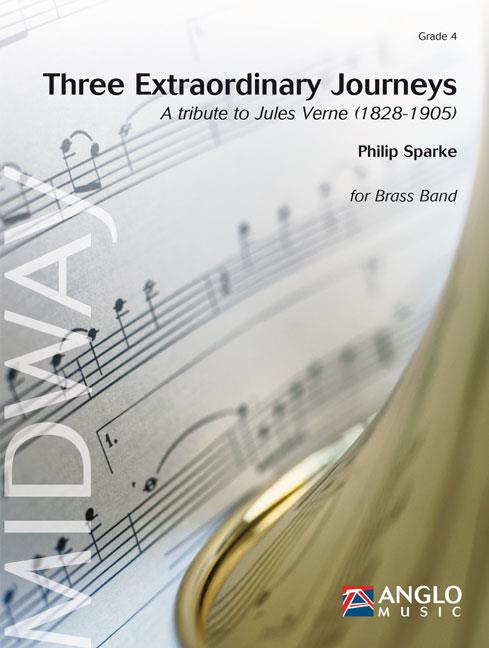
Three Extraordinary Journeys (Brass Band - Score and Parts) - Sparke, Philip
Three Extraordinary Journeys was commissioned to mark the centenary of the death of the famous author Jules Verne. Based on three novels from his Voyages Extraordinaires series of travel stories, the music aims to capture the excitement and adventure of these famous books. A fantastic major concert or 'own choice' contest piece.Duration: 13:15
Estimated dispatch 7-14 working days
-
 £79.99
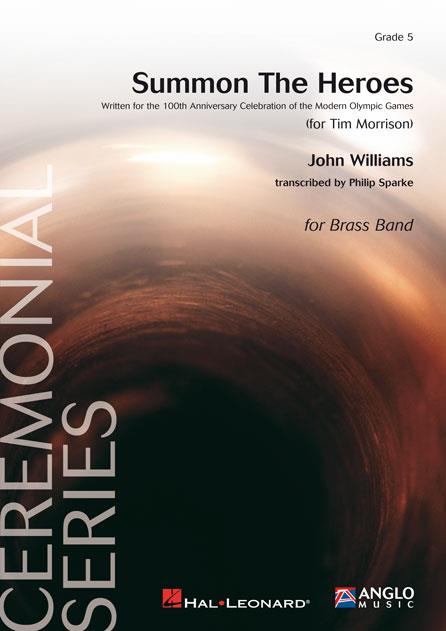
Summon the Heroes (Brass Band - Score and Parts) - Williams, John - Sparke, Philip
John Williams has written ceremonial music for many major events and ceremonies but of all these occasional pieces Summon the Heroes is the most elaborate and musically complex. It was composed for the Atlanta Olympic Games in 1996 and performed at the opening ceremony. As with all of John Williams's ceremonial compositions this work makes an ideal brass band work that will bring the house down as a concert opener.Duration: 6:20
Estimated dispatch 7-14 working days
-
 £89.95
Revelation (Brass Band - Score and Parts) - Wilby, Philip
Symphony for Double Brass on a theme of Purcell1995 marked the tercentenary of Purcell's death and Revelation was written as a tribute to his music and the ornate and confident spirit of his age.The five major sections are:PrologueVariations on a ground bass IFugueVariations on a ground bass IIEpilogue and ResurrectionDuration: 19.00
Estimated dispatch 7-14 working days
-
 £44.95
Revelation (Brass Band - Score only) - Wilby, Philip
Symphony for Double Brass on a theme of Purcell1995 marked the tercentenary of Purcell's death and Revelation was written as a tribute to his music and the ornate and confident spirit of his age.The five major sections are:PrologueVariations on a ground bass IFugueVariations on a ground bass IIEpilogue and ResurrectionDuration: 19.00
Estimated dispatch 7-14 working days
-
 £74.95
Endeavour (Brass Band - Score and Parts) - Sparke, Philip
Commissioned by the Festival of Bands, Brisbane 1988, for the Bicentennial World Brass Band Championship held there on 29th July.Endeavour takes its title from the name of the ship in which Captain James Cook circumnavigated the world and attempts to depict in music some aspects of the history of the great continent which he discovered.The Unknown Continent tells the story of the many fruitless voyages undertaken to find the mysterious Terra Australis and conjures up something of the awe and excitement its discovery engendered. Early struggles and hardships of the first settlers are described in The New Challenge but the true story of Australia over the last 200 years is one of success and Celebration ends the piece in triumph.Duration: 11.30 mins
Estimated dispatch 7-14 working days
-
£37.95
Endeavour (Brass Band - Score only) - Sparke, Philip
Commissioned by the Festival of Bands, Brisbane 1988, for the Bicentennial World Brass Band Championship held there on 29th July.Endeavour takes its title from the name of the ship in which Captain James Cook circumnavigated the world and attempts to depict in music some aspects of the history of the great continent which he discovered.The Unknown Continent tells the story of the many fruitless voyages undertaken to find the mysterious Terra Australis and conjures up something of the awe and excitement its discovery engendered. Early struggles and hardships of the first settlers are described in The New Challenge but the true story of Australia over the last 200 years is one of success and Celebration ends the piece in triumph.Duration: 11.30 mins
Estimated dispatch 7-14 working days
 View Music