
Results
-
 £102.99
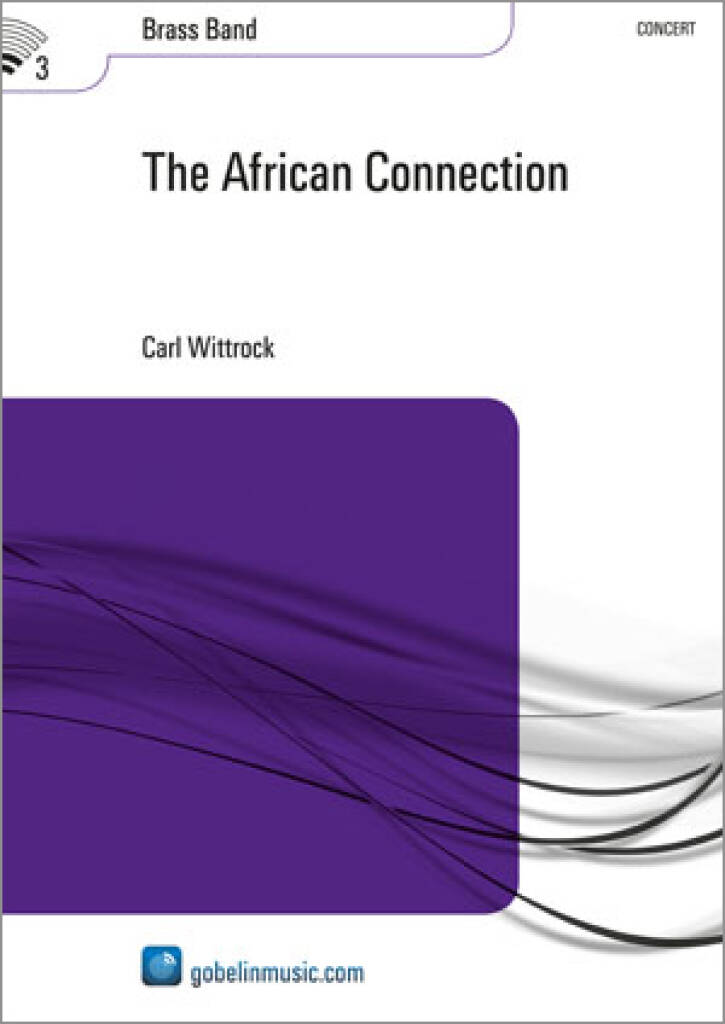
The African Connection - Carl Wittrock
Carl Wittrock's wide interest in global folk-music resulted in this concert-piece based on original African rhythms. Obviously, the percussion section has a conspicious role to play, but the band too may indulge itself in moments of thoroughly delightful excitement. The introduction depicts the awakening of nature, and develops into a dance. The (main) motif of this dance is from a dance entitled Apollo and comes from Gambia. Its accompaniment consists of an ostinato pattern by balaphon-master Maudo Susa. The quiet middle movement is based on the rhythm of the 'gigbo' : a traditional dance from Ghana. In the final movement -which also bears a slight resemblanceto a theme from 'The Lion King'- the so-called 'Kono' rhythm is used. The work is played most advantageously using djembes. Challenge and please your percussion section with 'The African Connection'.
Estimated dispatch 5-14 working days
-
 £60.99
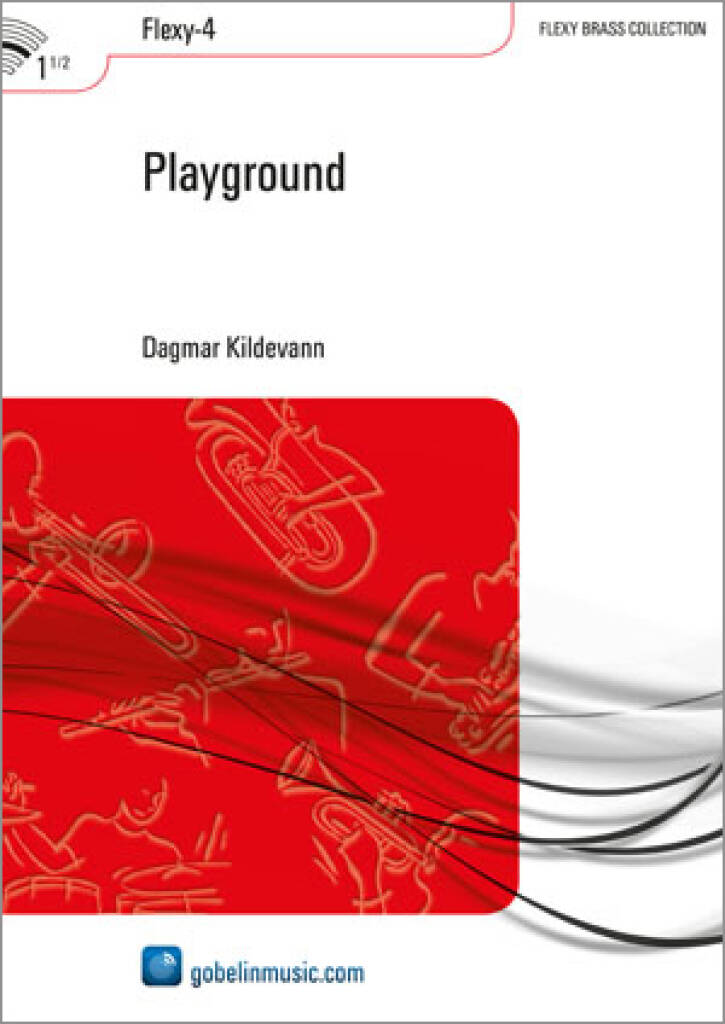
Playground - Dagmar Kildevann
In this composition the composer gives an impression of the village square where all the young people gather. In four movements he takes us along to his home town: 1. Folkdance - Moments of happiness, freedom from worries and optimism 2. Sunday Afternoon - a musical picture of a quiet day 3. Hide 'n Seek - time for sports and games 4. Saturday Night Fever - the sounds of a Saturday can also be heard on the square
Estimated dispatch 5-14 working days
-
 £84.99
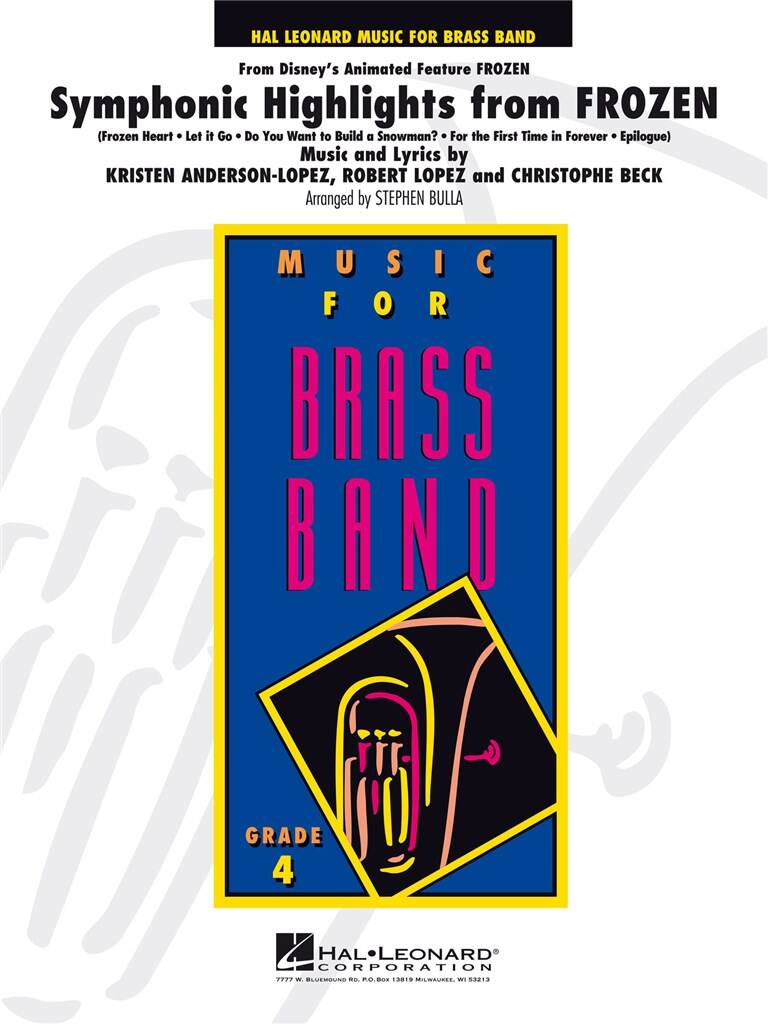
Symphonic Highlights from Frozen - Stephen Bulla
Using excerpts from the soundtrack in addition to the familiar hit songs, Stephen Bulla has created a dramatic and exciting medley showcasing the best musical moments from this hit movie. Includes: Frozen Heart, Do You Want to Build a Snowman?, For the First Time in Forever, Epilogue, and of course Let It Go.
Estimated dispatch 5-14 working days
-
 £74.00
Lamentatio - Anton Weeren
Lamentatio is a quiet reflection on loss and what remains. The music moves within a world of memory, where fragile lines and warm sonorities alternate and reinforce one another. From an introspective opening, a musical arc unfolds in which free, soloistic moments contrast with sustained tutti passages. Time seems to stand still at moments, before gently moving forward again. In a grandioso section, the work reaches a hopeful turning point, where the sound opens up and the perspective shifts. Without overt drama, the music resolves into a sense of acceptance - a quiet form of consolation for all that will remain.
Estimated dispatch 10-14 working days
-
£70.00
Apophenia - Peter Meechan
aApophenia is the experience of seeing patterns or connections in random or meaningless data.aApophenia is a trumpet concerto in three movements written for American trumpet virtuoso Rex Richardson. Each of the three movements features a different instrument; Movement 1 is for the Bb trumpet, the second is for flugel horn and trumpet, and the third is for trumpet and piccolo trumpet.Each of the three movements of Apophenia relate to the phenomenon of viewing Dark Side of the Rainbow - a name used to refer to the act of listening to the 1973 Pink Floyd album The Dark Side of the Moon whilst watching the 1939 film The Wizard of Oz, where moments where the film and the album appear to correspond with each other.Movement 1 is a fast a furious movement. Solo and ensemble interact at high tempo, swapping and creating new ideas, leading each other in new directions. Aside from the trumpet soloist, the kit player also acts as a quasi soloist.The second movement takes its musical inspiration from the Pink Floyd song Us and Them. It is during this segment of the film that some of the most amazing moments of connection happen.The final movement is a dance - and a tour de force for the soloist who begins on the Bb trumpet, before switching to the piccolo trumpet (or Eb trumpet) for the fast and furious finale. Many of the coincidences from Dark Side of the Rainbow relate to dancing, however, as long as a piece of music is the same tempo as the original, and the time signature is a regular one, this could be the case across most films. So the composer chose to write a dance that wouldn't synchronise to too many existing dance scenes!The soloist is free to improvise their own cadenza.Apophenia is dedicated to Rex Richardson.
Estimated dispatch 12-14 working days
-
 £30.00
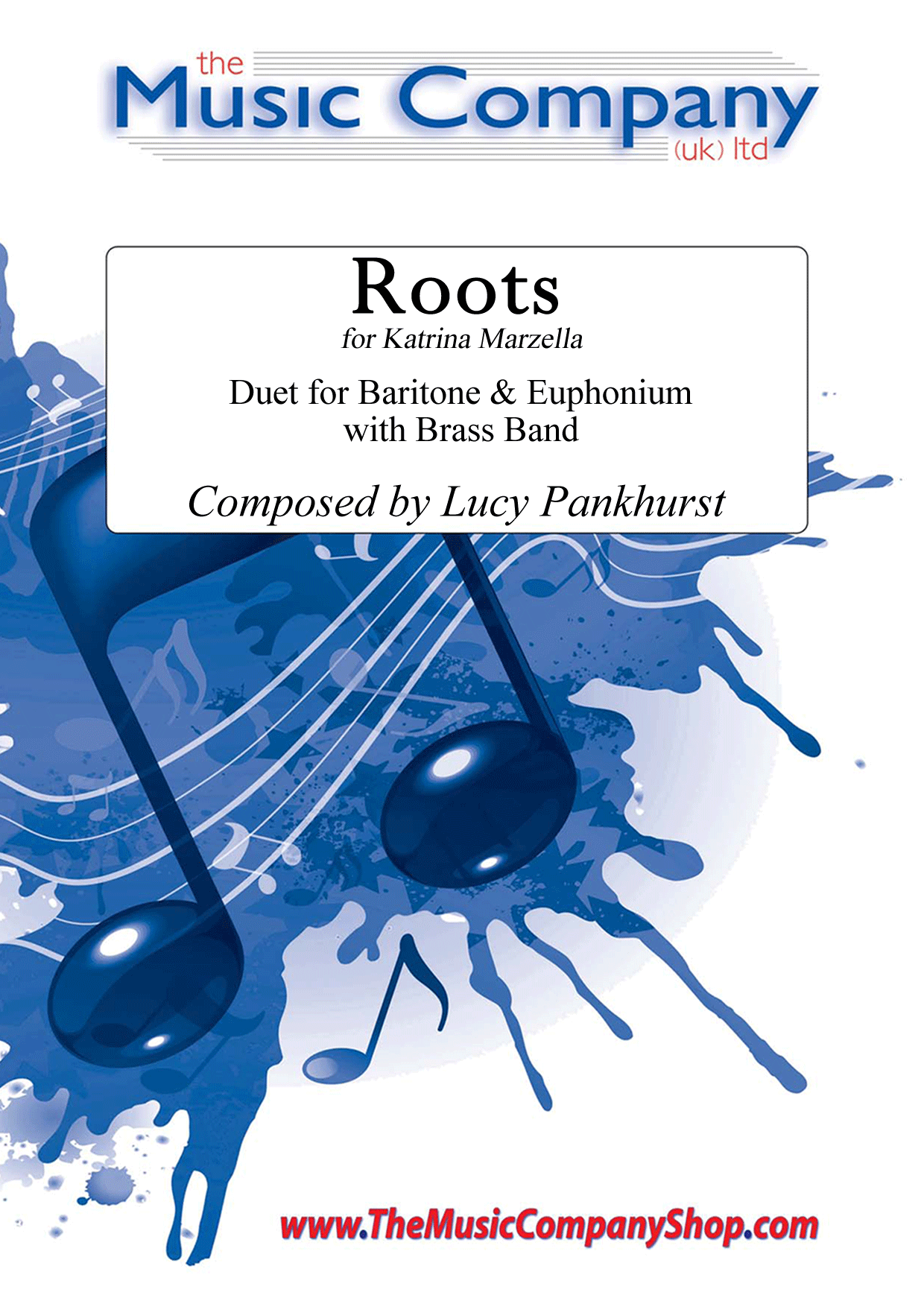
Roots - Lucy Pankhurst
Commissioned by Katrina Marzella in 2008, this modern 'duet' for Baritone and Euphonium soloists with brass band accompaniment has been inspired by 'nature and environment' as its primary muse. The music takes the listener through 7 stages of environmental atmosphere, in its combination of sounds and effects. It is a very uplifting work and with the back-story in mind (see programme notes below), it makes for an incredibly effective concert feature.Programme notes from the composer, Lucy Pankhurst:There are 7 main sections in the piece :RainGerminationGrowthTransionSunshineRainstormRestThe work begins with Rain, symbolised by the rainstick and 'rain sounds' in the brass , which allows the themes to germinate. The 'roots' of the music themselves, are firmly established in the tonic (root Eb) and 5ths in the low brass, from which the solo lines eventually grow, using triads and 5ths.During Growth, the solo baritone and euphonium begin with separate melodies which begin to twist around each other (much like tree roots), interlocking to produce harmonies and counterpoint, complimenting one another and firmly keeping the music in Eb major. Muted cornets and trombones continue to play overlapping semiquavers, reflecting the raindrops as they fall from the trees and leaves.A brief interlude, featuring brass sextet drives the music back to its Germination stage - here, named Transion, as it grows once more, evolving into something new. The Sunshine section is a dance. Moving rapidly through different keys, the warm sunlight catches on the dewy foliage, creating dazzling moments of clarity and beauty.However, the change in conditions also lead to brief moments of uncertainty, as the various creatures tentatively reappear from their shelter to bask as the earth is warmed. Birdsong can be heard in the solo lines as the entire band join in the celebrations.The jollity does not last long, however, as a Rainstorm, more violent than the last , ensues - stopping the dance in its tracks. The tam-tam and bass drum signify thunder, crashing into the music abruptly. However, the music still survives and re-emerges from the storm, delicately but securely establishing itself into a new key (C major), before softly concluding with the two soloists in rhythmic unison as the rain subsides and the world is at Rest.
In Stock: Estimated dispatch 3-5 working days
-
 £38.95
Unity Series Band Journal - Numbers 558 - 561, October 2026
558: Jesus is the winner! (Samuel Ekong)Jesus is the Winner is the publishing debut of Samuel Ekong, Band Secretary at Abuja Central Corps in the Nigeria Territory. Based on a popular song associated with renowned worship leader Ron Kenoly, this arrangement centres on the infectious chorus, "Jesus is the winner man". While the original song was performed in a reggae style, Ekong has reimagined it with a lively swing feel, creating a joyful and accessible work for brass band. Full of rhythmic energy and uplifting spirit, the arrangement encourages a light, buoyant approach throughout and offers an engaging concert item that is sure to be enjoyed by performers and audiences alike.559: Festival Arrangement - Hearts Ablaze (Marcus Venables)Written at the request of Jonathan Evans for Sale Salvation Army Band, Hearts Ablaze is based on the popular contemporary worship song Build Your Kingdom Here that has become especially significant within the corps. The music captures the passion, prayer and enthusiasm of its message, combining bold opening statements with lyrical moments and energetic rhythmic drive. After introducing the familiar melody, the work develops into a vibrant celebration built around the song's call: "Set your Church on fire... Build your kingdom here, we pray." Uplifting and engaging throughout, the piece offers both performers and audiences a joyful and inspiring musical experience.560: Cornet Solo - Soul Saver (Ian Robinson)Based on the well-known chorus Thank You, Lord, for Saving My Soul by Seth and Bessie Sykes, this solo is a heartfelt expression of gratitude for God's gift of salvation. The familiar melody is presented in an expressive setting that allows the soloist to communicate the simple yet powerful message of the song. Contrasting lyrical passages, rich harmonic colours and moments of gentle brilliance combine to create an engaging musical journey. Throughout, the focus remains on the chorus's timeless theme of thanksgiving, making this a moving and devotional addition to the brass band solo repertoire.561: Chorus Selection - God's Presence (Howard Davies)God's Presence by Major Howard Davies combines three well-known songs that explore the believer's walk with God. The selection includes Philip P. Bliss's Let the lower lights be burning, Charles H. Fillmore's O I love him, and the familiar Salvation Army chorus God is with us all the time (S.A.S.B. 1028). Each melody expresses a different aspect of Christian faith, from witness and devotion to the assurance of God's presence. Suitable as both a concert item and a congregational feature, this accessible arrangement offers warmth, variety and a clear spiritual message for performers and audiences alike.
Estimated dispatch 7-14 working days
-
 £95.00
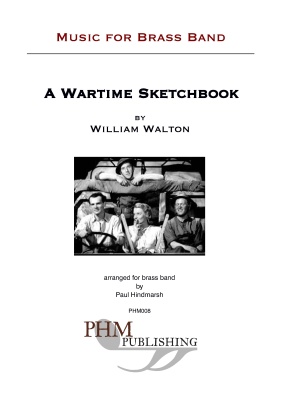
A Wartime Sketchbook (Brass Band - Score and Parts)
Early in 1941 William Walton, 39, received his call-up papers. He was by then one of the most eminent of British composers and was exempted from military service on condition that he provided music for films deemed to be of 'national importance'. Scoring Lawrence Olivier's Shakespeare epic Henry V in 1943 was the most substantial of these wartime projects. His role in patriotic films from 1941 and 42 like The Foreman went to France, Next of Kin, Went the day Well and The First of the Few was to provide appropriate title music and some underscoring at key moments. Walton extracted the most substantial portions of the latter as the popular Spitfire Prelude and Fugue for orchestra. The remaining music remained unpublished until 1990, when Christopher Palmer assembled the highlights into A Wartime Sketchbook. I was intrigued to hear these examples of Walton's wartime music and having discovered that they would fit naturally and idiomatically onto the brass band, I arranged six of the numbers into a suite for Besses o' th' Barn Band, which I was conducting at the time.In 1995 the brass band suite was recorded by the famous Black Dyke Mills Band as part of an all Walton album which I produced for the ASV label (ASV CD WHL 2093). This award- winning CD also included Walton's First Shoot, in the edition by Elgar Howarth, my transcription of movements from Music for Children and two substantial brass versions by Edward Watson of the suite from Henry V (with narrator) and the March and Siegfried Music from The Battle of Britain music.Prologue: This is the stirring title music from Went the day Well, a screen play by Graham Greene about a German airborne invasion of an English village. The main theme leads toBicycle Chase: Characteristic musical high-jinks for J.B.Priestley's The Foreman went to France.Refugees: From the same film, this is a poignant accompaniment to the long march of refugees. As Ernest Irving, the film's musical director, put it, "this really makes your feet sore and your knees sag."Young Siegfrieds: This lively movement comes from the music that Walton composed for The Battle of Britain in 1968, with the assistance of Malcolm Arnold, but which the film's producer rejected. It portrays first the Berliners, cheerfully ignoring the black-out and then, in the trio, the Young Siegfrieds of the Luftwaffe, courtesy of a parody of Siegfried's horn call from Wagner's opera.Romance: A soldier and a Dutch refugee snatch a few tender moments together in Next of Kin.Epilogue: At the end of The Foreman went to France, the French look forward with hope and optimism to eventual liberation.- Paul HindmarshDuration: 14.00
Estimated dispatch 7-14 working days
-
£40.00
A Wartime Sketchbook (Brass Band - Score only)
Early in 1941 William Walton, 39, received his call-up papers. He was by then one of the most eminent of British composers and was exempted from military service on condition that he provided music for films deemed to be of 'national importance'. Scoring Lawrence Olivier's Shakespeare epic Henry V in 1943 was the most substantial of these wartime projects. His role in patriotic films from 1941 and 42 like The Foreman went to France, Next of Kin, Went the day Well and The First of the Few was to provide appropriate title music and some underscoring at key moments. Walton extracted the most substantial portions of the latter as the popular Spitfire Prelude and Fugue for orchestra. The remaining music remained unpublished until 1990, when Christopher Palmer assembled the highlights into A Wartime Sketchbook. I was intrigued to hear these examples of Walton's wartime music and having discovered that they would fit naturally and idiomatically onto the brass band, I arranged six of the numbers into a suite for Besses o' th' Barn Band, which I was conducting at the time.In 1995 the brass band suite was recorded by the famous Black Dyke Mills Band as part of an all Walton album which I produced for the ASV label (ASV CD WHL 2093). This award- winning CD also included Walton's First Shoot, in the edition by Elgar Howarth, my transcription of movements from Music for Children and two substantial brass versions by Edward Watson of the suite from Henry V (with narrator) and the March and Siegfried Music from The Battle of Britain music.Prologue: This is the stirring title music from Went the day Well, a screen play by Graham Greene about a German airborne invasion of an English village. The main theme leads toBicycle Chase: Characteristic musical high-jinks for J.B.Priestley's The Foreman went to France.Refugees: From the same film, this is a poignant accompaniment to the long march of refugees. As Ernest Irving, the film's musical director, put it, "this really makes your feet sore and your knees sag."Young Siegfrieds: This lively movement comes from the music that Walton composed for The Battle of Britain in 1968, with the assistance of Malcolm Arnold, but which the film's producer rejected. It portrays first the Berliners, cheerfully ignoring the black-out and then, in the trio, the Young Siegfrieds of the Luftwaffe, courtesy of a parody of Siegfried's horn call from Wagner's opera.Romance: A soldier and a Dutch refugee snatch a few tender moments together in Next of Kin.Epilogue: At the end of The Foreman went to France, the French look forward with hope and optimism to eventual liberation.- Paul HindmarshDuration: 14.00
Estimated dispatch 7-14 working days
-
 £33.62
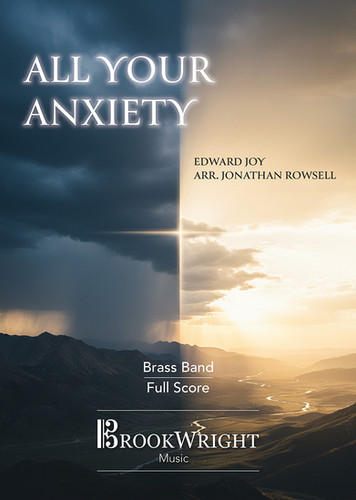
All Your Anxiety (Brass Band) Edward Joy arr. Jonathan Rowsell
All Your Anxiety is a reflective and expressive work for brass band inspired by Edward Joy's sacred song of the same name. Drawing deeply from the hymn's text and message, the piece explores the tension between human unease and the promise of peace found in faith. The work opens with a distinctive eighth-note figure in the euphonium that immediately establishes an unsettled character. Wide intervallic leaps and atypical slur groupings evoke a sense of fragility and uncertainty, musically portraying the weight of sorrow and care described in the opening verse of the hymn. This motivic material becomes the foundation of the entire arrangement, reappearing in varied forms as counter-melody, accompaniment, and featured solo lines across the ensemble. As the piece unfolds, the music gradually broadens and warms, reflecting the invitation of the text to "come to the cross" and leave one's burdens behind. Moments of lyricism and calm contrast with the earlier unease, leading toward a more settled and hopeful conclusion that mirrors the refrain's assurance: "Never a burden He cannot bear, never a friend like Jesus." To view a video of the Canadian Staff Band playing the piece please visit https://www.youtube.com/watch?v=5Ms8ubug4yA Sheet music available from www.brassband.co.uk or https://satradecentral.org Difficulty Level: 3rd Section + Length: 3.30 minutes Instrumentation: Soprano Cornet Eb Solo Cornet Bb 1st Cornet Bb 2nd Cornet Bb Flugel Horn Bb Solo Horn Eb 1st Horn Eb 2nd Horn Eb 1st Baritone Bb 2nd Baritone Bb 1st Trombone Bb 2nd Trombone Bb Bass Trombone Euphonium Bb Bass Eb Bass Bb Timpani Percussion
In Stock: Estimated dispatch 1-3 working days
 View Music