
Results
-
 £43.99
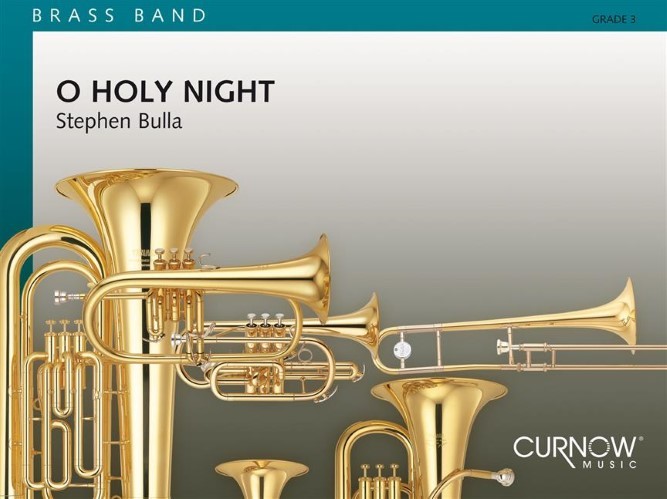
O Holy Night (Soprano Cornet Solo with Brass Band - Score and Parts) - Adam, Adolphe - Bulla, Stephen
This terrific melody by the 19th century French composer Adolph Adam is one of the world's most famous Christmas solo melodies. It is unique due to the fact that it was the only Christmas song recorded by the legendary opera singer Enrico Caruso. This arrangement for soprano cornet and brass band will make a fantastic touching addition to any Christmas carol.Duration: 5.30
Estimated dispatch 7-14 working days
-
 £60.99
Concertpiece for Cornet (Cornet Solo with Brass Band - Score and Parts) - Curnow, James
Concertpiece for Cornet is a valuable and tremendous addition to the solo repertoire of the instrument. Full of fireworks and technicalities the soloist is also put to the test with an expressive slower melody along with a varied and interesting accompaniment as you would expect from James Curnow. Showcase your cornet soloist with this tremendous concert piece.Duration: 6:30
Estimated dispatch 7-14 working days
-
 £12.50
CONCERTO FOR EUPHONIUM (Euphonium Solo part only) - Scott, Andy
Solo part only, Brass Band parts and score available separately. The 'Concerto for Euphonium' with Brass Band is scored in three movements: The Lure of the Red Jacket; Far Beyond the Stars; The Dragon's Den. The Lure of the Red Jacket responds musically to these ideas and attitudes; a non-relenting riff that signifies the hard slog of practice, scorings which find members of the band supporting the soloist, all the time the soloist putting together new riffs and ideas. Stylistically all this happens within a frame of minimalism and funk. Far Beyond the Stars is a simple folk-like melody that is stated by the soloist, which develops with different harmonic backdrops being introduced. The poignant words form the focus of the emotional intensity of this piece. The Dragon's Den is a fierce and fiery fusion of energy, virtuosic playing and intricate ensemble work, the finale of the Concerto for Euphonium draws upon the composers experience of big band and small group performance and writing. Dur: 15:00
Estimated dispatch 7-14 working days
-
 £24.95
FUJIKO (Cornet Solo with Brass Band Parts) - Scott, Andy - Fieldhouse, Jim
Brass Band parts only. Fujiko is cinematic soundscape that reflects its Japanese roots. A feature for solo cornet that commences with a simple folk-like melody, and builds to a powerful and emotive climax, before an atmospheric and calm ending. Dur: 5:00
Estimated dispatch 7-14 working days
-
£15.00
FUJIKO (Cornet Solo with Brass Band Score) - Scott, Andy - Fieldhouse, Jim
Brass Band score only. Fujiko is cinematic soundscape that reflects its Japanese roots. A feature for solo cornet that commences with a simple folk-like melody, and builds to a powerful and emotive climax, before an atmospheric and calm ending. Dur: 5:00
Estimated dispatch 7-14 working days
-
 £89.95
TUBA CONCERTO (Gregson) (Tuba Solo with Brass Band - Score and Parts) - Gregson, Edward
This work was commissioned by the Besses o' th' Barn Band with funds provided by the Arts Council of Great Britain. It was written for, and is dedicated to, John Fletcher, who gave the first performance in Middleton Civic Hall, near Manchester, on 24 April, 1976, with Besses o' th' Barn Band conducted by the composer. Another interesting feature about the premire was that it was recorded by BBC Television for an Omnibus programme with Andr Previn as presenter. The concerto exists in four versions: with brass band (1976), orchestra (1978), wind band (1984) and piano reduction.The concerto is in three movements, following the usual, quick-slow-quick pattern: Allegro deciso,Lento e mesto, Allegro giocoso. The first movement has a sonata form shell with two contrasting themes, the first one being rhythmic in character, the second lyrical. There is a reference made in passing to the Vaughan Williams Tuba Concerto, but this merges into the other material in the development section.The second movement begins with a chorale, but after the entry of the tuba it leads to a cantabile theme, softly unfolded by the soloist. The opening chorale passage returns, this time briefly on muted brass, and leads to a middle section which is more chromatic in style and soon builds to a powerful climax, where the opening cantabile theme triumphantly returns. The music subsides, returning to the opening chorale and ending peacefully.The finale is light and breezy in style, and is cast in rondo form. After a brief introduction the tuba announces the main rondo theme, which is dance-like and a little jaunty. There are two episodes: the first a broad sweeping tune, the second a slowish waltz and a little jazz-like. After a virtuoso cadenza reference is made to the very opening of the concerto before the work ends with a triumphal flourish.The Tuba Concerto has established itself as one of the main works in the solo tuba repertoire. It has been performed and broadcast in over 40 countries all over the world. There are currently six commercial recordings of the concerto in its various versions.resolution in C major, pointed by a simple but expansive melody towards which the piece has been heading, and ending in a blaze of joyful colour.Duration: 18 mins
Estimated dispatch 7-14 working days
-
£44.95
TUBA CONCERTO (Gregson) (Tuba Solo with Brass Band - Score only) - Gregson, Edward
Brass Band Score onlyThis work was commissioned by the Besses o' th' Barn Band with funds provided by the Arts Council of Great Britain. It was written for, and is dedicated to, John Fletcher, who gave the first performance in Middleton Civic Hall, near Manchester, on 24 April, 1976, with Besses o' th' Barn Band conducted by the composer. Another interesting feature about the premire was that it was recorded by BBC Television for an Omnibus programme with Andr Previn as presenter. The concerto exists in three versions: with brass band (1976), orchestra (1978) and wind band (1984).The concerto is in three movements, following the usual, quick-slow-quick pattern: Allegro deciso,Lento e mesto, Allegro giocoso. The first movement has a sonata form shell with two contrasting themes, the first one being rhythmic in character, the second lyrical. There is a reference made in passing to the Vaughan Williams Tuba Concerto, but this merges into the other material in the development section.The second movement begins with a chorale, but after the entry of the tuba it leads to a cantabile theme, softly unfolded by the soloist. The opening chorale passage returns, this time briefly on muted brass, and leads to a middle section which is more chromatic in style and soon builds to a powerful climax, where the opening cantabile theme triumphantly returns. The music subsides, returning to the opening chorale and ending peacefully.The finale is light and breezy in style, and is cast in rondo form. After a brief introduction the tuba announces the main rondo theme, which is dance-like and a little jaunty. There are two episodes: the first a broad sweeping tune, the second a slowish waltz and a little jazz-like. After a virtuoso cadenza reference is made to the very opening of the concerto before the work ends with a triumphal flourish.The Tuba Concerto has established itself as one of the main works in the solo tuba repertoire. It has been performed and broadcast in over 40 countries all over the world. There are currently six commercial recordings of the concerto in its various versions.resolution in C major, pointed by a simple but expansive melody towards which the piece has been heading, and ending in a blaze of joyful colour.Duration: 18 mins
Estimated dispatch 7-14 working days
-
 £95.00
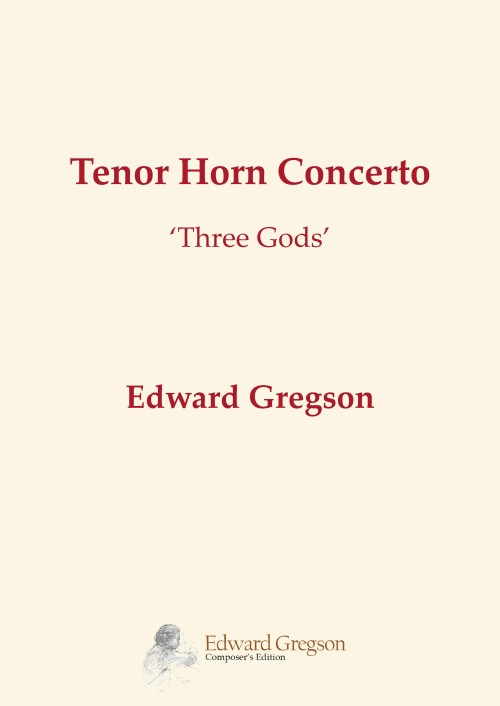
Tenor Horn Concerto 'Three Gods' (Tenor Horn Solo with Brass Band - Score and Parts) - Gregson, Edward
Edward Gregson's Tenor Horn Concerto (Three Gods) was commissioned by the Belgian tenor horn soloist Tim de Maeseneer for a recording of commissioned works he made in 2024 with his own band, Brass Band Willebroek.The subtitle of 'Three Gods' refers to three mythological Greek Gods: Zeus, Hermes and Apollo. The idea for this came from Gregson's Viola Concerto, which he composed in 2023 and which was similarly subtitled 'Three Goddesses'. Indeed, the first movement of the horn concerto shares some common material with the viola concerto, although the other movements are newly composed.The concerto exploits the noble character of the horn, but the writing is also virtuosic in character as well as lyrical and melodic, demanding an extended playing range of nearly four octaves with a variety of colouration in its sonorities. The unifying motif of the whole concerto is the interval of a rising 5th, heard at the outset. The opening also has some other surprises (both seen and heard).The musical ideas, cast in three separate movements, take their starting point from the characters of the Three Gods in the title:Zeus, ruled as King of the Gods on Mount Olympus, and was the God of Thunder and Lightning and of War. His music is often threatening and violent, but also has a more tender side as portrayed in the lyrical second subject. However, the dominant mood is one of foreboding.Hermes was the great messenger to the Gods who could travel between realms on his winged sandals. Thus, his music is fast, fleet of foot, and mercurial - a dashing scherzo, but with lyrical and expressive moments.Apollo, the God of Music and Dance (and the Sun), symbolises virtue and beauty. This final movement, 'Hymn to Apollo', is mainly slow and hymn-like and cast in a continuous stream of melody passed between soloist and band. Brief fanfares herald a triumphant march, before the music returns to its quiet opening, gradually rising to a triumphant climax with glittering melodic percussion leading the way. The music ends in a blaze of glory!Duration: 17.00
Estimated dispatch 7-14 working days
-
£40.00
Tenor Horn Concerto 'Three Gods' (Tenor Horn Solo with Brass Band - Score only) - Gregson, Edward
Edward Gregson's Tenor Horn Concerto (Three Gods) was commissioned by the Belgian tenor horn soloist Tim de Maeseneer for a recording of commissioned works he made in 2024 with his own band, Brass Band Willebroek.The subtitle of 'Three Gods' refers to three mythological Greek Gods: Zeus, Hermes and Apollo. The idea for this came from Gregson's Viola Concerto, which he composed in 2023 and which was similarly subtitled 'Three Goddesses'. Indeed, the first movement of the horn concerto shares some common material with the viola concerto, although the other movements are newly composed.The concerto exploits the noble character of the horn, but the writing is also virtuosic in character as well as lyrical and melodic, demanding an extended playing range of nearly four octaves with a variety of colouration in its sonorities. The unifying motif of the whole concerto is the interval of a rising 5th, heard at the outset. The opening also has some other surprises (both seen and heard).The musical ideas, cast in three separate movements, take their starting point from the characters of the Three Gods in the title:Zeus, ruled as King of the Gods on Mount Olympus, and was the God of Thunder and Lightning and of War. His music is often threatening and violent, but also has a more tender side as portrayed in the lyrical second subject. However, the dominant mood is one of foreboding.Hermes was the great messenger to the Gods who could travel between realms on his winged sandals. Thus, his music is fast, fleet of foot, and mercurial - a dashing scherzo, but with lyrical and expressive moments.Apollo, the God of Music and Dance (and the Sun), symbolises virtue and beauty. This final movement, 'Hymn to Apollo', is mainly slow and hymn-like and cast in a continuous stream of melody passed between soloist and band. Brief fanfares herald a triumphant march, before the music returns to its quiet opening, gradually rising to a triumphant climax with glittering melodic percussion leading the way. The music ends in a blaze of glory!Duration: 17.00
Estimated dispatch 7-14 working days
-
 £29.95
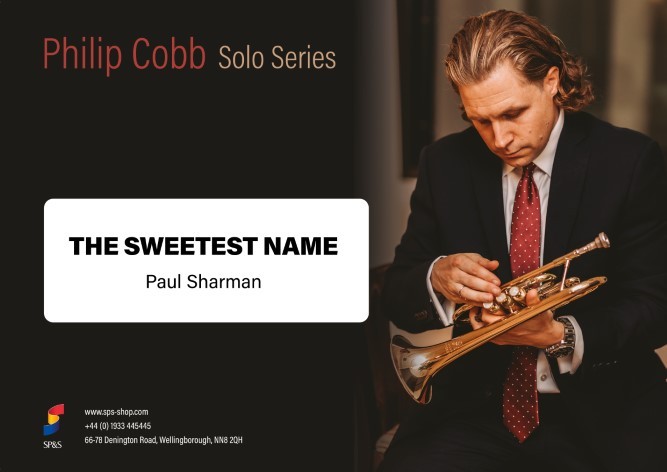
The Sweetest Name (Cornet Solo with Brass Band - Score and Parts) - Sharman, Paul
The Sweetest Name features a melody that was used in Erik Leidzen's major work, None Other Name. This extended arrangement of the tune has been written by Paul Sharman. Duration: 3.30
Estimated dispatch 7-14 working days
 View Music