
Results
-
£115.60
In Dulci Jubilo - Idar Torskangerpoll
This Christmas psalm is famous all over the world and especially in Europe. It is likely that the melody is more than 600 years old.Many famous composers have written their own harmonics and versions of the psalm. This arrangement isbased on two different harmonics; The first and third verse is based on the harmonics by Michael Praetorius while the second verse is based on the harmonics of Johann Sebastian Bach.
Estimated dispatch 5-14 working days
-
 £127.30
Bruremarsj fra Lodingen - Idar Torskangerpoll
This wedding march from Lodingen (small village in North-Norway) is widely used in wedding ceremonies. Norwegian artist Halvdan Sivertsen performs it often on his concerts with lyrics, but the melody is an old Norwegian folk tune.Thisarrangement can be used both for concerts and ceremonies If performed by a smaller ensemble, please make sure to cover all voices - use the cued notes when necessary.
Estimated dispatch 5-14 working days
-
£127.30
Dancing Trolls [Norwegian Dance] - Øystein Olsen Vadsten
"Dancing Trolls" is a sequel to "The Battle of the Hats", which was published in 2015. Like "The Battle of the Hats", "Dancing Trolls" is a piece of music based on Norwegian traditional dances. This time around,its the reinlender dance which takescentre stage.The music is composed by Oystein Olsen Vadsten who keeps the strong melodic and tempo, which is dear to this kind of dance. Admittedly given a make-over with a more rhythmic accompaniment and more exciting harmonization.Thismakes it a fun piece, both to Listen to and play. The reinlender dance derives from the Rhineland in Germany,and is also known as the German Polka.To the conductor:Because this is a dance form whichis dependent on the right "swing",it is of great importance to keep as close to the metronome mark as possible. A steady groove, primarily specified by the drum set, is also essential for a good result. Remember to keep a good balance between the melody carrying instruments and theaccompaniment. Good luck and have fun with this "crazy" little tune.
Estimated dispatch 5-14 working days
-
 £271.60
Aubade - Dawn Songs of the Fabulous Birds - Torstein Aagaard-Nilsen
Commissioned by The Norwegian Band Federation for The European Brass Band Championship 2003, in Bergen, Norway (Third edition) I remember as a kid the very early morning wake-up ceremonies caused by Seagulls having a "party" outside our home. Very few would describe it as beautiful, particularly not at 4:30 in the morning... But by listening carefully to birds I was fascinated by their diversity and musical language: they dont sing tunes or long phrases, they rather make sounds and signals, based on short motives. Aubade is based on musical pictures of the imaginary birds: the creatures with wings that exists only in myths and legends. The whole story starts with aBaritone-cadenza that evoke all the sleeping creatures. Very soon they all start to sing their songs in one way or another. The composition has a burlesque scherzo-character including slow espressive intersections. Traditional elements like melody and harmony is combined with extensive sounds and textural effects created by use of multiple muting, singing and playing at the same time. I am not too concerned about having a program for the piece. I just know that by thinking of the unheard dragon-songs, griffin-songs, the sound of the dodo, my creativity was stimultated. As a piece of music, Aubade follows its own rules based on well-known elements like melodies, arpeggio-figures, harmonies, rhythms, variations and recapitulation of ideas. - Torstein Aagaard-Nilsen
Estimated dispatch 5-14 working days
-
 £105.20
Irsk Fantasi - Roar Minde Fagerli
Irish fantasy is a short piece inspired by irish folk music. The melody consists of an A og B theme which both appears in many parts throughout the piece.The composer wrote this music originally for a kind of "musical journey around the world" project for beginning bands.
Estimated dispatch 5-14 working days
-
 £92.20
Go Far - Svein Fjermestad
The Title Go Far is a word play referring to what the players are going to (GO FAR!) and the musical inspiration from the TV-series Fargo (Mr. Wrench & Mr. Numbers). The piece is very groovy and especially the drum kit needs to lead the band and preferably sound like good, old John Bonham (drummer in the band Led Zeppelin). The melody is inspired by cool Native Americans and the band really needs to bring their primal roar! The piece was written for Eikanger-Bjorsvik Musikklag and their annual summer band camp Feriespel in 2017
Estimated dispatch 5-14 working days
-
 £115.60
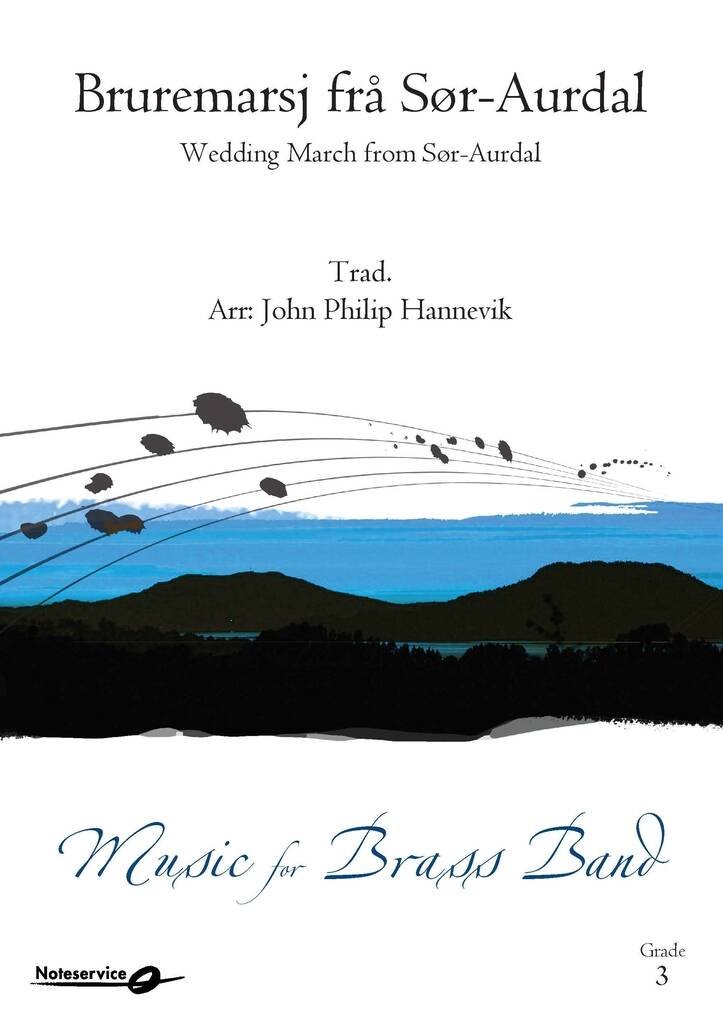
Bruremarsj fra Sor-Aurdal - John Philip Hannevik
This wedding march originates from the Valdres region in Norway. The municipality of Southern Aurdal is known for its two beautiful Stave churches, probably built around 1160-1190.The wedding march is not among the most well-known of its kind in Norway, but it still has a wonderful melody and a nice rhythmical lilt. Make sure that the tunes are played in a flowing and singing style.
Estimated dispatch 5-14 working days
-
 £105.20
Gressholmen - Kristian Kristensen - Reid Gilje
"Gressholmen" (in English "Grass-Islet") is a beautiful melody written by Norwegian singer/songwriter Kristian Kristensen.This arrangement is done in the same vocal character and style as the original recording. Please listen to this to find the best possible atmosphere and style.Best possible timbre and phrasing is two of the most important elements when performing this arrangement.
Estimated dispatch 5-14 working days
-
 £107.80
Ville Berre Elske Deg - Ingebjørg Bratland - Reid Gilje
This evocative ballad is written by Geir Hvidsten (music) and Ingebjorg Bratland (lyrics). We recommend listening to the original recording by Ingebjorg Bratland in addition to the recording of this arrangement.The soloists must play with intensity and expression.Please balance the elements and soloists into the mood one wants to create. Be aware of the unison melody line!Enjoy the music!
Estimated dispatch 5-14 working days
-
 £115.60
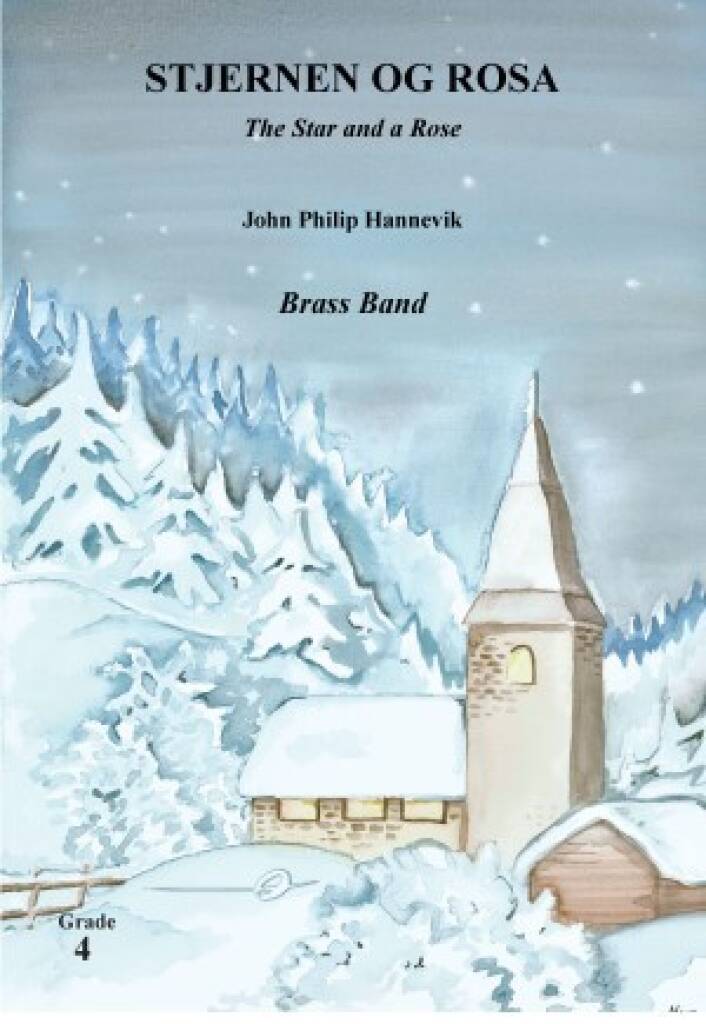
Stjernen og Rosa - John Philip Haqnnevik
The Star and a Rose is a big-scale Christmas piece for band, featuring four seasonal chorales.The first is a Gregorian-like chant Hodie Christus natus est.In this section of the piece, a soloist can be placed away from the band, maybe on a gallery. The soloist can be a tenor instrument, maybe trombone, or you can feature a vocal soloist.After this, the music leads us on to the old German Christmas chorale Lo, how a rose e'er blooming. This song is given a fairly rhythmical treatment, but make sure that the melody is presented in a cantabile style.An interlude follows, before the piece presents one of the most used and loved Scandinavian Christmas chorales, Mitt hjerte alltid vanker (My Heart will always wander), composed by the Danish bishop Hans Adolph Brorson around 1732. This song is building towards a climax, before the solo horn brings it all down to the Stable view described in the lyrics.Then comes a transition that brings us in to the final section of the piece, which presents the international Christmas Carol Adeste Fideles. As many will notice, I have borrowed a section from David Wilcocks majestic harmonization towards the end.The title of the piece has its background form the lyrics in My heart will always wander, where the text speaks about the stars in the sky. But also in the latin text for Adeste Fideles:Stella duce, Magi, Christum adorantesThe Rose is of course from the lyrics in the chorale Lo, how a Rose.
Estimated dispatch 5-14 working days
 View Music