
Results
-
 £137.99
Klezmer Discovery - Sjaak van der Reijden
The Yiddish word 'Klezmer' has been derived from the Old Hebrew words 'Kley' (tool, instrument) and 'Zemer' (song, singing, making music).Klezmer is the traditional music of Jews from Eastern Europe.Yiddish musicians (Klezmorim) were regularly invited to come and play at Yiddish weddings as well as several other Jewish celebrations and festive occasions. Despite its close connection with traditional Eastern European folk music, Klezmer music has succeeded in preserving its distinctive Jewish character. 'Klezmer Discovery' is a voyage of discovery through the richly varied music of the Jewish people from Eastern Europe.The introduction consists of a number of motives from differenttraditional melodies (a Mitzve Tenzel and L'cha Dodi), followed by a melody in 3/8th time (Kandel's Hora). This dance melody originally came from Bessarabia (present-day Moldavia) and was taken along to America by Jewish musicians round 1900. Subsequently, 'Der Terk in Amerika', a composition by famous clarinet player Naftule Brandwein can be heard. A number of fast, cheerful dance melodies (bulgars) form the finale of 'Klezmer Discovery' (Lebedyk un Freylekh, Lomir sich iberbetn and Sherele).
Estimated dispatch 5-14 working days
-
 £109.99
Antarctica - Carl Wittrock
Carl Wittrock became inspired by huge icefields surrounding the South Pole. Colourfull and majestic sounds provide the composition a fascinating view of this "6th" continent.'Antarctica' is a free impression of the scenery in the Antarctic.Melodies are linked together to convey the various aspects of the landscape.These melodies together with their simple harmonic accompaniments make this work pleasant for both the listener and the musician.
Estimated dispatch 5-14 working days
-
 £99.99
Lucerne Dances - Philip Sparke
Lucerne Dances consists of three movements, which play without a break and offer variety in abundance, with athletic figures, full chords, suave melodies, and alternating robust and mysterious themes. Several soloists are brought into the limelight, but each section, as well as the band as a whole, will have the opportunity to shine. In short: a captivating work with a festive touch that both the band and the audience will enjoy.
Estimated dispatch 5-14 working days
-
 £57.50
Salsa Brava - Etienne Crausaz
The Salsa Brava is a typical Spanish hot sauce that goes wonderfully well with barbecue or tapas. The Salsa is also a style of music that originated in the Caribbean, combining Cuban, Puerto Rican, and American influences.This composition is completely in keeping with this aesthetic, offering catchy melodies supported by a characteristic rhythmic patterns and highly intricate harmonies. A middle section provides space for soloists (cornet and trombone) to express themselves. The result is music which is festive, lively, and full of energy. A sure bet to charm your audience.This music is part of the musical tale La Malediction d'Aragne, written by Dominique Schweizer and commissioned by the Lyre de Courtion (dir. Dominique Morel) to mark its 100th anniversary.
Estimated dispatch 5-14 working days
-
 £60.99
Klezmeriana - Jan de Haan
The instrumental music of the Yiddish-speaking Jews, especially those of Eastern Europe, is known as klezmer. This terminology was originally used in Jewish cultural life as the name of a musician who played at weddings. At Jewish weddings, which usually last several days, klezmer musicians played not only dance music but also ceremonial music - for example during the wedding ceremony, and also music that was listened to during the wedding feast. Originally, there was no special term for this style of music. It was simply referred to as 'Jewish wedding music'. In the 1970s, the music - which is actually a fusion of different influences - enjoyed a resurgence in popularity and came to be known as klezmer. This music contains not only the sounds of the Balkans, but also influences of oriental and gypsy music too. Jan de Haan used no original klezmer melodies for Klezmeriana, but composed a series of sound-alike in an instrumentation for brass band.
Estimated dispatch 5-14 working days
-
 £91.99
Fanfares, Songs & Dances - Philip Sparke
Fanfares, Songs & Dances was commissioned by Brass Bands England, the Lithuanian Brass Band Association and the Dutch National Brass Band Championships (NBK), and first performed at the 43rd 'NBK' in October 2024. The work is played in three linked movements: FANFARES opens in robust fashion with a sequence of fanfare-like statements, initially featuring the horns, whose modal theme includes a figure that will reappear throughout the work. Euphoniums and then cornets introduce a second theme, which is followed by a third, again initiated by the horns. Baritones then change the mood with a more-lyrical theme, which builds to a climax, eventually leading back to a recall of the initial fanfare theme. This gradually dissolves to introduce the second movement. SONGS continues to relax the fanfare feel with a long introduction to the movement's main theme, first appearing on solo cornet. A change of key introduces a bridge passage which leads to a sonorous chorale, which builds to a triumphal return of the cornet theme. A peaceful coda leads to the final movement of the work. DANCES is a scherzo-like movement based around a series of rhythmic melodies in triple time, which lead to a majestic return of the 2nd movement's chorale theme under cornet figuration. The opening dance theme returns and heralds a joyous coda.
Estimated dispatch 5-14 working days
-
 £73.60
West of the Mississippi - Dean Jones
There's always a sense of adventure about America that makes it a really exciting topic to write about. The 3 States that sprang to mind in bringing a piece of music together were: California, Hawaii and Texas.We start out our American journey on the West Coast....California has provided much in the way of film and music for over 100 years. Combining this sense of free expression with the 'Surfing' culture, this initial section of the piece has an easy-going, fun feel in a pop idiom. Maybe wearing some shades might be quite a good look for this section!We move even further West now to the island of Hawaii where the free and easy goes onto a new level! The use of chromatics is a feature of Hawaiian melodies and has a feel a 'sliding' between notes that somehow sums up this feel of living on a tropical island! Have some fun with this section and have a Hawaiian garland to wear!Back into the USA mainland, and the fabulous state of Texas! Here we have the concept of the old fashioned rodeo and the 'Wild West'. Even today, the culture of horses, cowboys and tales of adventure are celebrated in places such as Fort Worth. The music captures some of these themes and has a fun and enjoyment...some get your Cowboy hats at the ready and enjoy the finale!
Estimated dispatch 5-14 working days
-
 £69.99
Sarabande and Polka - Sir Malcolm Arnold - Philip Sparke
In 1956 Sir Kenneth MacMillan created a one-act ballet for the Sadler's Wells Theatre Ballet, London. He selected the music from the two sets of English Dances which Sir Malcolm Arnold had written in 1950 and 1951 to great acclaim. The composer wrote two new dances, a Sarabande and a Polka, especially for the ballet, which was premiered at Sadler's Wells Theatre in June 1956. The two new dances have taken on a life of their own in the concert hall and are typical Arnold: the Sarabande contains one of his most memorable melodies and the Polka shows him at his quirky, tongue-in-cheek best.
Estimated dispatch 5-14 working days
-
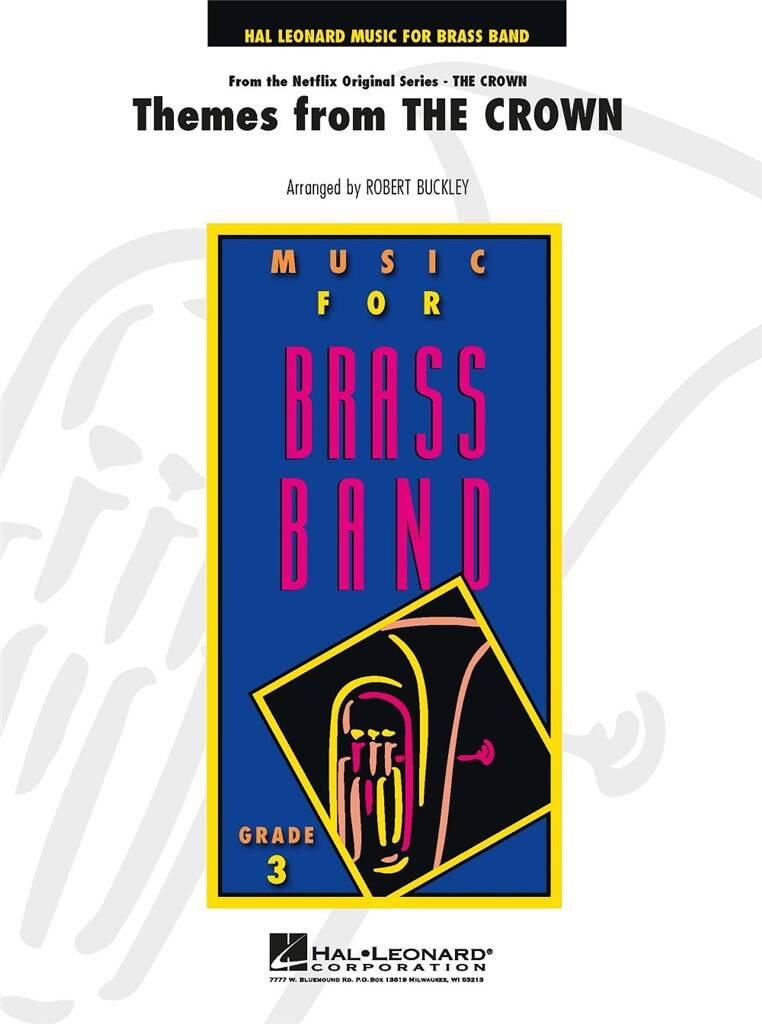 £49.99
Themes from The Crown - Robert Buckley
From the masterful Netflix series on British royalty, here are two of the iconic musical themes skillfully set for brass band by Christopher Bond with rich textures and haunting melodies.
Estimated dispatch 5-14 working days
-
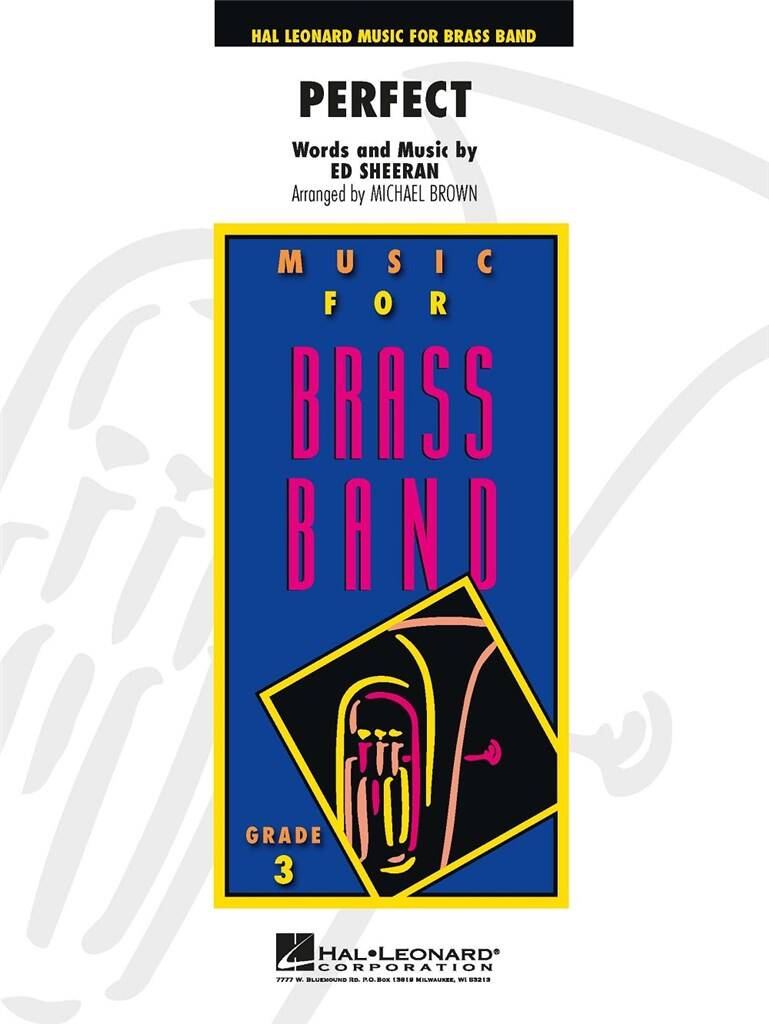 £59.99
Perfect - Michael Brown
Pop singer Ed Sheeran continues to dominate the charts, and this romantic ballad from his third album reached No. 1 in sixteen different countries! Here is a sensitive version for band with flowing melodies and nicely varied orchestration.
Estimated dispatch 5-14 working days
 View Music