
Results
-
 £24.95
 -
 £38.80
Gruss An Die Sanger (Brass Band - Score and Parts)
This set is March Card Sized
Estimated dispatch 7-14 working days
-
 £74.95
Variations on an Enigma (Score and Parts)
Variations on an Enigma was commissioned by Howard Snell for the Desford Colliery Band and first performed by them in Gillingham, Dorset, England in September 1986.The 'Enigma' is a short snatch of a phrase taken from a well-known brass band test piece - a phrase which caught the imagination of the composer who took it as the basis of a sort of concerto for band with each section featured in turn. First the cornets have their turn, with a 'moto perpetuo', and they are followed by the horns and flugel whose variation is delicate and decorative. Trombones follow, each having there own tune in turn and then combining them together. Euphoniums and baritones have an expressive funeral march which is interrupted by percussion and basses who share a rhythmic, syncopated variation. A climax is reached and this is followed by a fugue (based on the theme) against which snatches of the preceding variations appear. The fugue heralds what turns out to be the theme on which all the variations are based, appearing in full at last, whose first five notes are derived from the 'enigma' theme. The piece ends with an emphatic final statement by the timpani.
Estimated dispatch 7-14 working days
-
 £37.95
Variations on an Enigma (Score Only)
Variations on an Enigma was commissioned by Howard Snell for the Desford Colliery Band and first performed by them in Gillingham, Dorset, England in September 1986.The 'Enigma' is a short snatch of a phrase taken from a well-known brass band test piece - a phrase which caught the imagination of the composer who took it as the basis of a sort of concerto for band with each section featured in turn. First the cornets have their turn, with a 'moto perpetuo', and they are followed by the horns and flugel whose variation is delicate and decorative. Trombones follow, each having there own tune in turn and then combining them together. Euphoniums and baritones have an expressive funeral march which is interrupted by percussion and basses who share a rhythmic, syncopated variation. A climax is reached and this is followed by a fugue (based on the theme) against which snatches of the preceding variations appear. The fugue heralds what turns out to be the theme on which all the variations are based, appearing in full at last, whose first five notes are derived from the 'enigma' theme. The piece ends with an emphatic final statement by the timpani.
Estimated dispatch 7-14 working days
-
 £29.95
SOUNDS OF CHRISTMAS (Full Score)
Sounds of Christmas is a brand new collection of 36 Christmas arrangements and compositions that can be played by groups as small as five players, with the parts available as follows: Part 1: Bb and C; Part 2: Bb, Eb and F; Part 3: Bb, Eb, F and C BC; Part 4: Bb TC and C BC; Part 5: Eb TC, Bb TC and C BC. The full score does not contain all the instruments available, only the Bb and Eb pitched instruments (except the optional Eb Soprano cornet) and Percussion. Sounds of Christmas is sure to add interest to your Christmas carol playing and offers interesting additions to your Christmas concert repertoire. Includes: A Holly Waltz (The Holly and the Ivy); A Starry Night; Away in a Manger; Chiming Bells (Sweet Chiming Christmas Bells); Christmas Joy (March); Christmas Praise (March); Coventry Carol; Ding Dong! (Ding Dong! Merrily on High); God Rest You Merry, Gentlemen; Good Christian Men, Rejoice; Good King Wenceslas; Hark! THe Herald Angels Sing; Have Yourself a Merry Little Christmas; Infant Holy; It Came Upon a Midnight Clear; Jesus, Good Above All Other; Joy to the World; Mary's Boy Child; Mid-Winter (In the Bleak Mid-Winter); Normandy Carol (Away in a Manger); O Come, All Ye Faithful; O Little Town of Bethlehem; Once in Royal David's City; Rudolph, the Red-Nosed Reindeer; Silent Night; Sounds of Christmas (March Medley); The Andel Message (While Shepherds Watched); The Everlasting Light (O Little Town of Bethlehem); The First Nowell; The Infant King; The Manger Scene; The Virgin Mary had a Baby Boy; Three Kings' March; To Celebrate His Birth (March); We Wish You a Merry Christmas; Yuletide Rag (Deck the Hall).
Estimated dispatch 7-14 working days
-
 £42.95
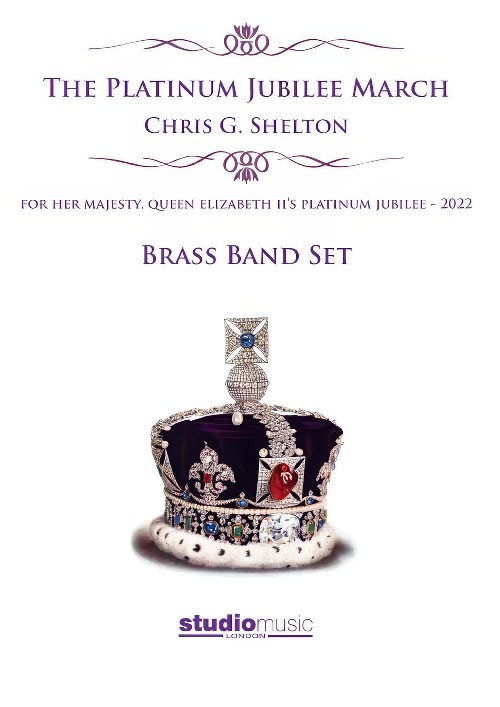
The Platinum Jubilee March (Brass Band - Score and Parts) - Shelton, Chris G.
The Platinum Jubilee March was written to celebrate Her Majesty, Queen Elizabeth II's seventy-year reign as monarch of the United Kingdom. Its premiere was televised live around the world as part of the Queen's Birthday Parade which marked the start of the national Platinum Jubilee celebrations.The Queen's Birthday Parade 2022 saw the First Battalion of the Irish Guards trooping their colour. To reflect this, the march begins in a celebratory style and features a melody based around the opening motif of Let Erin Remember - the regimental slow march of the Irish Guards. In traditional style, the march develops excitement both harmonically and melodically, creating a strong sense of drive before reaching a stately trio. This section has a very regal and noble feel, lending subtle harmonic nods to two of the most quintessentially British composers, Gustav Holst, and Sir William Walton. The march culminates in a bold grandioso, featuring semi-quaver lines that are underpinned by a driving trombone countermelody. A forthright restatement of the introductory fanfare brings the march to a very definite and resolved ending.
Estimated dispatch 7-14 working days
-
 £34.95
Chalk Farm No.2 (Brass Band - Score and Parts) - Gregson, Edward
Like so many of the best composers for brass band - Eric Ball, Wilfred Heaton, Elgar Howarth and Robert Simpson - Edward Gregson's youthful talents came to the fore in the Salvation Army. In 1975 Gregson was commissioned by the Chalk Farm Band of the Salvation Army to write a march for the centenary of the birth of the band's most long-serving bandmaster Alfred W Punchard, who conducted the band from 1894 to 1944. In 1909 the Salvation Army published a march called Chalk Farm featuring the old Army chorus 'March on, we shall win the day'.Gregson uses the same tune in his Chalk Farm No 2 march, but this is a symphonic march clearly to be played sitting down. He includes irregular bars of 5 and 7 beats as well as a tongue-in-cheek treatment of the tune, complete with bongos (in the march) and bi-tonality (in the trio). Chalk Farm No 2 imaginatively composed. Gregson's own main theme 'fits' the chorus as a counter-subject. The playful irreverence of the style has more in common with Wilfred Heaton's Praise or Glory, than the conventional Salvation Army March.Duration: 4.00
Estimated dispatch 7-14 working days
-
 £59.99
The Conqueror (Brass Band - Score and Parts) - Sparke, Philip
This fantastic contest march was composed for the Alexander Brass Band from Stavanger, Norway, who wanted a brand new march to play when they took part in the world-renowned Whit Friday March Contest. In the march Philip Sparke has followed the traditional brass band contest march format and it is named as a tribute to Alexander the Great, rather than the Alexander brass band, who were actually named after their local pub!Duration: 3:00
Estimated dispatch 7-14 working days
-
 £60.99
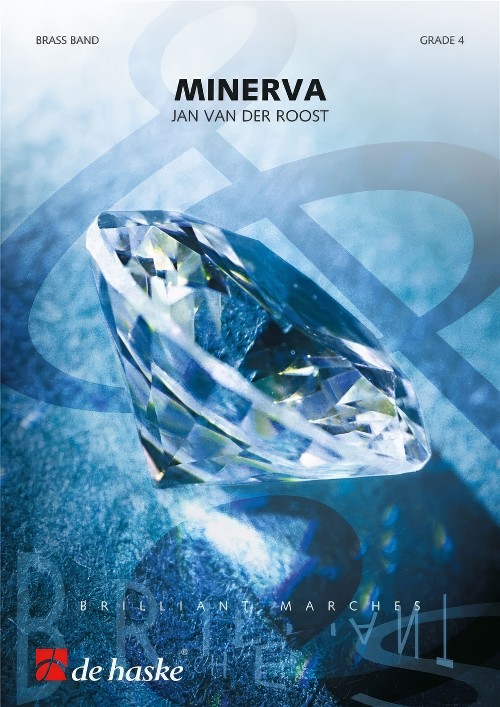
Minerva (Brass Band - Score and Parts) - Van der Roost, Jan
Minerva by Jan Van der Roost was composed on the commission of the German "Musikverein Braunshausen" on the occasion of the 75th anniversary of the orchestra. The composition, first performed on September 17, 1999, is not a street march but a concert march, just like Mercury and Arsenal. The use and variation of different rhythmic patterns gives the first part of this march a distinctly dynamic character. Two main themes are presented in several instrumental combinations. The theme from the trio, on the other hand, is characterized by a broad melodic approach using large intervals. This theme, wreathed by high woodwinds, is heard one more time after a contrasting new part, but now in a somewhat slower tempo. The counterpoint in this part refers to the first part of the march. The brilliant ending suits a festive anniversary march!Duration: 4:00
Estimated dispatch 7-14 working days
-
 £60.99
Artemis (Brass Band - Score and Parts)
Artemis is the Greek goddess of hunting and forests. In western art she is often pictured with deer, lions or bears with a bow in her hand. The tempo of this march is stately and the themes are "concertante" in character making Artemis best suited as a concert march rather than a street march. Technically this march is not too difficult although at times some dexterous fingering is necessary. The trio melody is especially lyrical and offers various sections within the band the possibility to show off their skill in playing the expressive melody. This excellent new concert march is sure to become a classic and be performed time and time again. 04:00
Estimated dispatch 7-14 working days
 View Music