
Results
-
 £17.50
Crusaders (Brass Band - Score only) - Goffin, Dean
This march is based on the hymn tune 'Ascalon' named after the Palestinian city which was of strategic importance in the Crusader Wars. The tune is also called 'The Crusader's Hymn' and was used as such by Franz Liszt in his oratorio 'St. Elizabeth'. The melody is seldom absent and it can be heard in some form or other throughout the march.
Estimated dispatch 7-14 working days
-
 £60.99
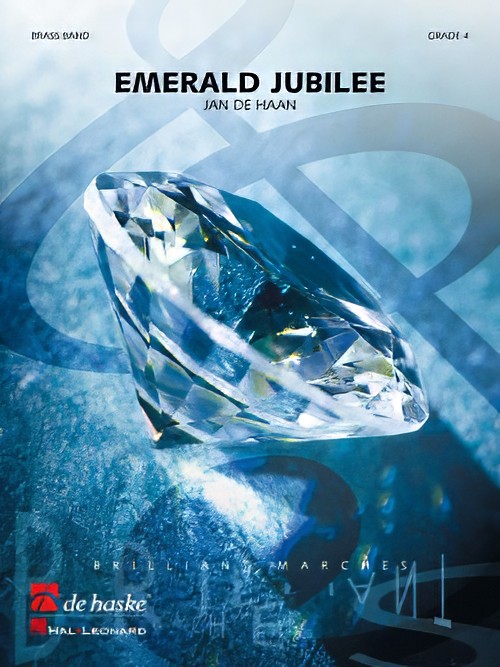
Emerald Jubilee (Brass Band - Score and Parts) - De Haan, Jan
An Emerald Jubilee celebrates a 40th anniversary. Jan de Haan composed this colourfully orchestrated concert march to celebrate Will van der Beek's 40th anniversary as conductor of the Deutsche Musikverein Haaren. As publisher of van der Beek's transcriptions of classical works Jan de Haan can look back on many years of successful collaboration with the knowledge that there will be many more to come. Unusually cast in a minor key, the main theme provides an interesting contrast to the more melodic major key of the second movement. The relatively slow theme gives this march a dignified stately and subdued quality.Duration: 2:45
Estimated dispatch 7-14 working days
-
 £44.00
The Liberty Bell (Brass Band - Score and Parts) - Sousa, John Philip - Wilkinson, Keith M.
This march, written in 1893, was originally destined for inclusion in an operetta but after the composer had witnessed a spectacle called "America" in Chicago, which had as its backdrop a huge painting of the Liberty Bell, it was given the name by which it has become famous. Further recognition has come in more recent years by the adoption of the march as the signature tune for the popular TV programme, Monty Python.The arrangement includes several solos for a large unpitched bell which add aural (and visual) interest. It has been recorded by Brass Band of the Western Reserve, musical director Keith M Wilkinson, on the CD Slides Rule.
Estimated dispatch 7-14 working days
-
 £59.99
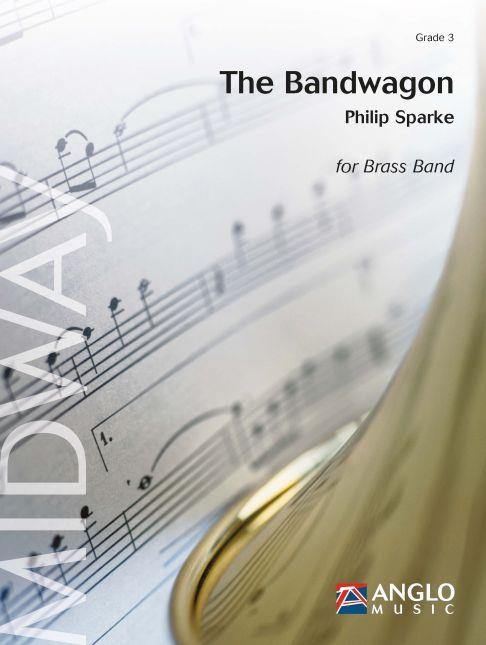
The Bandwagon (Brass Band - Score and Parts) - Sparke, Philip
Band director and radio presenter Yutaka Nishida hails from Tokyo and is the Frank Renton of the Japanese brass band world. He presents a weekly two-hour music programme on the Japanese national radio station, Digital Radio Musicbird. The programme is called The Bandwagon and the station commissioned Philip Sparke to compose a march, which could be used as the theme tune. The result is this bright and breezy march in simple ABA form. A great lively item for any concert.Duration: 2:45
Estimated dispatch 7-14 working days
-
 £44.95
The Wonder of Christmas (Brass Band - Score and Parts) - Graham, Peter
A festive march based on See Amid the Winter Snow. In the style of the composer's S.A. march The Shining Star.
Estimated dispatch 7-14 working days
-
 £95.00
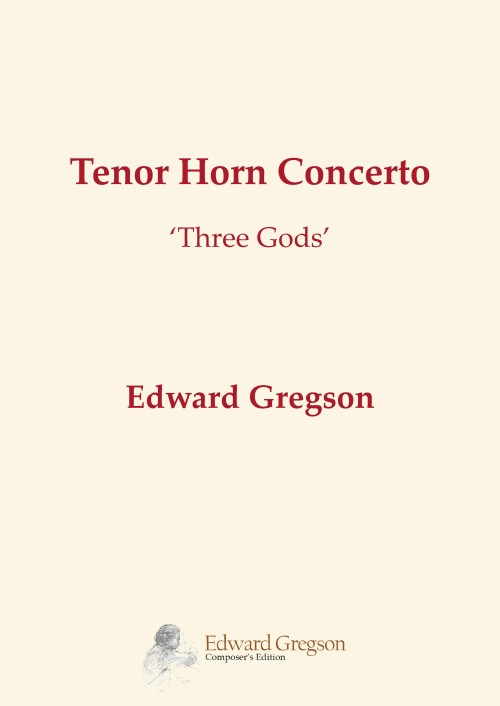
Tenor Horn Concerto 'Three Gods' (Tenor Horn Solo with Brass Band - Score and Parts) - Gregson, Edward
Edward Gregson's Tenor Horn Concerto (Three Gods) was commissioned by the Belgian tenor horn soloist Tim de Maeseneer for a recording of commissioned works he made in 2024 with his own band, Brass Band Willebroek.The subtitle of 'Three Gods' refers to three mythological Greek Gods: Zeus, Hermes and Apollo. The idea for this came from Gregson's Viola Concerto, which he composed in 2023 and which was similarly subtitled 'Three Goddesses'. Indeed, the first movement of the horn concerto shares some common material with the viola concerto, although the other movements are newly composed.The concerto exploits the noble character of the horn, but the writing is also virtuosic in character as well as lyrical and melodic, demanding an extended playing range of nearly four octaves with a variety of colouration in its sonorities. The unifying motif of the whole concerto is the interval of a rising 5th, heard at the outset. The opening also has some other surprises (both seen and heard).The musical ideas, cast in three separate movements, take their starting point from the characters of the Three Gods in the title:Zeus, ruled as King of the Gods on Mount Olympus, and was the God of Thunder and Lightning and of War. His music is often threatening and violent, but also has a more tender side as portrayed in the lyrical second subject. However, the dominant mood is one of foreboding.Hermes was the great messenger to the Gods who could travel between realms on his winged sandals. Thus, his music is fast, fleet of foot, and mercurial - a dashing scherzo, but with lyrical and expressive moments.Apollo, the God of Music and Dance (and the Sun), symbolises virtue and beauty. This final movement, 'Hymn to Apollo', is mainly slow and hymn-like and cast in a continuous stream of melody passed between soloist and band. Brief fanfares herald a triumphant march, before the music returns to its quiet opening, gradually rising to a triumphant climax with glittering melodic percussion leading the way. The music ends in a blaze of glory!Duration: 17.00
Estimated dispatch 7-14 working days
-
£40.00
Tenor Horn Concerto 'Three Gods' (Tenor Horn Solo with Brass Band - Score only) - Gregson, Edward
Edward Gregson's Tenor Horn Concerto (Three Gods) was commissioned by the Belgian tenor horn soloist Tim de Maeseneer for a recording of commissioned works he made in 2024 with his own band, Brass Band Willebroek.The subtitle of 'Three Gods' refers to three mythological Greek Gods: Zeus, Hermes and Apollo. The idea for this came from Gregson's Viola Concerto, which he composed in 2023 and which was similarly subtitled 'Three Goddesses'. Indeed, the first movement of the horn concerto shares some common material with the viola concerto, although the other movements are newly composed.The concerto exploits the noble character of the horn, but the writing is also virtuosic in character as well as lyrical and melodic, demanding an extended playing range of nearly four octaves with a variety of colouration in its sonorities. The unifying motif of the whole concerto is the interval of a rising 5th, heard at the outset. The opening also has some other surprises (both seen and heard).The musical ideas, cast in three separate movements, take their starting point from the characters of the Three Gods in the title:Zeus, ruled as King of the Gods on Mount Olympus, and was the God of Thunder and Lightning and of War. His music is often threatening and violent, but also has a more tender side as portrayed in the lyrical second subject. However, the dominant mood is one of foreboding.Hermes was the great messenger to the Gods who could travel between realms on his winged sandals. Thus, his music is fast, fleet of foot, and mercurial - a dashing scherzo, but with lyrical and expressive moments.Apollo, the God of Music and Dance (and the Sun), symbolises virtue and beauty. This final movement, 'Hymn to Apollo', is mainly slow and hymn-like and cast in a continuous stream of melody passed between soloist and band. Brief fanfares herald a triumphant march, before the music returns to its quiet opening, gradually rising to a triumphant climax with glittering melodic percussion leading the way. The music ends in a blaze of glory!Duration: 17.00
Estimated dispatch 7-14 working days
-
 £104.99
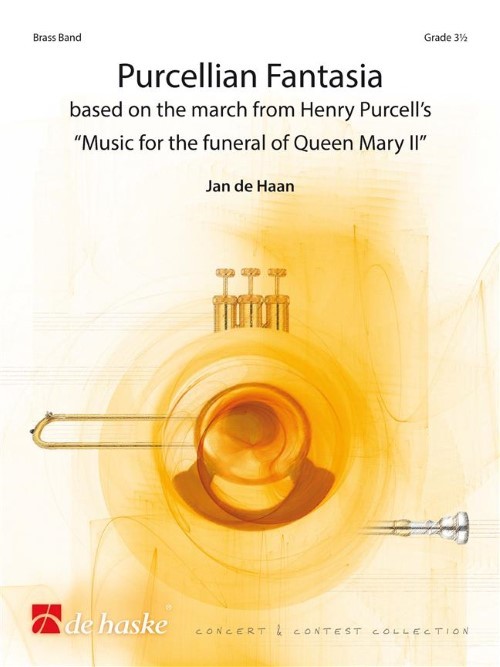
Purcellian Fantasia (Brass Band - Score and Parts) - De Haan, Jan
This composition is based on the march from Henry Purcell's Music for the funeral of Queen Mary II, a work written in 1694. In this fantasia, various movements flow from one to the next following the main theme; these movements not only elaborate on the theme, but also contrast with it. At times, the thematic material diverges so much, that the work acquires a character of its own; however, the composer often refers back to fragments of the theme. This work was test piece in the 4th division of the Dutch National Brass Band Championships (NBK) in 2017. Duration: 10.30
Estimated dispatch 7-14 working days
-
 £154.99
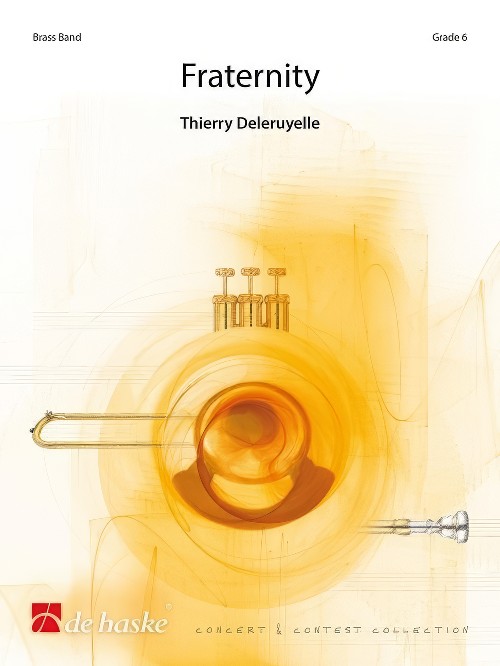
Fraternity (Brass Band - Score and Parts) - Deleruyelle, Thierry
This piece by Thierry Deleruyelle is based on one of the most significant events in the history of coal mining; the catastrophe at Courrieres, Northern France. It took place on 10th March 1906 and is considered the most momentous mining accident in Europe and the second most significant in the world. This work is both emotional and spectacular and tells in 7 contrasting sections the catastrophe that occurred. Fraternity was the test piece in the Champion category at the European Brass Band Competition 2016 in Lille, thus commemorating 110 years since the disaster at Courrieres.Duration: 15:45
Estimated dispatch 7-14 working days
-
£37.50
Fraternity (Brass Band - Score only) - Deleruyelle, Thierry
This piece by Thierry Deleruyelle is based on one of the most significant events in the history of coal mining; the catastrophe at Courrieres, Northern France. It took place on 10th March 1906 and is considered the most momentous mining accident in Europe and the second most significant in the world. This work is both emotional and spectacular and tells in 7 contrasting sections the catastrophe that occurred. Fraternity was the test piece in the "Champion" category at the European Brass Band Competition 2016 in Lille, thus commemorating 110 years since the disaster at Courrieres.Duration: 15:40
Estimated dispatch 7-14 working days
 View Music