
Results
-
 £45.00
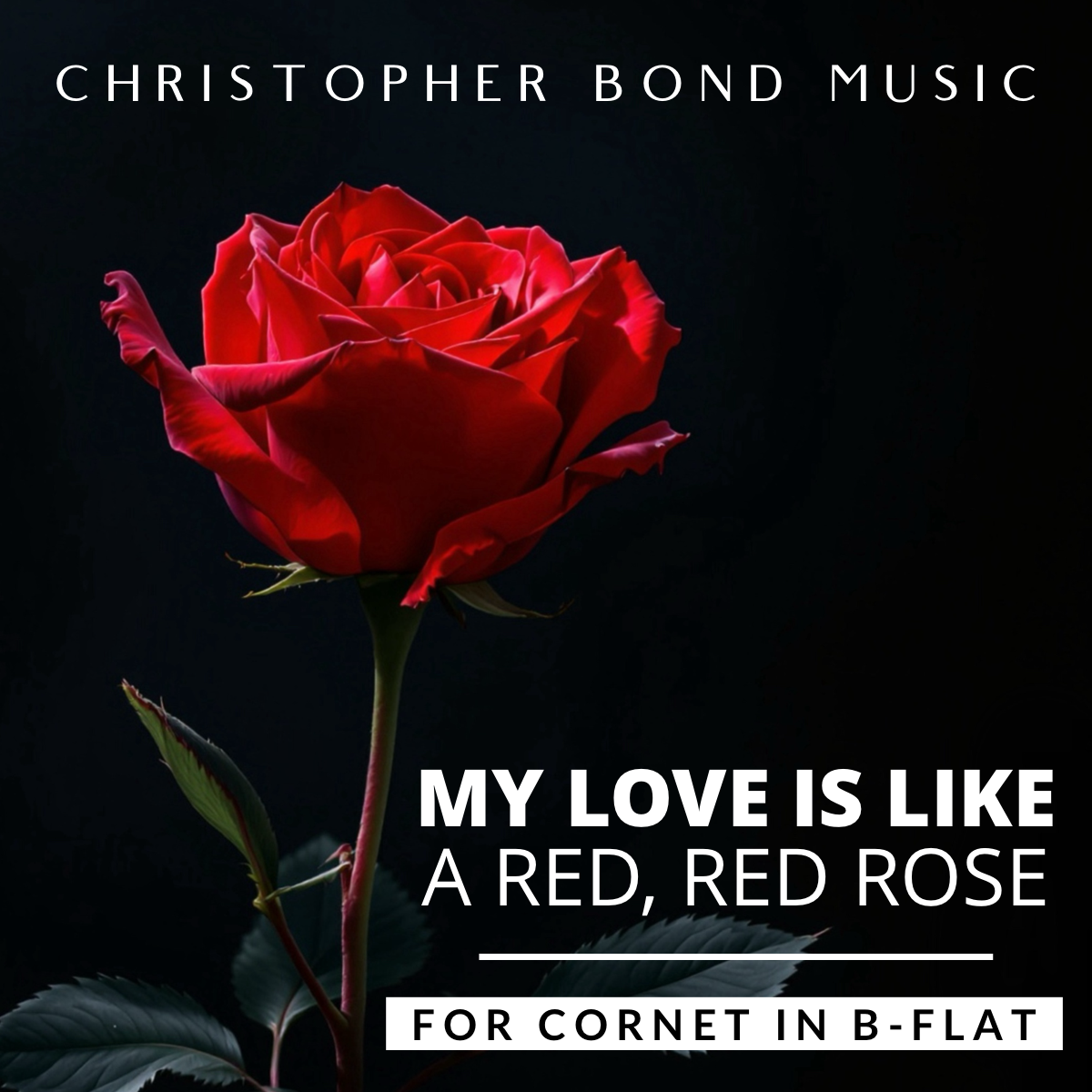
My Love Is Like A Red, Red Rose - Christopher Bond
This timeless melody has been reworked in a new version for cornet and brass band, premiered by James Screaton & The GUS Band at Brass in Concert in November 2025 at the Glasshouse International Centre for Music, Gateshead.
Estimated dispatch 10-14 working days
-
 £64.95
A Day in the Life of a Knight (Brass Band - Score and Parts) - Lawrence, Phil
Here we have a most descriptive piece of writing - a story through music. A fantastic 1st section test piece and championship concert work:The opening scene would depict standing on the battlements of a castle hearing the thundering hoofs of our brave Knight's horse miles in the distance. His arrival is expected, and his reputation is known across many lands. Today, he is to joust amongst mere mortal knights and compete for the hand of the fair (and local) Princess.He vanquishes all competitors and wins the day. The scene moves to evening and court where reception and dance is to be held for our winning knight. Both Knight and Princess become centre of attention during the dance. Their eyes only for each other.At last, the Knight has a chance to be a lone with his Princess as they steal away from the celebrations to a star lit rampart above the castle gardens, where the Knight declares his ever-lasting love and pledges his life and of honour to her. He asks her hand, meanwhile monks pray in the below chapel hoping for union. She say's yes. It is announced in court, then blown from the battlements.Day breaks; he is brought word of evil doings back in his own land. He leaves word to the Princess that he will be back soon to take her hand. The trouble back home was a rouse to get him away from the Princes so one of the vanquished, a dark knight in yesterdays joust, has summoned a dragon to kidnap the princess for his own.As the truth of the deception reaches our Knight he quickly returns to face the varlet that has taken his Lady. This time tis no joust, but a fight to the death with the dark knight and dragon. Our champion proves his best once again and wins the day and the hand of his Princess forever!- Phil LawrenceSuitable for 1st Section Bands and aboveDuration: 11.15
Estimated dispatch 7-14 working days
-
 £72.99
Lilo & Stitch (Music featured in the Film) (Brass Band - Score and Parts) - Schaars, Peter Kleine
In this great Disney musical a little girl, Lilo, adopts what she believes is a puppy but is what turns out to be an alien that has landed on earth by mistake. Their friendship is sealed by their mutual love of the music of the king - Elvis Presley. This arrangement contains a selection of Elvis classics that were featured in the film and is sure leave your audience humming Elvis songs long after they have left the concert.Duration: 6.15
Estimated dispatch 7-14 working days
-
 £30.00
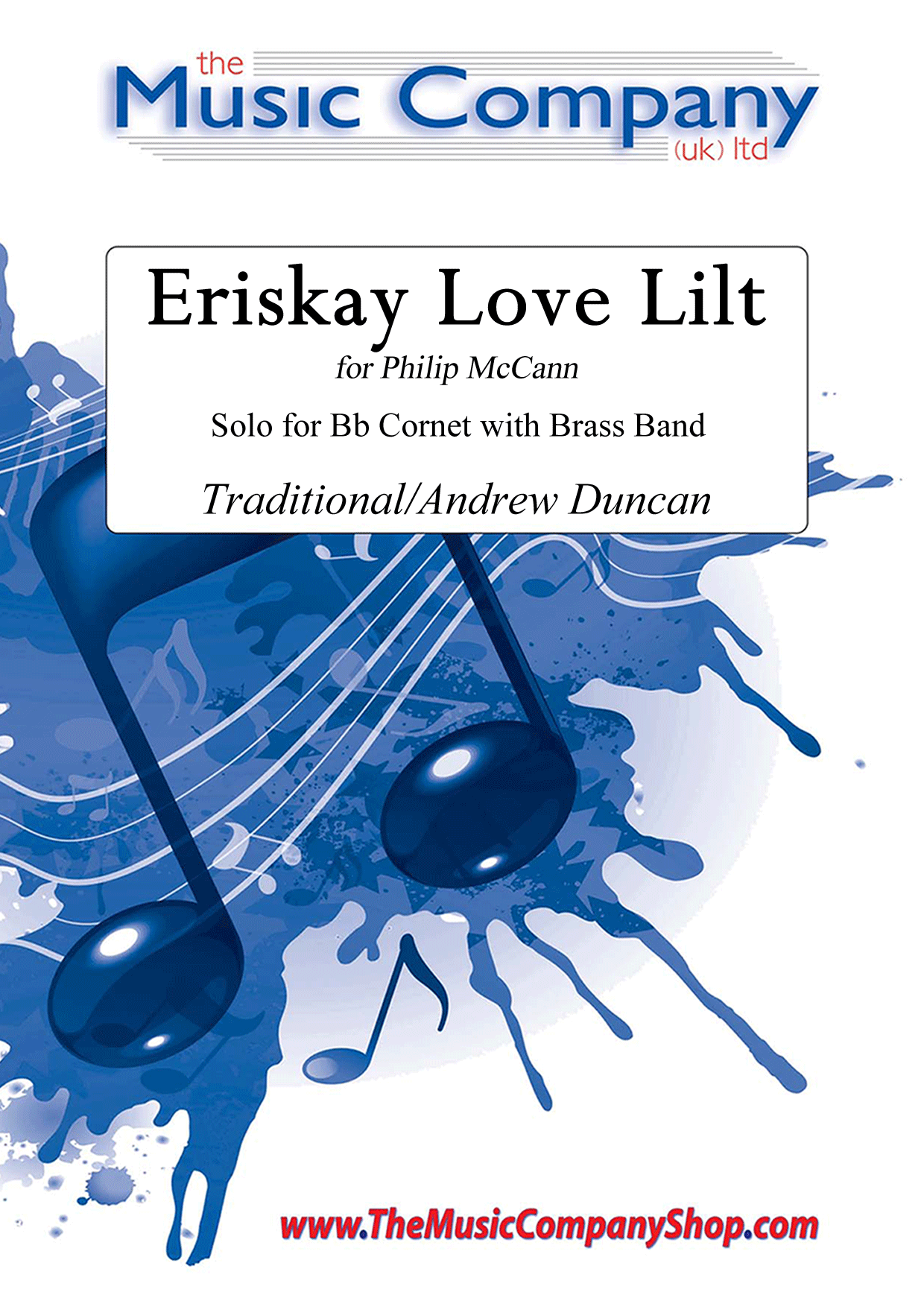
Eriskay Love Lilt (with brass band) - Trad
Eriskay Love Lilt is a traditional Gaelic melody from the Western Isles of Scotland, sensitively arranged here by Andrew Duncan as a cornet solo with brass band accompaniment.This arrangement was written in 2001 for Phillip McCann and was first played by him with the Hepworth Band at the 2002 Leek Music Festival in Derbyshire, England. It has also since been recorded by Eleanor Ferguson with the Whitburn Band on Reflections of Freedom.Andrew Duncan comments: The Isle of Eriskay (Eirisgeigh) lies forty miles off the North West coast of Scotland in the North Atlantic. It is a small island, only two kilometres square and lies between the larger islands of South Uist and Barra. Eriskay is one of the islands which form the archipelago known as the Western Isles or Na h-Eileanan an Air. The Eriskay Love Lilt is a hauntingly beautiful tune which is typical of the greater number of traditional Gaelic melodies in that it is largely based on the Aeolian mode, the black notes on the piano.Also available with piano accompanimentor as a solo with brass ensemble (10-piece).
In Stock: Estimated dispatch 3-5 working days
-
 £30.00
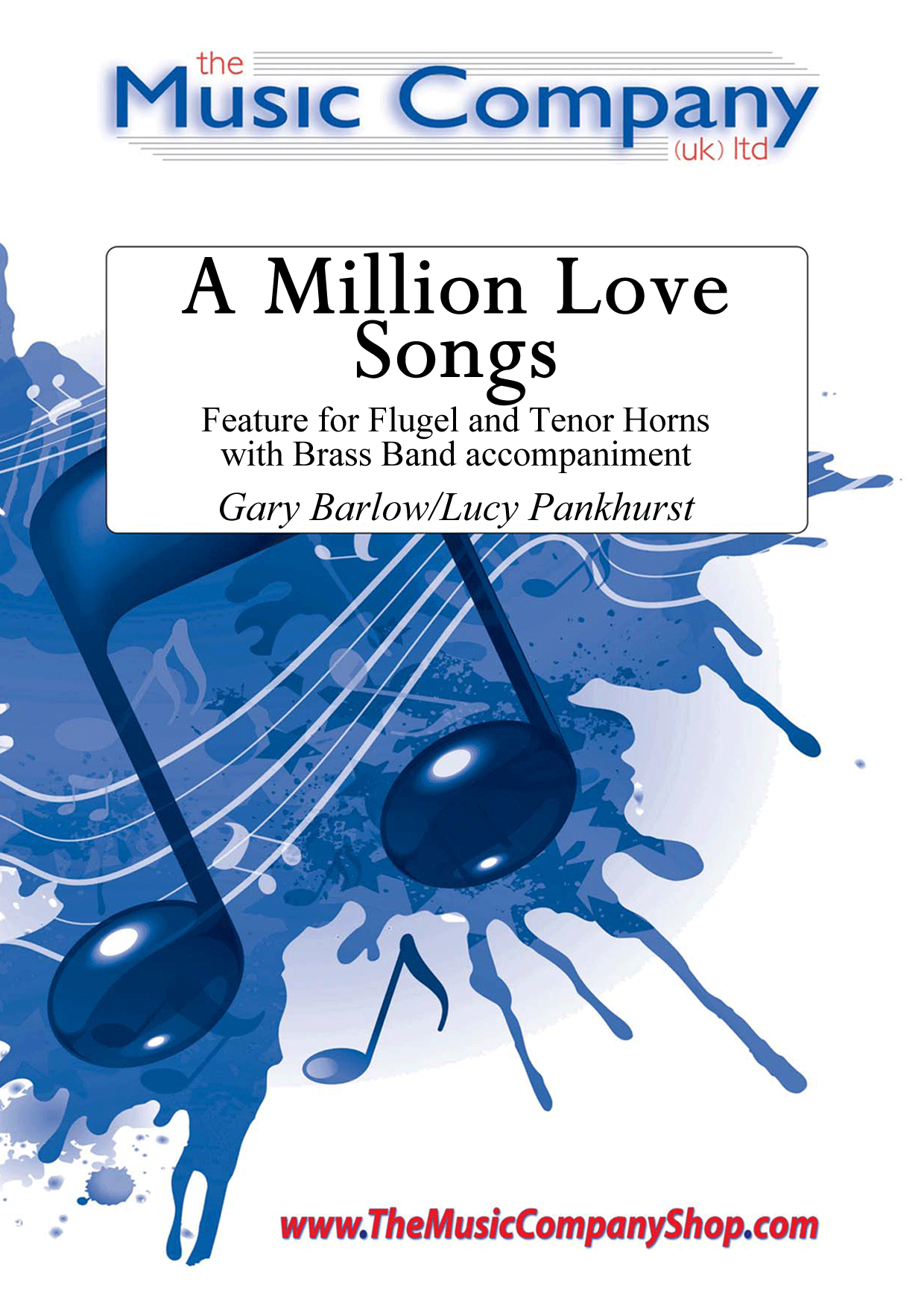
A Million Love Songs - Gary Barlow
Made famous by the boy band 'Take That', this fantastic new angle on the song from Lucy Pankhurst, creatively features the flugel and tenor horn section with full support from the accompanying band.Take That's Gary Barlow wrote 'A Million Love Songs' when he was 15. He also recorded a rough demo of the track, and was one of the songs he gave to music manager Nigel Martin-Smith on a cassette tape as part of his audition to join a boy-band.In his autobiography A Better Me, Gary revealed that Martin-Smith was so impressed by the tape, that he didn't realise it was Gary singing. As legend has it, the conversation went like this:Martin-Smith: "This tape, who has written the songs?"Barlow: "Me"Martin-Smith: "Who wrote the words, then?"Barlow: "Me. And the music and the backing track."Martin-Smith: "Wow, you'd better come back and see me tomorrow."The ballad became one of the group's most popular songs, and is often voted among the greatest love songs of all time. It peaked at No. 7 in the UK charts, and remains a firm favourite, not just for its sentiment, but for the beautiful melody Barlow created.Lucy's arrangement for brass band brings a whole new dynamic to the music and offers the flugelhorn and tenor horns a golden opportunity to shine.
In Stock: Estimated dispatch 3-5 working days
-
 £119.99
The Lonesome Knight - Saskia Apon
The composition the Lonesome Knight was based on a fairytale. The piece was written by Saskia Apon for the National Brass Band Championships 2001. Once upon a time there was a knight who went to fight and defeat the dragon that had beenkilling the people of his town. There is a short but intense battle between the two and the knight is triumphant. However whilst persuing the dragon the knight has travelled far away from his home and now is lost. He roames around trying to findhis way home, but exhausted and weary he falls to the ground. He awakens startled by a Giant and a group of Goblins who are celebrating the death of the dragon. The knight joins in the festivities but after a long evening is once more leftalone. The sun rises the following morning and he sees a castle on the horizon. He enthousiastcally ventures towards the castle in the hope of meeting other people. However he becomes greatly disillusioned when there is none to be found. Inhis desperation the knight climbs the tower ready to jump off. Suddenly he hears a heavenly voice. Right before him is the most beautiful princess he has ever seen. She graciously thanks him for killing the dragon, a spark ingnites between themand they build a life together and.... live happily ever after! Saskia Apon studied harp at Rotterdam School of music. With this instrument she rounded of her studies by passing with credit, however it was her love of composition thatremained her focus. Self-taught, she began composing at the age of nine. Since then she has written pieces for The Dutch Brass Quintet, The Dutch Brass Ensemble, The Rotterdam Trombone Quartet and the brass band quintet Brass Ability. Atpresent she is the in-house arranger for The Rotterdam Philarmonic Brass Ensemble. Besides the customary attention for the real splashworks she endeavours to add value to the melodic function of the brass wind instruments in her music. Hercompositions and arrangements can be found on many diverse Cds.The composition the Lonesome Knight was based on a fairytale. The piece was written by Saskia Apon for the National Brass Band Championships 2001. Once upon a time there was aknight who went to fight and defeat the dragon that had been killing the people of his town. There is a short but intense battle between the two and the knight is triumphant. However whilst persuing the dragon the knight has travelled far awayfrom his home and now is lost. He roames around trying to find his way home, but exhausted and weary he falls to the ground. He awakens startled by a Giant and a group of Goblins who are celebrating the death of the dragon. The knight joins inthe festivities but after a long evening is once more left alone. The sun rises the following morning and he sees a castle on the horizon. He enthousiastcally ventures towards the castle in the hope of meeting other people. However he becomesgreatly disillusioned when there is none to be found. In his desperation the knight climbs the tower ready to jump off. Suddenly he hears a heavenly voice. Right before him is the most beautiful princess he has ever seen. She graciously thankshim for killing the dragon, a spark ingnites between them and they build a life together and.... live happily ever after! Saskia Apon studied harp at Rotterdam School of music. With this instrument she rounded of her studies by passing withcredit, however it was her love of composition that remained her focus. Self-taught, she began composing at the age of nine. Since then she has written pieces for The Dutch Brass Quintet, The Dutch Brass Ensemble, The Rotterdam Trombone Quartetand the brass band quintet Brass Ability. At present she is the in-house arranger for The Rotterdam Philarmonic Brass Ensemble. Besides the customary attention for the real splashworks she endeavours to add value to the melodic functionof the brass wind instruments in her music. Her compositions and arrangements can be found on many diverse Cds.
Estimated dispatch 5-14 working days
-
 £118.99
The Graces of Love - Oliver Waespi
The Graces of Love (Le Gratie d'Amore) is the title of a book published in 1602 by Cesare Negri, the famous dance master of the Milan court in the Renaissance.It contains numerous dance tunes and precise descriptions of courtly dances. It also includes the tune Il bianco fior (The White Flower) on which the first movement of the present piece is based. A vigorous dance in three-four, it leads to an acceleration and a sudden shift to an even meter towards the end.The second movement, calm and contemplative in character, features the tune Vaghe bellezze ... (Veiled Beauty ...). Widely spacedmelodic parts surround two solos during which the tune is varied and developed. Finally, the third movement contains a saltarello with a hypnotic rhythm, ending the work with flair and gusto.
Estimated dispatch 5-14 working days
-
 £54.99
Can You Feel the Love Tonight - Alan Mencken - Ron Sebregts
The Lion King was a smash-hit box office success all over the world, and is still the highest grossing 2D animated film in the US. Can You Feel The Love Tonight, is a delightful concert band arrangement of the song from this Walt Disney classic, sung and composed by Elton John. A Disney favourite for young and old alike, your musicians will look forward to playing this piece both in rehearsal and in concert!
Estimated dispatch 5-14 working days
-
 £76.99
On the Movieset - John Emerson Blackstone
Glitter and glamour, good-looking people, a lot of Bling Bling and fast cars images like these will cross our minds when we think of the movie world. However, reality proves to be different : as a rule, a tremendous amount of work will have been done on the set before a film is ready to be shown on the big screen. A visit to an actual movie set inspired John Emerson Blackstone to write a composition bearing the same name. He had both seen a number of characteristic attributes and heard the typical phrases used in film making, and he incorporated them into 'On the Movie Set' . In the first part, 'The Clapboard', a 'director's assistant' is supposed to shout "Quieton the set'" and "Action!", as is done before a real scene is shot. Subsequently, in order to create the right atmosphere, the clacking of a 'Clapboard' should be heard. During a romantic scene we should be transported to another world by means of sweet sounds in the background, so romantic music is of course heard in the next part, 'Love Scene'. At the end of a long working day 'It's a wrap' is called on the set to inform everyone that the filming on that day is completed. Now there is only one more thing left to dream of : an Oscar..... Perf. Note: The use of the right props will add to the performance and appreciation of 'On the Movie Set'. A red carpet and a glamorous reception should give your audience the feeling they are attending a real 'opening night'!
Estimated dispatch 5-14 working days
-
£54.99
All You Need Is Love - John Lennon - Thijs Oud
The Beatles remain the biggest-selling British group of all time with their countless hits and timeless classics written by John Lennon and Paul McCartney.All You Need Is Love is one such song that recently made it into the top 40 pop songs of all time. In this arrangement Thijs Oud has utilised all the original Beatles elements whilst, at the end, integrating 'snippets' of many more of their hits.Perfect for all concert programmes this will also make an excellent finale to your events.
Estimated dispatch 5-14 working days
 View Music