
Results
-
 £79.99
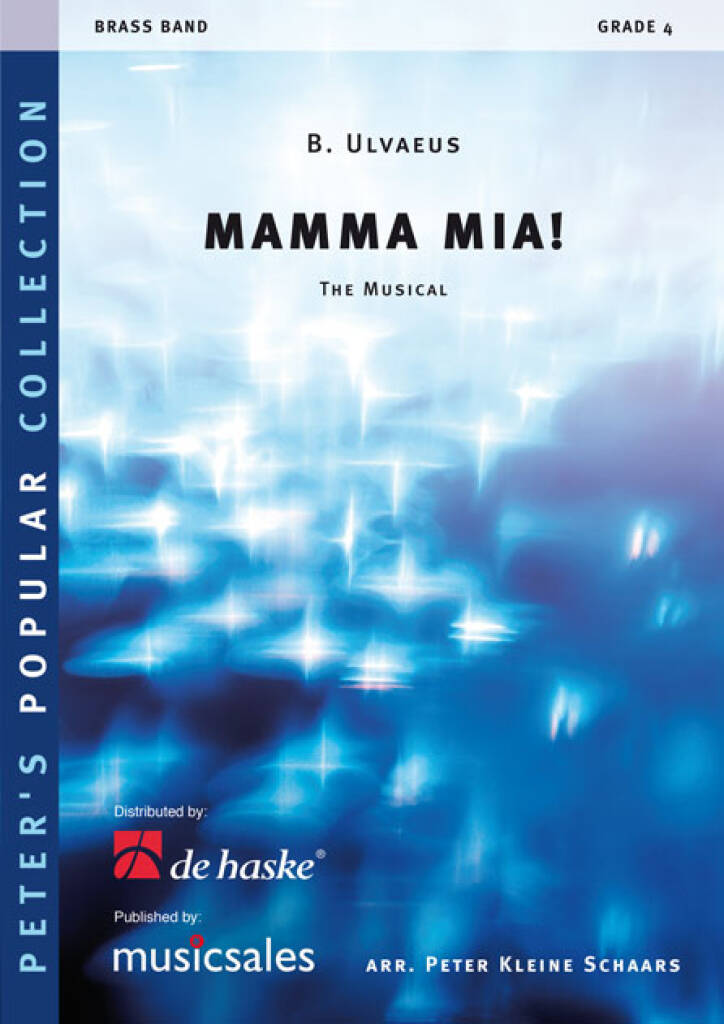
Mamma Mia! - Björn Ulvaeus - Peter Kleine Schaars
On the 6th of April 1999, exactly 25 years after ABBA had won the Eurovision Song Contest with the song Waterloo, the musical Mamma Mia! opened in London. The funny and appealing love story, based on 22 ABBA classics, became an immediate success. Arranger Peter Kleine Schaars has selected five of the most famous titles from the musical, added the hit Waterloo and used his musical imagination. The result is a catchy ABBA medley that will appeal to young and old.
Estimated dispatch 5-14 working days
-
 £15.99
'tis The Last Rose Brass Band - Traditional
It is often thought that this melody came from the Victorian era, when Irish songs were very popular, however this Air was first published in 1813 and has been adapted and arranged by many composers and arrangers over theyears. This arrangement, as a Flugel Horn solo, by Gary Westwood is a new treatment and shows off this tender and wistful love song.
Estimated dispatch 5-14 working days
-
 £127.30
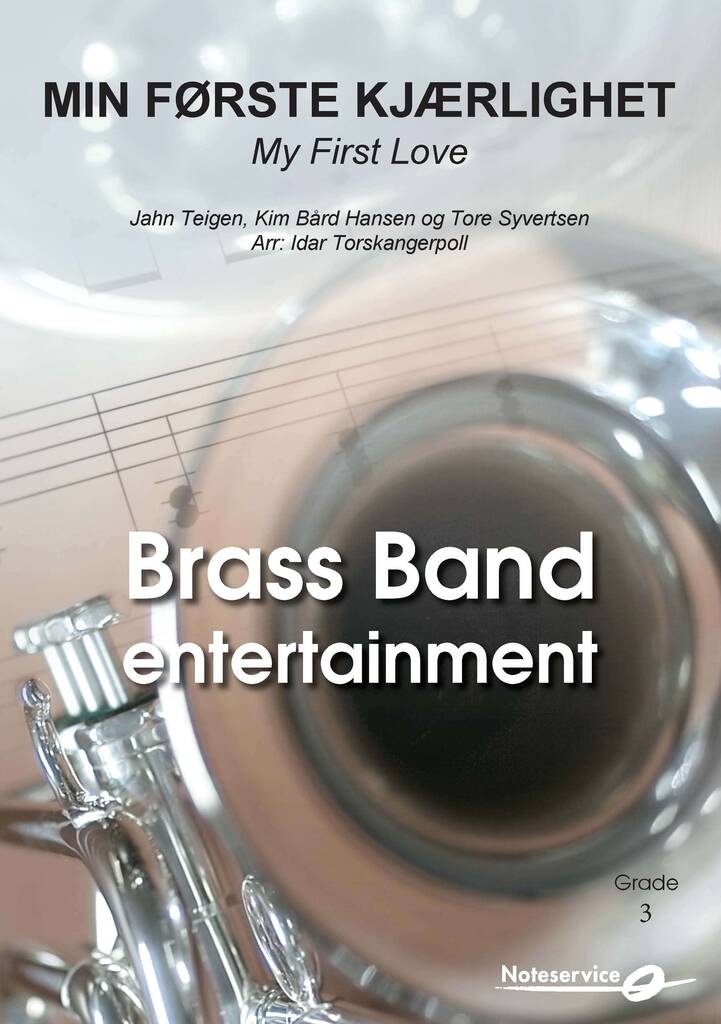
Min Forste Kjaerlighet - Jahn Teigen - Idar Torskangerpoll
"My first love" is one of Jahn Teigen's big hits, and definitely among Norwegian pop-history's biggest classics. The song was featured on the 1979 album "En dags pause".Jahn Teigen (1949-2020) was one of Norway's all time biggest pop stars, as a singer, songwriter and entertainer.
Estimated dispatch 5-14 working days
-
 £5.99
£5.99Scripture-based Songs Compilation Folio Books
No. of TuneTitleRefernece1Above all powersSpring Harvest Song Book 2003, 12All for theeThe Musical Salvationist, January 19763All Heaven declaresMagnify, 24All the world is waitingThe Musical Salvationist, April 19875As we are gatheredThe Source, 296Be bold, be strongThe Source,387Be still for the presence of the LordMagnify, 78Beauty for brokennessThe Source,379Blessd be the name of the LordThe Source,5310Breathe 11By his handSing to the Lord, Vol.1, Part 112Come, now is the time to worshipThe Source, 66213Come on and celebrate!The Source, 7514Come, thou Fount of every blessing (Nettleton)Salvation Army Song Book, 31315ContentmentHappiness & Harmony, 1416Crown him with many crowns (Diademata)Salvation Army Song Book, 15617Cwm RhonddaSalvation Army Song Book, 57818Do something beautifulSing to the Lord Children's Voices Series, Vol.1219Faithful GodThe Source, 8820Father, we love youHappiness & Harmony, 1621Give thanks with a grateful heartThe Source, 1822Glorious things of thee are spoken (Abbot's Leigh)Salvation Army Song Book, 15723God in youSing to the Lord, Vol.9, Part 224Great is the darkness (Come, Lord Jesus)Magnify, 1425He is ableSing to the Lord Children's Voices Series, Vol.1526He is the Lord (Show your power)Magnify, 1927Healing ChristSing to the Lord, Vol.6, Part 328Here am I, my LordThe Musical Salvationist, July 199129His ProvisionThe Musical Salvationist, July 198530Holy, holy, holy is the LordSongs of Fellowship, 18231HosannaThe Source, 18232How deep the Father's love for usThe Source, 185; Songs of Fellowship II, 78033I am a new creationThe Source, 19134I dare to be differentSing to the Lord, Vol.1, Part 135I love you, LordMagnify, 2436I will run to you (Your eye is on the sparrow)The Source, 109337In Christ aloneThe Source, 131138In his presenceSing to the Lord, Vol.9, Part 339In his time 40In Jesus' nameSing to the Lord, Vol.13, Part 141In this quiet momentSing to the Lord, Vol.13, Part 342It is to youMagnify, 3043Jesus is Lord!The Source, 28444Jesus, name above all namesHappiness & Harmony, 3245Joyful, Joyful (Europe)Salvation Army Song Book, 1046King of Kings, MajestyThe Source, 30947Knowing You (All I once held dear)Magnify, 348Light of the world (Here I am to worship)Sing to the Lord Children's Voices Series, Vol.1049Lord, I lift your name on highMagnify, 3850Lord, you know that we love youThe Musical Salvationist, April 198351Love Divine (Blaenwern)Salvation Army Song Book, 43852MajestyHappiness & Harmony, 4553My Lord and Christ!Sing to the Lord, Vol.2, Part 254My Lord, what love is thisThe Source, 37055My Saviour's love (I stand amazed)Salvation Army Song Book, 17956Nothing but thy bloodSing to the Lord Children's Voices Series, Vol.1357O God of burning, cleansing flame (Send the fire)Salvation Army Song Book, 20358O happy daySalvation Army Song Book, 36559Oh to see the dawn (The power of the cross)Spring Harvest Song Book 2005, 6760Only by graceMagnify, 4861Power of your love (Lord, I come to you)Magnify, 3762Praise, my soulSalvation Army Song Book, 1763Praise to the Lord (Lobe den Herren)Salvation Army Song Book, 1964Regent SquareSalvation Army Song Book, 14765Rejoice!The Source, 43866Shout to the Lord (My Jesus, my Saviour)Magnify, 4367Sing and make musicHappiness & Harmony, 5568Spirit of the living GodSongs of Fellowship, 511; The Source, 46369Storm the forts of darknessSalvation Army Song Book, 69670Teach me to danceThe Source, 46971The light has comeHappiness & Harmony, 6372The Potter's hand (Beautiful Lord, wonderful Saviour)The Source, 64073The servant King (From Heaven you came)The Source, 11474The splendour of the KingSpring Harvest Song Book 2005, 9775There is a redeemerMagnify, 5976To be in your presence (My Desire)Magnify, 6177To God be the gloryThe Musical Salvationist, April 198878Wake up, O sleeperSing to the Lord, Vol.6, Part 279We are marchingThe Source, 53980We have come into this placeHappiness & Harmony, 7381We want to see Jesus lifted highThe Source, 55982When the music fades (The heart of worship)Magnify, 7083Who is on the Lord's side? (Rachie)Salvation Army Song Book, 707
Estimated dispatch 7-14 working days
-
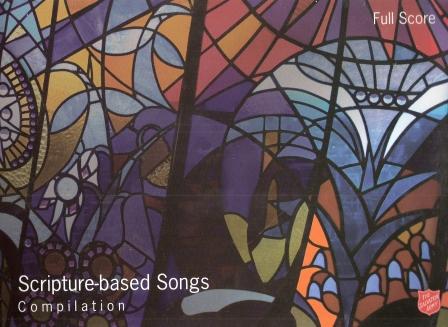 £29.95
Scripture-based Songs Compilation Full Score
No. of TuneTitleRefernece1Above all powersSpring Harvest Song Book 2003, 12All for theeThe Musical Salvationist, January 19763All Heaven declaresMagnify, 24All the world is waitingThe Musical Salvationist, April 19875As we are gatheredThe Source, 296Be bold, be strongThe Source,387Be still for the presence of the LordMagnify, 78Beauty for brokennessThe Source,379Blessd be the name of the LordThe Source,5310Breathe 11By his handSing to the Lord, Vol.1, Part 112Come, now is the time to worshipThe Source, 66213Come on and celebrate!The Source, 7514Come, thou Fount of every blessing (Nettleton)Salvation Army Song Book, 31315ContentmentHappiness & Harmony, 1416Crown him with many crowns (Diademata)Salvation Army Song Book, 15617Cwm RhonddaSalvation Army Song Book, 57818Do something beautifulSing to the Lord Children's Voices Series, Vol.1219Faithful GodThe Source, 8820Father, we love youHappiness & Harmony, 1621Give thanks with a grateful heartThe Source, 1822Glorious things of thee are spoken (Abbot's Leigh)Salvation Army Song Book, 15723God in youSing to the Lord, Vol.9, Part 224Great is the darkness (Come, Lord Jesus)Magnify, 1425He is ableSing to the Lord Children's Voices Series, Vol.1526He is the Lord (Show your power)Magnify, 1927Healing ChristSing to the Lord, Vol.6, Part 328Here am I, my LordThe Musical Salvationist, July 199129His ProvisionThe Musical Salvationist, July 198530Holy, holy, holy is the LordSongs of Fellowship, 18231HosannaThe Source, 18232How deep the Father's love for usThe Source, 185; Songs of Fellowship II, 78033I am a new creationThe Source, 19134I dare to be differentSing to the Lord, Vol.1, Part 135I love you, LordMagnify, 2436I will run to you (Your eye is on the sparrow)The Source, 109337In Christ aloneThe Source, 131138In his presenceSing to the Lord, Vol.9, Part 339In his time 40In Jesus' nameSing to the Lord, Vol.13, Part 141In this quiet momentSing to the Lord, Vol.13, Part 342It is to youMagnify, 3043Jesus is Lord!The Source, 28444Jesus, name above all namesHappiness & Harmony, 3245Joyful, Joyful (Europe)Salvation Army Song Book, 1046King of Kings, MajestyThe Source, 30947Knowing You (All I once held dear)Magnify, 348Light of the world (Here I am to worship)Sing to the Lord Children's Voices Series, Vol.1049Lord, I lift your name on highMagnify, 3850Lord, you know that we love youThe Musical Salvationist, April 198351Love Divine (Blaenwern)Salvation Army Song Book, 43852MajestyHappiness & Harmony, 4553My Lord and Christ!Sing to the Lord, Vol.2, Part 254My Lord, what love is thisThe Source, 37055My Saviour's love (I stand amazed)Salvation Army Song Book, 17956Nothing but thy bloodSing to the Lord Children's Voices Series, Vol.1357O God of burning, cleansing flame (Send the fire)Salvation Army Song Book, 20358O happy daySalvation Army Song Book, 36559Oh to see the dawn (The power of the cross)Spring Harvest Song Book 2005, 6760Only by graceMagnify, 4861Power of your love (Lord, I come to you)Magnify, 3762Praise, my soulSalvation Army Song Book, 1763Praise to the Lord (Lobe den Herren)Salvation Army Song Book, 1964Regent SquareSalvation Army Song Book, 14765Rejoice!The Source, 43866Shout to the Lord (My Jesus, my Saviour)Magnify, 4367Sing and make musicHappiness & Harmony, 5568Spirit of the living GodSongs of Fellowship, 511; The Source, 46369Storm the forts of darknessSalvation Army Song Book, 69670Teach me to danceThe Source, 46971The light has comeHappiness & Harmony, 6372The Potter's hand (Beautiful Lord, wonderful Saviour)The Source, 64073The servant King (From Heaven you came)The Source, 11474The splendour of the KingSpring Harvest Song Book 2005, 9775There is a redeemerMagnify, 5976To be in your presence (My Desire)Magnify, 6177To God be the gloryThe Musical Salvationist, April 198878Wake up, O sleeperSing to the Lord, Vol.6, Part 279We are marchingThe Source, 53980We have come into this placeHappiness & Harmony, 7381We want to see Jesus lifted highThe Source, 55982When the music fades (The heart of worship)Magnify, 7083Who is on the Lord's side? (Rachie)Salvation Army Song Book, 707
Estimated dispatch 7-14 working days
-
 £77.00
General Series Brass Band Journal, Numbers 2250 - 2253, December 2024
2250: Prelude on 'Rhosymedre' (Ralph Vaughan Williams trs. Douglas Engle)The English composer Ralph Vaughan Williams' work Three Preludes (founded on Welsh Hymn Tunes) was published for the organ in 1920. This is a transcription of the second movement of that work. The words associated with the hymn tune are by Samuel Crossman, My song is love unknown (S.A.S.B. 149), and vividly depict the events of Holy Week. The music is gentle and solemn and would be appropriate for a Good Friday service or as a moment of repose in a concert. 2251: Hosanna Shuffle (Sam Creamer)The half-time shuffle groove is a popular feel developed by alternative rock/pop bands of the 1980s. It marries elements of rock and swing styles together to form a new and infectious feel - Hosannah Shuffle being written as a tribute to this fusion of musical styles. Contrary to a swing style, shuffle brings the pulse back onto the beat while maintaining the swung quaver rhythms to create a rock-type rhythmic drive. 2252: Everlasting Love (Keith Manners)This piece was written for the London North East Music School in 2004. The theme of the week was 'Making a stand for Christ', reminding the school that it only takes one person to make such a stand before others follow. The music starts with a lone Solo Cornet playing the melody of Graham Kendrick's song Such Love (S.A.S.B. 199). One by one, other parts join in with the theme.2253: Festival March (Michael Cooper)This piece represents the first published brass composition of Bandmaster Michael Cooper, who is the Bandmaster at Brisbane City Temple Corps. This imposing festival march features the tunes I want to be a soldier (T.B. 683), Lift up the banner (T.B. 90) and My Jesus, I love thee (T.B. 506). These tunes depict the idea that spiritual warfare is an essential component of one's faith, success of which is articulated in the final verse of My Jesus, I love thee (S.A.S.B. 878).
Estimated dispatch 7-14 working days
-
 £55.00
Triumph Series Brass Band Journal, Numbers 1355 - 1358, November 2023
1355: March Medley - Pardoned Forever (Keith Manners)This collection of Easter-themed melodies should be played with enthusiasm and vigour. Featuring the songs He lives (S.A.S.B. 229), Chris is alive! Let Christians sing (S.A.S.B. 217) and No more! No more! He remembers sins no more (S.A.S.B. 460), the positive message of Easter Sunday is reflected in this bright march style.1356: Selection - I love the sweetest name (Noel Jones)This devotional selection includes three songs that feature the name of Jesus and derives its title from the following lines of those songs; 'How sweet the name of Jesus sounds' (S.A.S.B. 78), 'O, how I love the Saviour's name! The sweetest name on earth' (S.A.S.B. 94) and 'Sweetest name on mortal tongue' (S.A.S.B. 93).1357: Renewal (Harold Burgmayer)Will J. Brand penned the song Renewal (S.A.S.B. 634), with music by Bramwell Coles, for 'Day of Renewal' meetings conducted by General Albert Orsborn in October 1949. It was published in that form in The Musical Salvationist in 1951. Over time these meaningful words of consecration became wedded to an alternative tune, a lovely melody by Oscar Ahnfelt known as Trust in God (T.B. 903). This setting for band is based on a male-voice arrangement, conceived for a time of renewed consecration, sung by massed bands at the Canadian Staff Band's 50th Anniversary Festival in 2019.1358: Groove Hosanna! (Munashe Chikwezvero)This is a funk setting of three well-known melodies associated with Jesus' triumphal entry into Jerusalem. Today, such celebratory processions, and indeed most large gatherings, usually feature rich forms of music-making. Music provides atmosphere and generates excitement, and it is hoped that a funk inspired arrangement of these songs will inspire listeners to 'move to the groove'. The first two songs, Children of Jerusalem (S.A.S.B. 356) and Give me joy in my heart, keep me praising (S.A.S.B. 362) encourage us to sing 'Loud hosannas to our King!'. The words of the third song, When his salvation bringing, remind us that he "smiled to hear their song".
Estimated dispatch 7-14 working days
-
 £38.95
Unity Series Band Journal - Numbers 486 - 489, February 2020
486: March - Love Divine (Ian Clarke)This lively march features Charles Wesley's song, Love divine, all loves excelling (S.A.S.B. 262) set to the tune Stainer (T.B. 349) and Charles Gabriel's I stand amazed in the presence (S.A.S.B. 466).487: Song Arrangement - The potter's hand (Daniel Elson)A simple but effective arrangement of Dalene Zschech's popular worship song The potter's hand (S.A.S.B. 355).488: Ma-(cha-cha)-jesty (Gary Rose)The cha-cha-ch is a dance that originates from Cuba. It is danced to the music of the same name, introduced by Cuban composer and violinist Enrique Jorrin in the early 1950s. This work combines the cha-cha syle with the well-known song Majesty (S.A.S.B. 382).489: The old rugged cross (Andreas Holmlund)A flowing two-verse arrangement of George Bennard's much-loved song.
Estimated dispatch 7-14 working days
-
 £77.00
General Series Brass Band Journal, Numbers 2242 - 2245, April 2024
2242: Fanfare Prelude - Faithful in every way (Simon Gash)Lord, I come before your throne of grace (S.A.S.B. 378) has become a popular song for Sunday worship. These words of great assurance are married to a strong tune which, unlike many contemporary worship songs, suits the brass band idiom well. Although this piece will work without Percussion, the Snare Drum part, which underpins a lot of the piece, will help drive the music forward.2243: The wonders of thy grace (Norman Bearcroft)Herbert Booth's song Within my heart, O Lord, fulfil (S.A.S.B. 211) was the inspiration behind Lieut-Colonel Norman Bearcroft's three-verse setting of the hymn tune Wareham, with the title being taken from the lyrics of verse two.2244: Trombone Solo - I will wait (Andrew Mackereth)Major Leonard Ballantine has an astonishing gift for contemporary song writing. This song is a brilliant example of this, taking the idea of Jesus waiting patiently for us to accept the fullness of his offer of love.This arrangement was made at the request of Andrew Justice, former Principal Trombonist of The International Staff Band. For many years, Andrew has used this song with piano accompaniment. In making this arrangement, the composers aim was to capture the transparency you can create in piano playing.2245: The battle cry! (David Edmonds)Inspired by Lorne Barry's Trinity (F.S. 599), this piece would be well suited as a concert opener but would work in many settings as a contribution to worship. Its main feature is the driving rhythmic pattern in the Bass and Percussion sections. The music needs to be played with confidence and purpose. As the title suggests, it is a strong, inspiring battle cry, corralling the troops. This is a setting of the song by Stuart Townend and Keith Getty, O Church, arise (S.A.S.B. 819), which has become popular in recent years, not only within The Salvation Army, but also the wider Christian church.
Estimated dispatch 7-14 working days
-
 £38.95
Unity Series Band Journal - Numbers 522 - 525, October 2023
522: Festival March - The Rescuers (Andrew Hedley)This exciting and bright festival march comes from a new contributor to the band journals. Andrew Hedley is a bandsman at Chester-le-Street Corps and a member of the Euphonium Section of the International Staff Band. This work contains inventive harmonic and melodic patterns and we hope this will be the first of many works from this composer to be seen in our journals.523: Moses and Pharaoh (Ralph Pearce)This piece owes its creation to the playing of the Montclair Citadel Young Peoples' Band in the Sunday School assembly every weekend. The song Pharaoh, Pharaoh is extremely popular and is sung with gusto and much movement. The presentation of this song derives for an accompaniment written for the band to play along with the singing. To widen its use, the spiritual Go down, Moses (STTL Vol.7, Part 2) was added to make the present composition. This music should have drive throughout and be played with a sense of fun.524: Lord, to thee (Alan Williams)This is a setting of the tune Hendon (T.B. 249). The piece uses the first verse of Frances Ridley Havergal's commonly associated text 'Take my life and let it be consecrated, Lord, to thee' (S.A.S.B. 623), and from there it takes its title.525: Song Arrangement - This is why (Noel Jones)This music is based on the tune This is why (T.B. 353) by Elisha Albright Hoffman and this two-verse arrangement reflects the great song of testimony Would you know why I love Jesus (S.A.S.B. 912). An associated scripture reference is found in Mark 10:45 'For even the Son of Man did not come to be served, but to serve, and to give his life as a ransom for many'. The motif 'Would you know' occurs in the opening bars and is repeated throughout the piece, along with fragments of the first verse. The chorus confirms the hoy that Christians experience knowing that Christ's sacrifice has bought forgiveness for our wrongdoings.
Estimated dispatch 7-14 working days
 View Music