
Results
-
 £22.50
Fantasia on 'Glory to his Name' (Brass Band - Score only) - Bright, Dudley
This Fantasia is a celebration of the work of Ray Steadman-Allen. Through most of his 92 years, his music has had a profound and wide-ranging impact on Salvation Army music. Always innovative, rather than stylistically stereotypical, his music has led the way forward for Salvationist composers. As the title suggests, his light-hearted 1960's vocal solo provides thematic material and highlights his motivation. There are also references to and quotations from several more of his pieces. Yet, although much of his music can be challenging, he has also given us music that speaks directly to the heart. His much-loved songs 'He giveth more grace' ('Blacklands') and 'Remember Me' are heard in humble and sincere tribute to a life dedicated to giving the glory to God through his music.
Estimated dispatch 7-14 working days
-
 £69.99
Sunset Serenade (Brass Band - Score and Parts) - Doss, Thomas - Woude, Klaas van der
Sunset Serenade is a tribute by the composer to a music colleague, whose life was unexpectedly cut short. In spite of the sad circumstances of its creation, the music reflects overwhelmingly happy memories and thoughts of gratitude for time spent together and shared experiences. The overall peaceful nature of this composition symbolises a reconciliation with, and acceptance of, the transient nature of man.Duration: 5:45
Estimated dispatch 7-14 working days
-
 £60.99
Spiritual Moments (Brass Band - Score and Parts) - Stratford, Dizzy
In a pop style that is characteristic for Dizzy Stratford, this composition contains famous and lesser-known spirituals which are brought back to life in a refreshing manner.Duration: 6:15
Estimated dispatch 7-14 working days
-
 £94.95
Facets of the Heart (Brass Band - Score and Parts) - Davoren, Tom
2015 Butlins Championship Section Testpiece.Facets of the Heart was created during a turbulent period of the composers life. The concept behind it changed between inception and completion. The result is a musical representation of three lesser considered but extremely important aspects of love, set against their natural opposites. Running in three continuous sections, the chosen aspects are Fear, Pain and Comfort, and Doubt and Courage.Duration: 14 mins.
Estimated dispatch 7-14 working days
-
 £49.95
Facets of the Heart (Brass Band - Score only) - Davoren, Tom
2015 Butlins Championship Section Testpiece.Facets of the Heart was created during a turbulent period of the composers life. The concept behind it changed between inception and completion. The result is a musical representation of three lesser considered but extremely important aspects of love, set against their natural opposites. Running in three continuous sections, the chosen aspects are Fear, Pain and Comfort, and Doubt and Courage.Duration: 14 mins.
Estimated dispatch 7-14 working days
-
 £69.99
Capriccio for Trombone (Trombone Solo with Brass Band - Score and Parts) - Sparke, Philip
Capriccio for Trombone was commissioned by Brett Baker, trombone soloist and member of the famous Black Dyke Band. It is a tribute to the late Mike Moor, close friend and colleague of both Brett and the composer. The piece aims to capture Mike's good humour, his love for brass band music and the irrepressible, enthusiastic energy he involved in all things he did in his life.Duration: 3:30
Estimated dispatch 7-14 working days
-
 £72.99
New Horizons - Morten J. Wallin
The Norwegian composer Morten J. Wallin dedicated "New Horizons" to his three children, of 8, 20 and 23 years old. Each of them lives in a world of their own and is at a different stage of life, with their own school, friends and hobbies. They also all dream of the future in their own way, and of a life that is always offering new perspectives and ... a new horizon
Estimated dispatch 5-14 working days
-
 £68.90
Elisabeth - Michael Kunze - Erik Jansen
The life of the Austrian empress Elisabeth (1837-1898) which started as a fairy tale but ended as a tragedy, inspired the librettist Michael Kunze and the composer Silvester Levay to write a musical based on the life of the popular 'Sissi'. The musical was premiered in Vienna on 3 September 1992 and was very successful for many years. The story is told by Luigi Lucheni, Elisabeth's murderer. So death, represented by a mysterious and seductive young man, is omnipresent throughout the musical. Several songs have become hits and, of course, you can hear them in this fine selection by Peter Kleine Schaars who gathered various music and dance styles such as the rock shuffle, the jazz waltz and the classical Viennese waltz.
Estimated dispatch 5-14 working days
-
 £109.99
Suite Celebration - Bruce Fraser
Bruce Fraser composed this test piece for the 'Gouden Spiker Festival' 2003 (The Netherlands). Suite Celebration was inspired by events in his recent family life. The first movement celebrates the marriage of his daughter and reflects her bubbly personality and vitality. The melodies and harmonies of the whole work are based on a note row which came up during a discussion with the publisher. The second movement celebrates the birth of his grand-daughter 'Rebecca Aileen' and takes the form of a ballad featuring expressive opportunities for the soloists. The final movement is more of a look into the future and hope of success and a good life for hisfamily. Who knows what is coming?
Estimated dispatch 5-14 working days
-
 £174.10
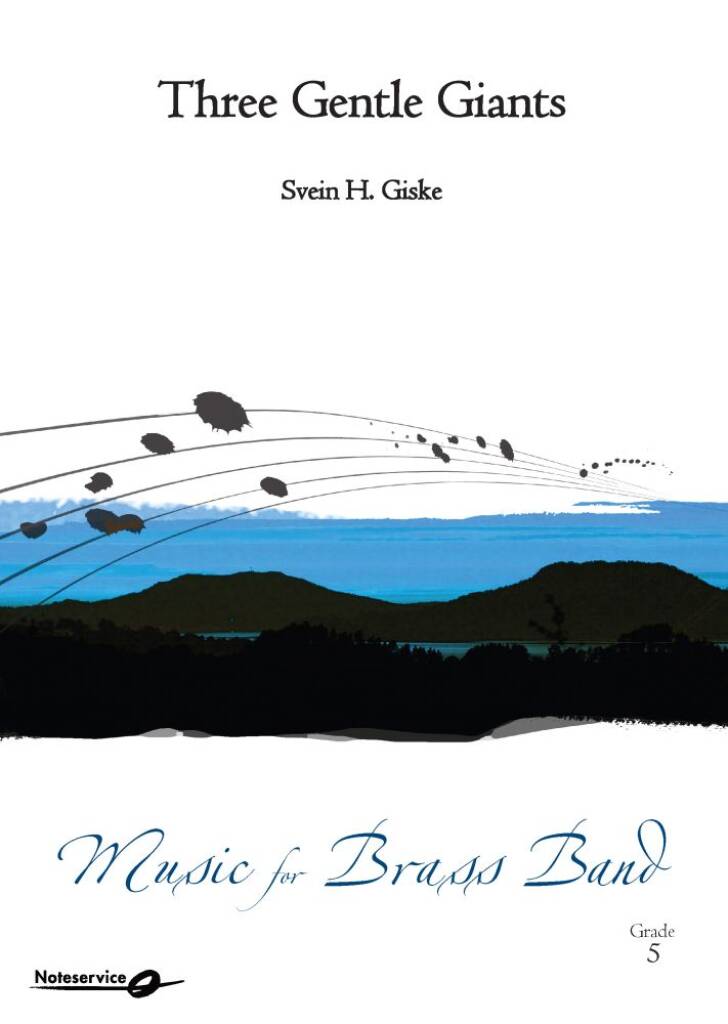
Three Gentle Giants - Svein H. Giske
Three Gentle Giantswas commissioned by Grenland International Brass Festival as a test piece for the 2nd division in 2008.Three Gentle Giants. The three giants each have their own monologue which leads into a conversation. They gather recognition and respect from each others views as the dialogue evolves. Eventually they find a more nutual and singular expression to their conversation.The giants are old with a long life behind them. This can be heard through a slow, melancholic waltz. A waltz is dance commonly linked to festiveoccasions, such as weddings, but for the giants it holds much more significance. It gives room to think about people they have met, placesthey have been, and all that life has given them.Quietly it ends, more or less like it began. We hear echoes of the past, before it all fades out.The giants wander off into a new beginning.Svein H. Giske- January 2023 -In Memoriam Thorvald, Finn and Thor Louis
Estimated dispatch 5-14 working days
 View Music