
Results
-
 £29.95
The Wizard - Phil Lawrence
Having played nearly all the great marches both in the brass band and orchestral repertoire, I was keen to create a cross between the best of brass band marches, and two of the great English orchestral composers of grand marches,...
Estimated dispatch 5-7 working days
-
 £34.95
A Slow Ride in a Static Machine - Phil Lawrence
A Slow Ride in a Static Machine was inspired some time ago when my (late) Father came to visit me "down in London" as he put it. It was based not on one of his circular mishaps, but on several!...
Estimated dispatch 5-7 working days
-
 £29.50
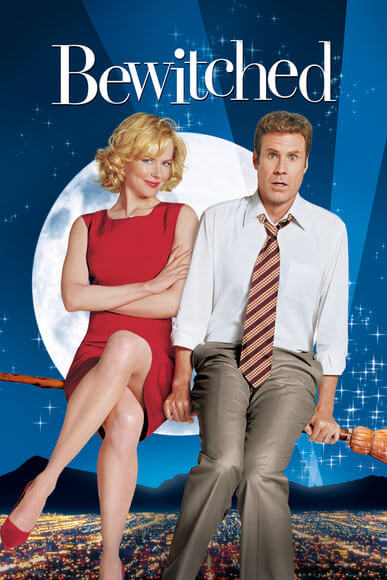
Bewitched - Howard Greenfield - Gavin Somerset
In 1964, the pilot to the new American sitcom 'Bewitched' was completed. The original screening used Frank Sinatra's 'Witchcraft' as the music for the opening titles, however, the production company did not want to pay the large fee to use this track and so, Greenfield & Keller were asked to compose an alternative. The foot-tapping swing piece they produced was reduced to an instrumental version with a light orchestra for the opening credits. However, the song has now been recorded several times. The most famous recording by Steve Lawrence was also featured in the film 'Bewitched' released in 2005. Since then, it has also appeared on the X-Factor a number of times. This fantastic swing item now comes arranged for brass band with the option of playing it at the Steve Lawrence song tempo, or the fast, big band instrumental tempo used in the TV Series. An optional, lower pitched part is also included between letters E-F for the cornet section & flugel to make the item more accessible to lower section bands. This item is a great swing number that audiences of all ages will recognize, a great piece for your new program & a must for every band looking to inject some life into their concerts.
In Stock: Estimated dispatch 1-3 working days
-
 £34.95
SLOW RIDE IN A STATIC MACHINE, A (Brass Band) - Lawrence, Phil
A Slow Ride in a Static Machine was inspired some time ago when my (late) Father came to visit me "down in London" as he put it. It was based not on one of his circular mishaps, but on several! He was always directed carefully, but refused to carry a map in the car! At one time when I lived in North London I would meet him outside the capital, and he would then follow be back to my place, but after I moved to East London I made him bite the navigational bullet and transverse the 'M25 Orbital'. His main problem seemed to be getting off this mesmerising circular cark park. He would often phone (in a weary tone) from the Dartford Tunnel (which is 5 junctions past the one he needed to get off at), asking me to, "bring him in" so to speak. I would always refuse. And then, he would do the opposite (especially when travelling at night), he would phone me up from near Cambridge (he'd gone the wrong way up the M11 away from London by 45 miles), and would ask where he was!The title is obviously a play on John Adams' composition, A Short Ride In A Fast Machine. This quirky tone poem starts as a wind-up by using those unwanted intervals of augmented 4th's and minor 9th's & 7th's in the main tune, before hearing the road works, the juggernauts multi horns, fender-benders, ambulance and police sirens! This then all works to a back beat on kit. The wind-up start gets to an almost Go-Go 1960's Disco middle section (the nostalgic hay-days of the open road), where our wind-up tune falls into place and we all relax as we can now drive at 42.1 mph! We DC, and then get into a right car mess in the Coda!Phil Lawrence.Duration:4:00
Estimated dispatch 7-14 working days
-
 £95.00
A Wartime Sketchbook (Brass Band - Score and Parts)
Early in 1941 William Walton, 39, received his call-up papers. He was by then one of the most eminent of British composers and was exempted from military service on condition that he provided music for films deemed to be of 'national importance'. Scoring Lawrence Olivier's Shakespeare epic Henry V in 1943 was the most substantial of these wartime projects. His role in patriotic films from 1941 and 42 like The Foreman went to France, Next of Kin, Went the day Well and The First of the Few was to provide appropriate title music and some underscoring at key moments. Walton extracted the most substantial portions of the latter as the popular Spitfire Prelude and Fugue for orchestra. The remaining music remained unpublished until 1990, when Christopher Palmer assembled the highlights into A Wartime Sketchbook. I was intrigued to hear these examples of Walton's wartime music and having discovered that they would fit naturally and idiomatically onto the brass band, I arranged six of the numbers into a suite for Besses o' th' Barn Band, which I was conducting at the time.In 1995 the brass band suite was recorded by the famous Black Dyke Mills Band as part of an all Walton album which I produced for the ASV label (ASV CD WHL 2093). This award- winning CD also included Walton's First Shoot, in the edition by Elgar Howarth, my transcription of movements from Music for Children and two substantial brass versions by Edward Watson of the suite from Henry V (with narrator) and the March and Siegfried Music from The Battle of Britain music.Prologue: This is the stirring title music from Went the day Well, a screen play by Graham Greene about a German airborne invasion of an English village. The main theme leads toBicycle Chase: Characteristic musical high-jinks for J.B.Priestley's The Foreman went to France.Refugees: From the same film, this is a poignant accompaniment to the long march of refugees. As Ernest Irving, the film's musical director, put it, "this really makes your feet sore and your knees sag."Young Siegfrieds: This lively movement comes from the music that Walton composed for The Battle of Britain in 1968, with the assistance of Malcolm Arnold, but which the film's producer rejected. It portrays first the Berliners, cheerfully ignoring the black-out and then, in the trio, the Young Siegfrieds of the Luftwaffe, courtesy of a parody of Siegfried's horn call from Wagner's opera.Romance: A soldier and a Dutch refugee snatch a few tender moments together in Next of Kin.Epilogue: At the end of The Foreman went to France, the French look forward with hope and optimism to eventual liberation.- Paul HindmarshDuration: 14.00
Estimated dispatch 7-14 working days
-
£40.00
A Wartime Sketchbook (Brass Band - Score only)
Early in 1941 William Walton, 39, received his call-up papers. He was by then one of the most eminent of British composers and was exempted from military service on condition that he provided music for films deemed to be of 'national importance'. Scoring Lawrence Olivier's Shakespeare epic Henry V in 1943 was the most substantial of these wartime projects. His role in patriotic films from 1941 and 42 like The Foreman went to France, Next of Kin, Went the day Well and The First of the Few was to provide appropriate title music and some underscoring at key moments. Walton extracted the most substantial portions of the latter as the popular Spitfire Prelude and Fugue for orchestra. The remaining music remained unpublished until 1990, when Christopher Palmer assembled the highlights into A Wartime Sketchbook. I was intrigued to hear these examples of Walton's wartime music and having discovered that they would fit naturally and idiomatically onto the brass band, I arranged six of the numbers into a suite for Besses o' th' Barn Band, which I was conducting at the time.In 1995 the brass band suite was recorded by the famous Black Dyke Mills Band as part of an all Walton album which I produced for the ASV label (ASV CD WHL 2093). This award- winning CD also included Walton's First Shoot, in the edition by Elgar Howarth, my transcription of movements from Music for Children and two substantial brass versions by Edward Watson of the suite from Henry V (with narrator) and the March and Siegfried Music from The Battle of Britain music.Prologue: This is the stirring title music from Went the day Well, a screen play by Graham Greene about a German airborne invasion of an English village. The main theme leads toBicycle Chase: Characteristic musical high-jinks for J.B.Priestley's The Foreman went to France.Refugees: From the same film, this is a poignant accompaniment to the long march of refugees. As Ernest Irving, the film's musical director, put it, "this really makes your feet sore and your knees sag."Young Siegfrieds: This lively movement comes from the music that Walton composed for The Battle of Britain in 1968, with the assistance of Malcolm Arnold, but which the film's producer rejected. It portrays first the Berliners, cheerfully ignoring the black-out and then, in the trio, the Young Siegfrieds of the Luftwaffe, courtesy of a parody of Siegfried's horn call from Wagner's opera.Romance: A soldier and a Dutch refugee snatch a few tender moments together in Next of Kin.Epilogue: At the end of The Foreman went to France, the French look forward with hope and optimism to eventual liberation.- Paul HindmarshDuration: 14.00
Estimated dispatch 7-14 working days
-
 £74.95
Hungerford Town (Brass Band - Score and Parts)
2011 Butlins 3rd SectionHungerford Town was commissioned by Tim Crouter and the Hungerford Town Band.The piece is in four movements played through without a break:The Black Prince: Opens with a short motif on which most of the following music is based. The music settles down into a mysterious mood that builds to the first transformation of the opening theme. The music is solid and rugged.The Coach Road: Hungerford was always a popular resting place for the horse drawn coaches on the way to London. The music is light and cheerful and features the soprano cornet and solo horn as postilions.St. Lawrence's Church: The previous motif from the first baritone becomes the main theme for this section that gives plenty of scope for warm and expressive playing. Music from the start of the suite is heard before it moves into a celebratory march.The Bear: The Bear Is a local inn frequented by travellers. The opening theme is heard again and brings the work to a triumphant close.Suitable for 4th Section Bands and above
Estimated dispatch 7-14 working days
-
£37.95
Hungerford Town (Brass Band - Score only)
2011 Butlins 3rd SectionHungerford Town was commissioned by Tim Crouter and the Hungerford Town Band.The piece is in four movements played through without a break:The Black Prince: Opens with a short motif on which most of the following music is based. The music settles down into a mysterious mood that builds to the first transformation of the opening theme. The music is solid and rugged.The Coach Road: Hungerford was always a popular resting place for the horse drawn coaches on the way to London. The music is light and cheerful and features the soprano cornet and solo horn as postilions.St. Lawrence's Church: The previous motif from the first baritone becomes the main theme for this section that gives plenty of scope for warm and expressive playing. Music from the start of the suite is heard before it moves into a celebratory march.The Bear: The Bear Is a local inn frequented by travellers. The opening theme is heard again and brings the work to a triumphant close.Suitable for 4th Section Bands and above
Estimated dispatch 7-14 working days
-
 £66.71
Armistice at Flanders Fields (Brass Band) Dwayne Bloomfield
This poignant and powerful work for brass band by Dwayne Bloomfield describes the day peace was announced to end World War I. The piece was written in 2023 to be played by bands around the world to mark Armistice Day. The composer writes: 'Unless you were there, it's impossible to imagine what it must have been like the day peace was announced ending World War I. The feelings soldiers experienced, who after years of fighting and suffering, to know it was over and they would return home to see family and loved ones again. This piece tries to tell their story. The work begins by approaching the front, distant artillery and battle sounds heard while the carnage and loss of lives was already known to the world. The band builds as we enter the thick of battle, the death and destruction, the conditions faced and the loss of hope of ever surviving. The next section, in 7/8 time, reflects the two sides fighting - both sides attacking and defending with mostly little result, but for the loss of more lives. Two euphoniums then depict the news and hope of peace talks. However, fighting did continue right up to the very end and on the last day there would be another 2,738 casualties. The Canadians were still battling to capture the town of Mons that morning. A song is sung in reflection of the estimated 5.5 million allied soldiers who lost their lives during World War I, then a clock ticks down the final minutes. The last three known casualties are depicted with French soldier Augustin Trebuchon, killed at 10:45am by a single shot as he rushed down the trenches to spread the news of coming peace; Canadian George Lawrence Price killed by a sniper round at 10:58am at the battle of Mons, and lastly a machine gun burst that killed American Henry Gunther, who is believed to have fallen on the 11th hour. Bells then toll ringing around the world announcing the end of the war. After years of war, it must have been jubilation for the families at home knowing their loved ones would be returning to them. The band builds with a hymn for peace as a final tribute to those who fought, before the piece resides with one of the most dreaded sounds at that time, the knock on the door from a telegram delivery boy or better known then as the Angels of Death. It wasn't just the 2,738 families from the casualties of the last day who would receive such a knock, but many more who expected their loved ones to be returning home would instead find out they were instead killed in the last weeks. So close. Driving around the battlefields today one comes across many intersections in the countryside which have cemetery signposts pointing in every direction. While the last post sounds in ceremonies today, this last bugle call instead depicts the horrors, devastation and death the soldiers faced during the war and right up the 11th hour of the 11th day of the 11th month, Armistice at Flanders Fields.' To view a video of Dallas Brass Band performing the work please visit https://www.youtube.com/watch?v=ljfyVz3cMgk Duration: Approx. 15.00 minutes Difficulty Level: 2nd Section + PDF download includes parts and score. Sheet music available from www.brassband.co.uk Instrumentation: Soprano Cornet Eb Solo Cornet Bb Repiano Cornet Bb 2nd Cornet Bb 3rd Cornet Bb Flugel Horn Bb Solo Horn Eb 1st Horn Eb 2nd Horn Eb 1st Baritone Bb 2nd Baritone Bb 1st Trombone Bb 2nd Trombone Bb Bass Trombone Euphonium Bb Bass Eb Bass Bb Percussion 1-3
In Stock: Estimated dispatch 1-3 working days
-
 £95.00
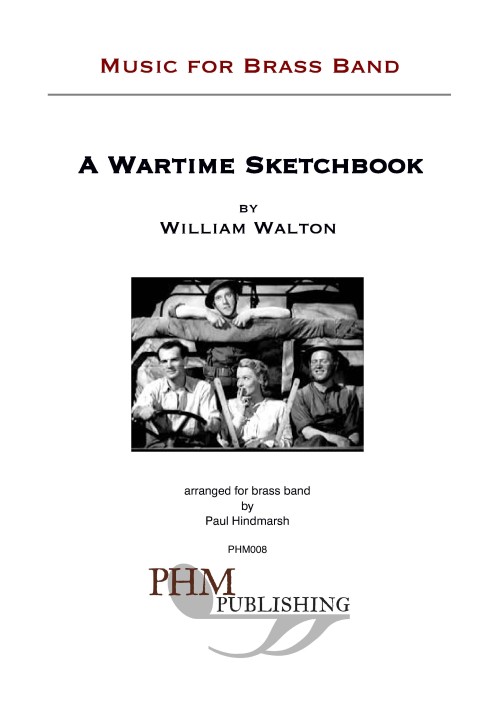
A Wartime Sketchbook (Brass Band - Score and Parts) - Walton, William - Hindmarsh, Paul
Early in 1941 William Walton, 39, received his call-up papers. He was by then one of the most eminent of British composers and was exempted from military service on condition that he provided music for films deemed to be of 'national importance'. Scoring Lawrence Olivier's Shakespeare epic Henry V in 1943 was the most substantial of these wartime projects. His role in patriotic films from 1941 and 42 like The Foreman went to France, Next of Kin, Went the day Well and The First of the Few was to provide appropriate title music and some underscoring at key moments. Walton extracted the most substantial portions of the latter as the popular Spitfire Prelude and Fugue for orchestra. The remaining music remained unpublished until 1990, when Christopher Palmer assembled the highlights into A Wartime Sketchbook. I was intrigued to hear these examples of Walton's wartime music and having discovered that they would fit naturally and idiomatically onto the brass band, I arranged six of the numbers into a suite for Besses o' th' Barn Band, which I was conducting at the time.In 1995 the brass band suite was recorded by the famous Black Dyke Mills Band as part of an all Walton album which I produced for the ASV label (ASV CD WHL 2093). This award- winning CD also included Walton's First Shoot, in the edition by Elgar Howarth, my transcription of movements from Music for Children and two substantial brass versions by Edward Watson of the suite from Henry V (with narrator) and the March and Siegfried Music from The Battle of Britain music.Prologue: This is the stirring title music from Went the day Well, a screen play by Graham Greene about a German airborne invasion of an English village. The main theme leads toBicycle Chase: Characteristic musical high-jinks for J.B.Priestley's The Foreman went to France.Refugees: From the same film, this is a poignant accompaniment to the long march of refugees. As Ernest Irving, the film's musical director, put it, "this really makes your feet sore and your knees sag."Young Siegfrieds: This lively movement comes from the music that Walton composed for The Battle of Britain in 1968, with the assistance of Malcolm Arnold, but which the film's producer rejected. It portrays first the Berliners, cheerfully ignoring the black-out and then, in the trio, the Young Siegfrieds of the Luftwaffe, courtesy of a parody of Siegfried's horn call from Wagner's opera.Romance: A soldier and a Dutch refugee snatch a few tender moments together in Next of Kin.Epilogue: At the end of The Foreman went to France, the French look forward with hope and optimism to eventual liberation.- Paul HindmarshDuration: 14.00
Estimated dispatch 7-14 working days
 View Music