
Results
-
 £76.00
Concerto for Euphonium (Parts only) - Philip Wilby
Completed on New Year's Eve 1995, Philip Wilby's concerto has already established itself as one of, if not the, greatest concerto for the instrument written so far. Its extended length seeks to explore that fine combination of sustained lyricism and explosive virtuosity which typifies the modern euphonium in the most expert hands. There are two parts which divide into four movements. Part One opens with a sonata structure movement which alternates between a melodic style and some rapid passage work. The intention of the music is a firm and cerebral development of the opening fourth-based motifs. At the tranquil conclusion of this music the second movement bursts in - Zeibekikos - a rapid and extrovert Greek Island dance complete with plate smashing! Part Two re-examines some of the opening material surrounded by cadenzas, and centred upon a short and sustained adagio. The final movement opens with a rapid fugal section which moves inexorably towards a climactic return of the music and tonality of the open
Estimated dispatch 7-9 working days
-
 £39.95
Judd: Excerpt Finale From Symphony 4
Peter Ilyich Tchaikovsky wrote his fourth symphony in 1877 and 1878. It was first performed in the latter year conducted by Nikolai Rubenstein. Despite initial critical reaction, the symphony has become a staple of the orchestral repertoire and is one of the most frequently performed late 19th century symphonies. In the exciting finale, Tchaikovsky incorporates a famous Russian folk song, 'In the field stood a birch tree' as one of its themes.
Estimated dispatch 7-14 working days
-
 £32.00
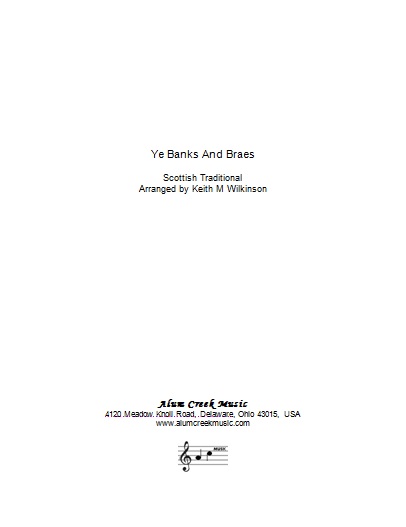
Ye Banks and Braes (Trombone Solo with Brass Band - Score and Parts)
The origins of this melody are unknown but, set to the poem by Robert Burns, this has become one of the most popular Scottish songs.This arrangement was prepared at the request of Brett Baker for one of his many visits to perform as a soloist with Brass Band of the Western Reserve and its musical director Keith M Wilkinson. It has been recorded by Brett with BBWR on the CD Slides Rule!
Estimated dispatch 7-14 working days
-
 £51.95
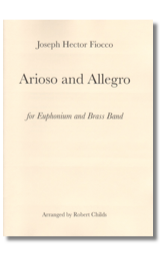
Arioso and Allegro - Joseph Hector Fiocco arr. Philip Wilby and Robert Childs
Joseph Hector Fiocco (1703-41) was the most famous member of a family of Belgian musicians. As well as being a church musician, Joseph was a violin maker, professor of Latin and Greek, and a distinguished harpsichord player. His famous allegro, originally written for harpsichord, lies well for the euphonium. It requires a steady tempo throughout its compass and dynamic range, and is ideal for improving technique and stamina. The lyrical arioso demands well-shaped phrases and ne breath control.
Estimated dispatch 7-9 working days
-
£37.50
Polish Adventures - Gavin Somerset
Composed for the All Saints Wind Band, Sheffield after their trip to Poland in the summer of 2003. This work reflects the different parts of the tour in four continuous movements... PROGRAM NOTES AS THEY APPREAR ON SCORE COVER I don't wish to ramble on with the program notes, do I do believe that if you know the story behind a piece of music, it just puts that extra something into the players performance. In 2002, the All Saints Wind Band, Sheffield, embarked on a 10 day tour of Poland. The group spent 28hrs on a couch packed with instruments, only to arrive finding Poland experiencing its worst summer in 70 years. In 2003, they decided to go back for another go! This time, luxury all the way, no 28hr coach journey, just a 1 1/2hr flight. This piece tells the story of the 2nd tour of Poland in four continuous movements... First the introduction. Early one morning, prepared for the drive to the airport, everyone tired, but excited. A day prior to this, some parents of the children set off in a van driving the instruments to the hotel, some 300 miles away. Bar 13 introduces the "Van" theme. Once arriving at the airport, the movements begin... 1. MORNING FLIGHT A very self explanatory part of the piece, and impressionist in its writing. Flying high over England and the channel, giving a sense of speed we were travelling at (compared to the poor lads in the van somewhere below us!) The Largo before F tells of the short coach journey to the hotel, and settling into what was our new home for 10 days. 2. IN THE STORM The weather was definitely an improvement on last year. So much so, that it became a regular event of the day to go and play rounders in a nearby field. This particular day however, with everyone concentrating hard on the game, it escaped everyone's attention that there was a very large storm creeping over the high mountain range near us. As the title of the movement suggests, the scene involved 25 of us running as fast as we could back to the hotel. Unfortunately, the heavy rain ran faster than us. 3. LAST MEMORIES As most of the people in the band were 18 this year, it was apparent that this would be their last event with the band. Many of the group had grown up together for the last 7 years and so, as the tour came to a close, there was a sense of sadness in the air, but everyone would always have the memories. 4. FINALE & HOME The van and the brave volunteers that went with it, set off the day before the rest of us flew home. This last movement reflect the whole tour, bringing back all the main themes from the different movements before arriving back at the school, just in time to see the van pull up. The "Van" theme makes its presence heard again towards the end. This piece was performed by the Wind Band at the leaving concert of many of the players in the band. I dedicate this piece to the band which is still functioning with new players, and to all those who took part on this tour.
In Stock: Estimated dispatch 1-3 working days
-
 £29.50
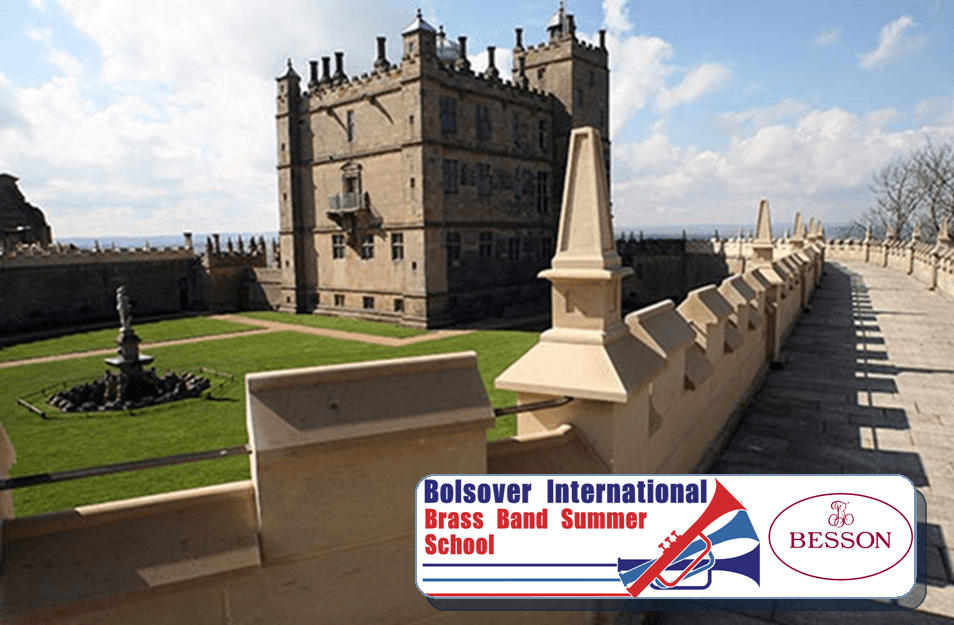
Bolsover Castle - Gavin Somerset
This work was commissioned by the Bolsover International Brass Band Summer School in memory of David Morris, a valued member of both the Summer School and Festival of Brass team. The light-hearted, traditional style March is playable by most levels of bands and following its popularity, has been declared the BIBBSS's signature tune. A donation from each sale of this title is being made to fund the 'Dave Morris Bursary Fund', to aid young people that need financial support to attend the Summer School. Course leader, Steven Mead describes the work as, "A really outstanding composition, based on the traditional March format, but with a freshness and excellent thematic material. It is a brisk march in 6/8 that is a delight to play and to listen to."
In Stock: Estimated dispatch 1-3 working days
-
 £24.50
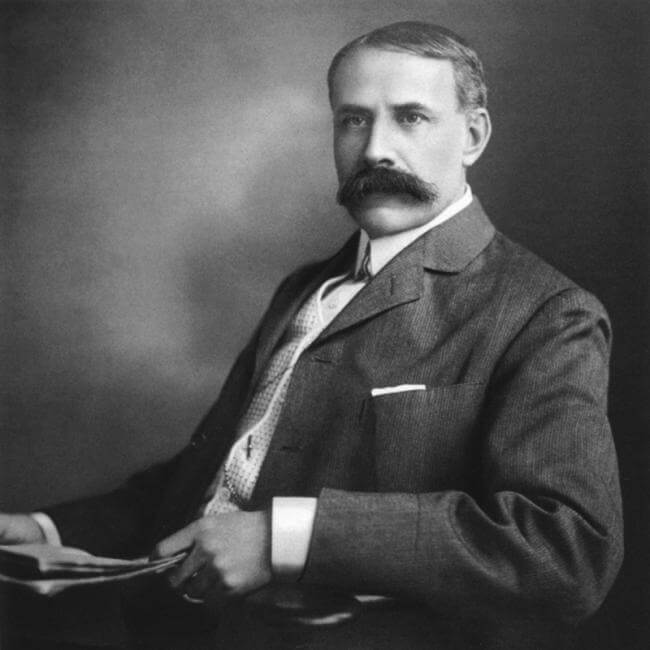
Nimrod 'From Enigma Variations' - Elgar - Gavin Somerset
The 'Enigma Variations' by Elgar are musical portraits of his friends and family. The best of these 14 variations is by far, number 9 entitled 'Nimrod'. The variation has become a piece in its own right and is common at funerals and other solemn occasions. Remembrance Day in particular would not be complete without hearing the work and is always performed at the Cenotaph in London on this day. Now, this arrangement by Gavin Somerset remains faithful to the original and with careful scoring throughout, it allows bands of most standards to play this gorgeous piece and still obtain those hair raising moments the audiences have come to expect. A must for every bands library.
In Stock: Estimated dispatch 1-3 working days
-
 £29.50
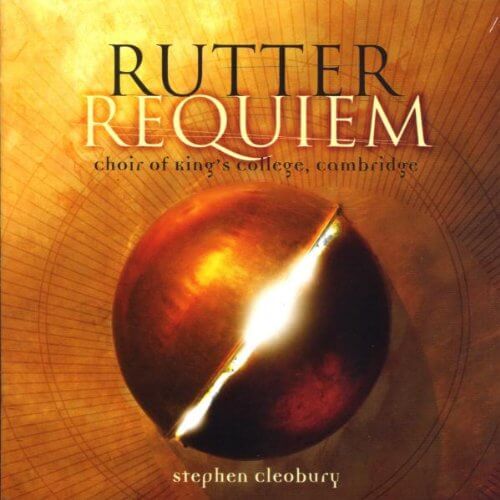
Pie Jesu (From Requiem) - John Rutter - Adam Rutter
John Rutter's music is known across the world for its simplicity and memorable melodies. The 'Pie Jesu' from his requiem is certainly no exception. First performed in Dallas, Texas in 1985, the 6 movements completed Rutter's setting of the Roman Catholic Mass. The third movement (the 'Pie Jesu') is typical of the composer, featuring a strong melody line with subtle accompaniments. Now arranged for Solo Cornet by Adam Rutter, this slow melody allows the soloist to shine in one of the finest and most famous settings of the work to date. A great addition to any concert & soloists repertoire.
In Stock: Estimated dispatch 1-3 working days
-
£24.50
Using Your Mobile - Various - Stephen Tighe
Its happened to most bands, in the middle of a quiet moment in the music, an audience member's mobile phone rings (or worse, a band members!!!). Now, all can be forgiven in the fantastic "tongue-in-cheek" piece of music. Based around the music of Johann Strauss, this lively arrangement pokes fun at the Grand Waltz (Nokia's preferred ring tone!), as well as some of the other often heard ring tones (William Tell etc). Fantastic entertainment value, working well in just about any concert.
In Stock: Estimated dispatch 1-3 working days
-
£24.50
Aberystwyth - Joseph Parry - Ed Keeley
This arrangement is based on the famous Welsh hymn tune Aberystwyth by Joseph Parry. Composed in the late nineteenth century whilst Parry was Professor of Music at Aberystwyth University. The tune is a powerful example of the expressive style of Welsh chapel music.Most widely known today as the setting for Charles Wesley's hymn "Jesus, Lover of My Soul," the melody is notable for its haunting minor key, sweeping phrases and dramatic climax. These qualities translate naturally to the warm, resonant and warm timbre of the brass band.This setting seeks to capture both the solemn dignity and emotional depth of the original tune. Rich harmonic textures and the sonorous colours of the brass band highlight the melody's expressive contours, building towards a broad and noble climax while preserving the reflective and haunting character of the hymn.
In Stock: Estimated dispatch 1-3 working days
 View Music
 Listen to MP3