
Results
-
 £100.00
King Arthur (Scenes from a Radio Drama) (Brass Band - Score and Parts) - Britten, Benjamin - Hindmarsh, Paul
King Arthur (Scenes from a radio drama) was the first of 28 scores Benjamin Britten (1913-1976) composed for radio between 1937 and 1947. It was an ambitious dramatisation of King Arthur's life and times - part pageant, part play, part cantata - written by D.G. Bridson.This colourful suite incorporates the Introduction, a dramatic Wild Dance, some of the music underscoring the scenes for Galahad and The Holy Grail, and two vivid battle scenes, ending with The Final Battle and Apotheosis.King Arthur (Scenes from a radio drama) for brass band should not be confused with a much longer orchestral suite which Paul Hindmarsh devised from the same source in 1995.Suitable for Premier Youth/2nd Section Bands and aboveDuration: 14.00
Estimated dispatch 7-14 working days
-
£19.99
King Arthur (Scenes from a Radio Drama) (Brass Band - Score only) - Britten, Benjamin - Hindmarsh, Paul
King Arthur (Scenes from a radio drama) was the first of 28 scores Benjamin Britten (1913-1976) composed for radio between 1937 and 1947. It was an ambitious dramatisation of King Arthur's life and times - part pageant, part play, part cantata - written by D.G. Bridson.This colourful suite incorporates the Introduction, a dramatic Wild Dance, some of the music underscoring the scenes for Galahad and The Holy Grail, and two vivid battle scenes, ending with The Final Battle and Apotheosis.King Arthur (Scenes from a radio drama) for brass band should not be confused with a much longer orchestral suite which Paul Hindmarsh devised from the same source in 1995.Suitable for Premier Youth/2nd Section Bands and aboveDuration: 14.00
Estimated dispatch 7-14 working days
-
 £29.50
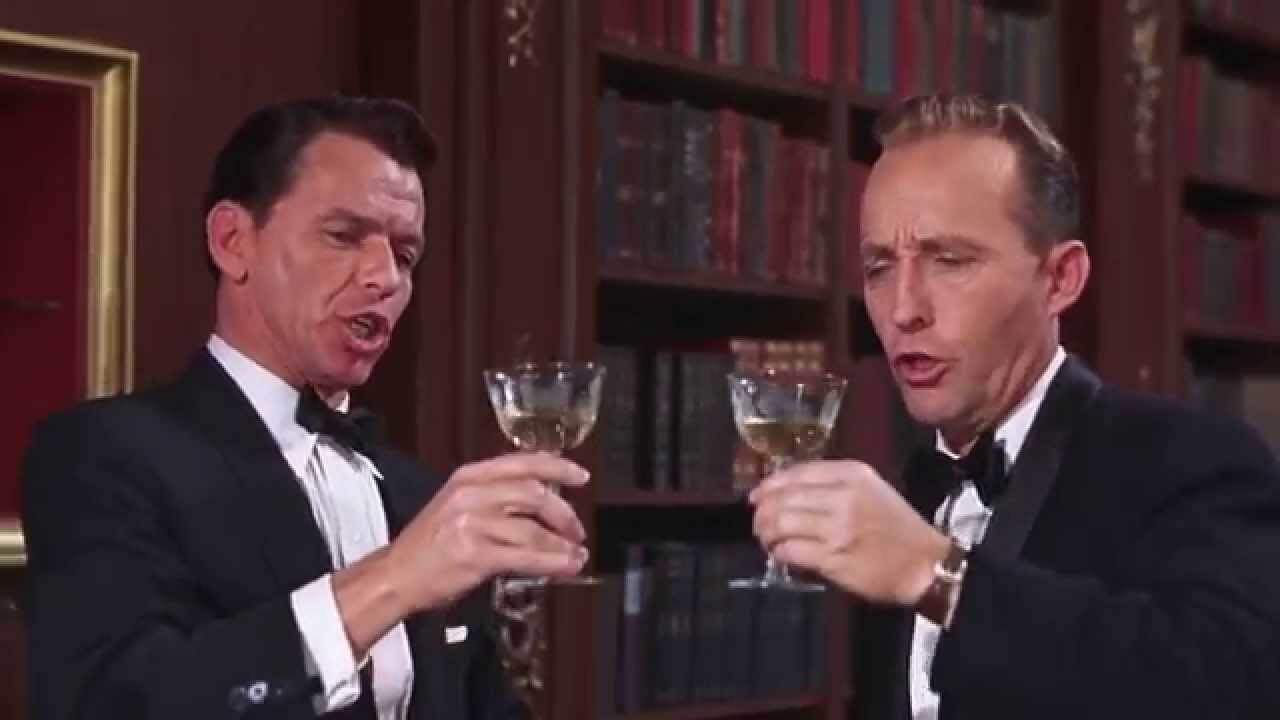
Well Did You Evah! - Cole Porter - Gavin Somerset
This fantastic, high-energy, showcase of a piece was originally composed by Cole Porter for the musical 'Du Barry Was A Lady'. However, it was not until it was performed by Bing Crosby & Frank Sinatra in the film 'High Society' that the piece shot to fame in 1956 and then again in 2001 when Robbie Williams performed the duet with Jon Lovitz on his album 'Swing When Your Winning'. Your band can now faithfully recreate Crosby & Sinatra's clever, comic on screen interaction in this arrangement by Gavin Somerset that is scored as a duet for any two Bb instruments to take the spotlight, or an Eb & Bb instrument. An entertaining piece for the entire band and one your audiences will love! To download the playback audio to play along to, please RIGHT CLICK HERE & Save As .
In Stock: Estimated dispatch 1-3 working days
-
 £24.00
We Wish You a Merry Christmas (Choir with Brass Band - Score and Parts) - Wilkinson, Keith M.
This traditional carol is arranged for band and chorus with optional bell choir. It was designed - and has been used effectively in this way - as a short encore to a Christmas concert. It is possible to invite the audience to join the final chorus (letter C).The publisher permits the user to copy as many Choir and Bell Choir parts as necessary.
Estimated dispatch 7-14 working days
-
 £60.99
You're a Lady (Brass Band - Score and Parts) - Skellern, Peter - Stalman, Wim
Songwriter and composer Peter Skellern was a great writer of many truly sensitive love songs, with You're A Lady being the most famous by far. This evergreen was originally performed with brass band backing, making it an obvious choice for a brass band arrangement.Duration: 5:15
Estimated dispatch 7-14 working days
-
 £84.95
A Day in the Life of a Knight (Brass Band - Score and Parts) - Lawrence, Phil
Here we have a most descriptive piece of writing - a story through music. A fantastic 1st section test piece and championship concert work:The opening scene would depict standing on the battlements of a castle hearing the thundering hoofs of our brave Knight's horse miles in the distance. His arrival is expected, and his reputation is known across many lands. Today, he is to joust amongst mere mortal knights and compete for the hand of the fair (and local) Princess.He vanquishes all competitors and wins the day. The scene moves to evening and court where reception and dance is to be held for our winning knight. Both Knight and Princess become centre of attention during the dance. Their eyes only for each other.At last, the Knight has a chance to be a lone with his Princess as they steal away from the celebrations to a star lit rampart above the castle gardens, where the Knight declares his ever-lasting love and pledges his life and of honour to her. He asks her hand, meanwhile monks pray in the below chapel hoping for union. She say's yes. It is announced in court, then blown from the battlements.Day breaks; he is brought word of evil doings back in his own land. He leaves word to the Princess that he will be back soon to take her hand. The trouble back home was a rouse to get him away from the Princes so one of the vanquished, a dark knight in yesterdays joust, has summoned a dragon to kidnap the princess for his own.As the truth of the deception reaches our Knight he quickly returns to face the varlet that has taken his Lady. This time tis no joust, but a fight to the death with the dark knight and dragon. Our champion proves his best once again and wins the day and the hand of his Princess forever!- Phil LawrenceSuitable for 1st Section Bands and aboveDuration: 11.15
Estimated dispatch 7-14 working days
-
 £59.99
Salute to a Hero (Brass Band - Score and Parts) - Sparke, Philip
It is a tradition at Marlow High School, Oklahoma, that the band members' parents host a Band Banquet every May, at which the senior members of the band present a gift to the band director as a token of gratitude for his year's work. In 2009, clarinet player Brenna Hensley had the idea to commission a new piece from composer Philip Sparke to present to band director Billy Daniel, which would be played at the Spring Concert later that month. Salute to a Hero was the result. The piece opens with a decorated fanfare played on cornets and trombones and, after a short bridge passage, this reappears, played by the full band. A central lyrical section brings a mood of calm, utilising different brass colours, before the fanfare returns to close the work.Duration: 2:15
Estimated dispatch 7-14 working days
-
£24.50
Danse Lithuanienne - Rimsky-Korsakov - Lee Rogers
Mlada was the vision of Stepan Gedeonov in 1870 originally to be performed as a ballet, however it was not until two years later in 1872 that four of the most famous Russian composers were brought on board to score the music for the production (CA(c)sar Cui, Modest Mussorgsky, Nikolay Rimsky-Korsakov and Aleksandr Borodin being the composers in question). Much of the score was created, however the ballet never saw a production and no workable edition is currently in use. Lee Rogers has taken the light hearted 'Danse Lithuanienne' from Rimsky-Korsakov's part of the score and arranged it for brass band. The work requires dexterity from the band and is the perfect showpiece to add to any programme.
In Stock: Estimated dispatch 1-3 working days
-
 £29.50
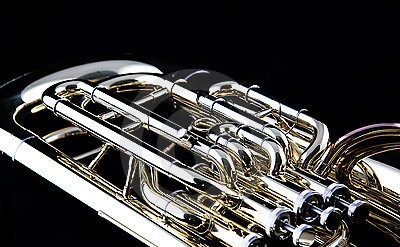
The Rose - Amanda McBroom - Rob Westacott
This classic song has been entertaining audiences around the globe since it was originally written back in 1977. It didn't reach world-wide success until the piece was recorded by artist Bette Midler and featured in the film, The Rose. Songwriter, Amanda McBroom recalls that she wrote the piece in just 45 minutes. The work has now been arranged as a gorgeous Euphonium solo with lower brass (flugelhorn down the band) accompaniment and is a great new addition to a soloist's repertoire. The work is not technically demanding and the lyrical tone of the piece is one that will allow players of all ages to shine with this solo. To download the playback audio to play along to, please RIGHT CLICK HERE & Save As .
In Stock: Estimated dispatch 1-3 working days
-
£29.50
Isle of Music - Max Stannard
This piece was written for the Friezland Band tour of the Isle of Man in 2025. It was performed as part of all three concerts the band gave in Douglas, Onchan and Castletown. It consists of three Manx traditional melodies which begins with a setting that incorporates driving energy into the song 'Arrane ny Niee', followed by the more plaintiff and reflective 'Arrane Oie Vie', before a lively finale of 'Hunt the Wren'. Duration c. 5 minutes
In Stock: Estimated dispatch 1-3 working days
 View Music
 Listen to MP3