
Results
-
£67.20
I Feel It Coming - Jan van Kreaydonck
Estimated dispatch 5-14 working days
-
 £61.99
I Feel It Coming
Estimated dispatch 10-14 working days
-
 £54.99
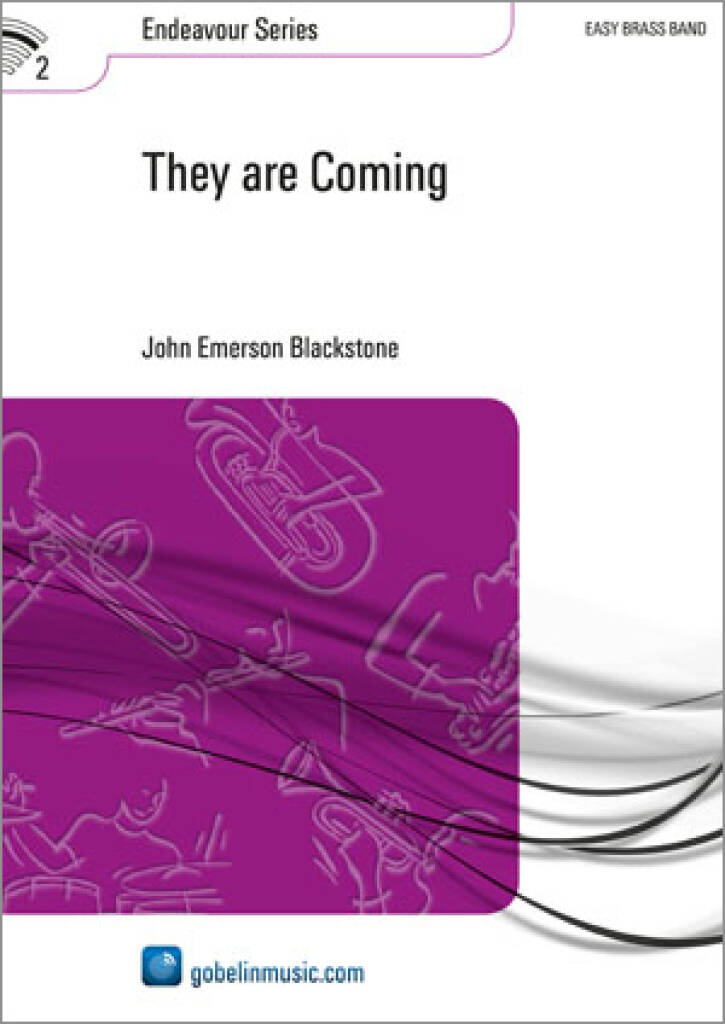
They are Coming - John Emerson Blackstone
There are people who are capable of planning well. They live their lives in a well-structured manner and know exactly what they have to do. On the other hand, there are also people who are the exact opposite: they want to do too many things at once and are often somewhat absent-minded, which occasionally results in frantic situations. The outcome of one such situation is 'They are coming'. John Emerson Blackstone had been working on a new composition for some time when he received a telephone call from his editor, who told him that the deadline was approaching rapidly, even worse, that it would expire at the end of that same day and that he would drop by in person to fetch thecomposition! Blackstone set to work in a frenzy and completed the last details. When his editor arrived, the piece was finished ..... and got its definitive title: 'They are coming'.
Estimated dispatch 5-14 working days
-
 £53.99
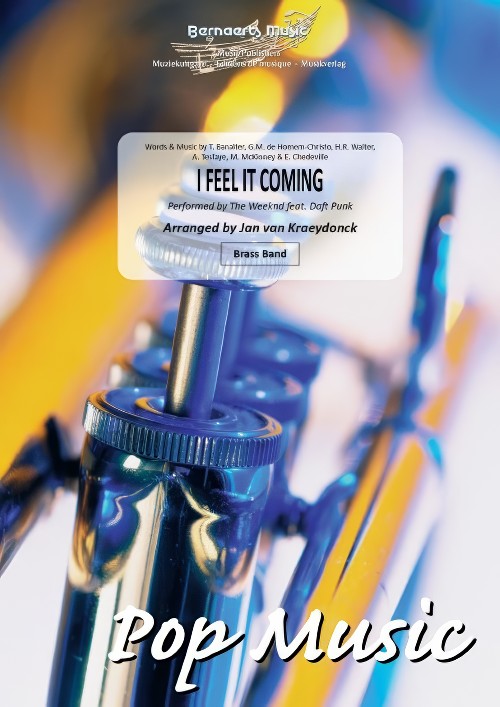
I Feel it Coming (Brass Band - Score and Parts) - Kraeydonck, Jan van
Performed by The Weeknd and Daft Punk. Duration: 03:30
Estimated dispatch 7-14 working days
-
 £24.95
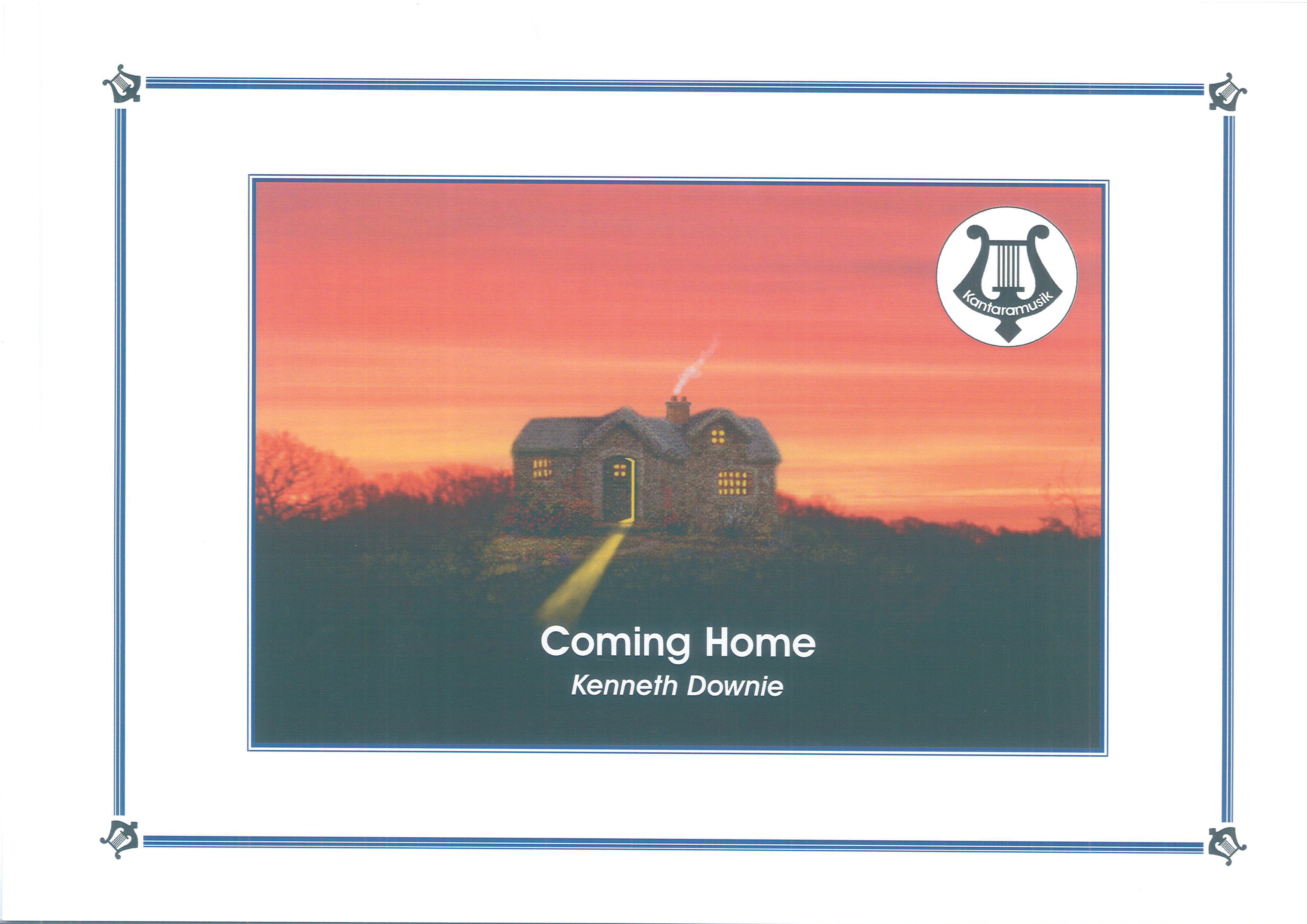
Coming Home (Brass Band - Score and Parts)
The arranger has described Coming Home! as music of reconciliation. In a world of conflict, at both national and personal level, it would be good to think that this music could bring a message of hope and resolution of problems for people who are hurting. It is a setting of Will Lamartine Thompson's melody to his own words beginning 'Softly and tenderly Jesus is calling'. The chorus starts 'Come home, come home! Ye who are weary,come home!'. The rising interval of a fifth is always associated with the words 'Come home'. It is the arrangers hope that the gentle and moving nature of this music will create for all listeners, whether or not they possess religious faith, a spirit of harmony and reconciliation.
Estimated dispatch 7-14 working days
-
£60.00
Santa Claus is Coming to Town - Gillespie, H & Coots, J-F - Wormald, C
Bring some festive sparkle to your Christmas concert with this arrangement of Michael Buble's Christmas hit Santa Claus is Coming to Town.Expertly arranged for brass band by Chris Wormald, this effervescent number is bursting with seasonal cheer, infectious rhythms and feel-good energy. It's the perfect way to bring a little swing and sparkle to your festive programme, with a tune audiences will instantly recognise and love.Difficulty: 4th section +Duration: 3 minutes
In Stock: Estimated dispatch 1-3 working days
-
£30.00
Santa Claus is Coming to Town (Score) - Gillespie, H & Coots, J-F - Wormald, C
Bring some festive sparkle to your Christmas concert with this arrangement of Michael Buble's Christmas hit Santa Claus is Coming to Town.Expertly arranged for brass band by Chris Wormald, this effervescent number is bursting with seasonal cheer, infectious rhythms and feel-good energy. It's the perfect way to bring a little swing and sparkle to your festive programme, with a tune audiences will instantly recognise and love.Difficulty: 4th section +Duration: 3 minutes
In Stock: Estimated dispatch 1-3 working days
-
 £24.95
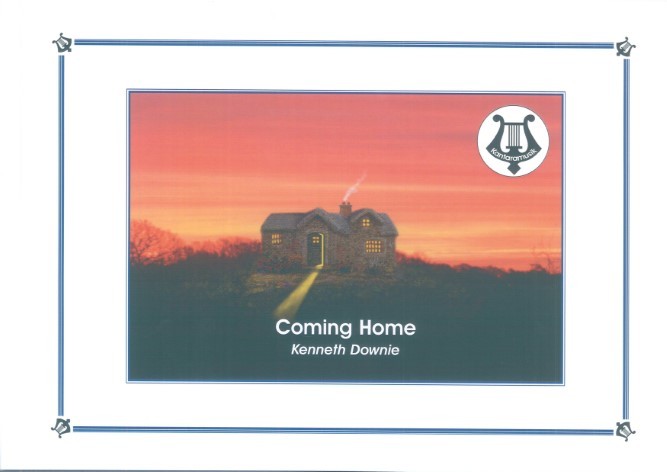
Coming Home (Brass Band - Score and Parts) - Downie, Kenneth
The arranger has described Coming Home! as music of reconciliation. In a world of conflict, at both national and personal level, it would be good to think that this music could bring a message of hope and resolution of problems for people who are hurting. It is a setting of Will Lamartine Thompson's melody to his own words beginning 'Softly and tenderly Jesus is calling'. The chorus starts 'Come home, come home! Ye who are weary,come home!'. The rising interval of a fifth is always associated with the words 'Come home'. It is the arrangers hope that the gentle and moving nature of this music will create for all listeners, whether or not they possess religious faith, a spirit of harmony and reconciliation.
Estimated dispatch 7-14 working days
-
£24.50
Wedding Music (Selections For A Wedding) - Various - Gavin Somerset
With more and more brass bands performing at weddings, having the correct music is essential for the couple's perfect day. With most of the traditional wedding music coming from large overtures & operas etc, this unique pack of music has been specially designed to minimise fuss (all 4 pieces are printed on just one sheet per part) and have just the "famous" bits included. Specially arranged by Gavin Somerset so that the pieces included can be performed from anything ranging from a full brass band to a brass quintet group and with repeats that can be cut or performed to tailor to each event. The pieces areaABRIDAL CHORUS (from Lohengrin) By Richard Wagner"Here comes the bride"aA is the standard march played for the bride's entrance at many formal weddings. The wedding between Elsa and Lohengrin however was almost an immidiate failure!PACHELBEL'S CANON By Johann PachelbelFormally known as the Canon & Gigue in D and originally composed for a string quartet, the Canon part of the composition has become a favorite at weddings, either as an alternative to the Bridal Chorus (above) or used during the signing of the register. The convention in the Baroque era would have been to play a piece of this type in the moderate to fast tempo, however at weddings it has become fashionable to play the work at a slow tempo.WEDDING MARCH (from "A Midsummer Night's Dream") By Felix MendelsshonPopularized by Princess Victoria's wedding to Prince Frederick William of Prussia and coupled with the Bridal Chorus for the entry of the bride, this Wedding March is often for the recessional at the end. Prelude to "Te Deum" By Charpentier Another item now popular in its use during weddings for its bright fanfares. Many composers have written music to the "Te Deum" text (Te Deum being an early Christian hymn of praise, used still regularly in the R.C Church). The prelude by Charpentier is by far one of the most famous
In Stock: Estimated dispatch 1-3 working days
-
 £68.90
Three Pictures for Band - Oliver Waespi
This composition consists of three sound pictures. Numerous associations mutually link those parts as far as motifs and harmony are concerned. The motif of the ascending and descending fourth plays an important role in many a theme. There are many fourth chords by means of which I try to put a harmonic and unifying stamp on the composition as a whole. Moreover there are similar or identical, though varied, motifs in the successive parts. The first part 'Cortege' (Procession) describes the dignified majestic procession by means of simple, precise rhythms. At first, the music is scarcely audible, as if coming from a distance; it gradually comes nearer until it reaches its climax in large chords, before fading away again. At each quarter note one could imagine a step. The second part 'Dialogue' consists in broad outlines of dialogues between the different orchestral groups. Some instruments are asking questions, others are giving answers. After a rather sad passage, the music turns into a climax followed by a second passage that brings comfort and leads to a quiet ending. In the third part, there is a sudden movement coming up in the shape of 'Waves'. The principle of the wave, successively swelling and decreasing, dominates the entire musical structure of this part, even in the separate motifs.Oliver Waespi
Estimated dispatch 5-14 working days
 View Music