
Results
-
£54.99
Pleasure for Band - Kees Schoonenbeek
As the title suggests Pleasure for Band is a pleasant composition it is based in five equal parts. The first movement makes use of A-B-A form, with the A theme having a bright joyous character and the B theme having a contrasting more lyrical feel. This work will make an idea encore for any concert.
Estimated dispatch 5-14 working days
-
 £60.99
Real-Pop - Kees Vlak
Real-Pop is an easy five movement suite, with each movement, all in contrasting pop styles, reflecting an aspect of the land of the rising sun - Japan. This entertaining new work is a must for all elementary bands who want to add something a little different to their concert programme.
Estimated dispatch 5-14 working days
-
 £134.99
Earthquake - Jan de Haan
On average, about eight thousand (mostly light) earthquakes occur worldwide each day. Composer Jan de Haan has always been fascinated by this natural phenomenon. Earthquake portrays the beautiful South-American peninsula, Isla Iberi which lies directly on a major fault line. The peace and tranquility is shattered by a major tremor and the terrified people flee in fear. In addition to showing the earthquakes destructive power, Earthquake also conveys the courage and faith of the industrious people of Isla Iberia, as they energetically start the reconstruction of their beloved residential area. Earthquake is dedicated to the memory of all victims of the devastating Asiantsunami which occurred on 26 December 2004.
Estimated dispatch 5-14 working days
-
 £60.99
Pie Jesu - Gabriel Fauré - Robert van Beringen
Pie Jesu is the famous aria for soprano and orchestra from Gabriel Faure's Requiem, opus 48. Faure (1845- 1924) composed the work in 1887, two years after his father's death and only a short time before his mother passed away. Faure's Pie Jesu is richly atmosphere and peaceful, and Robert van Beringen perfectly captures the essence of Faure's beautiful music in this arrangement for fanfare band.
Estimated dispatch 5-14 working days
-
 £87.99
Prelude, Dance and March - Malcolm Arnold - Robin Norman
Malcolm Arnold is one Britain's best-loved composers. In 1948 he composed a very short suite for the National Youth Orchestra of Great Britain - entitled simply To Youth. Seven years later he took To Youth and made some fairly major revisions, including a complete new movement, and the Little Suite for Orchestra was born. The Little Suite for Orchestra follows a very similar pattern to the later suites for brass band, starting with a bold, strident Prelude, which strangely ends quietly before a lovely, lilting, Dance composed in 3/8 time. Finally a rollicking and militaristic March brings the suite to a conclusion. This arrangement for brass band by Robin Norman is sure tobecome a classic in the brass band repertoire.
Estimated dispatch 5-14 working days
-
 £17.99
The Foggy Dew - Philip Doe
'The Foggy Dew' is one of those charming Irish melodies which seem to capture the beauty and serenity of that country, all of which is evoked in this delicate arrangement by Philip Doe.
Estimated dispatch 5-14 working days
-
 £54.99
Eine Kleine Morgenmusik - Bruce Fraser
An "unintended" play on words on the title of Mozart's famous composition forms the basis of this solo piece. It was composed in 2004 by the Scottish composer, Bruce Fraser, and features a solo for flugel or cornet. It is not a very difficult piece for both the soloist and the band, but is that always necessary? A lovely, highly recommended intermezzo for your concert.
Estimated dispatch 5-14 working days
-
 £54.99
Chester's Chase - John Emerson Blackstone
Chester's musical pursuit has been depicted so well that it is a feast to perform and to listen to this composition. In his typical manner Blackstone succeeds in transforming an apparently musical phenomenon into a valuable orchestral piece which is attractive to everyone.
Estimated dispatch 5-14 working days
-
 £54.99
Kettledrum Overture - Timothy Travis
Little (solo) material is available for the novice kettledrummer. Your kettledrummer will be thrilled with the star part this composition allows him or her to play. Kettledrum Overture is a classic overture for a novice kettledrummer and band. Lively, educational and a guaranteed hit in your concert.
Estimated dispatch 5-14 working days
-
 £54.99
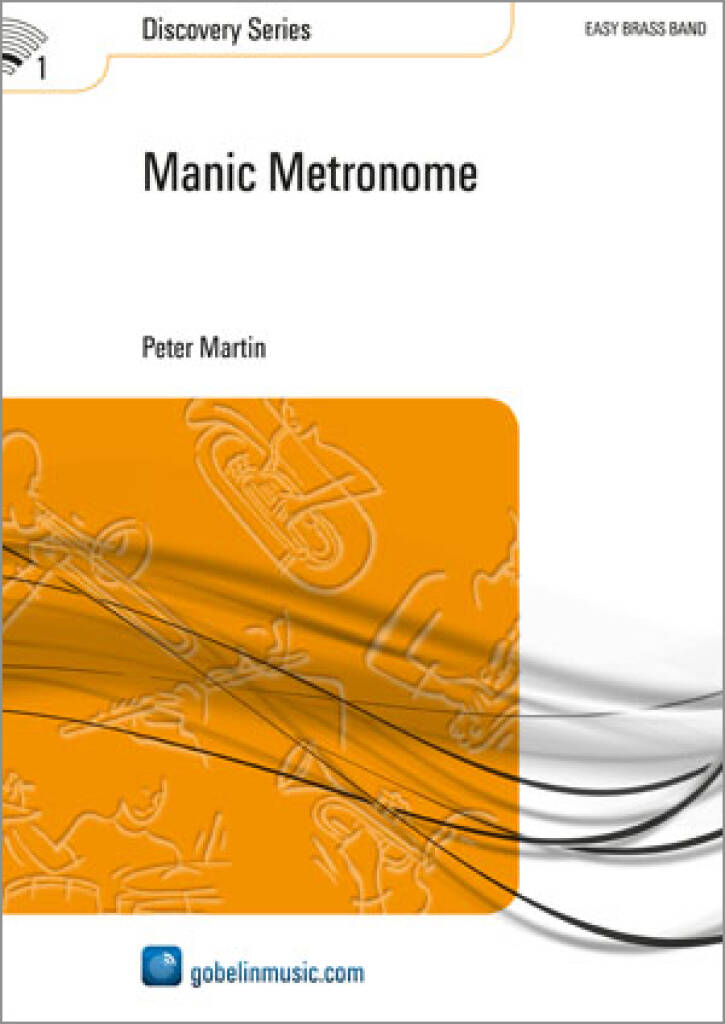
Manic Metronome - Peter Martin
A metronome can drive you crazy, particularly when the tempo is fairly quick. But what would you think of a metronome that goes crazy itself? From the very beginning of this fun piece, the machine tries to put the band on the wrong track, and it almost works. Composer Peter Martin created a charming piece of music, but the question is, does it all end well? Use your imagination and creativity in Manic Metronome!
Estimated dispatch 5-14 working days
 View Music