
Results
-
 £51.99
Into Your Eyes (Brass Band - Score and Parts) - Houben, Kevin
Into Your Eyes was commissioned by the Nielse ConcertBand (Belgium) to celebrate its tenth anniversary. The band was formed through the fusion of two existing music societies by the late Michel Versavel, who was the combined ensemble's first conductor. This wonderful chorale is a hymn to his memory, and is dedicated to the further growth and advancement of the band. Duration: 3.30
Estimated dispatch 7-14 working days
-
 £22.00
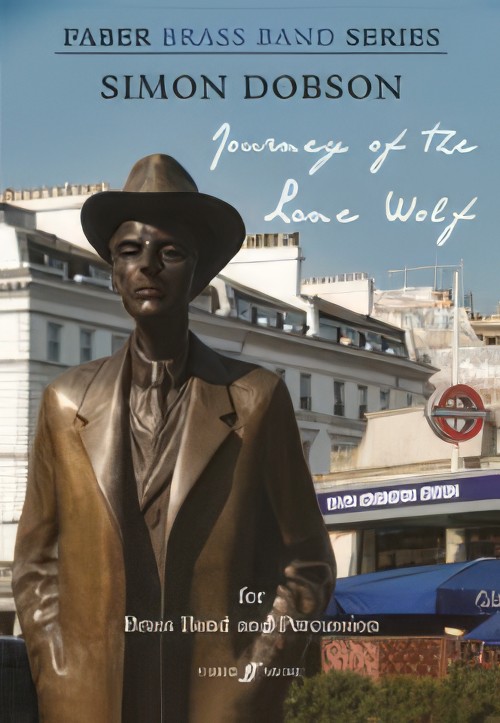
Journey of the Lone Wolf (Brass Band - Score only)
Championship Section Test Piece for the 2016 National Finals of the British Brass Band Championship.The Lone Wolf of the title is the great Hungarian composer and folklorist Bla Bartok. Bartok's journey took him from the hills of the Balkans to the heart of the new world. His singular vision may have meant a life out in the cold, a life without warmth and love, a life without true happiness, a death mourned by a few in a strange land.The first of the three linked movements is capturing the Peasants' Song and follows the young Bartok and fellow composer Zoltan Kolday as they embark on Summertime adventures through the Hungarian countryside to collect and catalogue the astonishing variety of Gypsy and folk music heard in the Balkan hills. The arrival of WW1 plunges Bartok's beloved Hungary into chaos.Bartok was at times a cold man, aloof and lonely. The occasional moments of tenderness he showed are portrayed in Night Music. His brief but intense affairs speak of a love he could only long for. Jazz is my night music and here there are hints of what Bartok may have heard in the USA later in his life.Having been forced by the world's evils to leave his homeland of Hungary for America Bartok, the anti-fascist, felt isolated and angry. In the finale, Flight and Fight, we hear his longing for a simpler time of Gypsy folk dances as well as his maturity and depth as a composer finally exploring deeper colours and darker themes.Duration: 15.00
Estimated dispatch 7-14 working days
-
 £34.95
The High Council (Brass Band - Score and Parts) - Steadman-Allen, Ray
This march was written at the request of the then Chief of the Staff, Commissioner Arnold Brown for the welcome meeting of the 1974 High Council, a gathering of The Salvation Army's top leaders from around the world who meet to elect a new General. The scintillating music is filled with many wonderful and surprising shifts of key, rhythm and instrumental colour. Evangeline Booth's song 'The world for God' provides the international reference while at the trio's peak, the composer joins three tunes in impressive counterpoint; 'We're the Army' (cornets), 'A Robe of White' (horns and baritones) and 'Bound for Canaan's Shore' (trombones). The march ends with a dazzling shift into triple time and an impressive molto allargando codetta.
Estimated dispatch 7-14 working days
-
£17.50
The High Council (Brass Band - Score only) - Steadman-Allen, Ray
This march was written at the request of the then Chief of the Staff, Commissioner Arnold Brown for the welcome meeting of the 1974 High Council, a gathering of The Salvation Army's top leaders from around the world who meet to elect a new General. The scintillating music is filled with many wonderful and surprising shifts of key, rhythm and instrumental colour. Evangeline Booth's song 'The world for God' provides the international reference while at the trio's peak, the composer joins three tunes in impressive counterpoint; 'We're the Army' (cornets), 'A Robe of White' (horns and baritones) and 'Bound for Canaan's Shore' (trombones). The march ends with a dazzling shift into triple time and an impressive molto allargando codetta.
Estimated dispatch 7-14 working days
-
 £100.00
Journey of the Lone Wolf (Brass Band - Score and Parts) - Dobson, Simon
Championship Section Test Piece for the 2016 National Finals of the British Brass Band Championship.The Lone Wolf of the title is the great Hungarian composer and folklorist Bla Bartok. Bartok's journey took him from the hills of the Balkans to the heart of the new world. His singular vision may have meant a life out in the cold, a life without warmth and love, a life without true happiness, a death mourned by a few in a strange land.The first of the three linked movements is capturing the Peasants' Song and follows the young Bartok and fellow composer Zoltan Kolday as they embark on Summertime adventures through the Hungarian countryside to collect and catalogue the astonishing variety of Gypsy and folk music heard in the Balkan hills. The arrival of WW1 plunges Bartok's beloved Hungary into chaos.Bartok was at times a cold man, aloof and lonely. The occasional moments of tenderness he showed are portrayed in Night Music. His brief but intense affairs speak of a love he could only long for. Jazz is my night music and here there are hints of what Bartok may have heard in the USA later in his life.Having been forced by the world's evils to leave his homeland of Hungary for America Bartok, the anti-fascist, felt isolated and angry. In the finale, Flight and Fight, we hear his longing for a simpler time of Gypsy folk dances as well as his maturity and depth as a composer finally exploring deeper colours and darker themes.Duration: 15.00
Estimated dispatch 7-14 working days
-
 £169.99
Explorers on the Moon (Brass Band - Score and Parts) - Raphael, Paul
Composed by Paul Raphael, Explorers on the Moon, the sequel to his 2017 work Destination Moon, was composed in 2019 to commemorate the 50th anniversary of the 1969 Moon Landings. It is inspired by the Belgian author Herge and his most famous creation, Tintin. The music uses Herge's story from 1950, almost twenty years prior to the first ever moon landing, following Tintin and his fellow adventurers as they become the first humans on the Moon. This fantastic piece is split into three parts, titled Space, Nightmare Land and The Journey Home and is one of the most spectacular contest pieces in recent years.Duration: 20.00
Estimated dispatch 7-14 working days
-
 £119.99
The Essence of Youth (Brass Band - Score and Parts) - Roels, Stijn
In The Essence of Youth the composer gives an insight into childhood and youth -- inspired by his own daughter. The opening of sparking rhythms, dynamic contrasts and changes of time signature paint a vivid picture of the unpredictability of children. The first and second movements recount the love -- and also tension and the worries -- in the adult-child bond, through dissonant harmonies but also pretty melodies. The fugue-like ending leads to a final splendid chorale: a picture of proud parents with their child! Duration: 9.45
Estimated dispatch 7-14 working days
-
 £38.00
Moose on the Loose (Brass Band - Score and Parts) - Hamlyn, Mark
"I had a dream of a moose that escapes captivity and heads towards the city. At first he has a ball with all the new things to see but as he approaches the centre he gradually despairs at the chaos of the crowds of people and traffic. In the end he flees desperately out of the city and slams himself back into his cage. The piece is clearly a homage to Shostakovich and perhaps shouldn't be taken too seriously" - Mark Hamlyn. Duration: 4.00. Suitable for 1st Section Bands and above.
Estimated dispatch 7-14 working days
-
 £87.99
Hail the Dragon! (Brass Band - Score and Parts) - Sparke, Philip
Its title, Hail the Dragon!, references a work Philip Sparke wrote in 1984, The Year of the Dragon. The piece opens with a lively and energetic fanfare. The mood becomes more subdued in the centre section as the cornet introduces a new theme that builds to an emotional climax. This leads into a recap of the opening fanfare which acts as a type of descant to short quotations from the last movement of The Year of the Dragon before reaching a thunderous finale.Duration: 4:45
Estimated dispatch 7-14 working days
-
 £59.99
Flowerdale (from Hymn of the Highlands) (Soprano Cornet Solo with Brass Band - Score and Parts) - Sparke, Philip
Flowerdale is a forest in Wester Ross, Scotland, which is well-known for it's beautiful waterfall. This piece, for solo soprano cornet, is one of the movements from Philip Sparke's epic suite Hymn of the Highlands. It depicts the tall trees swaying gently in the wind with the serenity of the area being reflected by the subtle accompaniment of the band. Let your soprano player bloom into colour with this exquisite solo. A real show stopper.Duration: 4:20
Estimated dispatch 7-14 working days
 View Music