Results
-
£50.00
Whirlegigg - Kenneth Hesketh
'Whirlegigg' is the middle English word for a contraption that continuously spins. A great fascination with many inventors of the medieval period was to develop a perpetual motion machine constantly turning and giving off energy. This idea is particularly apt for this piece. A simple ternary structure gives ample opportunity for both boisterous and reflective material with gyrating accompaniment figures never far away. The machine almost stops near the end, but finally musters one last burst of excitement and energy to bring the work to its close.Brass Band Grade 5: 1st SectionDuration: 5 minutes.Whirlegigg has been recorded by the Leyland Band, conducted by Jason Katsikaris, and is available on the CD Penlee.
In Stock: Estimated dispatch 1-3 working days
-
£90.00
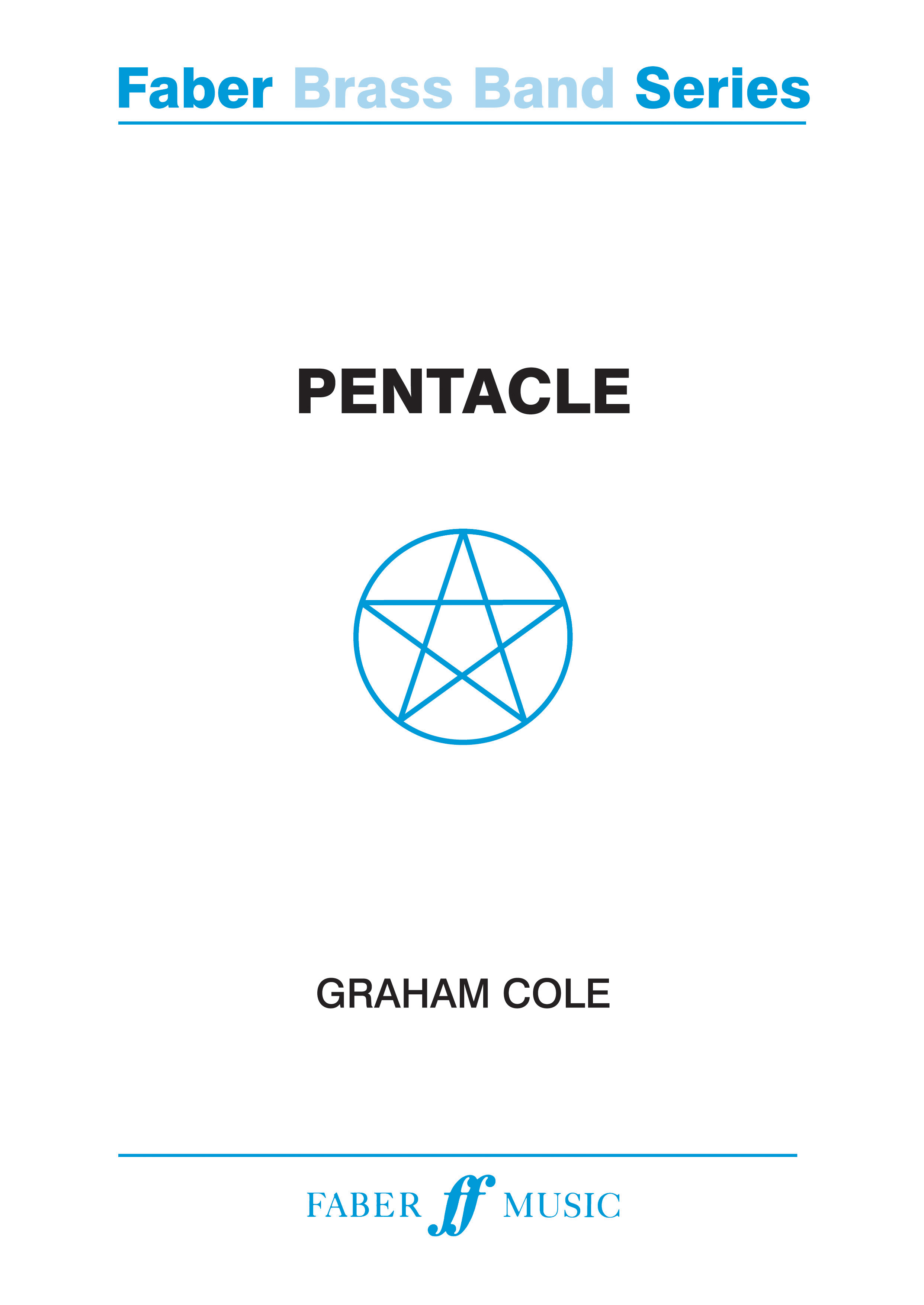
Pentacle (Score & Parts) - Graham Cole
Pentacle was selected as a test piece for the National Brass Band Championships of Great Britain, First Section regional competition in 2009. The Pentacle is an image of an upright five-pointed star drawn inside a circle with a single continuous line making the five points equally spaced. Traditionally, each of the five angles has been attributed to the five metaphysical elements of the ancients. These provide the titles for the five sections of the piece: Earth (representing stability and physical endurance), Wind (representing intelligence and the arts), Fire (representing courage and daring), Water (representing emotions and intuition) and Quintessence (which represents the All and the Divine spirit).Brass Band Grades 1 & 2: Novice and Learner bands.Duration: 13 minutes.
In Stock: Estimated dispatch 1-3 working days
-
£85.00
The Drop: Remixed (Score & Parts) - Simon Dobson
Originally commissioned as the set test piece for Section B of the 2007 European Brass Band Championships, The Drop was re-worked and extended as The Drop: Remixed for Leyland Band to perform at the 2008 RNCM Festival of Brass in Manchester. Ideal as a First Section brass band test piece, The Drop: Remixed contains much tuneful and dance-based music and finishes with a massive drum 'n 'bass-inspired ending.Brass Band Grade 5: 1st SectionDuration: 12 minutesThe work has subsequently been recorded by the Leyland Band, conducted by Jason Katsikaris, an is on the CD entitled Penlee.
In Stock: Estimated dispatch 1-3 working days
-
£55.00
Sweeney Todd Suite - Malcolm Arnold
Malcolm Arnold's ballet, Sweeney Todd, was first staged in 1959 by The Royal Ballet Company with choreography by John Cranko. The music was later adapted as a concert work and it is from this version that this brass band arrangement, by Phillip Littlemore, is made. The original concert suite lasts some 20 minutes, but this version has been shortened to a more manageable eight minutes.The first performance of this arrangement was given on the 22nd October 2006 at the Malcolm Arnold Festival, Derngate, Northampton by the Rushden Windmill Band conducted by Richard Graves.Brass Band Grade 4: Advanced Youth and 3rd Section.Duration 8 minutes.
In Stock: Estimated dispatch 1-3 working days
-
£50.00
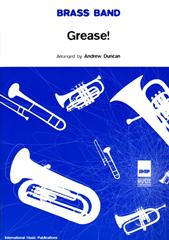
Grease! (Score & Parts) - Warren Casey
Andrew Duncan has taken some key themes from the shown Grease! and made this fine brass band arrangement.Brass Band Grade 4: Advanced Youth and 3rd SectionDuration: 4 minutes
In Stock: Estimated dispatch 1-3 working days
-
£55.00
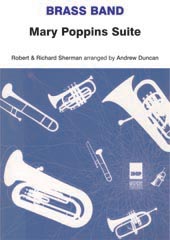
Mary Poppins Suite (Score & Parts) - Richard Sherman
Mary Poppins' mixture of live action and animation, together with the exceptional songs from Robert and Richard Sherman, provides a thoroughly entertaining movie spectacle. Julie Andrews's Oscar-winning performance as the title character is exceptional and Dick Van Dyke's Bert, the chimney sweep, is equally stunning (despite that comical cockney accent). Andrew Duncan has put together a very enjoyable symphonic suite of music from the film including Chim chim cher-ee; Feed the Birds, Let's go Fly a Kite, A Spoonful of Sugar, Sister Suffragette and the inimitable Supercalifragilisticexpialidocious! Brass Band Grade 4: Advanced Youth and 3rd Section. Duration: 5 minutes.
In Stock: Estimated dispatch 1-3 working days
-
£45.00
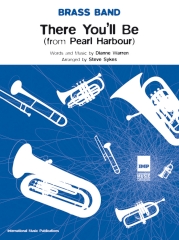
There You'll Be (from Pearl Harbour) (Score & Parts) - Diane Warren
Diane Warren is one of the greatest songwriters of today and her song There You'll Be was featured in the film Pearl Harbour starring, Ben Affleck and Kate Beckinsale. This brass band arrangement has been made by Steve Sykes. Brass Band Grade 4: Advanced Youth and 3rd Section Duration: 8 minutes.
In Stock: Estimated dispatch 1-3 working days
-
£45.00
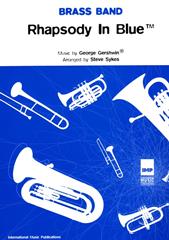
Rhapsody in Blue (Score & Parts) - George Gershwin
Steve Sykes has taken the main themes from George Gershwin's classic 1924 Rhapsody in Blue for piano and concert jazz orchestra to form a tuneful selection for brass band. Brass Band Grade 4: Advanced Youth and 3rd Section Duration: 8 minutes
In Stock: Estimated dispatch 1-3 working days
-
£65.00
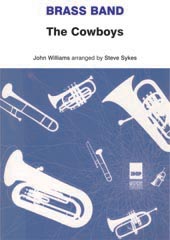
The Cowboys (Score & Parts) - John Williams
In a career that's spanned over five decades, composer John Williams has scored fewer than five Westerns which, judging from his exemplary work on this 1972 score The Cowboys, seems something of a shame. Williams offers up a robust, brassy score that the composer hopes 'people will find genuine pleasure in'. Brass Band Grade 5: 1st Section Duration: 6 minutes
In Stock: Estimated dispatch 1-3 working days
-
£55.00
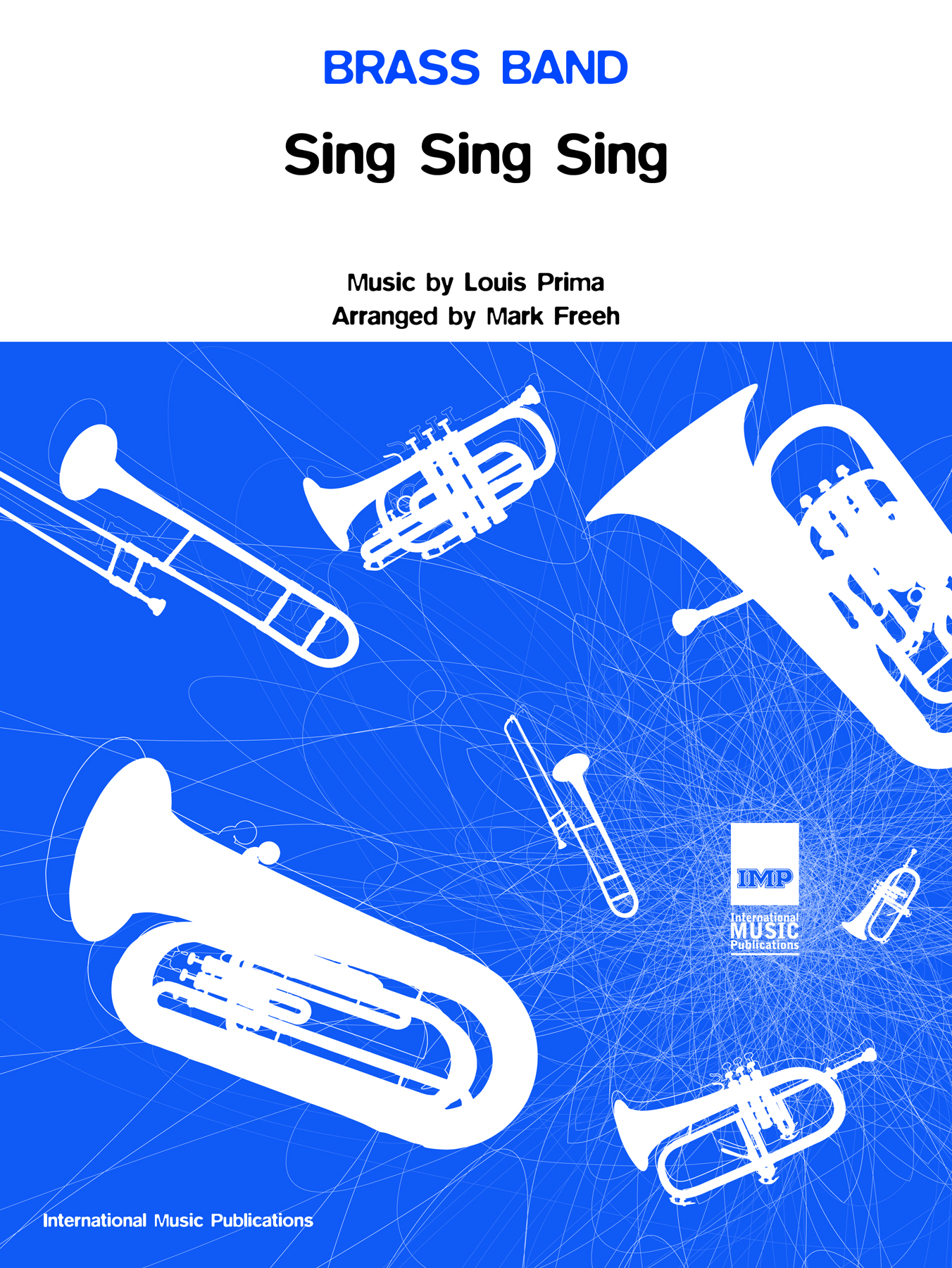
Sing Sing Sing (Score & Parts) - Louis Prima
Sing, Sing, Sing, written in 1936 by Louis Prima, has become one of the definitive songs of the big band and Swing Era. Although written by Prima, it is often most associated with Benny Goodman. Easily accessible to concert audiences due to its big beat and showy drum breaks structure, this arrangement by Mark Freeh is a welcome inclusion in any concert programme.Brass Band Grade 4: Advanced Youth and 3rd SectionDuration: 6 minutes
In Stock: Estimated dispatch 1-3 working days