
Results
-
 £54.99
I Will Follow Him - Del Roma - Ron Sebregts
This old hit has been revamped for the film Sister Act, in which Whoopi Goldberg performs the number with Deloris & the Sisters. This adaptation for brass band has been arranged by Ron Sebregts.
Estimated dispatch 5-14 working days
-
£60.99
Es ist ein Ros Entsprungen - Michael Praetorius - Otto M. Schwarz
The many sided and productive Michael Praetorius (1571-1621) is knwon as a composer of dance music, sacred music and music for the advent and Christmas time. He worked as Kapelmeister to the court at Wolffenbuttel, but he was also asked to serve in other places, includin Dresden. Praetorius was valued for the new impulses he gave to music by means of his use of instrumental accompaniment. His main contribution is his theoretical work "Syntagma Musicum", one of the most important musical refernce books, in connection with instruments and instrumentation in the early 17th Century. "Es ist ein ros entsprungen" is a well known ancient melody which has inspired numerous composers andarrangers througout the Centuries. Otto M. Schwarz has made a choral arrangement.
Estimated dispatch 5-14 working days
-
 £60.99
Norwegian Songs - Edvard Grieg - Jacob de Haan
Norwegian composer Edvard Grieg (1843-1907) wrote a lot of songs, several of which Jacob de Haan has arranged for ensemble of variable strength. The songs are: Fremad! Fremad!, Stille Nu! and Fola, Fola, Blakken. It has been arranged for beginner bands and can be played with a minimum of four players (+ percussion).
Estimated dispatch 5-14 working days
-
£54.99
Only Time - Ron Sebregts
For many years Enya has been selling as many records as pop goddesses like Madonna and Britney Spears. But it was the events of September 11, 2001 that truly brought this Irish singer to the world stage with CNN broadcasting her ballad Only Time with the tragically dramatic images around the World Trade Center in New York. Ron has arranged this moving song in his own familiar creative way
Estimated dispatch 5-14 working days
-
£54.99
Swingin' Kilts - John Blanken
John Blanken has created a swinging arrangement of the famous Scottish traditional tune Scotland the Brave. The usual version with bagpipes is the best known and there is a similarity in Swingin' Kilts owing to its long, drone-like tones in the accompaniment. The theme has been rhythmically adapted but it is still easily recognisable. Swingin' Kilts holds a challenge for every brass band. It makes demands in terms of timing and technique which give this work the bravura feel that will keep the audience as well as the musicians swinging in their seats.
Estimated dispatch 5-14 working days
-
 £54.99
Heb je even voor mij - Klaas van der Woude
Since his first successes in the 1990s the amiable popular singer Frans Bauer has grown into a megastar in the Netherlands. In Germany, too, he has a great number of fans. Although he is derided by many because of his schmalzy style, Frans Bauer sells CDs galore, attracts full houses everywhere and can be viewed in his own reality soap on television. In 2004 he was even awarded a Gouden Harp (Gold Harp), which is the most important prize within Dutch music. It is presented to artists and composers who have promoted Dutch light music in their own unique way during their career. The cheery singalong Heb je even voor mij (Got a Minute for Me) is a great top hit: a winner in everypub and at parties. This arrangement by Klaas van der Woude willput the musicians as well as the audience in a happy mood.
Estimated dispatch 5-14 working days
-
 £76.99
The Heart of Lithuania - Jacob de Haan
Composer Jacob de Haan has based The Heart of Lithuania on five folk melodies from Lithuania, a country that despite its small size has a rich cultural heritage. The choice and diversity of emotions, largely determined by the characteristic melodies, take the listener straight to the heart of the Lithuanian people.
Estimated dispatch 5-14 working days
-
 £60.99
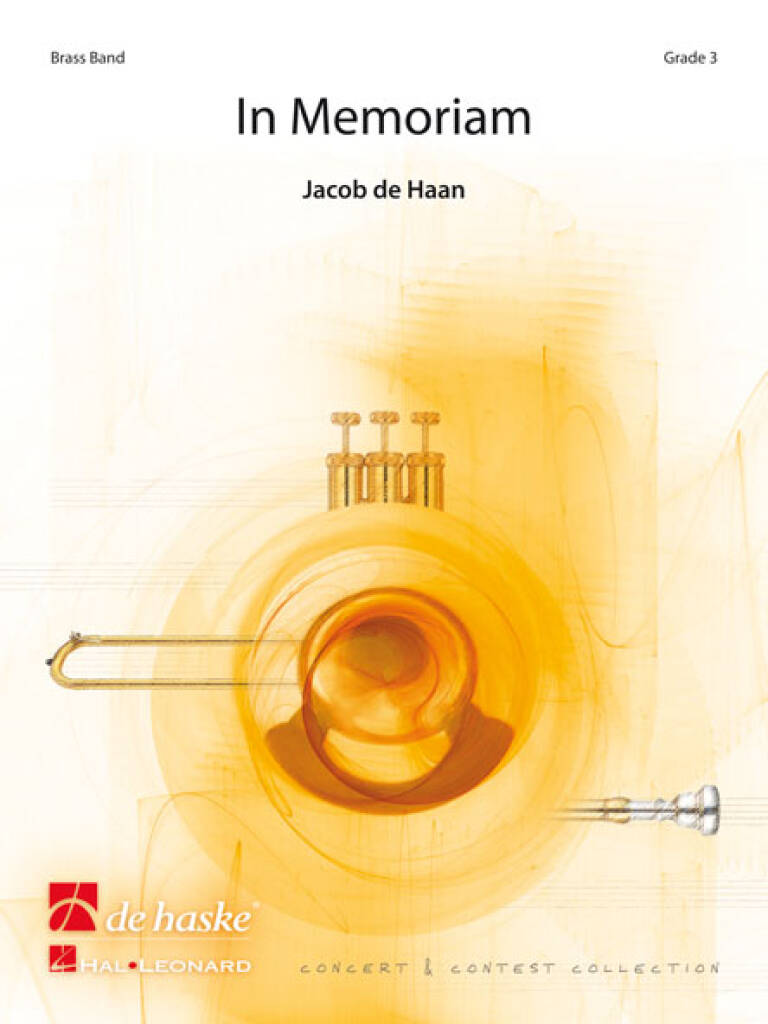
In Memoriam - Jacob de Haan
When someone departs this life, there is sadness, people seek comfort, and memories come to mind. Jacob de Haan has brought these three elements together in In Memoriam, which has been composed with the aim of honouring the deceased, and offering consolation to the bereaved.
Estimated dispatch 5-14 working days
-
 £55.00
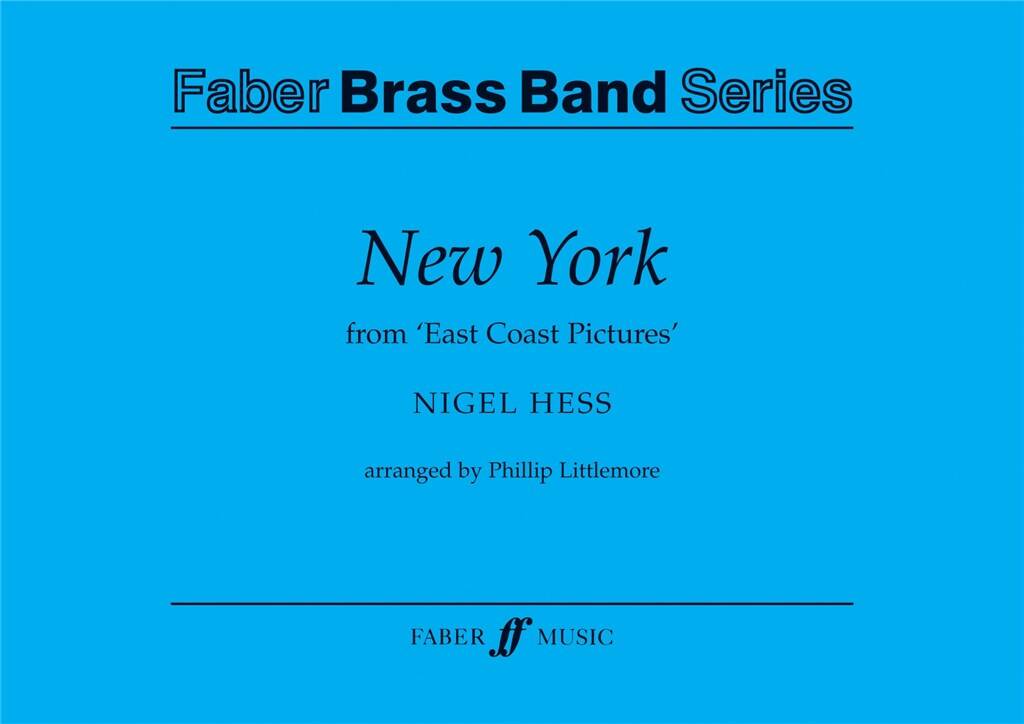
New York. - Nigel Hess
'New York'... or to be more precise, Manhattan. For anyone who is familiar with this bizarre and wonderful city, this piece needs no explanation. This brass band transcription has been made by Phillip Littlemore and provides adriving and punchy 4 minute work for brass band. 'New York' is the third movement of 'East Coast Pictures', originally written for wind band, commissioned in 1985 by the British Youth Wind Orchestra with funds from NationalWestminster Bank plc. These three short 'pictures' were inspired by several visits by the composer to a small part of the USA's East Coast, an area that provides great extremes in the geography and thepeople.This work has recently been recorded on the CD 'East Coast Pictures' by the Leyland Band, conducted by Michael Fowles, and is available from this site (catalogue number: 0-571-52109-6).
Estimated dispatch 5-14 working days
-
 £109.99
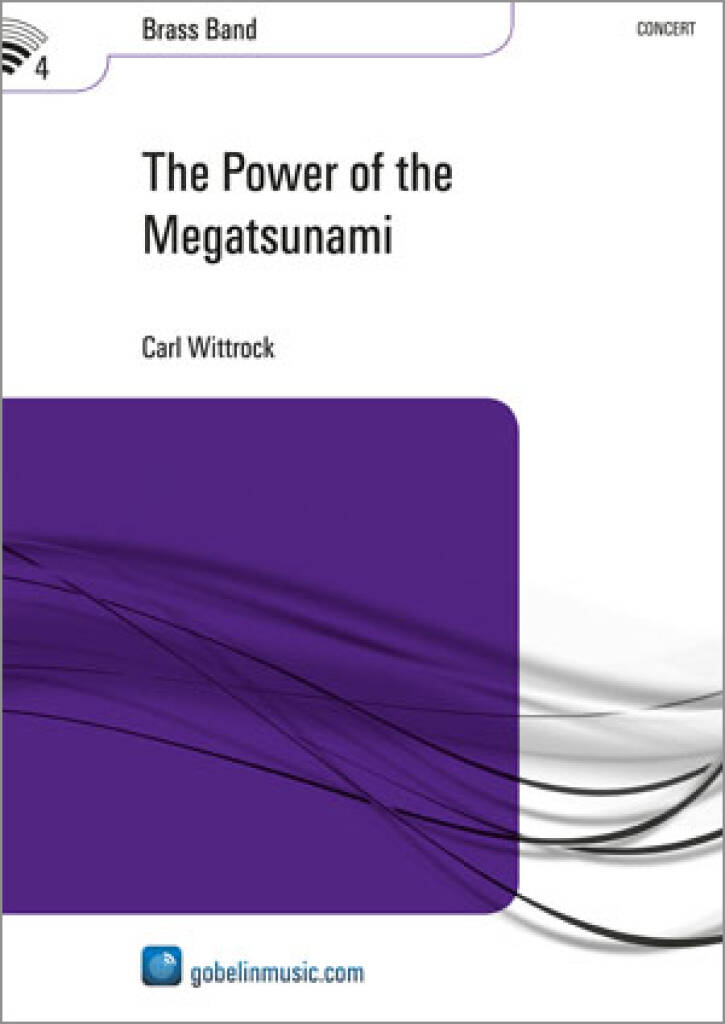
The Power of the Megatsunami - Carl Wittrock
The word 'tsunami' is of Japanese origin. When you look it up in a dictionary, you will find that it means 'a great sea wave produced by submarine earth movement or volcanic eruption'. A megatsunami is the superlative of this awesome expressionof power that nature can create, and has catastrophic consequences. When Carl Wittrock completed this composition not many such big earth movements had occurred, but since then we have become all too familiar with the disastrousconsequences which a tsunami may have. On the 26th of December 2004 a heavy seaquake took place near the Indonesian island of Sumatra. Tidal waves 10 meters in height ravaged the coastal regions of many countries for miles around. The tsunamitook the lives of thousands of people and destroyed many villages and towns. There are more areas which run the risk of being struck by a tsunami, such as the island of La Palma, one of the Canary Islands. This island is based on oceaniccrust at a fracture zone and as such is one of nature's time bombs. The consequences of a natural calamity like a megatsunami are immense. In the case of La Palma, the tidal wave will move in the direction of South America, where it may reach 50km inland, destroying everything on its way. In his composition Wittrock describes an ordinary day which will have an unexpected ending. Right from the beginning there seems to be something in the air, the music creating an oppressiveatmosphere of impending disaster. Themes are interrupted, broken off suddenly, followed by silence, suggesting the calm before the storm. Suddenly a short climax (glissandi in the trombone part) indicates the seaquake, and the megatsunami isa fact. Hereafter follows a turbulent passage symbolising the huge rolling waves. After nature's force has spent itself, resignation sets in and the composition ends with a majestic ode to nature.
Estimated dispatch 5-14 working days
 View Music