
Results
-
 £12.50
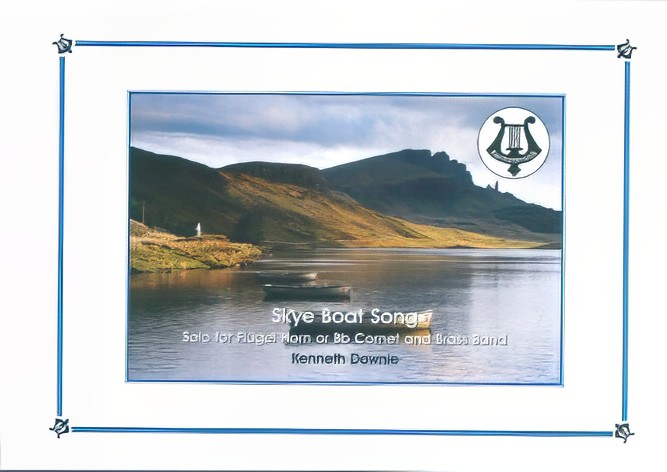
Skye Boat Song - Flugel Horn Solo (Brass Band - Score Only) - Downie, Kenneth
This wistful Scottish folk song tells the story of the escape of Bonnie Prince Charlie from Uist to Skye after the battle of Culloden in 1746. His defeat effectively ended the Jacobite movement as a political threat in Britain. The gentle tune has great charm and is often used as a lullaby.
Estimated dispatch 7-14 working days
-
 £112.00
March Slav (Brass Band - Score and Parts) - Tchaikovsky, Peter Ilyich - Wilkinson, Keith M.
March Slav was composed in 1876 for a charity concert to support the war in the Balkans. It was completed in the remarkably short time of 5 days and was encored twice at its first performance! The themes are based loosely on Serbian folk songs and there is also a reference to the Russian national anthem. The mood is funereal in style at the opening but this gives way to a very triumphant style by the end.This arrangement was prepared for the 2007 Summer concerts of Brass Band of the Western Reserve, musical director Dr Keith M Wilkinson (www.bbwesternreserve.org). It has been recorded by BBWR on the CD Slides Rule!
Estimated dispatch 7-14 working days
-
 £44.95
Excerpts from Finale from Symphony No.4 (Brass Band - Score and Parts) - Tchaikovsky, Peter Ilyich - Gordon, William
Peter Ilyich Tchaikovsky wrote his fourth symphony in 1877 and 1878. It was first performed in the latter year conducted by Nikolai Rubenstein. Despite initial critical reaction, the symphony has become a staple of the orchestral repertoire and is one of the most frequently performed late 19th century symphonies. In the exciting finale, Tchaikovsky incorporates a famous Russian folk song, 'In the field stood a birch tree' as one of its themes.
Estimated dispatch 7-14 working days
-
£22.50
Excerpts from Finale From Symphony No.4 (Brass Band - Score only) - Tchaikovsky, Peter Ilyich - Gordon, William
Peter Ilyich Tchaikovsky wrote his fourth symphony in 1877 and 1878. It was first performed in the latter year conducted by Nikolai Rubenstein. Despite initial critical reaction, the symphony has become a staple of the orchestral repertoire and is one of the most frequently performed late 19th century symphonies. In the exciting finale, Tchaikovsky incorporates a famous Russian folk song, 'In the field stood a birch tree' as one of its themes.
Estimated dispatch 7-14 working days
-
 £59.99
A Final Fling (Euphonium Solo with Brass Band - Score and Parts) - Sparke, Philip
A Final Fling was written at the request of David Childs for a CD recording with a Celtic theme, which he released in 2007. The phrase 'a final fling' means a last quick effort at doing something, perhaps when this item is used as an encore, and also, a fling is a type of Scottish Highland dance, which tied in with the Celtic theme. A light- hearted piece, A Final Fling starts in the mood of a folk dance and quotes from The Irish Washerwoman before flying to a close. A perfect way to put your euphonium player in the spotlight.Duration: 2:00
Estimated dispatch 7-14 working days
-
 £87.99
Shalom! (Brass Band - Score and Parts) - Sparke, Philip
The long history of Jewish folk song has resulted in a rich and varied repertoire of songs which deal with religion, history, festival and celebration. The melodies featured in Shalom! reflect this panoply of subjects and range widely in mood, from lament to rejoicing.Duration: 10:00
Estimated dispatch 7-14 working days
-
 £60.99
Tiritomba (Brass Band - Score and Parts) - Nijs, Johan
Italian Folk SongDuration: 2.00
Estimated dispatch 7-14 working days
-
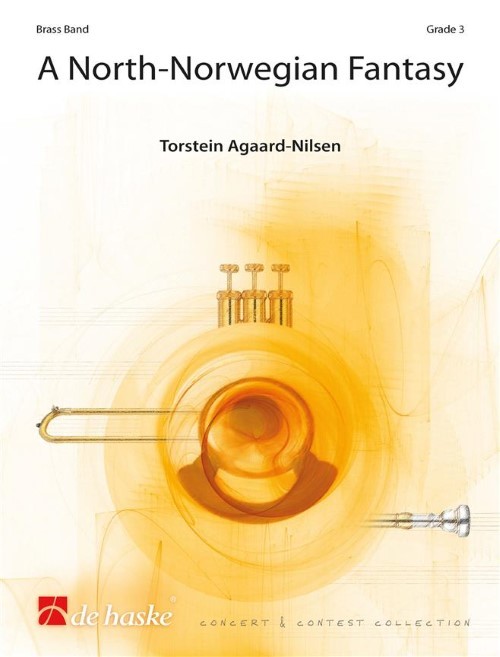 £72.99
A North Norwegian Fantasy (Brass Band - Score and Parts) - Aagaard-Nilsen, Torstein
This exciting brass band work is written in the form of a rhapsody based on folk tunes originating from the region where this young Norwegian composer was born. In addition to traditional harmonies the composer makes use of modal chords to create the appropriate atmosphere for this beautiful region of Norway.Duration: 7:00
Estimated dispatch 7-14 working days
-
£37.95
Zither Carol (Brass Band - Score and Parts) - Bolton & Slack
Czech Folk Tune
Estimated dispatch 7-14 working days
-
 £60.99
Astrid (Flugel Horn Solo with Brass Band - Score and Parts) - Steadman-Allen, Ray
Norwegian folk song, arranged by Ray Steadman-Allen as a flugel horn soloDuration: 3.45
Estimated dispatch 7-14 working days
 View Music