
Results
-
 £186.20
E.T. - John Williams - Ton van Grevenbroek
Steven Spielberg made this big box office success film 'E.T.', telling the story of a boy, named Eliot, and his friendship with a fascinating little alien 'E.T.'. The film score, written by the internationally famous composer and conductor John Williams, brings their 'adventures on earth' back to life. This science fiction fantasy appeals to the imagination of both young and older people. Ton van Grevenbroek signs this fine orchestration for symphonic band.
Estimated dispatch 5-14 working days
-
 £115.60
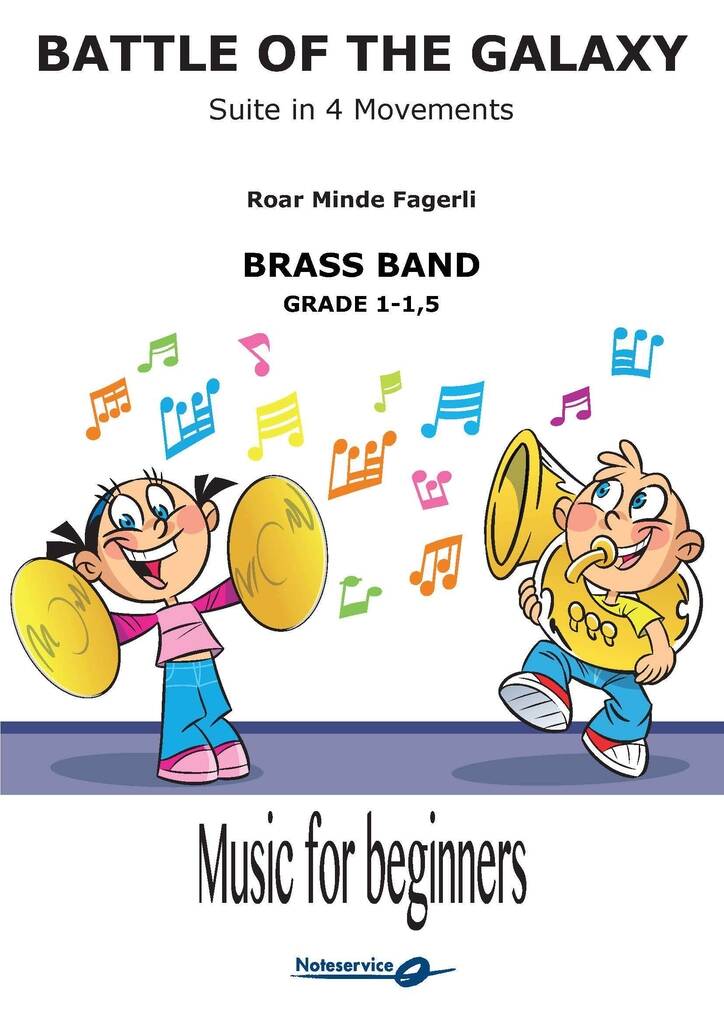
Battle of the Galaxy - Roar Minde Fagerli
Battle of the Galaxy is a suite in four movements. The composer describes the battle between the good and evil in a fantasy galaxy.The first movement is a journey into the galaxy. In the second movement dark and evil forces invade the galaxy. The third movement is the inhabitants hope for peace in the galaxy. In the last movement the heroes step forward and bring peace to the galaxy.The composer is inspired by films and TV series in the science fiction genre.
Estimated dispatch 5-14 working days
-
 £87.99
With Clouds Descending - Philip Sparke
With Clouds Descending is a fantasy on the powerful Advent hymn Helmsley which is long associated with another Advent hymn - Wesley's Lo! He Comes with Clouds Descending. The hymn tune is divided into an introduction and three complete verses of Helmsley, which surround a slower central section, whose melody is derived from the last line of the hymn tune. Philip Sparke's grade 4 arrangement of this majestic piece for Brass Band is equally suitable as a concert opener or a main concert piece.
Estimated dispatch 5-14 working days
-
 £60.99
Fantasia Di Pasqua - Michael Bilkes
Fantasia di Pasqua is a fantasy in which traditional Easter melodies have been used. The work is written for brass band with a separate brass quartet which, since this music is often performed in churches, the composer suggests should be positioned on a gallery. This creates a double choir effect and perfectly fits the Renaissance-like style. Each of the melodies is played in various dance-like cadences that, partly because of the double choir effect, will result in a very lively and original performance.
Estimated dispatch 5-14 working days
-
 £50.00
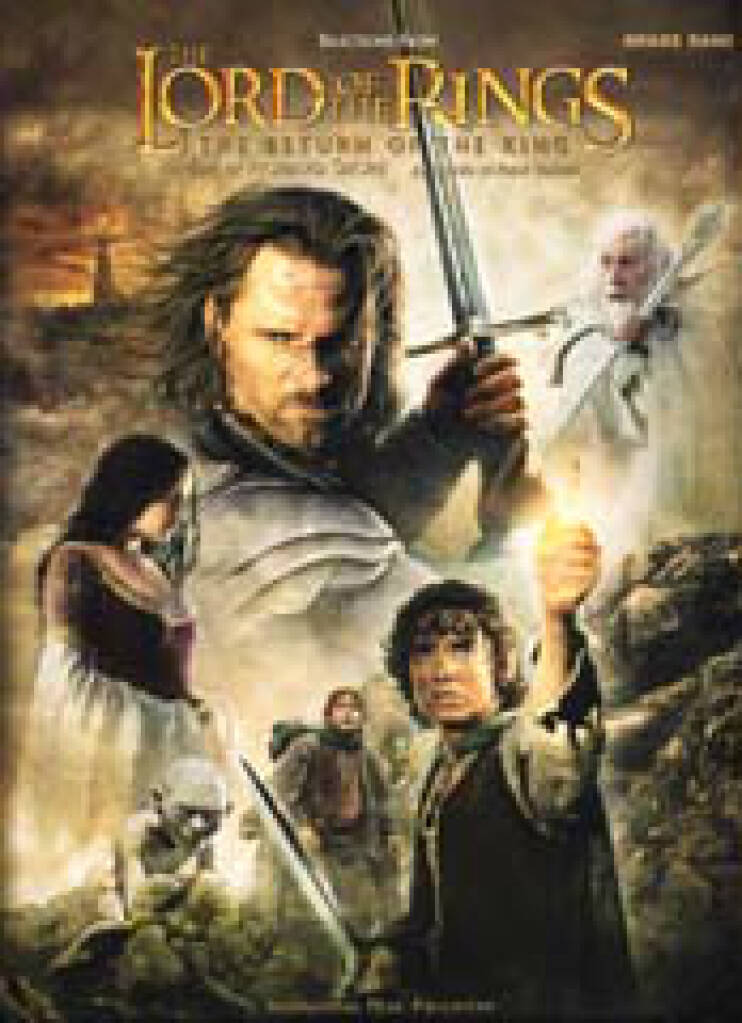
The Lord of the Rings: Return of the King - Howard Shore - Philip Harper
A spectacular fantasy medley from the third and final episode of the Oscar-winning trilogy. The most poignant and memorable themes from this magical motion picture have been arranged and assembled as a gala concert piece for fullBrass Band and percussion by Philip Harper. Bring the mystery and excitement of Middle Earth into your repertoire with this full score and parts pack.
Estimated dispatch 5-14 working days
-
 £154.99
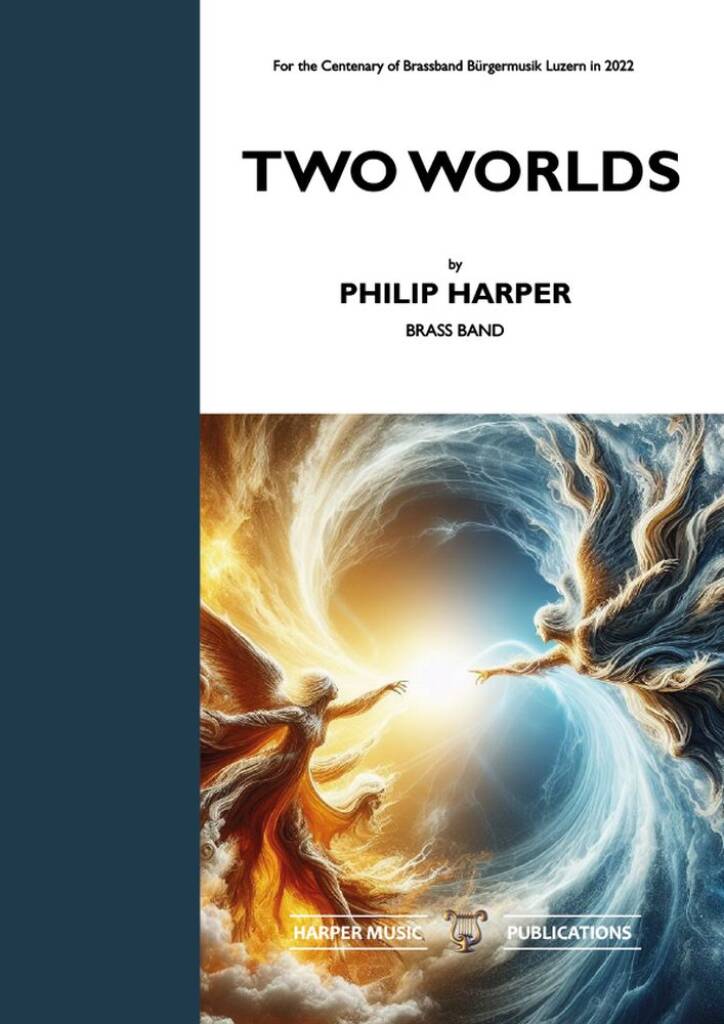
Two Worlds - Philip Harper
A powerful musical journey through time, Two Worlds explores the enduring force of storytelling. In an imaginary encounter, the Egyptian Pharaoh Tutankhamun and the American President Lincoln - in reality, separated by 5,000 years - meet to discuss the myths, truths and beliefs that shaped their respective civilizations. From the divine sun gods of Ancient Egypt to America's dream of equality, this evocative work blends fantasy and history with bold, cinematic music. At once dramatic and thought-provoking, Two Worlds reminds us that the stories we believe in can unite or divide, destroy or inspire.Commissioned for the centenary of the Swiss Brassband Burgermusik Luzern, in 2022.
Estimated dispatch 5-14 working days
-
 £95.00
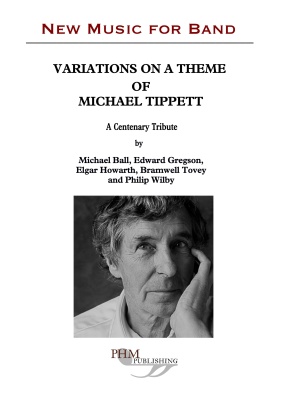
Variations on a Theme of Michael Tippett (Brass Band - Score and Parts)
A Centenary Tribute by Michael Ball, Edward Gregson, Elgar Howarth, Bramwell Tovey and Philip WilbyThis unique 'pice d'occasion' arose out of a telephone conversation in 2004 with Alan Wycherley, who was the soprano cornet player of the Foden's Richardson Band at the time. He indicated that the band would like to include an original birthday tribute for Edward Gregson (60) and Elgar Howarth (70) in its concert at the 2005 RNCM Festival of Brass in Manchester. I have been Artistic Director of Manchester's Festival of Brass since it was established in 1990 as a BBC Radio 3 series, As the centenary of the birth of Sir Michael Tippett fell on 5 January 2005, I devised this collective work as a way of embracing all three anniversaries in a novel way.The idea of joint compositions is not a new one in the classical music world. In the 1860s, Verdi was joined by a number of his contemporaries in a Requiem Mass for Rossini. In this country there have been a number of orchestral examples over the past fifty years, but never before for the brass band. Although Tippett composed only one work for brass band, Festal Brass with Blues, his orchestral works and operas are full of idiomatic brass writing. The theme I chose for this celebration is one of Tippet's most memorable miniatures featuring wind and brass. In the opera Midsummer Marriage it marks the entry of the Ancients. It is also included in the orchestral Suite in D (1948), for the Birthday of Prince Charles.I invited five of the leading contemporary voices in brass band music to add their own creative perspectives to the little Tippett theme, with it's characteristic rhythms, embellishments and modality - the Lydian mode. Each contribution was designed to fit into a tonal and formal template to give the whole work a flow and continuity. In Danse des Amis, Bramwell Tovey has composed a jazzy, humorous variation. Inspiration came from Tippett's love of jazz and, more personally, from the characteristically syncopated gait of the distinguished music critic John Amis, who Tovey once observed leaving a performance of Tippett's opera King Priam before the end. Incidentally, that performance was conducted by Elgar Howarth.We hear Edward Gregson in lyrical mode. His Midsummer Song is redolent of the sound world of Tippett's opera A Midsummer Marriage and it ends with a brief reference to a favourite of Gregson's, Tippett's Concerto for Orchestra. Michael Ball provides a brief moment of light, airy activity bringing to mind perhaps Tippett's love of Shakespearian fantasy, especially The Tempest. Elgar Howarth juxtaposes a slowed down version of the processional theme with distant recollections of fanfares from King Priam. Philip Wilby has rounded the tribute off with a spectacular fugue. During its inexorable progress Wilby ingeniously introduces the two other birthday references - the three-note musical signature that Elgar Howarth includes in much of his music and the characteristic theme which begins Edward Gregson's substantial work for brass an organ The Trumpets of the Angels. An elaborated reprise of Tippett's little theme is followed by a dynamic coda.- Paul HindmarshDuration: 13.00
Estimated dispatch 7-14 working days
-
£40.00
Variations on a Theme of Michael Tippett (Brass Band - Score only)
A Centenary Tribute by Michael Ball, Edward Gregson, Elgar Howarth, Bramwell Tovey and Philip WilbyThis unique 'pice d'occasion' arose out of a telephone conversation in 2004 with Alan Wycherley, who was the soprano cornet player of the Foden's Richardson Band at the time. He indicated that the band would like to include an original birthday tribute for Edward Gregson (60) and Elgar Howarth (70) in its concert at the 2005 RNCM Festival of Brass in Manchester. I have been Artistic Director of Manchester's Festival of Brass since it was established in 1990 as a BBC Radio 3 series, As the centenary of the birth of Sir Michael Tippett fell on 5 January 2005, I devised this collective work as a way of embracing all three anniversaries in a novel way.The idea of joint compositions is not a new one in the classical music world. In the 1860s, Verdi was joined by a number of his contemporaries in a Requiem Mass for Rossini. In this country there have been a number of orchestral examples over the past fifty years, but never before for the brass band. Although Tippett composed only one work for brass band, Festal Brass with Blues, his orchestral works and operas are full of idiomatic brass writing. The theme I chose for this celebration is one of Tippet's most memorable miniatures featuring wind and brass. In the opera Midsummer Marriage it marks the entry of the Ancients. It is also included in the orchestral Suite in D (1948), for the Birthday of Prince Charles.I invited five of the leading contemporary voices in brass band music to add their own creative perspectives to the little Tippett theme, with it's characteristic rhythms, embellishments and modality - the Lydian mode. Each contribution was designed to fit into a tonal and formal template to give the whole work a flow and continuity. In Danse des Amis, Bramwell Tovey has composed a jazzy, humorous variation. Inspiration came from Tippett's love of jazz and, more personally, from the characteristically syncopated gait of the distinguished music critic John Amis, who Tovey once observed leaving a performance of Tippett's opera King Priam before the end. Incidentally, that performance was conducted by Elgar Howarth.We hear Edward Gregson in lyrical mode. His Midsummer Song is redolent of the sound world of Tippett's opera A Midsummer Marriage and it ends with a brief reference to a favourite of Gregson's, Tippett's Concerto for Orchestra. Michael Ball provides a brief moment of light, airy activity bringing to mind perhaps Tippett's love of Shakespearian fantasy, especially The Tempest. Elgar Howarth juxtaposes a slowed down version of the processional theme with distant recollections of fanfares from King Priam. Philip Wilby has rounded the tribute off with a spectacular fugue. During its inexorable progress Wilby ingeniously introduces the two other birthday references - the three-note musical signature that Elgar Howarth includes in much of his music and the characteristic theme which begins Edward Gregson's substantial work for brass an organ The Trumpets of the Angels. An elaborated reprise of Tippett's little theme is followed by a dynamic coda.- Paul HindmarshDuration: 13.00
Estimated dispatch 7-14 working days
-
 £41.09
Christmas Day (Brass Band) Gustav Holst arr. Philip Rayment
VIEW SCORE PDF Well-known English composer, Gustav Holst (1874-1934) wrote this choral fantasy in 1910, about five years before his renowned orchestral suite, The Planets. The piece was originally composed for SATB choir and orchestra and dedicated to the students of Morley College, where Holst taught music. In the years since, it has been arranged for various combinations of voice and/or instruments. This arrangement is in the original key and could be adapted for use with choir and/or organ. Christmas Day features three carols in their entirety: Good Christian Men, Rejoice; God Rest Ye Merry, Gentlemen and Come, Ye Lofty, Come, Ye Lowly (an old Breton melody). There are also references to The First Nowell. Although well-received initially, this work (like many of Holst's) was neglected for many years and has not been widely recorded. It is hoped that it will be useful for brass bands during the festive season, particularly in a large acoustic. To listen to the Canadian Staff Band performing the work please visit www.youtube.com/watch?v=ccXkbWi_iWE Sheet music available from: UK - www.brassband.co.uk USA - www.solidbrassmusic.com Difficulty Level: 3rd Section + Instrumentation: Soprano Cornet Eb Solo Cornet Bb Repiano Cornet Bb 2nd Cornet Bb 3rd Cornet Bb Flugel Horn Bb Solo Horn Eb 1st Horn Eb 2nd Horn Eb 1st Baritone Bb 2nd Baritone Bb 1st Trombone Bb 2nd Trombone Bb Bass Trombone Euphonium Bb Bass Eb Bass Bb Percussion 1-3
In Stock: Estimated dispatch 1-3 working days
-
 £79.95
Neverland - Christopher Bond
"All children, except one, grow up" wrote J.M. Barrie about Peter Pan in 1911; the first line and an expression of beautiful melancholy and fantasy, coming to represent one of the best-loved children's stories of the twentieth century. 'Peter & Wendy', as the book was first released, has subsequently been transformed into adaptations for film and stage, with subsequent books based on this iconic tale. In writing this new work for brass band, the composer has taken three of the main themes from J. M. Barrie's book, and used these themes to create new musical material, forming a work in three contrasting sections. I. Journey to Neverland The opening of the work, mysterious in its style, reflects the opening chapters of the story - a leafy London street, still in the dead of night - with the music transforming quickly as it builds in texture and momentum - a Journey to Neverland through the night sky; Second Star to the Right and straight on 'til morning. "Then Peter knew that there was not a moment to lose. 'Come,' he cried imperiously, and soared out at once into the night, followed by John and Michael and Wendy. Mr & Mrs Darling and Nana rushed into the nursery too late. The birds were flown." II. The Windows that Closed The central section of the work takes its inspiration from the sense of longing throughout the book, mainly by Peter Pan, the Darling Children & The Lost Boys. Distant memories of life before Neverland, memories of the Lost Boys' mothers, and regret at what the children have missed. Peter says "Long ago, I thought like you that my mother would always keep the window open for me; so I stayed away for moons and moons and moons, and then flew back; but the window was barred, for mother had forgotten all about me, and there was another little boy sleeping in my bed." III. Aboard the Pirate Ship The final section of the work takes its inspiration from the Pirate Ship, and Peter Pan's ultimate battle with its infamous Captain Hook. "In person, he was cadaverous and blackavized, and his hair was dressed in long curls, which at a distance looked like black candles, and gave a singularly threatening expression to his handsome countenance. His eyes were the blue of the forget-me-not, and of a profound melancholy, save when he was plunging his hook into you, at which time two red spots appeared in them and lit them up horribly."
Estimated dispatch 10-14 working days
 View Music
 Watch video