
Results
-
 £104.99
High Flyers - Andrew R. Mackereth
From the composer: High Flyers are regarded as people with promise and potential.They are winners. This is music for winners.The title, as well as being a play-on-words, implies the nature of the work. It is a bright, optimistic, and upbeat piece attempting to depict an exhilarating ride on flying carpet. The opening rising chords immediately suggest the gentle elevation of the carpets' ascent towards unknown heights, leading to a hint of a first theme in the horns at Fig. B. The first four notes provide the thematic material for the whole work: C F G A.A perpetual sense of movement is achieved through accented quaver chords punctuating the melodicmaterial of the first main theme. Fig. E sees the music of the opening bars fully realised, with flourishes from the euphonium and baritones representing swirling clouds, shooting stars, or passing birds in flight.The same subject is developed into a lyrical second theme with a new lush harmonic treatment, evocative of gliding over an expanse of sparse countryside.This section ends with a note of serenity but is shattered by the urgent insistence of the percussion rhythms.The third section introduces a new idea with a slightly distorted fanfare in the cornets and trombones. This figure suggests for the first time that there may be trouble ahead. In fact, there is no need to fear and the journey can continue without aggravation. This fanfare returns near the end to signal a final note of triumph.A new rhythmic variant of the cell motif emerges as the third theme now transformed by the addition of a triplet figure. The music steadily gains momentum before moving inexorably towards the climactic return of the music and tonality of the opening bars of the piece.
Estimated dispatch 5-14 working days
-
 £109.99
Land of Legends - Andreas Ludwig Schulte
In 'Land of Legends' German composer Andreas Ludwig (what's in a name) Schulte takes you along to the fictional world of legends, myths and fairy tales. The introduction to the first part (The Castle) describes the majestic contours of the scene of action. Its instrumentation (horns) immediately makes you imagine being in Medieval spheres. The addition of trenchant copper instruments even gives the part a heroic tinge. After entering through the gate, a lot of hustle and bustle appears to be going on in the courtyard. Pages, squires and soldiers are busy attending to their arms. Beer is being brewed, flax is being spun, cattle are being tended and some craftsmen fromneighbouring villages are busily at work. In the upper chamber of the round tower lives an old man (The Old Wizard). He hardly ever comes out, and nobody knows exactly what he is doing. It is said that he is engaged in wizardry and magic. It is all very mysterious. There are also festivities, some of them sober, others exuberant. The wedding in the third part is celebrated in a grand manner. With a flourish of trumpets, the bride makes her entrance at the hand of her father. Afterwards, at the party there is dancing to the music played by minstrels and of course a plentiful banquet follows.
Estimated dispatch 5-14 working days
-
 £154.99
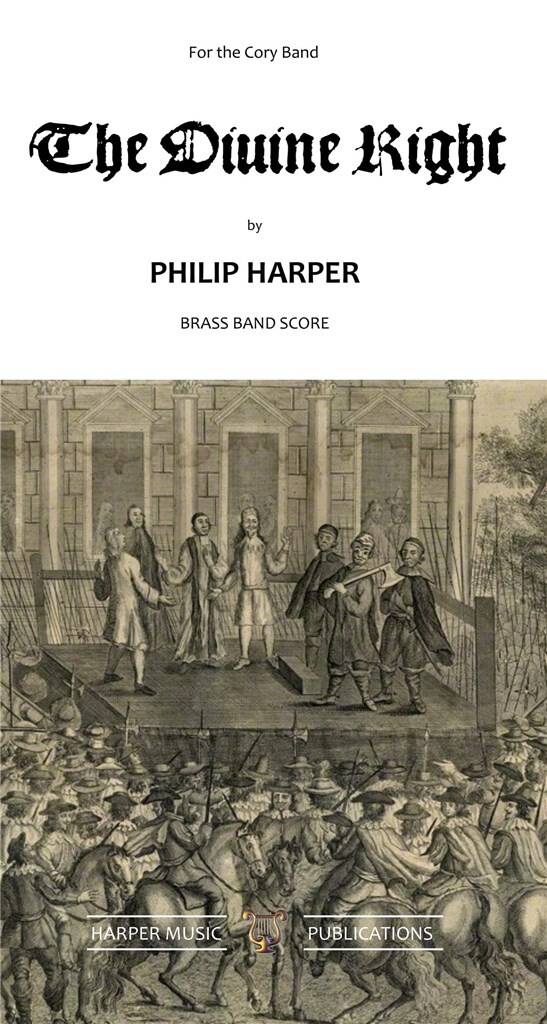
The Divine Right - Philip Harper
At the time of composing this piece, the Arab Spring was sweeping through the Middle East. It seemed that almost every week a new countrys people had risen up against the regimes and dictatorships which had prevailed for generations, leaving manynations at a defining crossroads in their history. There were so many possible ways ahead: so many hopes, yet so many uncertainties.My music is a depiction of these revolutionary times, and several musical themes are in turn presented, discussed, considered, fought over, altered, rejected or accepted. Most nations have had, or probably will have, their own Arab Spring, including my own, the United Kingdom. Events of 17th Century Britain provide the context for this piece, particularly those following the execution of the tyrant King Charles I on30 January 1649. The regicide was in part due to Charless steadfast belief in the Divine Right of Kings, and led to a tumultuous interregnum, where England stood at its own defining crossroads.The music begins turbulently, before King Charles appears and is led to the gallows outside Banqueting House in central London where he is brutally decapitated. From the assembled crowd rose, according to one observer, a moan as I never heard before and desire I may never hear again.The music descends to emptiness. The musical argument which follows is not strictly programmatic, but a number of musical themes are all thrown into the melting pot, representing ideas such as: religion; military force; reasoned Parliamentary debate; and the chattering,irrepressible voice of the people. Additionally, there are some quotations from the music of royalist composer Thomas Tomkins (1572-1656), who was often in tune with the feeling of the times. This defining episode in Englands history was brought to a close with the Restoration of the monarchy in 1660, and as the exiled King Charles II rode back into London the diarist John Evelyn wrote: Never was so joyful a day seen in this nation. I stood in the Strand and beheld it, and blessed God.At the end of the piece the bells ring out, and the musical appearance of the King has transformed from turbulent to triumphant. Philip Harper, 2013
Estimated dispatch 5-14 working days
-
 £78.20
The Rocketeer - James Horner - Roland Smeets
Before Titanic,James Horner was not above composing scores for cartoonish family films, and many of those that brought him on their production board owe him greatly. The Rocketeer entails the story of a young pilot during World War II who happens upon a rocket pack that allows him to fly. The film is based on the tradition of old film serials that left theater-goers hanging with "To be continued," and aside from modern production, it is old fashioned and innocent fun. Horner's score begins and ends with the brilliant "Main Title," which is so moving it was used in previews for later films that did not yet have finished scores. Most of th Rocketeersoundtrack elicits the adventure and lifting spirit of the film and reveals how Horner incorporates rich instrumentals in the tiniest crevices. Even when the film involves danger, as in "Jenny's Rescue," the composer takes care when it is hardly even required. Instead of some "duh-duh-duhs," he brings on a full, stunning orchestra and when he overdoes it, it is in a jolly way -- he never exhausts his medium. That is what separates him from inferior composers, and what makes a nice film like The Rocketeer extra nice. It is a soundtrack worth listening to.
Estimated dispatch 5-14 working days
-
£74.99
Fanfare and Jubiloso - James Curnow
Accessible even to particularly advanced Jr. High bands or honor groups, James Curnow's brilliant fanfare and treatment of Renaissance composer Tylman Susato's RONDO is truly a jubilant musical expression. FANFARE AND JUBILOSO is dedicated to Harry Begian, the world renowned and highly respected American music educator and conductor, and is a creative exploration of joyous energy.Investigating those intriguing Renaissance harmonic concepts, this celebratory offering will be a fresh and vigorous addition to your concert repertoire!
Estimated dispatch 5-14 working days
-
 £76.99
The Green Hill - Bert Appermont
This piece was commissioned by Swiss Euphonium virtuoso Erich Schmidli. Bert Appermont dug deep into Celtic music for inspiration and created a fantasy that shows off the incredible, but often overlooked, versatility of the Euphonium. Charming lyrical melodies, virtuosic runs and exciting, colourful tuttis create plenty of contrast in this exciting work. The difficulty level for the soloist and band means almost any band to perform this piece and showcase their Euphonium player.
Estimated dispatch 5-14 working days
-
 £60.99
Canterbury Chorale - Jan Van der Roost
This quiet piece with its broad tones was originally written for brass band on request of Robert Leveugle, chairman of the composer's own band: Brass Band Midden Brabant (Belgium). The direct cause was a visit to the beautiful cathedral of the English city Canterbury, in which so many fine compositions sounded throughout the centuries. Later on, Jan Van der Roost rescored this piece for symphonic wind band, exploring the full richness of colours of this formation. Besides solo phrases for several instruments, there are some massive tutti passages making the wind orchestra sound like a majestic organ. By the way: an "ad libitum" organ part adds an extra richness, colour and powerto this piece, making it sound even more broad and grand.
Estimated dispatch 5-14 working days
-
 £84.99
Symphonic Highlights from Frozen - Stephen Bulla
Using excerpts from the soundtrack in addition to the familiar hit songs, Stephen Bulla has created a dramatic and exciting medley showcasing the best musical moments from this hit movie. Includes: Frozen Heart, Do You Want to Build a Snowman?, For the First Time in Forever, Epilogue, and of course Let It Go.
Estimated dispatch 5-14 working days
-
 £60.99
Concertpiece for Cornet - James Curnow
Concertpiece for Cornet is a valuable and tremendous addition to the solo repertoire of the instrument. Full of fireworks and technicalities the soloist is also put to the test with an expressive slower melody along with a varied and interesting accompaniment as you would expect from James Curnow. Showcase your Cornet soloist with this incredible 'concert piece'.
Estimated dispatch 5-14 working days
-
 £23.50
A Brussels Requiem - SCORE ONLY - Bert Appermont
The attacks in Brussels on 22 March 2016 created a shockwave throughout Belgium and the rest of the world. Equally, the attacks in Paris and Nice led to great public indignation, fear and disbelief. What has happened to the western world? Have our cultures grown apart to such an extent that we do not understand each other anymore? Bert Appermont's intention was to voice certain emotions that these acts of terror have caused: particularly fear, grief, anger, and helplessness. He uses the French children's song Au Claire de la Lune as a connecting thread throughout the work. This piece is also about hope and faith in another world, and is meant to pay homage to all victims, resulting in a dignified remembrance. The musical development is presented in four through-composed parts, titled Innocence, In Cold Blood, In Memoriam - We Shall Rise Again and A New Day. This work was commissioned by the Brassband Oberosterreich (Brass Band Upper Austria) to be played at the European Brass Band Championships 2017.
Estimated dispatch 5-14 working days
 View Music