
Results
-
£69.99
Variations on a Shaped Note Melody - James Curnow
Based on the American 'shaped-note' melody Saints Bound for Heaven, Variations on a Shaped Note Melody by James Curnow captures a feeling of joyful celebration through a series of unique and skilfully adapted variations. The opening strains are actually fragments of the first variation and occur before the main tune is introduced by low brass. The second variation features a euphonium solo and builds to a glorious climax with the full ensemble. The final variation is joyful and filled with energy, using flourishes and fanfares throughout the band for a grand conclusion to this marvellous work.
Estimated dispatch 5-14 working days
-
 £39.95
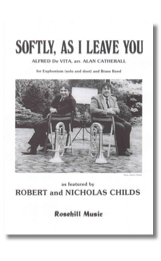
Softly, As I Leave You - Alfred de Vita arr. Alan Catherall
Made popular by many singers over the years, this lovely song was first arranged for the Childs brothers as a solo, and later a duet, by Alan Catherall. It was first performed in the duet version at the Royal Albert Hall, London, in October 1985, conducted by their late father, John Childs. Also available with piano Brass Band Set comprises: Detailed condensed conductor score Solo B-flat Euphonium B-flat Euphonium Duet (2) E-flat Soprano Cornet Solo B-flat Cornet (4) 2nd B-flat Cornet (2) 3rd B-flat Cornet (2) B-flat Flugelhorn* Solo E-flat Horn* 1st E-flat Horn* 2nd E-flat Horn 1st B-flat Baritone 2nd B-flat Baritone 1st B-flat Trombone 2nd B-flat Trombone Bass Trombone B-flat Euphonium (2) E-flat Bass (2) B-flat Bass (2) 1st Percussion 2nd Percussion 3rd Percussion (Drum Kit) * Alternative parts for use as solo or duet provided. There is no Repiano Cornet part.
Estimated dispatch 7-9 working days
-
 £49.95
Concert Gallop
Here is a charming, easy-going solo for all B-flat or E-flat brass instruments from the prolific Philip Wilby. This brass band version also comes with alternative solo parts for euphonium duet or trio and euphonium quartet (two baritones and two euphoniums).
Estimated dispatch 7-9 working days
-
 £15.00
Celtic Lullaby - Helen Douthwaite
An original composition by Helen Douthwaite for solo baritone, euphonium or trombone with brass band (reduced score) accompaniment.The piece was written with training/junior band level players in mind, and offers a great opportunity to spotlight a soloist through this moment of musical beauty.Set includes score and parts for:Soloist - Euphonium/Baritone/TromboneCornet 1Cornet 2Eb Tenor Horn 1Eb Tenor Horn 2Trombone 1Trombone 2Baritone/EuphoniumEb Bass (optional)GlockenspielPercussion
In Stock: Estimated dispatch 3-5 working days
-
 £29.95
Danse Macabre - Jonathan Bates
DURATION: 4'00". DIFFICULTY: Championship. 'Danse Macabre' is a showpiece solo for Euphonium, composed for the Reg Vardy Band for the 2019 Brass in Concert Championships, held at The Sage, Gateshead. This work formed part of a set based around the 4 human temperaments; choleric, sanguine, phlegamtic and melancholic - the latter of which is represented by 'Danse Macabre'. . This solo is in 2 contrasting sections, opening with a sombre and mournful melodic passage to showcase the soloist's expressive musical qualities before breaking out into a wild dance (loosely based around fragments from the famous Saint-Saens version) demonstrating a great range of technical wizardy, range and flexibility. .
In Stock: Estimated dispatch 1-3 working days
-
£35.00
Alu - Peter Meechan
Alu was commissioned by Pat Herak for his wife Diana, for their 10th wedding anniversary. It was premiered by Diana and the Brass Band of Columbus, USA.It is a simple, reflective piece, which grows from a small idea first heard in the baritone and changes throughout, although the opening material is never far away.The solo part is equally suitable for baritone or euphonium.
Estimated dispatch 12-14 working days
-
£65.00
Macchia - Harper, P
For those who enjoyed 'In Gardens of Peace' you will love this new lyrical and singing extended euphonium solo from Philip Harper which will have your audiences purring with satisfaction!3rd section + (solo part 1st section)Duration 7 mins Listen to Brass Band Limburg play Macchia
In Stock: Estimated dispatch 1-3 working days
-
£32.50
Macchia (Score) - Harper, P
For those who enjoyed 'In Gardens of Peace' you will love this new lyrical and singing extended euphonium solo from Philip Harper which will have your audiences purring with satisfaction!3rd Section (solo part 1st Section)Duration 7 minsListen to Brass Band Limburg play Macchia
In Stock: Estimated dispatch 1-3 working days
-
 £39.99
Come What May
ABOUT THIS PIECE: Add a touch of romance and drama to your next programme with this beautiful arrangement of Come What May from Moulin Rouge. Written by David Baerwald and Kevin Gilbert, this emotional ballad became the standout love song of the 2001 film, performed by Nicole Kidman and Ewan McGregor. Its heartfelt lyrics and sweeping melody have made it a timeless classic, celebrated by audiences around the world. This arrangement brings the song's emotional depth and cinematic grandeur to the brass band stage, with solo opportunities for tenor horn, cornet and euphonium. With its soaring themes and tender undertones, Come What May is a fantastic showcase of the band's ability to convey both power and sensitivity. ENSEMBLE: Standard British Brass Band WHEN YOU BUY THIS PRODUCT, YOU GET: High-quality printed score and parts LEVEL: 2 LISTEN: Click here DURATION: 5 minutesEXAMPLE SCORE: Click here LEVEL GUIDE: Level 1- Accessible to all Level 2 - c. UK third section and higher Level 3 - c. UK second section and higher Level 4 - c. UK first section and higher Level 5 - c. UK championship section level
Estimated dispatch 5-7 working days
-
£65.00
Blackbird Special - Davis, Lewis, Towns, Harris, Marshall, Joseph, Johnson & Jones - Reid Gilje
"Blackbird Special" is a song by American band Dirty Dozen Brass Band.The song is an entertainment piece, a good concert opener or encore.When used as a concert opener one may let the different sections of the band enter the stage one by one playing in order of appearance.Percussion section may play their parts ad lib. The most important is the groove of the piece.Please pay attention to strict articulation from bar 17. Be aware of the marcatos at 33. The last note of the slurs at 41 must be not be too short.It's important to hold the note values, especially in bars 49, 51, 53 and 55.From 57 and throughout the piece, the percussion may invite the audience to join for handclaps.As an extra effect, the Bass Tubas may stand at 57, the Horns at 59, backrow Cornets and Trombones at 61 and Euphonium/Baritone/Solo Cornets at 63.
Estimated dispatch 7-14 working days
 View Music