
Results
-
 £40.00
The Ayres of Agincourt
ABOUT THIS PIECE: The Ayres of Agincourt has long been a staple of the wind band repertoire and is now available to brass bands in this transcription from Adam D J Taylor. The original Ayres were inspired by the famous victory in the 15th century of the English over the French at Agincourt, France, and are intended to sound like old English songs that might have been sung by King Henry's men. Majestic, exciting, dramatic - this music should be on your next concert! ENSEMBLE: Standard British Brass Band WHEN YOU BUY THIS PRODUCT, YOU GET: High-quality printed score and parts LEVEL: 3 LISTEN: DURATION: 5-minutes 30-seconds EXAMPLE SCORE: Click here LEVEL GUIDE: Level 1- Accessible to all Level 2 - c. UK third section and higher Level 3 - c. UK second section and higher Level 4 - c. UK first section and higher Level 5 - c. UK championship section level
Estimated dispatch 5-7 working days
-
£70.00
A Tallis Anthem - Geert Jan Kroon
A Tallis Anthem is based on If Ye Love Me by Thomas Tallis (1505-1585). He was one of the first who set English words to the Rites of the Church of England. If Ye Love Me is a classic example of the new English anthems: mainly homophonic, but with brief moments of imitation. The opening is a triumphant version of the first homophonic phrases of the song, interrupted by a calm melody build with material from a motive from the original. The anthem is played by a quartet placed in front of the band or of stage for efect. This is followed by a more modern anthem leading to a triumphant finale.
-
 £18.00
Scarborough Fair
DescriptionScarborough Fair is a traditional English ballad about the Yorkshire town of Scarborough. The song relates the tale of a young man who instructs the listener to tell his former love to perform for him a series of impossible tasks, such as making him a shirt without a seam and then washing it in a dry well, adding that if she completes these tasks he will take her back. Often the song is sung as a duet, with the woman then giving her lover a series of equally impossible tasks, promising to give him his seamless shirt once he has finished.As the versions of the ballad known under the title Scarborough Fair are usually limited to the exchange of these impossible tasks, many suggestions concerning the plot have been proposed, including the theory that it is about the Great Plague of the late Middle Ages. The lyrics of "Scarborough Fair" appear to have something in common with an obscure Scottish ballad, The Elfin Knight which has been traced at least as far back as 1670 and may well be earlier. In this ballad, an elf threatens to abduct a young woman to be his lover unless she can perform an impossible task.As the song spread, it was adapted, modified, and rewritten to the point that dozens of versions existed by the end of the 18th century, although only a few are typically sung nowadays. The references to the traditional English fair, "Scarborough Fair" and the refrain "parsley, sage, rosemary, and thyme" date to 19th century versions. A number of older versions refer to locations other than Scarborough Fair, including Wittingham Fair, Cape Ann, "twixt Berwik and Lyne", etc.The earliest notable recording of it was by Ewan MacColl and Peggy Seeger, a version which heavily influenced Simon and Garfunkel's later more famous version. Amongst many other recordings, the tune was used by the Stone Roses as the basis of their song "Elizabeth my Dear".
Estimated dispatch 7-14 working days
-
You're My World - Umberto Bindi, Gino Paoli, Carl Sigman - Len Jenkins
"You're My World" is a ballad originally recorded in 1963 as "Il Mio Mondo" ("My World") by Umberto Bindi, who co-wrote the Italian-language version with Gino Paoli. Although the original Italian version was not a hit, even in Italy, the song came to the attention of UK record producer George Martin, who commissioned an English version to be recorded by his protegee Cilla Black. The English lyrics were written by Carl Sigman. Cilla's recording at Abbey Road Studios was made with Johnny Pearson conducting his orchestra and The Breakaways providing background vocals. Her road manager and future husband Bobby Willis also sang on the track. "You're My World" reached No. 1 in Britain on the chart dated 30 May 1964 and remained there for a total of four weeks, one week more than Cilla's preceding single "Anyone Who Had A Heart" (Also available as a Brass arrangement from Wobbleco Music). Although Cilla returned to the UK Top Ten eight times, "You're My World" was her final No. 1 hit. Two quite different arrangements are available; one for Full Brass Band and one for Brass Quintet with optional Glockenspiel. Both attempt to retain the style of the original recording.
-
 £65.00
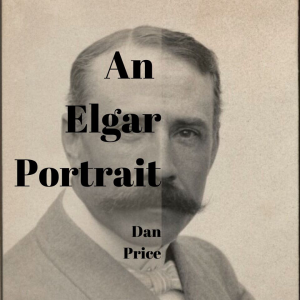
AN ELGAR PORTRAIT - D.Price
This work was composed in commemoration of the 150th Anniversary of the birth English Composer Sir Edward Elgar. The suite is in three movements: 'Introduction', 'Elegy' and 'March', each of which have been inspired by three of Elgar's most celebrated works; Chanson de Matin, Nimrod ('Variation IX' from the Enigma Variations) and Pomp and Circumstance No.1.'Introduction' - Hollybush HillHollybush Hill is the name of one of the peaks of the Malvern Hills in Worcestershire. The Malverns were a favourite walking area for Elgar and his wife, and their panoramic views inspired much of Elgar's music.'Elegy' - BroadheathBroadheath is the small village at the foot of the Malvern Hills where Elgar was born (and lived at various times throughout his life). Elgar is buried not far from Broadheath at St Wulstan's in Little Malvern. 'March' - Worcester CathedralMany of the Worcestershire ensembles and music festivals played an important role in Elgar's early musical education. He was heavily involved in The Three Choirs Festival and either conducted or played in many of the light orchestras and vocal groups that performed at venues across Worcester. A statue of Elgar overlooks the Cathedral at the end of Worcester High Street.An Elgar Portrait has been used regularly as an own-choice test-piece for Section 4 bands, and was also selected as the set work for the Swiss National Championships in 2007 as well as the Pontins Championships in 2008. The composer has slightly reworked this piece for the Section 4 Final of the National Brass Band Championships of Great Britain 2020 and it's this version that should be performed at the contest. If bands currently have an older version in their libraries, please contact us directly for more information.
In Stock: Estimated dispatch 3-5 working days
-
 £30.00
Amenaza - Jock McKenzie
Inspired by elements of the music of Astor Piazzolla, Gotan Project and Bill Whelan's' Riverdance'. The (mainly) minor tonality with chromatic harmonic shifts creates a mood of tension & unease; hence the title of "Amenaza" a Spanish word which translates as "Threat" in English.
-
 £30.00
Ding Dong Merrily on High - Traditional
The popular French tune of this carol first appeared as a secular dance named "Branle de L'Official". It appeared in 'Orchesographie', a collection of dances published in 1589 and written by Jehan Tabouret (pen name Thoinot Arbeau). The established lyrics were written by the English composer George Ratcliffe Woodward and first published in 1924; appearing in the Cambridge Carol Book.
-
 £30.00
Drive the Cold Winter Away - Traditional
This carol first appeared in print in the early seventeenth century, being found in various notable collections; Playford's "The English Dancing Master", the "Samuel Pepys Collection" and the "Roxburghe Collection". Whilst the music is thought to have come from an earlier era the dance tune ("When Phoebus Did Rest"), the words were first printed as a broadside c.1625. As a carol, the lyrics discuss various seasonal festivities during 'Christmastide'. Alternative titles for the same carol include "In Praise of Christmas" and "All Hail to the Days".
-
 £30.00
I Saw Three Ships - Traditional
This is a traditional English carol rumoured to have originated in Derbyshire. The earliest printed version is from the 17th century and the familiar version was later published in William Sandys' collection of 'Christmas Carols Ancient and Modern' in 1833. There are numerous theories as to the meaning of the carol's words; after all, Bethlehem, the place of Jesus' birth is not a coastal location. It has been suggested that the ships are actually camels (ships of the desert) used by the Magi for their visit to the baby Jesus. My arrangement takes advantage of the traditional 'jig' style of this carol to add a little 'Celtic' flavour.
-
 £30.00
Joy to the World - George Frideric Handel
"Joy to the World" is a popular Christmas Carol with words by Isaac Watts. As of the late 20th century, "Joy to the World" was the most published Christmas hymn in North America. The words of the hymn are by the English writer Watts are based on Psalm 98, 96:11-12 and Genesis 3: 17-18. The version of this carol usually heard today is from an edition by Lowell Mason and is named "Antioch" and attributed as "arranged by Handel". This tune has the first four notes in common with the chorus "Lift up your heads" from the Messiah and the third line recalls "Comfort ye" from the same work. But this resemblance is often dismissed as a chance resemblance by Handel scholars today. Another theory is its similarity to a tune called "Comfort" and associated with Charles Wesley's hymn "O Joyful Sound", which was written some three years earlier than Lowell Mason's "Antioch" in 1833. This carol has been recorded by many artists such as Andy Williams, The Supremes, Bing Crosby, Ella Fitzgerald, Johnny Cash, Nat King Cole, Perry Como, Vic Damone and Mariah Carey.
 View Music