
Results
-
 £69.99
A Flemish Christmas - Jan Hadermann
In A Flemish Christmas, Jan Hadermann tells the Christmas story by means of four Old Flemish Christmas Songs.Mary is chosen to bring Jesus Christ, the son of God, into the world: Het was een maged uitverkoren ('She was a virgin chosen').On the occasion of a census, Mary, who is with child, and Joseph, her husband to be, travel from Nazareth to Bethlehem, where Jesus will be born in a humble stable: Maria die zoude naar Bethlehem gaan (Mary would go to Bethlehem').O kerstnacht, schoner dan de dagen ('Oh Christmas Night, more beautiful than the days') is a stately chorale that sings the praises of Jesus' birth.Three wise men from the East, Caspar,Melchior and Balthazar, follow a bright star in the sky, which leads them to Bethlehem. There, they worship the newborn King, and offer him gold, frankincense and myrrh: Wij komen van Oosten (We've come from the East').This musical Christmas story ends with a festive repeat of the third movement, the stately chorale.
Estimated dispatch 5-14 working days
-
 £55.00
Shelter Island. - Nigel Hess
Shelter Island is a small island situated near the end of Long Island, a few hours drive east of New York. In the summer it becomes a crowded tourist trap but in the winter it is gloriously deserted, and bravely facesthe onslaught of the turbulent Atlantic, shrouded in sea mists and driving rain. This brass band transcription, by Phillip Littlemore, is of the first movement of East Coast Pictures, originally written for wind band, and wascommissioned in 1985 by the British Youth Wind Orchestra with funds from National Westminster Bank plc. These three short 'pictures' were inspired by several visits by the composer to a small part of theUSA'sEast Coast, an area that provides great extremes in the geography and the people.
Estimated dispatch 5-14 working days
-
 £22.00
The Catskills - Nigel Hess
In upstate New York lie the Catskill Mountains - an extraordinary combination of tranquillity and power, peace and majesty. Once seen they call you back again and again. This brass band transcription has been made by PhillipLittlemore and explores the sonorous and warm sounds of the brass band. The Catskills is the second movement of East Coast Pictures, originally written for wind band, and was commissioned in 1985 by the British Youth WindOrchestra with funds from National Westminster Bank plc. These three short 'pictures' were inspired by several visits by the composer to a small part of the USA's East Coast, an area that provides greatextremesin the geography and the people.
Estimated dispatch 5-14 working days
-
 £183.20
The Junction Point - John Brakstad
The railway between Oslo and Bergen, "Bergensbanen", was built in the years 1895 1909. This piece is dedicated to the railway labourers, the navvies, who did the hard work across the mountains. Most of the work, even in the tunnels, were done by hand. The official opening of the railway was in 1909, but there was also a celebration and a dynamite salute when the two teams of labourers and locomotives from East and West met in the mountains in October 1907. At this point, the rails were joined together with a joint in the national colours: "The Junction Point"!
Estimated dispatch 5-14 working days
-
 £82.80
The Cotton Phoenix - Alex Poelman
The Cotton Phoenix is the first part of the two-part work "Metropolis of the East" and describes the influence of the textile industry on the development of Enschede. The composition begins introducing the Enschede-theme. After a big fire, the city rises from the ashes and the textile industry reaches a peak. The second part describes the liberation after the war, where Enschede, thanks to the industry, is able to recover. The piece ends with the Enschede-theme; the city in its present form.
Estimated dispatch 5-14 working days
-
 £73.60
Old Market Square - Joris Bolhaar
In the second part of the two-piece work Metropolis of the East is the Old Market, the centre point of the city of Enschede in the Netherlands. Elements such as the Great Church, the monument to the city fire of 1862, and historical events such as the textile strike can be heard in this piece, as well as the sounds of the many al-fresco cafes, the theatre Concordia, and the many festivals. This piece is coupled with The Cotton Phoenix (Alex Poelman) but functions well as a stand-alone work.
Estimated dispatch 5-14 working days
-
 £54.99
Camel Ride - Jan de Haan
In Camel Ride you will experience the magic of a colourful Arabic caravan as it slowly passes by. With this short work for a flexible ten part instrumentation, composer Jan de Haan has brilliantly reflected the atmosphere of the parade and carefully capturing the mysticism of the East. Camel Ride will make a great interlude in your concert performances.
Estimated dispatch 5-14 working days
-
 £154.99
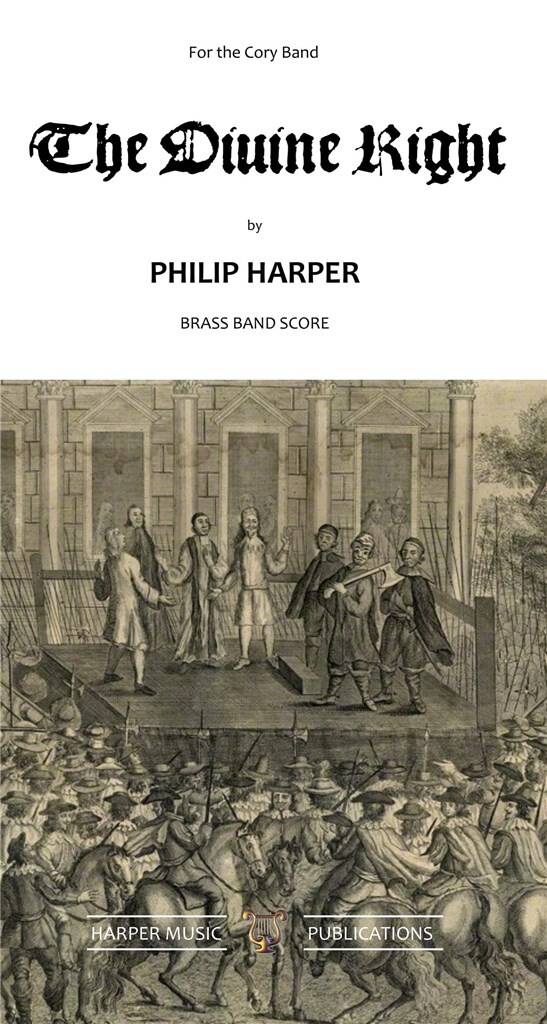
The Divine Right - Philip Harper
At the time of composing this piece, the Arab Spring was sweeping through the Middle East. It seemed that almost every week a new countrys people had risen up against the regimes and dictatorships which had prevailed for generations, leaving manynations at a defining crossroads in their history. There were so many possible ways ahead: so many hopes, yet so many uncertainties.My music is a depiction of these revolutionary times, and several musical themes are in turn presented, discussed, considered, fought over, altered, rejected or accepted. Most nations have had, or probably will have, their own Arab Spring, including my own, the United Kingdom. Events of 17th Century Britain provide the context for this piece, particularly those following the execution of the tyrant King Charles I on30 January 1649. The regicide was in part due to Charless steadfast belief in the Divine Right of Kings, and led to a tumultuous interregnum, where England stood at its own defining crossroads.The music begins turbulently, before King Charles appears and is led to the gallows outside Banqueting House in central London where he is brutally decapitated. From the assembled crowd rose, according to one observer, a moan as I never heard before and desire I may never hear again.The music descends to emptiness. The musical argument which follows is not strictly programmatic, but a number of musical themes are all thrown into the melting pot, representing ideas such as: religion; military force; reasoned Parliamentary debate; and the chattering,irrepressible voice of the people. Additionally, there are some quotations from the music of royalist composer Thomas Tomkins (1572-1656), who was often in tune with the feeling of the times. This defining episode in Englands history was brought to a close with the Restoration of the monarchy in 1660, and as the exiled King Charles II rode back into London the diarist John Evelyn wrote: Never was so joyful a day seen in this nation. I stood in the Strand and beheld it, and blessed God.At the end of the piece the bells ring out, and the musical appearance of the King has transformed from turbulent to triumphant. Philip Harper, 2013
Estimated dispatch 5-14 working days
-
 £89.99
Around a Village - Menno Haantjes
The idyllic village Beetsterzwaag, in the east of Friesland, and its surroundings are depicted in this suite. The first part describes the main street with its liveliness. The second part brings us to the nearby church of St. Hippolytus-Olterterp while the final section describes the children playing in the woods of Sparjebird. Het idyllisch in de Friese bossen gelegen dorp Beetsterzwaag en haar omgeving staat model in deze landelijke suite. Het eerste deel beschrijft de hoofdstraat met al haar levendigheid. Het tweede deel brengt ons in het naburige St. Hippolytus-kerkje van Olterterp terwijl het slotdeel de spelende kinderen beschrijft in het speelbosSparjebird.
Estimated dispatch 5-14 working days
-
£76.99
Famous Folksongs - Dagmar Kildevann
In 'Famous Folksongs' we are taken on a musical trip around the world, from France to the USA and from South America to the Middle East. Dagmar Kildevann arranged eight word famous folk songs in very different ways. From traditional (Lolo mi boto) to modern (Le coq est mort) and from swing (Sur le pont) to rock (Michael row the boat). Bon voyage, have a pleasant journey! Oh, and by the way, don't forget your passport!
Estimated dispatch 5-14 working days
 View Music