Results
-
 £60.99
Gladiator - Hans Zimmer - Klaas van der Woude
The long list of musical film scores by the German composer Hans Zimmer includes such works as Armageddon, Rain Man, Speed and Thelma and Louise, showing he is at ease with many types of film music. Some of his best work was his music for the epic Gladiator. Klauss van der Wourde has created a great arrangement from this wonderful score.
Estimated dispatch 5-14 working days
-
 £76.99
The Green Hill - Bert Appermont
This piece was commissioned by Swiss Euphonium virtuoso Erich Schmidli. Bert Appermont dug deep into Celtic music for inspiration and created a fantasy that shows off the incredible, but often overlooked, versatility of the Euphonium. Charming lyrical melodies, virtuosic runs and exciting, colourful tuttis create plenty of contrast in this exciting work. The difficulty level for the soloist and band means almost any band to perform this piece and showcase their Euphonium player.
Estimated dispatch 5-14 working days
-
 £76.99
Avatar Soundtrack Highlights - James Horner - Jay Bocook
James Horner composed the soundtrack to the stunning science-fiction film Avatar, which millions of enthusiastic movie-goers have already seen. Jay Bocook combines all the action, adventure, drama, and romance Horner wrote into his music and has created a medley, adapted for brass band by Philip Sparke, that will take your audience on an exciting voyage.
Estimated dispatch 5-14 working days
-
 £64.99
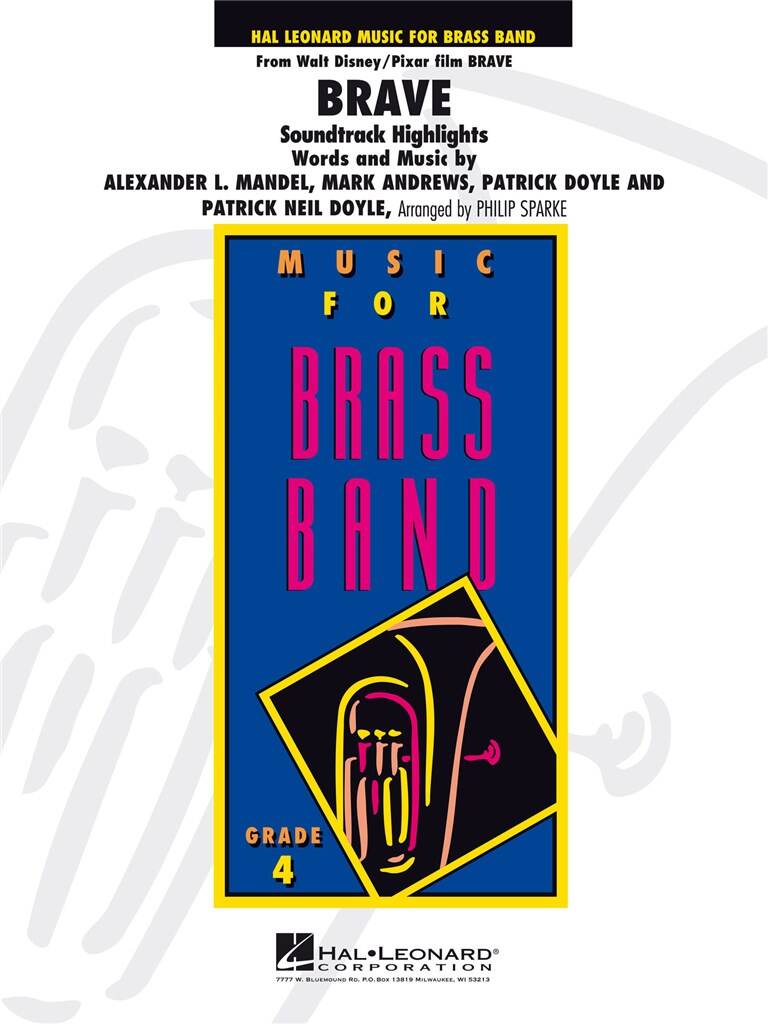
Brave - Patrick Doyle - Philip Sparke
Patrick Doyle, who has already been nominated for an Oscar and two Golden Globes for his fabulous film music, created the soundtrack for the Disney/Pixar film BRAVE. The Brit, Philip Sparke, was inspired by the sometimes powerful, other times lyrical and in part celtic-flavoured melodies to put together a stylish medley for brass band, in which the following tunes appear: FATE AND DESTINY, THE GAMES, MERIDAS HOME, NOBLE MAIDEN FAIR (A Mhaighdean Bhan Uasal) and TOUCH THE SKY.
Estimated dispatch 5-14 working days
-
 £45.00
Dreamtime
Commissioned by Philip Harper for the Cory Bands 2013 tour to Australia, Dreamtime draws inspiration from Australian Aboriginal mythology. The Dreamtime is a sacred era in which the Aborigines believe ancestral totemic (symbolic) spirits created the world. The work is heavily percussive, including narration and a pseudo-didgeridoo, created with multi-phonics in euphoniums and tubas. The work can still be performed without multi-phonics, narration and reduced percussion. Duration: 00:07:30 (with narration) Grade: 5 Listen:
Estimated dispatch 5-7 working days
-
 £34.95
Goodbye Old Friend - Christopher Bond
Walt Disney was just twenty-five years old when he created Oswald the Lucky Rabbit, and the pair gained huge success, but that success was short-lived. In 1928, Disney travelled to New York City in hopes of negotiating a more profitable contract for the Oswald cartoons with his producer, Charles Mintz. Unknown to Disney, Mintz had been working behind his back to counter his own financial problems by stealing many of Disney's animators and staff. Walt Disney was devastated and decided to let Oswald go, and in doing so, lose all the rights to the rabbit he had created and nurtured so dearly. 'Goodbye Old Friend' is a beautiful slow-melody for euphonium and baritone, communicating the profound loss Disney felt in losing his producer, staff, and most of all, Oswald the Lucky Rabbit.
Estimated dispatch 10-14 working days
-
£40.00
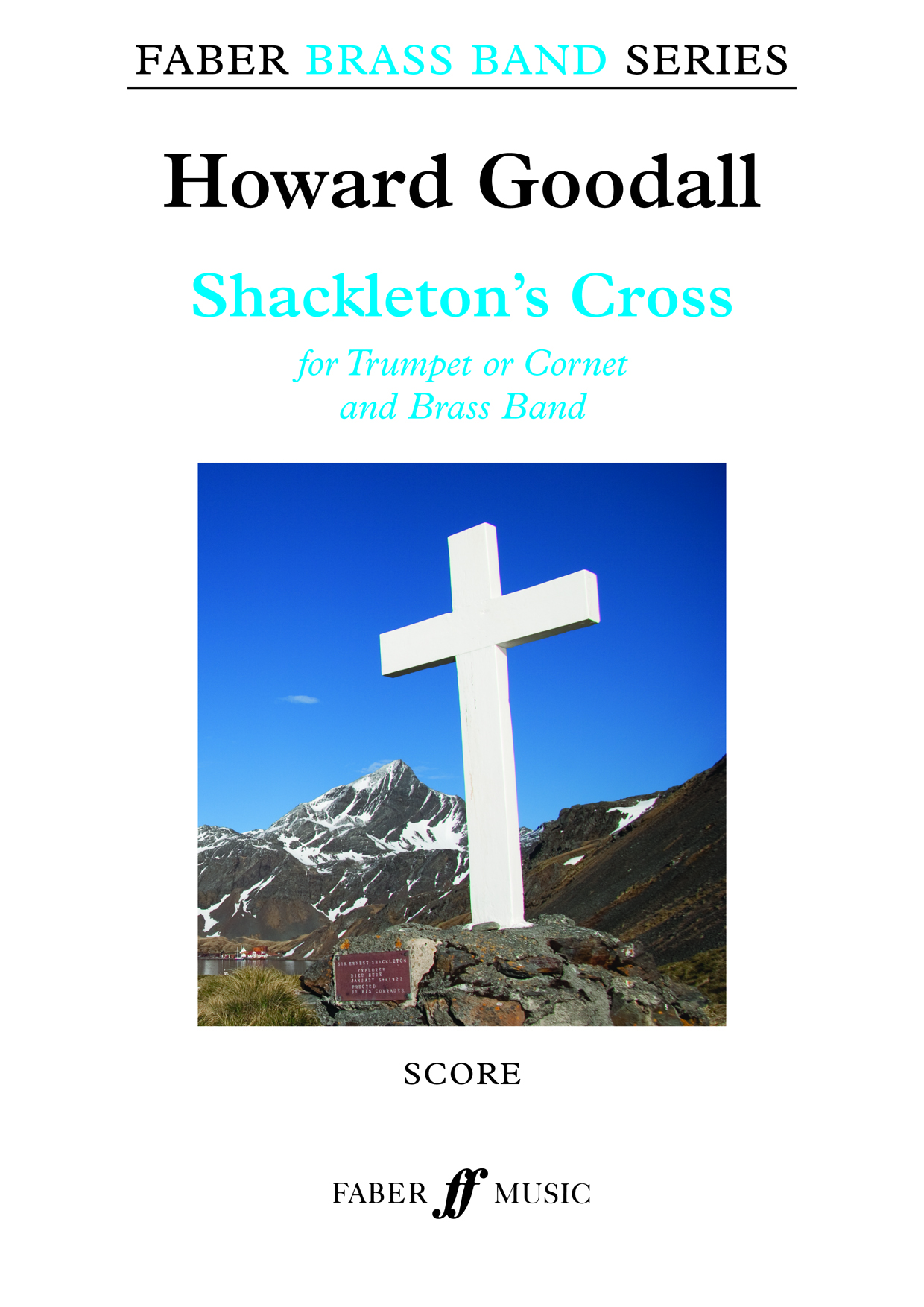
Shackleton's Cross - Howard Goodall
Shackleton s Cross was inspired by a painting created in 1957 by the English artist Edward Seago (1910 1974). The title refers to a cross which was erected to the memory of Sir Ernest Shackleton, who led a number of explorations to the Antarctic. Shackleton died in 1922 whilst on a Polar expedition, and the cross can be found on a promontory at the entrance to the bay at Grytviken Whaling Station in South Georgia. The painting is owned by HRH The Duke of Edinburgh, and was part of an exhibition at Buckingham Palace from October 2011 to April 2012.Originally scored for oboe, trumpet and small orchestra, Daniel Hall s sensitive arrangement for trumpet or cornet and brass band follows the composer s alternative version for solo trumpet and organ, created for Crispian Steele-Perkins (trumpet) and David Goode (organ).
In Stock: Estimated dispatch 1-3 working days
-
 £35.00
strange geometry
Descriptionstrange geometrywas commissioned by Morgan Griffiths and the Hammonds Saltaire Band for their performance at the Brass in Concert Championships of 2015.As a bit of a space/sci-fi geek, as well as a musician, two events during the summer of 2015 had a particular effect on me. The first was the tragic early death in a plane crash of the famous film composer James Horner. Horner's music, particularly in films like 'Star Trek II: The Wrath of Khan', 'Avatar', 'Apollo 13' and even his debut in Roger Corman's 1980 budget film 'Battle Beyond the Stars', defined for a generation the sound of sci-fi at the cinema. Along with John Williams he created the vocabulary for those who wish to express other-worldly wonder in music and his inventive talent will be much missed in an industry where originality has become something of a dirty word in recent years.The second event was the epic flyby of Pluto by the NASA New Horizons spacecraft. There are many reasons to find this mission inspiring - for example, the scientists and engineers behind it created a craft that has travelled at 37,000 mph for nine years and three billion miles to arrive within seventy-two seconds of the predicted time for the flyby. That they achieved this with such accuracy is an outstanding tribute to humanity's ingenuity and insatiable curiosity. However, the most exciting aspect of the mission was the clear, high resolution pictures of this unthinkably remote and inhospitable world beamed back to mission control. The best previous image of Pluto was an indistinct fuzzy blob - suddenly we could see mountains made of ice, glaciers of methane and carbon monoxide and nitrogen fog - features previously unimagined on a world thought to be a slightly dull ball of cold rock. The BBC's venerable astronomy programme 'The Sky at Night' waxed lyrical about these newly discovered features, referring to "the surprising discoveries of mountains and strange geometry on the surface of this cold distant world".I like to think that Horner would have been as inspired as I have been by this real-life science story, and this piece uses some of the vocabulary of the sci-fi movie soundtrack in a tribute to the memory of a great musician and to the inspirational geeks at NASA who have boldly taken us where no-one has gone before.Note: This work comes with a B4 portrait score. Listen to a preview and follow the music below!
Estimated dispatch 7-14 working days
-
 £34.99
Shackleton's Cross (Cornet Solo with Brass Band - Score and Parts)
Shackleton's Cross was inspired by a painting created in 1957 by the English artist Edward Seago (1910 1974). The title refers to a cross which was erected to the memory of Sir Ernest Shackleton, who led a number of explorations to the Antarctic. Shackleton died in 1922 whilst on a Polar expedition, and the cross can be found on a promontory at the entrance to the bay at Grytviken Whaling Station in South Georgia. The painting is owned by HRH The Duke of Edinburgh, and was part of an exhibition at Buckingham Palace from October 2011 to April 2012. Originally scored for oboe, trumpet and small orchestra, Daniel Hall's sensitive arrangement for trumpet or cornet and brass band follows the composer's alternative version for solo trumpet and organ, created for Crispian Steele-Perkins (trumpet) and David Goode (organ). Duration: 5.00
Estimated dispatch 7-14 working days
-
 £11.87
All Tuned Up - 120 Famous Tunes for All Occasions (International Size) Hard Copy
This unique new resource from BrookWright Music will be an essential part of every band's library! All Tuned Up is designed to cater for ensembles for occasions throughout the year. Tunes are drawn from genres including Classical, Hymns, Folk and Patriotic amongst many others to form a comprehensive book that will cover a wide variety of events such as Weddings, Funerals, Graduation Ceremonies, Parties, Proms, Remembrance, Street Playing and Thanksgiving. Playable by as few as five players but also designed to work for full brass band or wind band, it features flexible parts in a wide variety of transpositions. These excellent arrangements have been expertly created by Andrew Wainwright, David E. Jones, Dean H. Jones and Steven Ponsford. The general harmonic format of All Tuned Up is in five parts, although additional notes have been included to thicken the harmony where more players are available. Therefore, the book will work equally well with larger groups, including full brass bands and wind bands. At the end of the Part 1 Bb book are four a capela tunes for Remembrance/Memorial occasions. To view a promotional video please visit www.youtube.com/watch?v=nmodRrXQRRs This purchase is for International sizes: Full Score - A4 Size - 297mm x 210mm Band Parts - A5 Size - 210mm x 148mm The full set includes: Full Score Part 1 Eb (optional) - Soprano Cornet/Trumpet Eb, Clarinet Eb Part 1 Bb - Cornet/Trumpet Bb, Clarinet Bb, Flugel, Soprano Saxophone Part 1 C - Piccolo, Flute, Oboe, Part 2 Bb - Cornet/Trumpet, Clarinet Bb, Flugel Part 2 Eb - Tenor Horn, Alto Saxophone, Alto Clarinet Eb Part 2 F - Horn, Cor Anglais Part 3 Bb - Baritone, Trombone, Euphonium, Tenor Saxophone, Part 3 C (Bass clef) - Baritone, Trombone, Euphonium Part 3 Eb - Tenor Horn, Alto Saxophone, Alto Clarinet Eb Part 3 F - Horn, Cor Anglais Part 4 Bb - Euphonium, Baritone, Tenor Saxophone Part 4 C (Bass clef) - Euphonium, Baritone, Bassoon Part 5 Eb - Bass Eb, Baritone Saxophone Part 5 Bb - Bass Bb, Bass Clarinet Part 5 C (Bass clef) - Tuba, Bassoon, String Bass Percussion (optional) - Various
In Stock: Estimated dispatch 1-3 working days
 View Music
 Listen to MP3