
Results
-
 £35.00
Ascension - Lucy Pankhurst
A major work written for the RNCM Brass Festival Competition 2005, and inspired by the nature of Ascension - creating a Musical depiction of the spiritual journey towards enlightenment, sanctuary and ultimate inner peace.As aninitial muse for this work, the 'Tibetan Singing Bowl' is utilised with the Brass Band in order to represent this path to Serenity, together withBaoding Balls(Chinese Health Balls) to mark the point of Final Ascension.Programme notes from the composer, Lucy Pankhurst:Ascension is a Musical depiction of the Spiritual Journey towards enlightenment, sanctuary and ultimate inner peace.As my initial muse for this work, the Singing Bowl is utilised with the Brass Band in order to represent this path to Serenity. "Tibetan" Singing Bowls date back to the 8th Century A.D., originating in the pre-Buddhist shamanic Bon Po culture in the Himalayas and are still used in modern Monasteries. The original purpose of them still remains a mystery, with accounts stating that it is forbidden to disclose the true function of the Bowls, as the "secrets of sound" yield so much Power, that they must be kept hidden.Listening to the tones created by the Singing Bowl effectively silences the internal dialogue of the listener, making it an excellent tool for Meditation, Centering and entering trance-like states. In Buddhism, as with many cultures, sound is an important part of Spiritual Practice. There are 9 methods to reach Enlightenment in the Buddhist Doctrine ; the seventh is SOUND.These Bowls are used by Healers in a similar way to help balance the body's residual energies. The Bowls are usually made from seven different sacred metals, intended to correlate directly to the seven sacred "Planets" : GOLD (Sun), SILVER (Moon), MERCURY (Mercury), COPPER (Venus), IRON (Mars), TIN (Jupiter), ANTIMONY (Saturn). Any one Bowl can create up to seven different frequencies (tones) simultaneously. In Healing, the Singing Bowl is played whilst balanced on the palm of the hand, struck three times to stabilise the surrounding energies, before rotating the wooden "beater" around the outer circumference of the Bowl to create the "singing" effect.I have included an optional Vibraphone part (to be played with a Double Bass Bow) with Tubular Bells, to be used only in performances where a Singing Bowl cannot be acquired. However, a traditional Bowl should be used whenever possible, to create this specific and unique sound.Baoding Balls or Chinese Health Balls are also utilised in this work. Their appearance in the Music here, however, is to mark the point of Final Ascension, where the music reaches its ultimate goal. These delicate cloisonne iron Balls are said to stimulate the acupressure points on the hand, thus improving the Chi and Energy Paths (Life Force) throughout the entire body. The delicate "tinkle" produced by these spheres is hypnotic and captivating. For this reason, where no Baoding Balls are obtainable for performance, only delicate metallic percussion should be used in replacement (i.e. Crotales, Antique Cymbals or (liberal) single strikes on a Triangle etc.). Bell Trees, Wind Chimes and Cow Bells should not be used.As in many cultures, the number three is important in Ascension, as it represents not only the purification from the Singing Bowl, but also it is a number of confirmation, reiterated throughout the music in the metallic percussion in addition to the Brass, re-affirming the correct path to Enlightenment.
In Stock: Estimated dispatch 3-5 working days
-
 £127.95
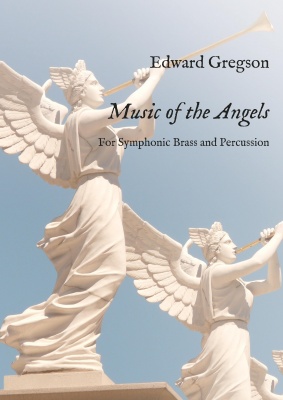
Music of the Angels (Symphonic Brass Ensemble - Score and Parts)
In 1998 Gregson was commissioned by conductor Martyn Brabbins to write a short concert opener with choir to mark his debut as Music Director of the Huddersfield Choral Society. Entitled ...and the seven trumpets... this ten minute flourish is founded on a verse from Chapter 8 of the Revelation To John (The Apocalypse), the last book in the Bible: 'and I saw the seven Angels which stood before God: and to them were given seven trumpets'. The performance employed the full power of the Huddersfield Town Hall organ and the brass section of the BBC Philharmonic, including seven trumpets and four horns placed strategically around hall.The following year, when Gregson received a commission from the Cheshire-based Foden's Brass Band (conducted at that time by Nicholas Childs) for a work to mark its centenary in 2000, he turned to the first portion of ...and the seven trumpets... as the basis for an ambitious celebratory work entitled The Trumpets of the Angels. "The opportunity to create an extended work which would break out of the brass band mould was an important milestone for me," the composer says. In 2015 he was asked by Nicholas Childs to create a new performing edition without organ for the Black Dyke Band. This received its first performance in April 2016 at the European Brass Band Festival in Lille. In 2018, Gregson revisited the music for a third time, returning the opening fanfares to orchestral brass and transforming substantial portions of the 'Black Dyke' version to create Music of the Angels, a dramatic canvas for symphonic brass and percussion.An array of bells and gongs offer an unmistakable key to the source of Gregson's inspiration. Inscribed In tribute to Olivier Messiaen, the work's principal material and its sound world, but crucially not the underlying musical processes, are influenced by Messiaen's masterpiece for wind and percussion, Et exspecto ressurectionem mortuorum (1964). Music of the Angels begins with braying of horns suggestive of the start of an ancient ritual. Six 'angel' trumpeters, set behind the ensemble, answer in sequence, with the evocative sound of tam-tams creating the Messiaen-like aura. Once the horns have reached the performing space, four of the trumpeters deliver highly contrasting fanfare cadenzas. At the climax of this episode, the individual fanfares are presented together, as if, perhaps, to reflect the Biblical writer's apocalyptic visions of hail, fire, seas of blood and the cataclysmic destruction of man and beast.This powerful vision of death and destruction gives way to a prayerful lament, re-imagining a sung Kyrie Eleison from the 'Black Dyke' edition, with flugel horn and euphonium obligati. The hushed atmosphere is broken by tenor and side drums, and trumpets five and six, which gallop away like the Horsemen of the Apocalypse. In the biblical account their steeds had 'heads like lions with fire and smoke and sulphur issuing from their mouths'.As the reverberation of a dramatic climax dies we hear the entry of the seventh trumpet, from 'on high', blazing forth with a version of the main that extends across the entire compass of the instrument - almost three octaves. Supported by a 'holy trinity' of gongs, an 'epic' final cadenza introduces new material which is further developed in a frenetic final section. This is announced by two sets of timpani, to the left and right. Braying brass (euphoniums and horns) once more adds an air of foreboding. As the music builds towards a magisterial conclusion, the Messiaen-inspired tritones of the principal motif are smoothed out into perfect 5ths and combined with the earlier material in a full-voiced chorale, over which the seventh trumpet blazes in triumph.- Programme note by Paul HindmarshScored for1 Trumpet in E flat (Trumpet 5)6 Trumpets in B flat (Trumpet 4 doubling Flugel Horn)4 Horns in F3 Tenor Trombones1 Bass TromboneEuphonium2 Tubas2 Timpani (Percussion 3 doubles Timpani 2)Percussion (3 players): 3 Tam-tams, 3 Suspended Cymbals, Bass Drum, Tenor Drum, Snare Drum, Tubular Bells.Duration: 16.00
Estimated dispatch 7-14 working days
-
 £34.95
Puffing Devil, The - Christopher Bond
The Puffing Devil (2013) was commissioned by Camborne Trevithick Day Committee on the occasion of Camborne's 30th Trevithick Day celebration. The premiere performance of the work, written for brass band and children's choir, saw a massed performance by six brass bands and children from nine local schools. With the intention of being an educational work as well as a musical work, The Puffing Devil reflects the story of Richard Trevithick both in the lyrics and the musical material.A mysterious opening sees running semiquavers in the euphoniums as the flugel horn introduces the work with a solo, before the entry of the horns playing rhythmic quavers. The addition of the voices at the outset is for effect - working with the instruments to create the sound of a steam engine gathering pace simply to the words 'Trevithick'. Once a steady tempo is reached, themes are introduced and sung by the choir, where the vocal writing is a very simple singular-melody; easy for any primary school aged children to learn. An ending of grandeur in a majestic nature is presented, to create a big finish to a feel-good educational work.
Estimated dispatch 10-14 working days
-
 £94.95
Waiting for a Pain Hit!??!!? (Brass Band - Score and Parts)
Waiting For a Pain Hit!??!!? was written during November and December 2006 as an entry in the 2006/07 Swiss Brass Band Association Composers Competition. It was later chosen as the Championship Section set test piece for the 2010 Swiss National Brass Band Championships.The piece originates from sketches for a Brass Quintet which was written whilst I was in my second year of studies at the Royal Welsh College of Music and Drama. The piece, now being much more elaborate both musically and structurally than the original, aims to explore the many various textures available to a large brass ensemble. The aims of the piece, from its earliest stages, were mainly exploration of textures as well as dealing with issues of continuity and whilst the piece certainly contains challenging technical elements, they were not a driving force behind its inception and more organically grew from the primary aims of the piece. I was purposefully looking throughout the writing and editing process to create a piece of music with a seamless, ethereal quality to both the structure and the musical content.There are no 'performance directions' throughout the piece, the reasoning for this is explained below. However, I have spent much time and thought over the tempo markings throughout the piece and the tempos throughout the piece are the desired tempi and care should be taken with these. The tempo markings contained throughout the piece form a vital part of the structure and affect the continuity of the piece. Metronome marks contained within a box show the tempo of the new section in relation to the tempo that precedes it by use of metronome modulations. Any alterations to the tempo of the section that precedes it will alter the boxed metronome marks.The title of a piece of music, please forgive my generalisation, is to give an insight into 'what a piece is about'. I suppose that this piece is no different, but with the title being slightly abstract I shall resist the temptation to reveal what it means to me. The title, I feel, needs to be open to interpretation along with the music within. That's the way, with this piece especially, I like my music to be. Freedom to find our own meaning and a way to express it from within the score is vital. It is only then that the piece can take on its own identity and grow in ways that even I might not have imagined, revealing different sides to its personality with each performance.Before the music begins I have included some text. Do these words hold the key to the music?! Can they help??! I DON'T KNOW!!! I just like the rhythms, the pulse and the imagery. Hopefully, all of this can help to create a picture. But let it be your picture...- Paul McGhee, June 2010
Estimated dispatch 7-14 working days
-
 £34.95
The Puffing Devil (Vocal Solo)
For Children's Choir and Brass BandThe Puffing Devil (2013) was commissioned by Camborne Trevithick Day Committee on the occasion of Camborne's 30th Trevithick Day celebration. The premiere performance of the work, written for brass band and children's choir, saw a massed performance by six brass bands and children from nine local schools. With the intention of being an educational work as well as a musical work, The Puffing Devil reflects the story of Richard Trevithick both in the lyrics and the musical material. A mysterious opening sees running semiquavers in the euphoniums as the flugel horn introduces the work with a solo, before the entry of the horns playing rhythmic quavers. The addition of the voices at the outset is for effect - working with the instruments to create the sound of a steam engine gathering pace simply to the words 'Trevithick'. Once a steady tempo is reached, themes are introduced and sung by the choir, where the vocal writing is a very simple singular-melody; easy for any primary school aged children to learn. An ending of grandeur in a majestic nature is presented, to create a big finish to a feel-good educational work.
Estimated dispatch 7-14 working days
-
 £33.62
'Mid all the traffic (Brass Band) Traditional arr. Andy Wareham
This stunning arrangement by British composer Andy Wareham is of the popular hymn 'Mid all the Traffic, which marries the North-American folksong Shenandoah set to lyrics by English journalist, novelist and poet William Arthur Dunkerley (written under the pseudonym of 'John Oxenham'). The hymn is very well-regarded in both the Salvation Army and wider brass band movement thanks to a popular arrangement by renowned Salvationist composer Leonard Ballantine. The arranger writes: 'This setting of 'Mid All The Traffic was originally composed during the Covid-19 pandemic as an octet arrangement for single instrument. My hope was to create an arrangement that offers an alternative view on harmony and could be multi-track recorded; allowing performers to give, and share, a performance whilst in isolation. The music was written in dedication to all of the 'key-workers' in the UK, especially in the NHS, who worked tirelessly throughout difficult conditions during the Covid-19 pandemic.' To view a follow-the-score video of the work please visit https://www.youtube.com/watch?v=naajvdsg9Wo PDF download includes score and parts. Sheet music available from: UK - www.brassband.co.uk USA - www.solidbrassmusic.com Difficulty Level: 3rd Section + Instrumentation: Soprano Cornet Eb Solo Cornet Bb Repiano Cornet Bb 2nd Cornet Bb 3rd Cornet Bb Flugel Horn Bb Solo Horn Eb 1st Horn Eb 2nd Horn Eb 1st Baritone Bb 2nd Baritone Bb 1st Trombone Bb 2nd Trombone Bb Bass Trombone 1st Euphonium Bb 2nd Euphonium Bb Bass Eb Bass Bb Bass Drum Suspended Cymbal
In Stock: Estimated dispatch 1-3 working days
-
 £37.35
Capriccio for Brass Band (Robbert Vos)
VIEW SCORE PDF Capriccio for Brass Band (Robbert Vos) was the winner of both the overall prize decided by the judges and Public Commendation prize for the 2020 International Brass Band Composer Competition, a contest that included some 92 entries from around the world. The composer writes: 'My Capriccio for Brass Band is a lively, intense and virtuosic piece based on several thematic, rhythmical and harmonic ideas which are developed during the piece. It is non-programmatic and not based on a storyline. The middle section, in contrary, is in more of a minimalistic style, where there is room to create a mysterious and open atmosphere. Rhythmical elements are quoted from the opening movement, whilst clashing chords are used to build up tension. The last movement builds to a big climax, where several of the compositorial ideas used before come together for the finale.' PDF download includes score and full set of parts. Sheet music available from: UK - www.brassband.co.uk USA - www.solidbrassmusic.com Difficulty Level: Championship Section Instrumentation: Soprano Cornet Eb Solo Cornet Bb Repiano Cornet Bb 2nd Cornet Bb 3rd Cornet Bb Flugel Horn Bb Solo Horn Eb 1st Horn Eb 2nd Horn Eb 1st Baritone Bb 2nd Baritone Bb 1st Trombone Bb 2nd Trombone Bb Bass Trombone 1st Euphonium Bb 2nd Euphonium Bb Bass Eb Bass Bb Timpani Percussion 1-3
In Stock: Estimated dispatch 1-3 working days
-
 £59.77
Caprice (Euphonium Solo with Brass Band) Andrew Batterham
VIEW SCORE PDF Caprice was written for Matthew van Emmerik, to showcase his virtuosity in an engaging piece of concert music. The work is in theme and variation form, with the primary material being the theme from the last of Paganini's Ventiquattro Capricci per violino solo, a collection of 24 caprices for solo violin. This theme has been the inspiration for similar works by many composers since it was first published, including Liszt, Brahms, Rachmaninov, Benny Goodman and Andrew Lloyd Webber. In this work, the famous theme is treated to a more contemporary approach. The first variation, Capricious, relies on motor rhythms and jagged dialogues between the soloist and the band. It is couched in an organic scale reminiscent of the Phrygian mode. The second variation, Sad, is in direct contrast, acting as a traditional ballad and allowing the soloist to explore the expressive side of the instrument. The third variation, Energetic, is a micro set of variations in itself, designed to display the soloist's innovative technique and stamina. Each section is more challenging than the last, until the work concludes with a whirlwind dance at breakneck speed. Like all of Batterham's recent work, the musical language of Caprice draws upon classical, jazz, funk and ska elements to create a unique sound where anything can happen, and probably will. This arrangement was made possible through Matt's instigation and generosity. To view a video of Matthew van Emmerik performing the version with brass band please visit www.youtube.com/watch?v=D0hsvux_a5o To view a video of Fletcher Mitchell performing the version with piano please visit www.youtube.com/watch?v=NOZ6KRldDVo Sheet music available from: UK - www.brassband.co.uk USA - www.solidbrassmusic.com Instrumentation: Euphonium Soloist Soprano Cornet Eb Solo Cornet Bb Repiano Cornet Bb 2nd Cornet Bb 3rd Cornet Bb Flugel Horn Bb Solo Horn Eb 1st Horn Eb 2nd Horn Eb 1st Baritone Bb 2nd Baritone Bb 1st Trombone Bb 2nd Trombone Bb Bass Trombone Euphonium Bb Bass Eb Bass Bb Percussion 1-3
In Stock: Estimated dispatch 1-3 working days
-
 £89.66
Euphonium Concerto with Brass Band (Karl Whelan)
VIEW SCORE PDF Karl Whelan's Euphonium Concerto with Brass Band is written in three linked movements: I: Prelude II: Aria III: Scherzo The first movement, Prelude, is in a mirror image sonata form and with its menacing ostinato sets the tone for the entire concerto and also introduces material on which the concerto is based. During this movement, the soloist has the opportunity to display their technical ability as well as the extremes of the instruments range. A chord based on the notes of the ostinato signal the beginning of the second movement, Aria. Here, material from the first movement has been weaved together and moves through a multitude of keys, the soloist is able to show the expressive side of the instrument to create an almost yearning, operatic aria. A reiteration of the 1st subject takes us into an almost march like figure at the beginning of the third movement, Scherzo. This is then interrupted both times by dance-like scherzo which, as with the rest of the concerto navigates itself through different keys leading to the cadenza that even the temple blocks have the the chance of participating in! The concerto concludes with almost a battle between the band (playing fragments of the first and second subjects from the first movement), and soloist who is attempting to have the last word! To view a follow-the-score video of the work please visit: www.youtube.com/watch?v=aEnou67XHqA Sheet music available from: UK - www.brassband.co.uk USA - www.solidbrassmusic.com Instrumentation: Euphonium Soloist Bb Soprano Cornet Eb Solo Cornet Bb 2nd Cornet Bb 3rd Cornet Bb Flugel Horn Bb Solo Horn Eb 1st Horn Eb 2nd Horn Eb 1st Baritone Bb 2nd Baritone Bb 1st Trombone Bb 2nd Trombone Bb Bass Trombone Euphonium Bb Bass Eb Bass Bb Timpani Percussion 1-3
In Stock: Estimated dispatch 1-3 working days
-
£7.46
Euphonium Concerto with Brass Band (Karl Whelan) Soloist Copy
*Karl Whelan's Euphonium Concerto with Brass Band is written in three linked movements: I: Prelude II: Aria III: Scherzo The first movement, Prelude, is in a mirror image sonata form and with its menacing ostinato sets the tone for the entire concerto and also introduces material on which the concerto is based. During this movement, the soloist has the opportunity to display their technical ability as well as the extremes of the instruments range. A chord based on the notes of the ostinato signal the beginning of the second movement, Aria. Here, material from the first movement has been weaved together and moves through a multitude of keys, the soloist is able to show the expressive side of the instrument to create an almost yearning, operatic aria. A reiteration of the 1st subject takes us into an almost march like figure at the beginning of the third movement, Scherzo. This is then interrupted both times by dance-like scherzo which, as with the rest of the concerto navigates itself through different keys leading to the cadenza that even the temple blocks have the the chance of participating in! The concerto concludes with almost a battle between the band (playing fragments of the first and second subjects from the first movement), and soloist who is attempting to have the last word! To view a follow-the-score video of the work please visit: www.youtube.com/watch?v=aEnou67XHqA To purchase the full band set please visit www.brookwrightmusic.com/product-page/euphonium-concerto-with-brass-band-karl-whelan *Please note this download only includes the soloist copy. Sheet music available from: UK - www.brassband.co.uk USA - www.solidbrassmusic.com Instrumentation: Euphonium Soloist Bb Soprano Cornet Eb Solo Cornet Bb 2nd Cornet Bb 3rd Cornet Bb Flugel Horn Bb Solo Horn Eb 1st Horn Eb 2nd Horn Eb 1st Baritone Bb 2nd Baritone Bb 1st Trombone Bb 2nd Trombone Bb Bass Trombone Euphonium Bb Bass Eb Bass Bb Timpani Percussion 1-3
In Stock: Estimated dispatch 1-3 working days
 Watch video