
Results
-
 £52.70
Far Eastern Dream - Paul Voet
The longest trip we make is to the Far East. Japan, China, Tibet,... all countries with an enormous cultural background and history. Percussion is very important here to give a rich dimension to this Japanese 'Black Bamboo' theme. Tam-tam, Chinese cymbals, Tibetan gong and a kododrum (if not possible, large floor tom) together with marimba and glockenspiel are used all the time in a carefulway. A solo cornet presents the main theme that is answered by the whole lower brass section. While this theme develops now and then the sounds of the impressive 'dung' is heard. (dung is the Tibetan very large trumpet-like instrument with loud and very deep sounds) In a quicker tempo Eb bass, euphonium and solo cornet start with the theme and even the counter theme. The whole group joins the party but everything ends very silently with mute.
Estimated dispatch 5-14 working days
-
 £127.30
Mahalageasca - Mahala Rai Banda - Reid Gilje
Mahalageasca is a piece that make you happy both to listen and perform.It's possible to play the piece as a stage entrance piece. Repeat bars 1 to 8 several times. You might let the Drum set and some Percussion start alone. After basses have played their first eight bars, move on to bar nine.It is also possible to perform is as an ancore where you might change positions for the brass players but use the same pattern with Percussion as above.Here's a suggestion for set-up:Backrow sits in front of the conductor (on horn chairs)Soprano and Solo Cornets standing behind them.Trombones sits at the conductors right (on Euphonium/Baritone-chairs)Basses sitting behind the TrombonesFlugelhorn and horns on the left (sitting on the solo cornet chairs)Euphoniums and Baritones behind the horns.Please do not play too loud on mf. A bit press on the start of the slurs often better the emphasis (some marcatos written as well)Bars 96 to 136 is challenging for mallet percussion. They can be played as solo, or two players might share it in a convenient way.
Estimated dispatch 5-14 working days
-
 £59.99
Marcho Brioso - Philip Sparke
Marcho Brioso was commissioned by The Brioso Brass, a British-style brass band from Hokkaido, Japan. They gave the first performance in January 2012.The commission was for a bright and breezy march that the band could use as their theme tune, so Marcho Brioso falls into the composer's series of Broadway-style marches, which includes Slipstream, The Bandwagon and Jubiloso.After a short introduction a solo cornet plays the main theme, accompanied by a euphonium counter-melody. A secondary phrase from the horns and baritones leads to a tuttiversion of the main theme which is followed by the traditional 'bass' strain. A change of key heralds the trio section, which features a cantabile melody on euphonium; this is then taken up by the full band after a short bridge passage and further change of key.This takes us back to the home key which sees a quiet staccato version of the main theme lead to a recapitulation and a short coda which brings the march to a close.
Estimated dispatch 5-14 working days
-
 £104.99
Beecher Variations - Stephen Bulla
In this beautiful composition, melodic fragments of the hymn tune Beecher are morphed into a series of variations, showing the melody in various moods from expressive, then quiet and soft, to bright and triumphant in the end. Written as a testpiece in the 4th division for the Dutch Brass Band Championships in 2015, the music features challenging solo parts for cornet, soprano cornet, flugelhorn and euphonium. A great work for the concert stage!
Estimated dispatch 5-14 working days
-
 £228.70
Festive Fireworks - Fredrick Schjelderup
Festive Fireworks is written in three movements: I. Festivitas, II. Fantasia & III. Fireworks. The piece is based on two different tunes, both presented in the first movement, "Festivitas". II. Fantasia is written as a calm fantasy on the two themes. It includes melodic lines, percussion effects and finish off with cadenza's for Solo Cornet, Solo Horn, Euphonium and Eb Bass. III. Fireworks is a quick movement with lots of energy combined with technique and melodic lines. Elements of the first and second movement is presented and mixed together for a great finale. To the conductor: "I. Festivitas" can also be used as a concert opener or finale and has two differentendings for concert use or contests (by using all the three movements).
Estimated dispatch 5-14 working days
-
 £122.10
Den store dagen - Benny Borg - Bjørn Morten Kjærnes
This beautiful song contains a huge contrast between the hopeful and the disappointing. A mother has her birthday and is waiting her children to celebrate it. Each verse starts optimistically, but the short chorus is characterized by the disappointment, that everyone calls, and cannot come. This has been tried recreated musically, mostly in the last two choruses, as it dawns on her that she will not receive a visit. It's a beautiful tune, but with a serious message that it's easy to take someone for granted.One of the elements Hjorring Brass Band (DK) came up with after rehearsal, was that they really liked the change between the ballad parts with even eights and the swing parts. This also gives the piece a sense of "parlando" character, which tells a story, and is therefore important to focus. It is not quite simple, as the melody also in those parts with even eights has some triplet rhythms. Therefore, this is a topic you can work on very consciously.If you have heard the Wind Band version, you can notice that both keys and modulation are different in the Brass Band arrangement to sound better for this instrumentation.Regarding instrumentation, Flugelhorn, Solo Horn and Euphonium have important roles, in addition to Solo Cornet.It is also possible to use a vocal soloist, but then you have to soften the melody voices, especially, where small variations in the melody have been made for the wind instruments.
Estimated dispatch 5-14 working days
-
 £102.99
Gemini Concerto - Philip Sparke
Gemini Concerto was commissioned by and written for Ryukoku University (Japan), Andre Henry and Shoichiro Hokazono. Set in three movements, the concerto aims to explore the close relationship, as solo instruments, between the cornet and euphonium, exploiting the many common factors between the two as well as the subtly different characteristics they possess in terms of both lyrical and rhythmic playing. The first movement is a bustling toccata and the second movement is lyrical and improvisatory in nature. A fantastic piece and a great addition to the repertoire!
Estimated dispatch 5-14 working days
-
 £53.50
Mr Cool's Swing - Etienne Crausaz
This piece is in line with the tradition of works by Louis Prima and performances by Benny Goodman. It attempts to reproduce a similar "feel", adapted from the music of these two artists, for brass band. The result is a swing with a sustained tempo and modern harmonies, as well as solo passages highlighting the cornet, the trombone and the euphonium with effervescent riffs. Mr Cool's Swing will absolutely find success with your audience! This music forms part of the musical tale La Malediction d'Aragne (Aragne's Curse), commissioned by the Lyre de Courtion (conductor Dominique Morel) on the occasion of its 100th anniversary.
Estimated dispatch 5-14 working days
-
 £154.99
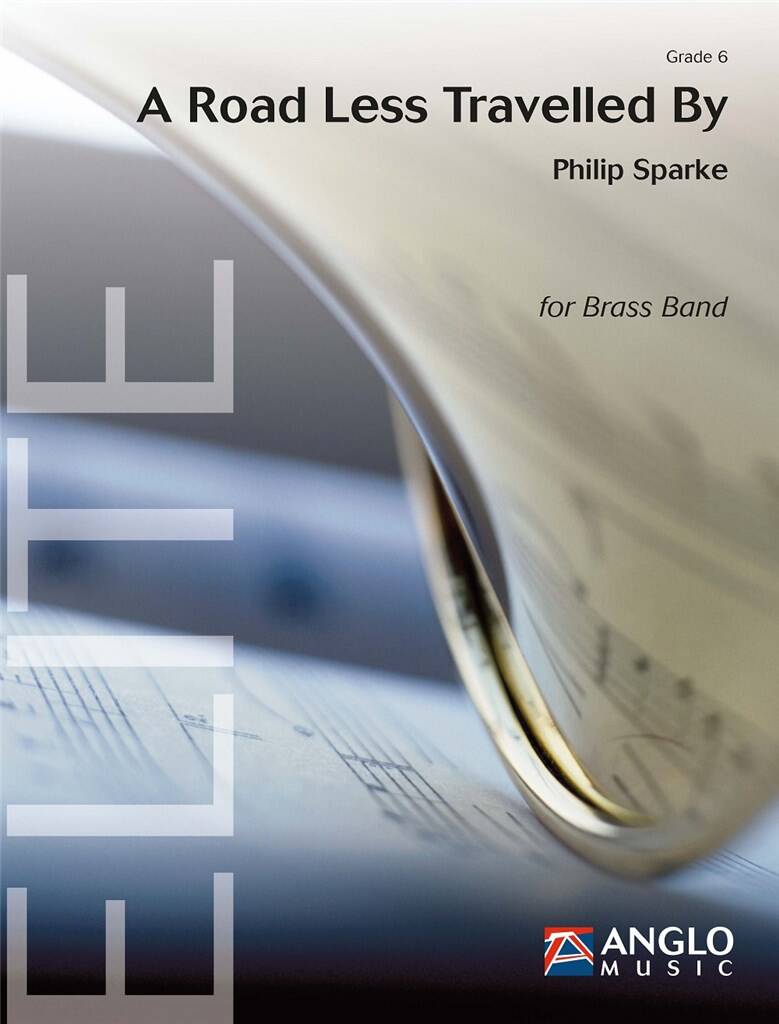
A Road Less Travelled By - Philip Sparke
A Road Less Travelled By was commissioned by Palangos Orkestras for the Championship Section of the 2020 European Brass Band Championships held in Palanga, Lithuania. The title alludes to a poem by American author, Robert Frost, which appeared in his 1916 collection, Mountain Intervals. In common with most of the composer's larger works, the piece is not programmatic, but purely abstract. The choice of title shares Sparke's view of how composers can often develop. There can be no 'destination' in a composer's career, but rather a continuing journey to an unknown place. Set in three movements, which play without a break, A Road Less Travelled By opens with a Moto Perpetuo firmly rooted in classical language, form and syntax. A continuous river of semiquavers, veering from melody to accompaniment and back again, adds drive, energy and motion. The second movement, Nocturne, is in the form of a free fantasia; solos for vibraphone, flugel horn and euphonium set the stage for a central cornet solo, quietly echoed by the full band. A triumphal climax is reached before the movement dissolves into a Scherzo Finale. A brief coda based on earlier material drives the piece to a close.
Estimated dispatch 5-14 working days
-
 £76.99
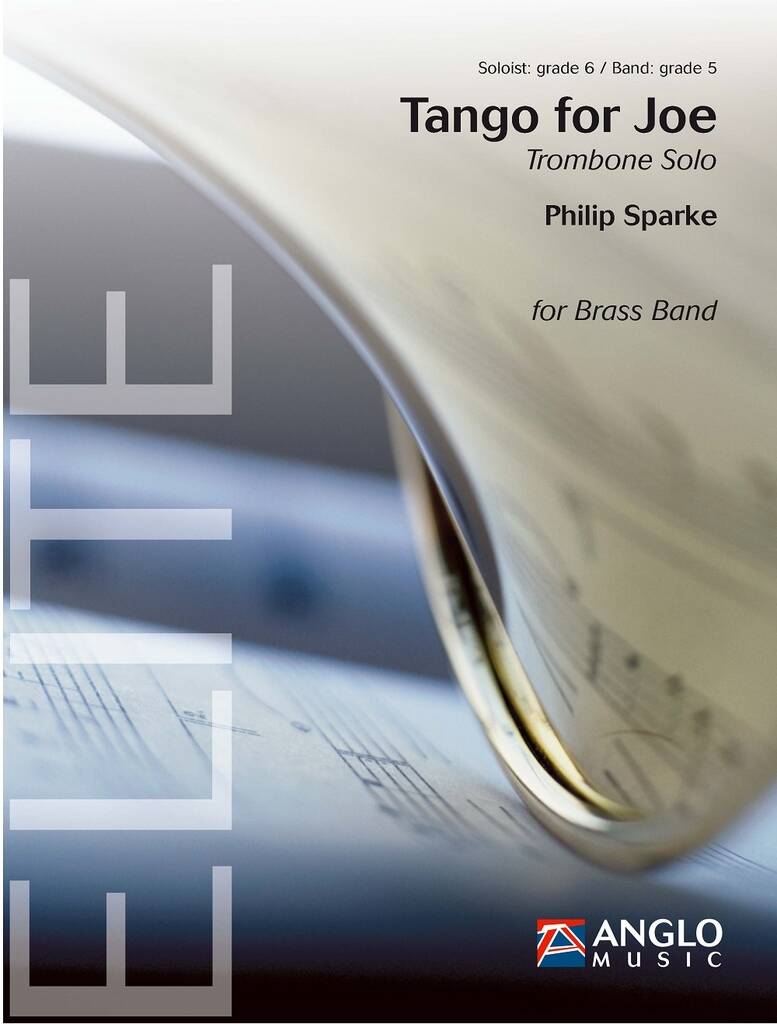
Tango for Joe - Philip Sparke
Gemini Concerto was commissioned by and written for Ryukoku University (Japan), Andre Henry and Shoichiro Hokazono. Set in three movements, the concerto aims to explore the close relationship, as solo instruments, between the cornet and euphonium, exploiting the many common factors between the two as well as the subtly different characteristics they possess in terms of both lyrical and rhythmic playing. The first movement is a bustling toccata and the second movement is lyrical and improvisatory in nature. A fantastic piece and a great addition to the repertoire!
Estimated dispatch 5-14 working days
 View Music