
Results
-
 £34.95
By Water and the Word - Jonathan Bates
DURATION: 4'00". DIFFICULTY: 4th+. 'By Water and the Word' was composed for 2020 Brass Band Summer School in memory of it's long-standing course administrator Philip Biggs, who passed away in 2019. Aside from his work with BBSS, Philip was also the renowned administrator for the National Youth Brass Band of Great Britain where my first opportunities as a writer of brass music were presented. It's a certainty to say that without Philip's work at the head of this organisation, there's zero chance I would be able to do what I do today as a musician, and for that it was a huge honour to write this short work in his memory. Under Maestro Bramwell Tovey, each course would conclude with an encore of The Day Thou Gavest (St. Clements) and one of the most used hymn tunes throughout the week was The Church's One Foundation (Aurelia). Since then, these two tunes have become synonymous with the NYBBGB and in turn Philip's life & work, so I felt it fitting to combine these two wonderful sacred melodies into a new work paying homage to those memories. .
In Stock: Estimated dispatch 1-3 working days
-
 £79.95
Grieg Variations - Jonathan Bates
DURATION: 12'30". DIFFICULTY: 2nd+. . 'Grieg Variations' is a through-composed work in the traditional style of a 'theme & variations'. The work opens with the main melodic fragment featured throughout Grieg Variations which comes from Grieg's Peer Gynt Suite No.2; the final movement - 'Solveig's Song'. . This theme is followed by a set of 9 variations, each taking inspiration from various melodies and styles found within the Peer Gynt Suite. The first variation, a light-footed scherzo based upon the tonal line of Solveig's Song is followed by an 'Alla marcia' variation - in which the music is inspired by the 2nd movement - 'Arab Dance' - of the original suite. The 3rd variation takes a far darker and more aggressive turn in a variation set around the music of the 1st movement of the Peer Gynt Suite before a relaxation into a solemne revisiting of the original theme. Opening with a sombre and longing solo for Flugel horn, the focal point of this 4th variation is an extended solo for the Solo Euphonium, marked 'molto espressivo'. The new material here is used as a theme throughout this variation, being reprised by the full band immediately after as the music builds to a climax point at the top of the musical line. . Following this, there are 2 cadenzas for the Solo Horn and Solo Cornet respectively; the former inspired by the thematic material of Solveig's Song, and the latter from the Oboe cadenza at the beginning of Grieg's '2 Lyric Pieces, Op.68'. These cadenzas lead swiftly into the 7th variation, a bustling rhyhm-driven movement set in complex time. The 3rd movement of the Peer Gynt Suite No.2 - 'Peer Gynt's Homecoming' - makes it's first appearance in variation 8 in a triumphant battle-like setting before a combination of both this material and the Solveig's Song combine to bring Grieg Variations to it's close -not without a little nod to potentially Grieg's most famous work - In The Hall of the Mountain King. . .
In Stock: Estimated dispatch 1-3 working days
-
£44.95
SYMPHONIC RHAPSODY FOR EUPHONIUM AND BAND (Brass Band Set) - Edward Gregson
This is a developed solo in which lyrical and variation elements are contrasted and combine. The theme is an old song 'So we'll roll the old chariot along, and we don't drag on behind'.
Estimated dispatch 7-14 working days
-
 £30.00
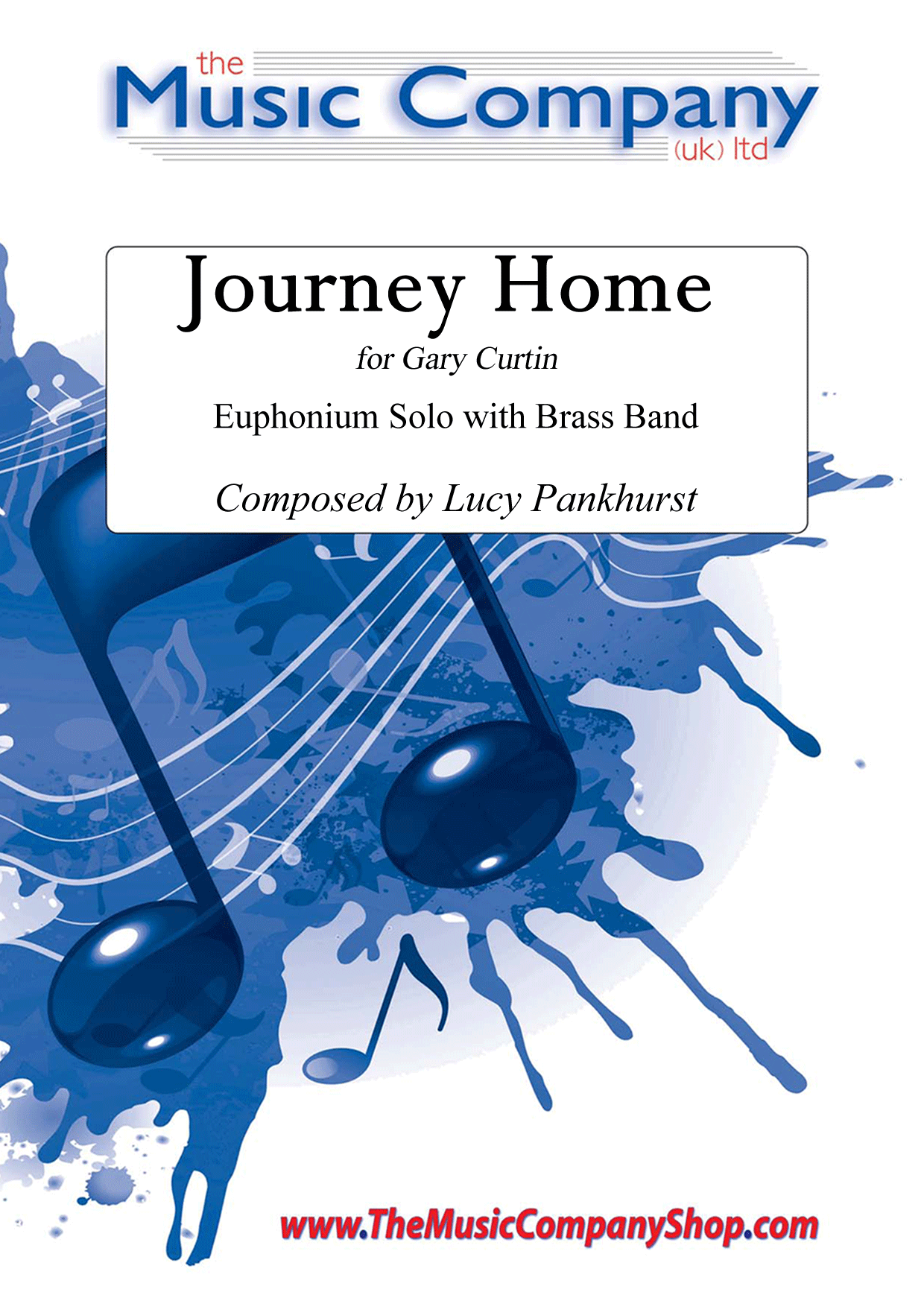
Journey Home - Lucy Pankhurst
Written for the Euphonium player of the Wingates Band by Lucy Pankhurst, this solo offers a wonderful variety of music all wrapped up in one piece.Starting with a hymnal melody with beautiful, building harmonies and incorporating some great techniques for added effect, the euphonium then moves into a more rhythmic element, which is brilliantly echoed throughout the band.Unusual and unexpected sounds and rhythms all combine to make this a a must for the euphonium player's repertoire collection!
In Stock: Estimated dispatch 3-5 working days
-
 £38.95
Unity Series Band Journal - Numbers 558 - 561, October 2026
558: Jesus is the winner! (Samuel Ekong)Jesus is the Winner is the publishing debut of Samuel Ekong, Band Secretary at Abuja Central Corps in the Nigeria Territory. Based on a popular song associated with renowned worship leader Ron Kenoly, this arrangement centres on the infectious chorus, "Jesus is the winner man". While the original song was performed in a reggae style, Ekong has reimagined it with a lively swing feel, creating a joyful and accessible work for brass band. Full of rhythmic energy and uplifting spirit, the arrangement encourages a light, buoyant approach throughout and offers an engaging concert item that is sure to be enjoyed by performers and audiences alike.559: Festival Arrangement - Hearts Ablaze (Marcus Venables)Written at the request of Jonathan Evans for Sale Salvation Army Band, Hearts Ablaze is based on the popular contemporary worship song Build Your Kingdom Here that has become especially significant within the corps. The music captures the passion, prayer and enthusiasm of its message, combining bold opening statements with lyrical moments and energetic rhythmic drive. After introducing the familiar melody, the work develops into a vibrant celebration built around the song's call: "Set your Church on fire... Build your kingdom here, we pray." Uplifting and engaging throughout, the piece offers both performers and audiences a joyful and inspiring musical experience.560: Cornet Solo - Soul Saver (Ian Robinson)Based on the well-known chorus Thank You, Lord, for Saving My Soul by Seth and Bessie Sykes, this solo is a heartfelt expression of gratitude for God's gift of salvation. The familiar melody is presented in an expressive setting that allows the soloist to communicate the simple yet powerful message of the song. Contrasting lyrical passages, rich harmonic colours and moments of gentle brilliance combine to create an engaging musical journey. Throughout, the focus remains on the chorus's timeless theme of thanksgiving, making this a moving and devotional addition to the brass band solo repertoire.561: Chorus Selection - God's Presence (Howard Davies)God's Presence by Major Howard Davies combines three well-known songs that explore the believer's walk with God. The selection includes Philip P. Bliss's Let the lower lights be burning, Charles H. Fillmore's O I love him, and the familiar Salvation Army chorus God is with us all the time (S.A.S.B. 1028). Each melody expresses a different aspect of Christian faith, from witness and devotion to the assurance of God's presence. Suitable as both a concert item and a congregational feature, this accessible arrangement offers warmth, variety and a clear spiritual message for performers and audiences alike.
Estimated dispatch 7-14 working days
-
 £64.95
The Storm Cone (Brass Band - Score and Parts)
The Storm Cone was commissioned from Lucy Pankhurst as a central part of an immersive artwork by Laura Daly, which considers our intrinsic relationship with the past. The project itself takes the form of a downloadable app, featuring geolocated augmented reality technology and binaural recordings. The music was performed and recorded remotely by the students, staff and friends of the University of Salford during the UK lockdowns in 2021.At its centre, is a journey through music and sound that charts the fading away of a brass band during the interwar years (1918 - 1939). Using new technologies to trace lost bandstands in their final days of mass popularity, we first encounter the band performing as a full ensemble, in 360audio. Breath-taking detail can be heard from every instrument as you move amongst the absent musicians; proximity alters the perception of sounds as Pankhurst's score builds and then returns to a single note. From the powerful, collective sound of the band, the journey then follows the departed musicians into eight spatial sound works by Daly, where their fragile solo phrases merge and mutate in new environments. History, fiction, artifice, and reality combine within this sensory encounter to confront the present with its past.This absorbing work takes its name from the title of Rudyard Kipling's 1932 poem that forewarned of WWII. It considers key aspects of the interwar period and the ensuing break-up and reshaping of communities in different parts of the country. Brass bands, with their strong industrial, religious and militaristic associations, lost many musicians to both World Wars, and the intervening years of shellshock, unemployment, economic migrancy, and industrial action. Their survival and the survival of brass music tell a story of working-class life during this epoch of deindustrialisation. Life, music and creative legacy are all being sustained by breath. As the band's sound lingers in an absent-minded hum or whistle, it becomes both an imprint and portal to these past times.The Storm Cone commemorates the legacy of creativity, music and sound, the power of community and the importance of collective memory, history and storytelling. It highlights the emotive nature of the past and how it can also help foresee possible futures. Serving as a warning shot, The Storm Cone contemplates the residual impact of the interwar period and the cyclical nature of history in terms of current events, including the economic downturn and the rise of populism, extremism, racism and antisemitism; problems seemingly exacerbated by the current pandemic. The resulting experience is an artwork that underlines human strength and fragility and is imbued with a sense of both loss and celebration.Duration: 10.00
Estimated dispatch 7-14 working days
-
 £44.95
Judd: Symphonic Rhapsody for Euphonium
This is a developed solo in which lyrical and variation elements are contrasted and combine. The theme is an old song 'So we'll roll the old chariot along, and we don't drag on behind'.
Estimated dispatch 7-14 working days
-
 £89.95
Partita (Score and Parts)
Partita was written in 1989 to a commission from Eikanger/Bjrsvik Musikklag (Norway) who were European Champions at the time.There are three movements.1 The first movement is almost a miniature concerto for band. It opens with a relentless quaver passage in the basses, which builds until the whole band is involved. Horns and baritones are first to take centre-stage in close harmony and the euphoniums and basses follow them. These forces combine to introduce the cornets that have a 10-part fanfare to themselves before the trombones interrupt. The opening quaver figure returns, somewhat ominously, and, after the full band recalls previous material, brings the movement to a close.2. Starts with a cornet solo over a pulsating accompaniment after which the band builds to a noble tune on the trombones. The full band takes over and brings back the opening cornet tune with which the soloist, with the aid of a euphonium counter-melody, quietly ends the movement, leading directly into:3. A sparkling vivo, which opens with the fanfare-like figures throughout the band until a solo cornet, emerges with an acrobatic tune. The whole band takes this up until horns; baritones and trombones introduce an energetic second subject, which leads to a full band climax in the form of a jubilant chorale. This died away to reintroduce the opening fanfare against a new theme from the trombones, which eventually leads back to a recapitulation. We are then thrown headlong into a 12/8 presto, which hurtles to a coda, which recalls the opening themes.
Estimated dispatch 7-14 working days
-
 £44.95
Partita (Score Only)
Partita was written in 1989 to a commission from Eikanger/Bjrsvik Musikklag (Norway) who were European Champions at the time.There are three movements.1 The first movement is almost a miniature concerto for band. It opens with a relentless quaver passage in the basses, which builds until the whole band is involved. Horns and baritones are first to take centre-stage in close harmony and the euphoniums and basses follow them. These forces combine to introduce the cornets that have a 10-part fanfare to themselves before the trombones interrupt. The opening quaver figure returns, somewhat ominously, and, after the full band recalls previous material, brings the movement to a close.2. Starts with a cornet solo over a pulsating accompaniment after which the band builds to a noble tune on the trombones. The full band takes over and brings back the opening cornet tune with which the soloist, with the aid of a euphonium counter-melody, quietly ends the movement, leading directly into:3. A sparkling vivo, which opens with the fanfare-like figures throughout the band until a solo cornet, emerges with an acrobatic tune. The whole band takes this up until horns; baritones and trombones introduce an energetic second subject, which leads to a full band climax in the form of a jubilant chorale. This died away to reintroduce the opening fanfare against a new theme from the trombones, which eventually leads back to a recapitulation. We are then thrown headlong into a 12/8 presto, which hurtles to a coda, which recalls the opening themes.
Estimated dispatch 7-14 working days
-
 £102.99
Sinfonietta No.1 (Brass Band - Score and Parts) - Jeanbourquin, Marc
Sinfonietta No.1 won first prize in the 2023 Composition Competition organized by the Swiss Brass Band Association. Various melodic themes and rhythmic motifs develop throughout the work. They combine with the numerous dynamic effects to bring a certain unity, from the beginning to the end of this competition piece. The technical and melodic difficulties allow the different soloists to show their virtuosity and musical prowess over five uninterrupted parts. After a first slow and misterioso part, there is a contrast with the following energico sequence based on an ostinato, creating both a progression and a tension, to drive everything towards the third part mesto (sad), then lento, where some cadenzas and numerous dissonances can be heard. The energico transition announces the fifth part, a ternary and fast con fuoco. This last part will lead the audience to a final apotheosis.Duration: 10.30
Estimated dispatch 7-14 working days
 View Music