
Results
-
£37.50
Triumphalis - Ed Keeley
Triumphalis is a celebration that honours victory - a musical epitaph that reflects on the horrors and sacrifices of WWII. The BBC began prefixing its transmissions to the European Mainland with V for Victory in Morse Code (3 dots and a dash) in 1941, this motif corresponds to the famous opening of Beethoven's 5th Symphony on the timpani - becoming a symbol of resistance and hope. The music continues with a quasi bugle call, followed by a victory fanfare. Then, the music meanders through both major and minor keys symbolising victories and defeats, joy and sorrow, finally culminating in a joyous and flourishing celebration.
In Stock: Estimated dispatch 1-3 working days
-
 £44.50
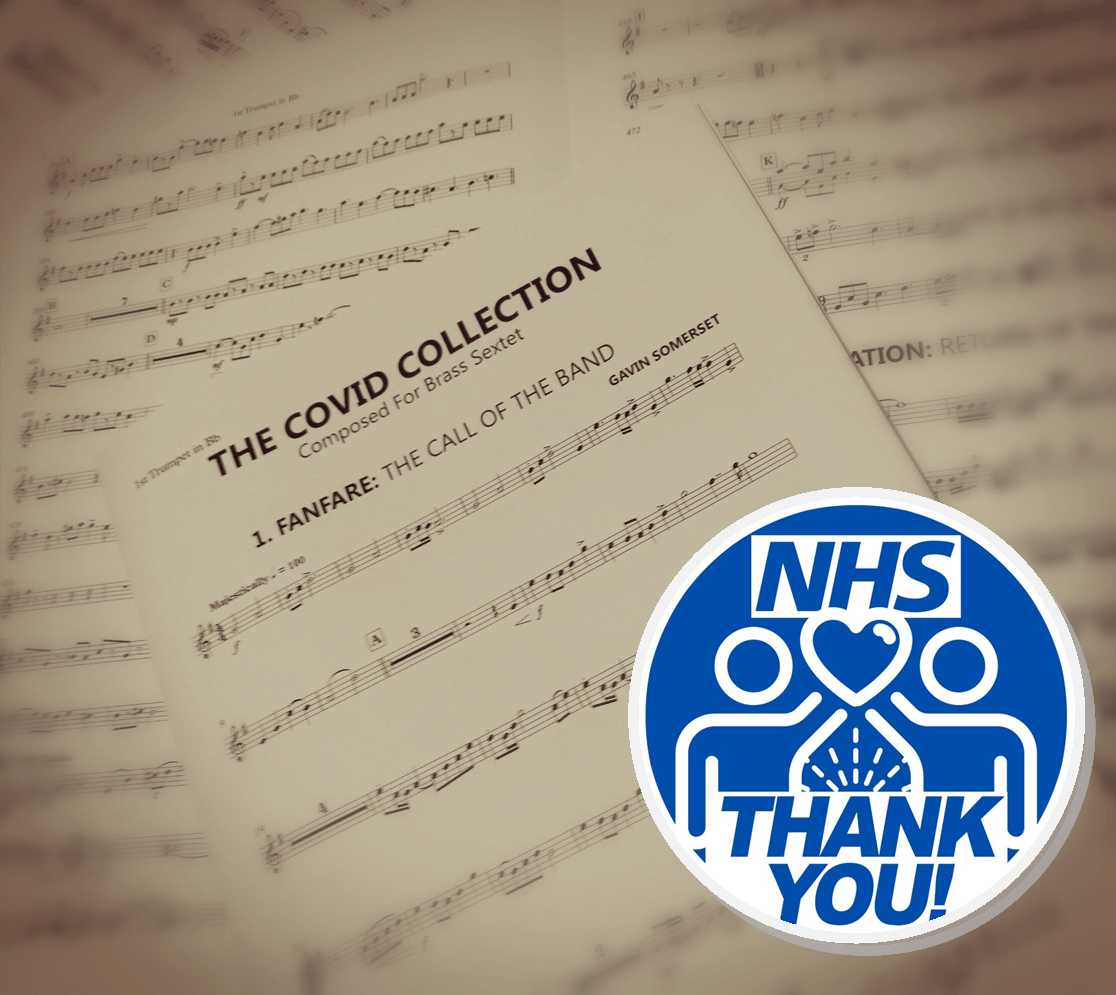
The Covid Collection - Gavin Somerset
This exciting new 22-minute concert suite for Brass Sextet has been composed during the months of lockdown charting the feelings of a nation, with seven movements playable by 6 (or more) players. The music was composed with the intention for players to perform either together live in a small group, in isolation by way of a virtual performance (downloadable backing tracks are available to play along to) and ultimately, to give players something to enjoy as we all miss our brass band families. This concert suite is the perfect addition to all bands' libraries at a time when rehearsals are limited. Several of the movements are already in preparation for a full band edition to be released at a later date: (also available as a digital download worldwide - purchase now & print to play). Bands purchasing this sextet edition will be eligible for a discount on the upcoming full brass band edition of the concert suite. ------------------------------------------------------------------------------------- Movement 1: FANFARE: The Call of the Band - CLICK HERE TO DOWNLOAD PLAYBACK TRACK This opening fanfare gives way to a full of life and energy. With catchy melodies and harmonies, it is an effective opening to any concert programme and the perfect way to begin the Suite. Movement 2: March of the Antibodies - CLICK HERE TO DOWNLOAD PLAYBACK TRACK A cheeky little number that keeps on fighting though. Whilst not a March in the traditional brass band sense, players should aim to give a 'happy' performance of this movement ensuring smiles all around for both performers and the audience.Movement 3: Solidarity - CLICK HERE TO DOWNLOAD PLAYBACK TRACK The first slow movement of the concert suite aims to reflect on the isolation many of us felt during the time of lockdown. However, during these times, walks out with loved ones allowed many to connect and enjoy downtime, not often afforded to many. Movement 4: Lazy Days - CLICK HERE TO DOWNLOAD PLAYBACK TRACK A movement whose title really does say it all. A laid back swing number that should be played in an as relaxed manner, as possible!Movement 5: Hymn for Carers (Dedicated to the NHS & Care Workers) - CLICK HERE TO DOWNLOAD PLAYBACK TRACK Dedicated to the NHS & Care Workers, this hymn tune is filled with emotional highs and lows, felt by many of the hospital and care staff who worked tirelessly to keep our people safe, with a timely nod at the end to Vera Lynn & our missed VE day commemorations. Movement 6: Army of the Keyworkers - CLICK HERE TO DOWNLOAD PLAYBACK TRACK A stirring work in 12/8 which rightfully, depicts our heroes who kept the country moving through the most difficult of times. An heroic number for players to enjoy.Movement 7: CELEBRATION: Return of the Band - CLICK HERE TO DOWNLOAD PLAYBACK TRACK Little needs to be said about this movement, as at this time of release, we cannot yet celebrate the return of all players to the band rooms across the country. However, when that time comes, this movement is to be played with the joy of normality we shall all feel. CLICK HERE TO DOWNLOAD THE FULL SUITE BACKING TRACK ------------------------------------------------------------------------------------- Each movement can be performed as a standalone item, or form part of the full 22-minute concert suite. Sextet scored for: x1 Cornet I in Bbx1 Cornet 2 in Bb1x Flugelhorn1x Tenor Horn in Eb1x Euphonium/Baritone in Bb1x Eb Bass*extra parts included are, Cornet parts in Eb & C, Horn in F, Euphonium/Baritone in BC, Trombone (TC and BC), BBb Bass in TC & Tuba in BC.
In Stock: Estimated dispatch 1-3 working days
-
 £74.99
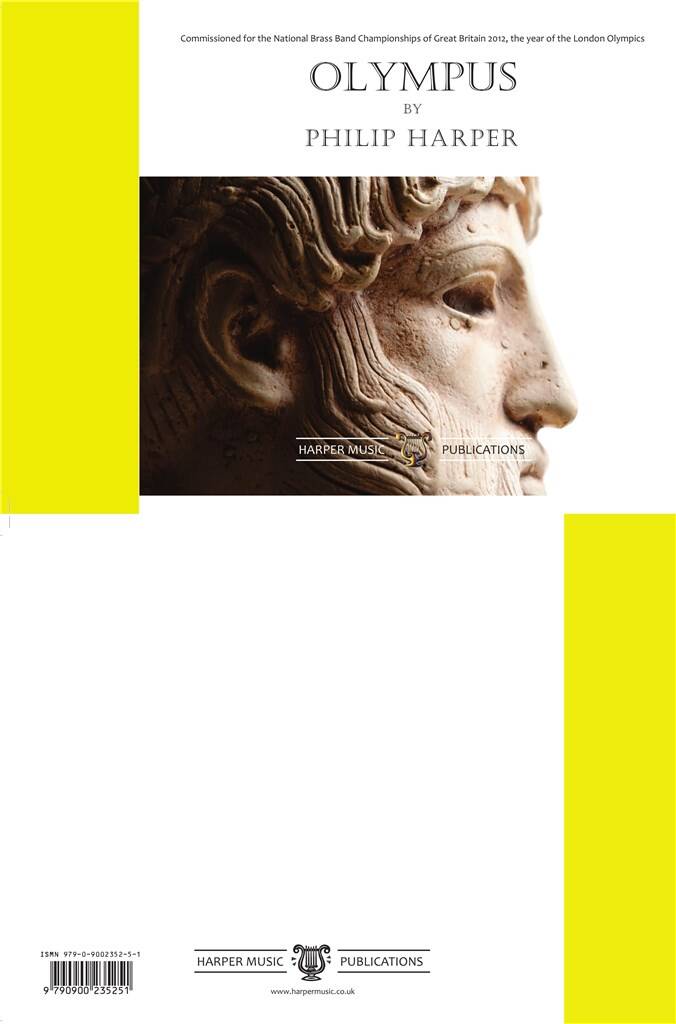
Olympus - Philip Harper
Selected as the test-piece for the 3rd Section Regional contests of the National Brass Band Championships 2012The music begins with a depiction of the exciting Opening Ceremony where noisy fanfares and sudden swells add to the cosmopolitan flag-waving clamour. Without a break the music leads to The Chariot Race, a fast compound-time gallop withthundering hooves in the basses and percussion, and a heroic melody introduced by the tenor horns. Chariot racing was the main equestrian event in the Ancient Greek Games, which were founded in memory of King Oenomaus. In the Greek legend he suffereddefeat in a chariot race to his son-in-law and Zeus' grandson, Pelops, but much of the music is bitter-sweet to symbolise the fact that Pelops had to cheat to win drawing parallels with some of the issues still facing modern-day athletics. A slow, mystical passage follows, describing The Temple of Zeus at Olympia. The statue of Zeus, who was honoured throughout the Ancient Games' history, was housed inside the temple and was one of the Seven Wonders of the Ancient World. Themusic depicts this period of the dawn of one of mankind's most ancient civilisations and there is a series of solo passages above a drone. The next section is called The Olympic Flame and a broad and lyrical anthem-like melody develops slowly in the euphoniums, which gradually ascends until the horns can take it over before passing upwards again to the cornets (Higher). The musicbursts into bright life at the lighting of the flame and the regular rhythmic pattern which has been established goes through an accelerando (Faster). The final section is called The Olympic Truce and aims to capture the cooperative spirit of the ancient practice of ending wars for the duration of the games. The anthem-like melody makes an affirmatory return (Stronger) and the work ends asit began with a blaze of colour and a real sense of optimism and global celebration. "Citius, Altius, Fortius" (Faster, Higher, Stonger)NOTES ON PERFORMANCEPercussion requirements: 1 to 3 players (3 Timpani, Snare Drum, Tenor Drum, Cymbals, Glockenspiel, Triangle)
Estimated dispatch 5-14 working days
-
 £159.99
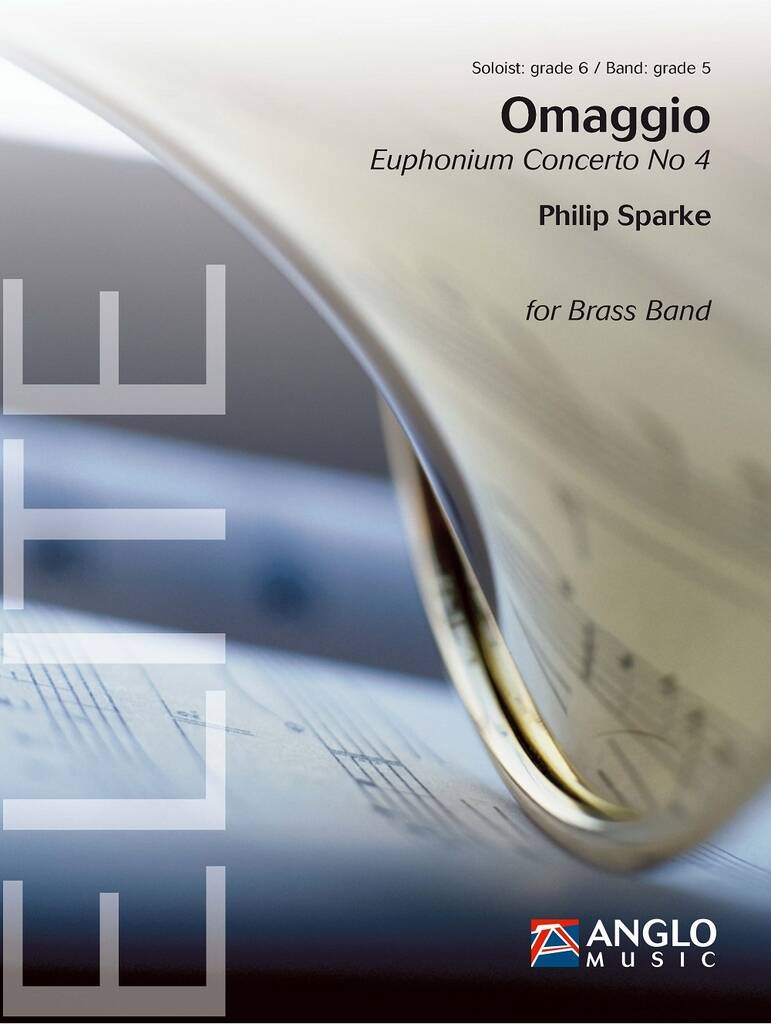
Omaggio - Philip Sparke
Omaggio was commissioned by Steven Mead in celebration of his 60th birthday and in memory of his father, Rex. He gave the premiere of the brass band version in Rome in March 2022, accompanied by the Italian Brass Band conducted by Filippo Cangiamilla. The concert band premiere took place on 6th July that year as part of the 2022 Spanish International Tuba Euphonium Conference, accompanied by the Banda municipal de musica de Malaga. The concerto is set in 3 continuous movements, which are united by a recurring syncopated interval of a fifth. The first movement, FANTASIA, opens with this motive accompanying an extended monologue for the soloist. This is followed by a lengthy bridge passage by the band (piano), which is eventually joined by the soloist, who guides the music back to the opening soliloquy, leading to an energetic central section. This develops until the opening material again returns to introduce the second movement, BALLAD, which revolves around an expressive melody for the soloist, interspersed by accompanied cadenzas. The third movement, THE KING TRIUMPHANT, pays homage to Steven's late father, Rex, and its title alludes both to Rex's name ('Rex' being Latin for 'king') as well as his love of Eric Ball's Salvationist masterpiece, The Kingdom Triumphant. The finale is an energetic tour-de-force featuring an acrobatic 6/8 melody, which is interrupted twice by the magnificent hymn tune, Helmsley, which Ball uses so effectively in The Kingdom Triumphant. A galloping coda brings the work to a close.
Estimated dispatch 5-14 working days
-
 £115.00
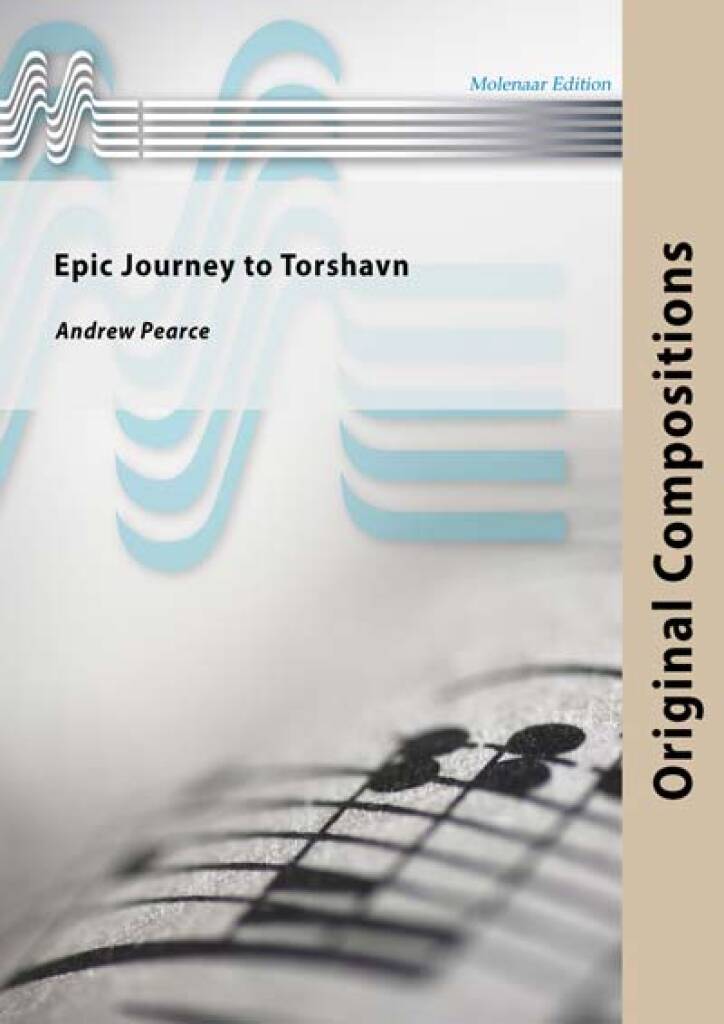
Epic Journey to Torshavn - Andrew Pearce
Epic Journey to Torshavne is an impressive concert work, commissioned by Gouden Spiker Festival 2016. The journey begins At Sea as trombones announce first sighting of the island. A stirring theme in basses creates mystery and anticipation as the island gradually appears. A lively theme in 3/2 introduces Folk Dance & Celebration conjuring dramatic images of early settlers, followed by a calmer rendition entitled People of Torshavn. A brass chorale segues into Finale with a fast reprise and brass chords underscore the splendour of the island.
Estimated dispatch 5-14 working days
-
 £36.90
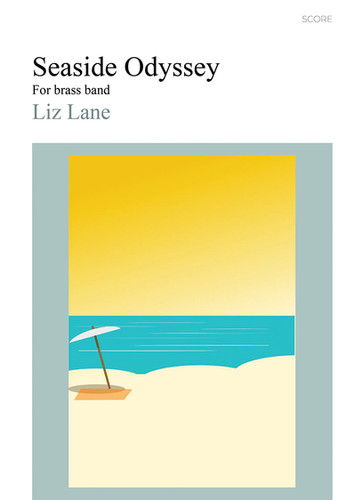
Seaside Odyssey (Brass Band) Liz Lane
Seaside Odyssey is a celebration of the British seaside! The music represents a juxtaposition between natural and manmade elements; there are two main musical themes - the reflective sea (a wordless setting of John Masefield's Sea Fever) and a more lively 'seaside' theme, heard separately in different ways and later together. From childhood memories, sand, beach and cliffs to cafes, ice creams, fish and chips, buckets and spades, boating trips, beach huts, bandstands, piers, theatres, gardens, mini golf, arcades and more, Seaside Odyssey is a journey from dawn to dusk with the sea at the heart of the music. This work was commissioned by Grimethorpe Colliery Band for its seaside tour, August 2023, where it performed at Paignton, Lyme Regis, Weymouth, Shanklin and Herne Bay. Includes optional poems and words specially curated from poets associated with the seaside towns, which can be read before a performance. Duration: approx. 5 minutes This PDF download includes parts and score. Sheet music available at www.brassband.co.uk (UK) or https://satradecentral.org (USA) Instrumentation: Eb Soprano Cornet Bb Solo Cornet Bb Repiano Cornet Bb Cornet 2 Bb Cornet 3 Bb Flugelhorn Eb Solo Tenor Horn Eb Tenor Horn 1 Eb Tenor Horn 2 Bb Baritone 1 Bb Baritone 2 Bb Trombone 1 Bb Trombone 2 Bass Trombone Bb Euphonium Eb Bass Bb Bass Percussion 1: timpani, triangle and optional 'arcade jackpot' effect (see score/part) Percussion 2: 3 suspended cymbals (2 ride, 1 crash) and hi-hat Percussion 3: snare, tom-toms and bass drum Percussion 4: glockenspiel
In Stock: Estimated dispatch 1-3 working days
-
 £29.52
Fanfare for the Olympians (Brass Band) Aaron Stanley
VIEW SCORE PDF This uplifting and rhythmic fanfare by American composer J. Aaron Stanley will be an ideal alternative to the traditional fare that is written in celebration of the Olympic Games. The composer writes: 'Most of my works start with a concept and working title in mind before I even begin composing. But Fanfare for the Olympians, on the other hand, was titled afterward, allowing the music to suggest its own title. The festive, anticipatory nature of the work seems to build excitement and tension for something celebratory and grandiose, like the Olympic Games. Written in 2000, at the time, I was obsessed with quartal harmonies and asymmetrical meters. But the driving eighth-note pulse of alternating 2+2+3 / 3+2+2 is what drives the fanfare forward to its epic climax.' Sheet music available from: UK - www.brassband.co.uk USA - www.solidbrassmusic.com Difficulty Level: 2nd Section + Instrumentation: Soprano Cornet Eb Solo Cornet Bb Repiano Cornet Bb 2nd Cornet Bb 3rd Cornet Bb Flugel Horn Bb Solo Horn Eb 1st Horn Eb 2nd Horn Eb 1st Baritone Bb 2nd Baritone Bb 1st Trombone Bb 2nd Trombone Bb Bass Trombone Euphonium Bb Bass Eb Bass Bb Timpani Percussion 1-2
In Stock: Estimated dispatch 1-3 working days
-
 £45.00
Barcelona
ABOUT THIS PIECE: Bring the grandeur of the epic rock-opera classic Barcelona to your performance with this outstanding arrangement by Adam D J Taylor. Originally written by Freddie Mercury and Mike Moran, this iconic duet was performed by Mercury and the legendary operatic soprano Montserrat Caball. Celebrating the 1992 Barcelona Olympics, the song blends rock and operatic styles into a soaring, unforgettable anthem of unity and celebration. This arrangement starts with the iconic Queen rendition of the British National Anthem God Save the King, before capturing the dramatic flair and emotional power of the Barcelona. Ideal for fans of Freddie Mercury, Queen, and powerful, genre-defying music, this arrangement offers an exhilarating challenge for performers and a thrilling experience for audiences alike. ENSEMBLE: Standard British Brass Band WHEN YOU BUY THIS PRODUCT, YOU GET: High-quality printed score and parts LEVEL: 2 LISTEN: Click here DURATION: 4 minutesEXAMPLE SCORE: Click here LEVEL GUIDE: Level 1- Accessible to all Level 2 - c. UK third section and higher Level 3 - c. UK second section and higher Level 4 - c. UK first section and higher Level 5 - c. UK championship section level
Estimated dispatch 5-7 working days
-
 £118.00
Epic Journey to Torshavn - Andrew Pearce
Epic Journey to Torshavne is an impressive concert work, commissioned by Gouden Spiker Festival 2016. The journey begins At Sea as trombones announce first sighting of the island. A stirring theme in basses creates mystery and anticipation as the island gradually appears. A lively theme in 3/2 introduces Folk Dance & Celebration conjuring dramatic images of early settlers, followed by a calmer rendition entitled People of Torshavn. A brass chorale segues into Finale with a fast reprise and brass chords underscore the splendour of the island.
Estimated dispatch 10-14 working days
-
 £42.00
Hymn at Sunrise (Score only) - Ray Steadman-Allen
The idea for this work was prompted by a poem - Hymn Before Sunrise - which describes the majesty of a mountain in darkness, the sounds of a nearby waterfall and so on. Nothing came of the exposure to these pictures except for general thoughts about the dawn of day and a series of movements expressing a personal response to the wonder of creation in an imaginary moment in time. The movement titles, which were added later, are intended to underline a prevailing sense of worship, wonder and exaltation. The music is pure, not pictoral, though listeners may conjure their own images. An actual hymn - Tallis' Cannon - is incorporated. There are five movements: 1. Thanksgiving: A short prelude in two parts. First a brief passage of 'dawn music' before things become more vigorous: fanfare-like music ushers in the trombone section's presentation of the Tallis tune. A broad band version concludes the movement. 2. De Profundis: A slow movement shot through with anxious questionings featuring flugel and trombone. The mood lightens a little in the centre where the soprano cornet is featured and the movement ends serenely. 3. Celebration is characterised by rhythmic drive, this is buoyant with plenty of incident pointed up by the percussion. 4. Invocation: Melodic in nature and sober in mood, the first section is a series of short solos mingled with chorale-like statements. Central to the movement is a chorale-prelude style presentation of the Tallis tune. The third section reintroduces the earlier solo music by the full ensemble. Dissolving, the music enters the last movement without a break. 5. Paean: Marked allegro con spirito there is, quite rightly, a fair amount of fun in the rejoicing. Snatches of Tallis are heard, then comes a gentle passage with a cornet solo leading to fanfare music and recapitulation. Two recitatives are succeeded by a coda which brings the work to a sonorous and exultant conclusion.
Estimated dispatch 7-9 working days
 Listen to MP3
 View Music