
Results
-
 £26.50
 -
 £183.20
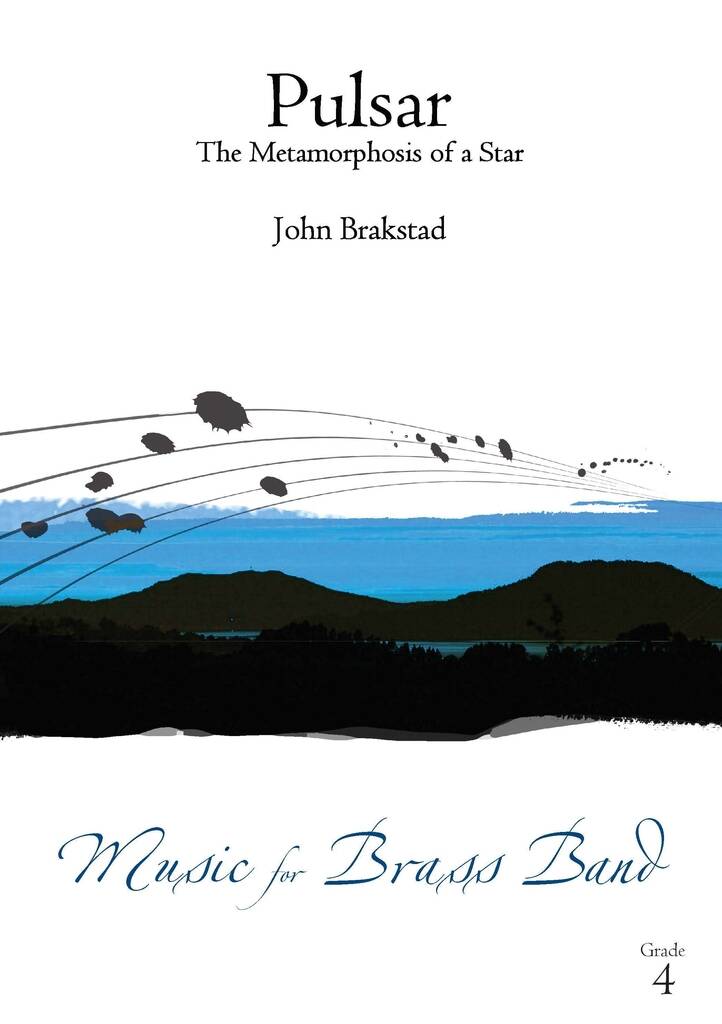
Pulsar - The Metamorphosis of a Star - John Brakstad
4th July in 1054 AD one of the most spectacular events was witnessed in the Cosmos. A massive star blew out; a supernova explosion.From the Earth it appeared as a new, bright star; the most brilliant in the sky. It was visible for three weeks, also in daylight, before it then faded away.But what was left of it is spectacular. Today we call it the "Crab Nebula".And in the very centre of the Nebula lies the remnant of the star; the core crushed by the force of gravity.This is a rotating neutron star, a pulsar, just 20 kilometres across, but so dense that it weighs more than our sun.As the neutron star spins, ejected particles stream out from its poles at almost the speed of light.These jets create powerful beams that sweep around as the star rotates.When the beams sweep across the Earth, they can be heard as regular pulses. We call them pulsars.In this piece there are three percussion parts. In addition there is an "optional part" to replace the marimba and vibraphone written in the three original percussion parts if desired. This fourth part is shown in the full score.
Estimated dispatch 5-14 working days
-
 £119.50
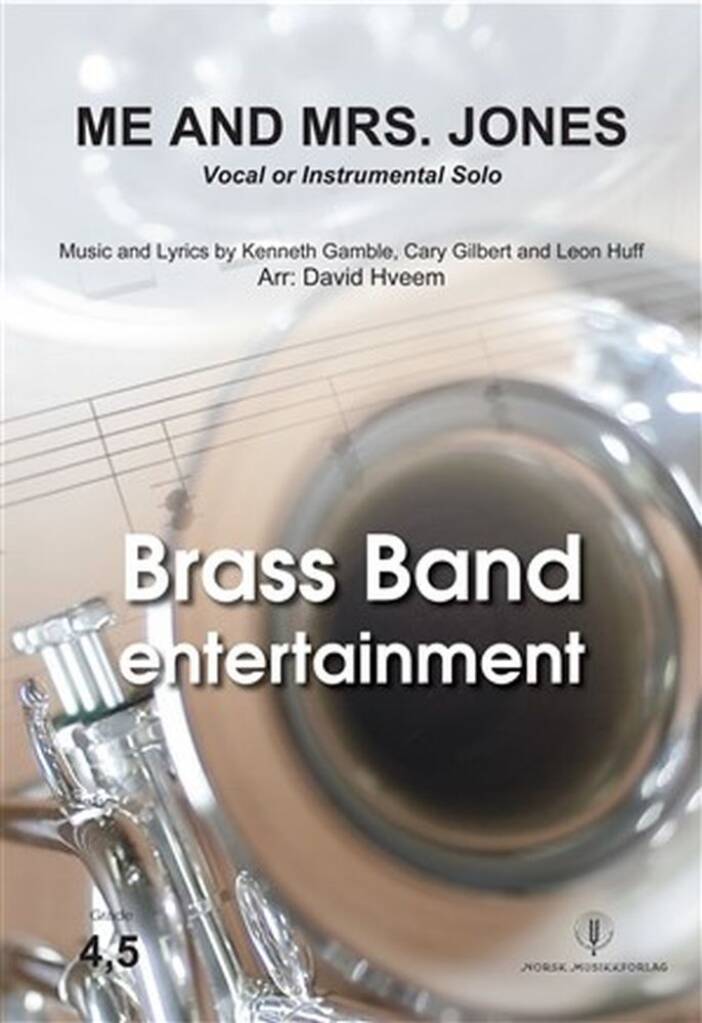
Me and Mrs. Jones - Kenneth Gamble - David Hveem
Me and Mrs. Jones was written by Kenny Gamble, Leon Huff and Cary Gilbert in 1972, and was first recorded by Billy Paul on the album 360 Degrees of Billy Paul. The song is about a man who has an affair with Mrs. Jones, and how the two secretly meet every day in the same cafe, even though they may know it's not quite right: "We got a thing going on/we both know that it's wrong/but it's much too strong/to let it go now." Paul has stated that he was sure the song was going to be a hit even before it was released, as "it's a song everyone can relate to", but already from the start the lyrics were considered somewhat controversial and the song were banned from several radio stations. Nevertheless, it became one of the best-selling singles of 1972 and Paul received a Grammy for Best Male R&B Vocal Performance.Well known is also Michael Buble's version of the song, released on the album Call Me Irresponsible in 2007. It is his version that has been the inspiration for this arrangement, which brings out even more of the jazz elements Buble has found in the song. The arrangement is quite demanding for the ensemble, and requires great rhythmic precision in particular.
Estimated dispatch 5-14 working days
-
 £115.60
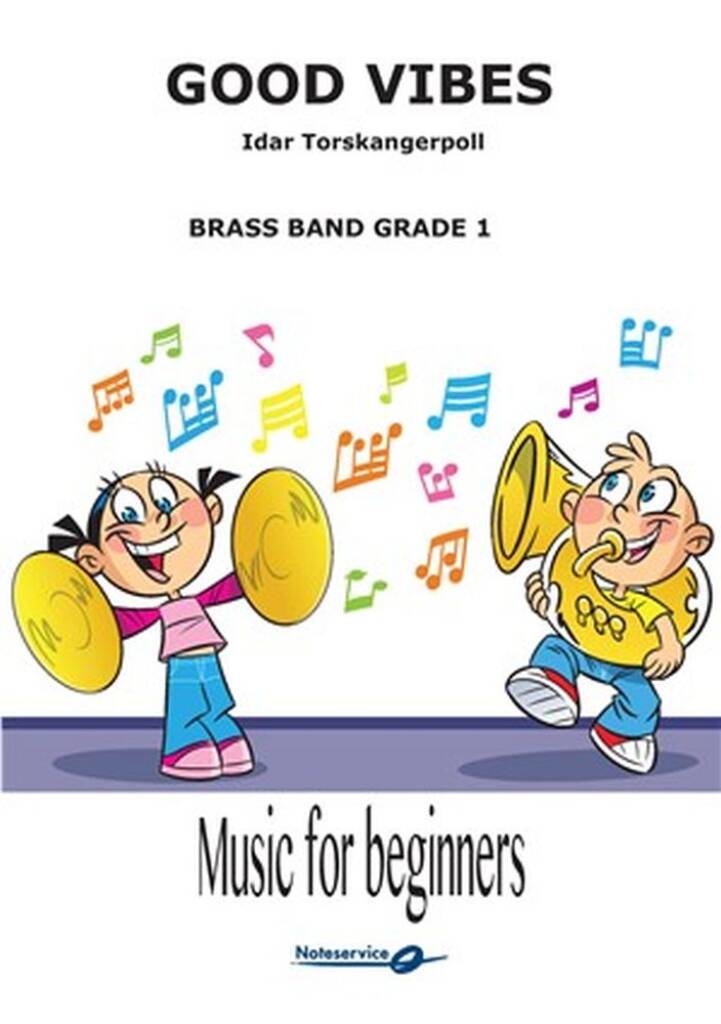
Good Vibes - Idar Torskangerpoll
This piece for beginning band was written as a commission for Norsk Noteservice to the "Music for Beginners" serie.The piece is a feelgood item with limited range for all instruments, suitable for young players. The rhythmic structure is repetitive and polyphony is often in the "call and response" form. Hence it is an easy piece to read and play.The refrain is rhythmically unison making it easy for all to play syncopated rhythms.
Estimated dispatch 5-14 working days
-
 £72.70
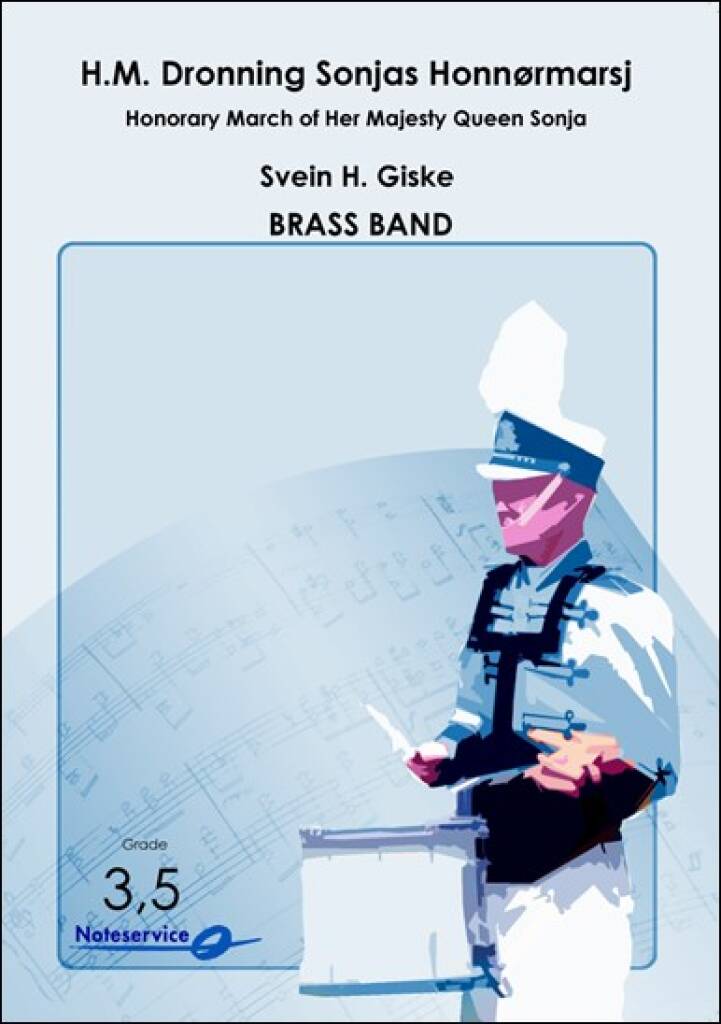
Honorary March of Her Majesty Queen Sonja - Svein H. Giske
This march was commissioned by The office of cultural affairs in Fana and Ytrebygda (a part of Bergen Municipality) for the opening of The Bergen Light Rail.The premiere was given by The Norwegian Navy Band Bergen and Smoras skolemusikkduring the light rails maiden voyage. Her Majesty Queen Sonja of Norway opened the light rail on June 22nd 2010.My idea was to give the march a strong link to Bergen. In the bass solo (letter B) I have quoted Bergens "national"anthem Nystemtn and in the Trio (letter E) I have used a bugle call from Bergens unique tradition of archerchery brigades. The first part of the march is meant to have a sort of train feel to it; somethingthats moving steadily through thestreets of the city.
Estimated dispatch 5-14 working days
-
£60.99
Aurora Borealis - Morten J. Wallin
Aurora Borealis, more popularly known as the Northern Lights, was a source of superstition in the Middle Ages. This dazzling spectacle, which is accompanied by whispering sounds, put the fear of God into those who didn't know that this was simply one of nature's grand shows. Many heathen attributed the phenomenon to the incomprehensible ways of the gods. Today we know better. Every 11 years, the amount of particles emitted by the sun is at its highest level, as is the case this year. These particles are hurled away from the sun, beyond its magnetic field. A small percentage of these particles are able to penetrate the earth's atmosphere. Once they are here, they begin tocollide and form the beautiful patterns in the night sky which we call the Aurora Borealis.
Estimated dispatch 5-14 working days
-
 £70.00
Masque. - Kenneth Hesketh
A Masque (short for Masquerade) has been defined by Historians as 'A revel in which Mummers or masked folk come with torches blazing into the festive hall and call upon the company to dance and dice'. The chaos of this dramaticdance is depicted in this 'Masque' by Hesketh. The main theme is bravura and is often present, in the background. The form of the piece is a simple scherzo-trio-scherzo. Colourful scoring (upper wind solos, trumpet and horn solosalternating with full bodied tuttis) with a dash of wildness may tease both player and listener to let their hair down a little! 'Masque' has been transcribed for wind band by Kenneth Hesketh from his 'Scherzo forOrchestra',commissioned by the National Children's Orchestra in 1987.
Estimated dispatch 5-14 working days
-
 £125.00
East Coast Pictures. - Nigel Hess
East Coast Pictures, originally written for wind band, have now been transcribed by Phillip Littlemore, introducing these exciting programmatic pieces to a wider audience. These three short 'pictures' wereinspired by several visits by the composer to a small part of the USA's East Coast, an area that provides great extremes in the geography and the people. Shelter Island is a small island situated almost at the end of LongIsland, a few hours' drive east of New York. In the summer it becomes a crowded tourist trap, but in the winter it is gloriously deserted, and bravely faces the onslaught of the turbulent Atlantic, shrouded in sea mistsanddriving rain. In upstate New York lie the Catskill Mountains, an extraordinary combination of tranquillity and power, peace and majesty. Once seen they call you back again and again. New York ...or, to be precise, Manhattan.For anyone who is familiar with this bizarre and wonderful city, this 'picture' needs no explanation. For those not yet hooked, here is a foretaste of things to come.
Estimated dispatch 5-14 working days
-
 £22.00
The Catskills - Nigel Hess
In upstate New York lie the Catskill Mountains - an extraordinary combination of tranquillity and power, peace and majesty. Once seen they call you back again and again. This brass band transcription has been made by PhillipLittlemore and explores the sonorous and warm sounds of the brass band. The Catskills is the second movement of East Coast Pictures, originally written for wind band, and was commissioned in 1985 by the British Youth WindOrchestra with funds from National Westminster Bank plc. These three short 'pictures' were inspired by several visits by the composer to a small part of the USA's East Coast, an area that provides greatextremesin the geography and the people.
Estimated dispatch 5-14 working days
-
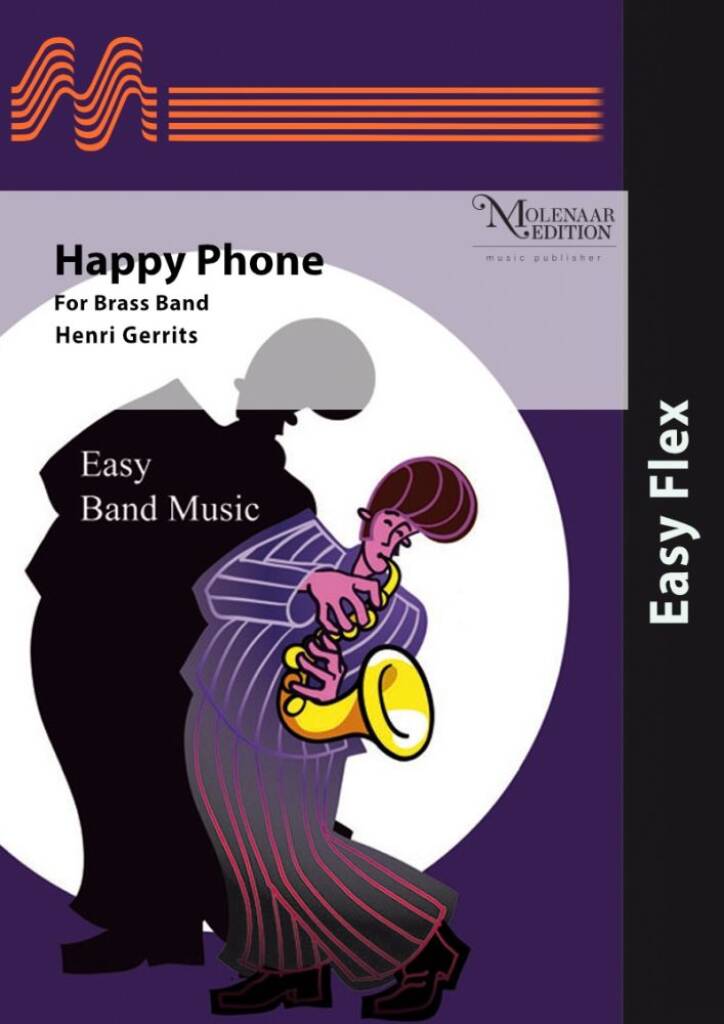 £96.60
Happy Phone - Henri Gerrits
In this sparkling work, the conductor is interrupted in the middle of a musical adventure by a spontaneous phone call from a member of the orchestra. This unexpected moment adds an extra layer of liveliness and humour to the performance, creating a unique experience every time. This piece is perfect for training orchestras looking for a challenging and inspiring addition to their epertoire. A masterpiece that breaks the boundaries of traditional orchestral music and leaves unforgettable impression at every performance.
Estimated dispatch 5-14 working days
 View Music