
Results
-
 £30.00
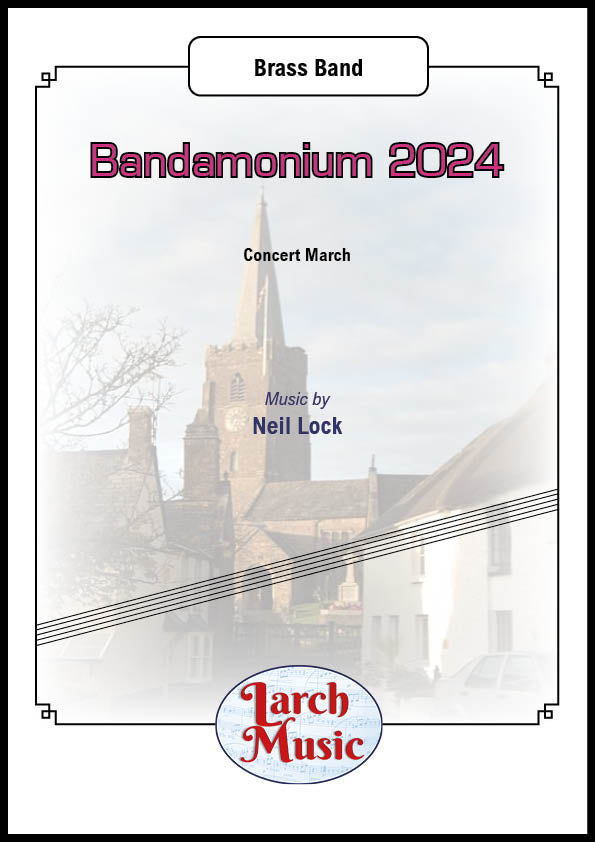
Bandamonium 2024 (Neil Lock) - Brass Band Sheet Music Full Score & Parts - LM541
COMPOSER: Neil LockThis march was submitted to the march composers' competition for "Bandamonium 3"in Hatherleigh, Devon in July 2024. The winning march was played by massed bands at the conclusion of the celebrations on Saturday 27th July 2024. Unfortunately, this march took second place in the competition, behind the march of Paul Pennicotte-Henrie, conductor of Okehampton Silver Band.The march can be played with or without the singing. (Even at the Whit Friday marches, begad!) I suggest that it should be introduced by 3-beat rolls.When played with singing, the "Bandamonium" lyrics (bars 10-13 and 56-57) are to be sung by all players, keeping to their own parts, with appropriate octave adjustment for their individual singing voices. Conductor and percussionists should sing with the main theme (Db and C at bars 10-13, F at 56-57). Listen to the 3rd cornet players!There is an additional part for Singers, in which the trio melody (bars 58 onwards) can be sung by Soprano and Tenor singers at a moderate choir standard. An octave-down option is also provided in the higher bars. This part can be given to "spare" singers within the band, or to singers external to the band if opportunity permits. The lyrics are:We are in Devon,We're in Hatherleigh,Whit Friday heaven,But we're marching free!Now it's past seven,Time to party,At BandamoniumIn Hatherleigh!LM541 - ISMN : 9790570005413
In Stock: Estimated dispatch 3-5 working days
-
 £47.00
Adventure Island - Andrew Pearce
A family enters the gates into a magical theme park with exciting rides and attractions. The swashbuckling Pirate theme is up-tempo and memorable with plenty of excitement for the brass and percussion sections, a perfect opener for any concert! For intermediate bands (level C).Also available with virtual conductor video on YouTube to create a virtual orchestra!! Video to be viewed here:copy this link into your browser:Https://www.youtube.com/watch?v=dsg04rZwmqU
Estimated dispatch 10-14 working days
-
 £104.00
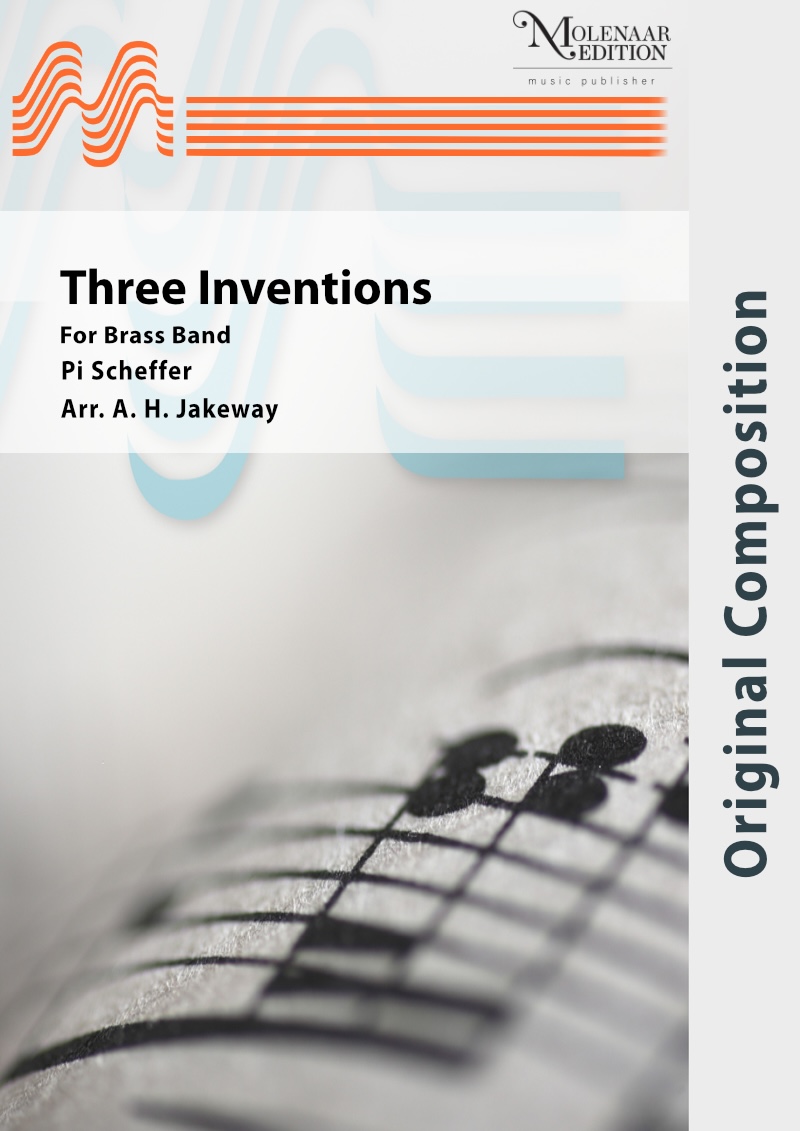
Three Inventions - Pi Scheffer/A. H. Jakeway
Dr. J (Pi) Scheffer was the leader of the famous Dutch AVRO Radio Big Band 'The Skymasters' in the 50's, as well as also being an English teacher. He also had a huge success with his composition for wind band 'Three Inventions', not only in Europe but also in the USA. At the time of publication (1971) there was no promotion with sound sample of this work, so for this reason now Molenaar Edition has a complete new score and parts available in their 'Creative Compositions' (c) series. The work is in the movements. 'Flippant', 'Whimsical' and 'Sorta Mixed Up'. A recent edition of the American magazine publication 'The School Musician' even compared Scheffer with Leonard Bernstein.
Estimated dispatch 10-14 working days
-
 £58.00
Intrada 'Praise My Soul' - C. Brugman
Estimated dispatch 10-14 working days
-
 £28.00
Alte Kameraden / Old Comrades - C. Teike
Estimated dispatch 10-14 working days
-
 £28.00
In Treue Fest/Standfast and True - C. Teike/Willy Hautvast
Estimated dispatch 10-14 working days
-
 £71.00
King All Glorious - G. M. Vail/C. Wesley
Estimated dispatch 10-14 working days
-
 £28.00
 -
 £28.00
Black Diamond - C. J. N. Cori
Estimated dispatch 10-14 working days
-
 £43.00
Jerusalem - C. H. H. Parry/Jan Willem Singerling
Estimated dispatch 10-14 working days
 View Music