Results
-
 £104.99
Slavia - Jan Van der Roost
Jan Van der Roost originally composed each and every note of 'Slavia' (as in case in 'Puszta', 'Rikudim' and 'A Highland Rhapsody'). Consequently, 'Slavia' does not contain any arrangement of existing tunes, but is an original composition 'in the style of...'. The introduction has an ABA structure and exposes a broad melodic line. Following a short cadenza, there is a second movement in a fast and fiery tempo. The tempi increase, gradually culminating in an exciting final climax, making this 'Slavonic Rhapsody' a spell-binding experience to the very last note.
Estimated dispatch 5-14 working days
-
 £60.99
Arsenal - Jan Van der Roost
Arsenal was composed for the 50th anniversary of the 'Harmonie van het Spoorwegarsenaal'[railroad arsenal], based in Mechelen (Belgium). Rather a stately concert march, it has beautiful themes and a broad melody in the trio. It was premiered in the Mechelen Cultural Center on the 11th of May 1996 during the solemn ceremony, opening the anniversary year and conducted by the composer. In the mean time, Arsenal has been recorded several times by such renowed performers like the Tokyo Kosei Wind Orchestra, the Black Dyke BB etc.
Estimated dispatch 5-14 working days
-
 £60.99
Don't Cry For Me Argentina - Andrew Lloyd Webber - Ron Sebregts
Don't Cry For Me Argentina is the best-known song from the 1976 musical Evita. It was sung by Eva Peron when she was addressing the crowds amassed in the square below her balcony. More recently it was a hit for Madonna, who sang it in the 1996 film version of Evita. This arrangement for Brass Band retains the broad emotive melody of the original together with its intense emotion.
Estimated dispatch 5-14 working days
-
 £60.99
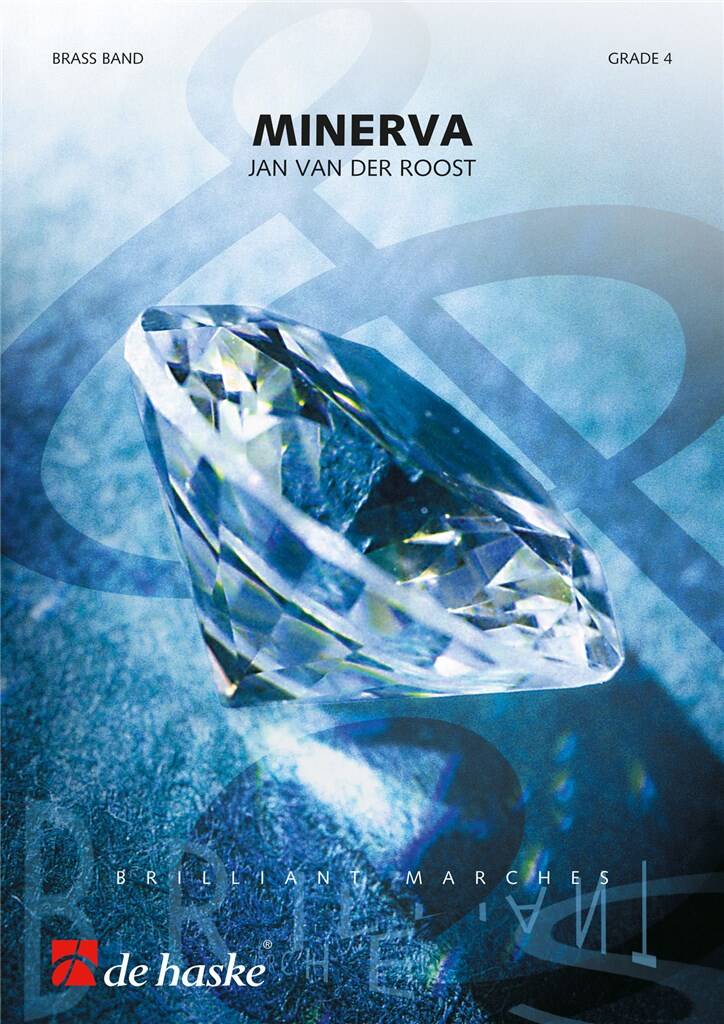
Minerva - Jan Van der Roost
Minerva by Jan Van der Roost was composed on the commission of the German "Musikverein Braunshausen" on the occasion of the 75th anniversary of the orchestra. The composition, first performed on September 17, 1999, is not a street march but a concert march, just like Mercury and Arsenal. The use and variation of different rhythmic patterns gives the first part of this march a distinctly dynamic character. Two main themes are presented in several instrumental combinations. The theme from the trio, on the other hand, is characterized by a broad melodic approach using large intervals. This theme, wreathed by high woodwinds, is heard one more time after a contrasting newpart, but now in a somewhat slower tempo. The counterpoint in this part refers to the first part of the march. The brilliant ending suits a festive anniversary march!
Estimated dispatch 5-14 working days
-
 £74.99
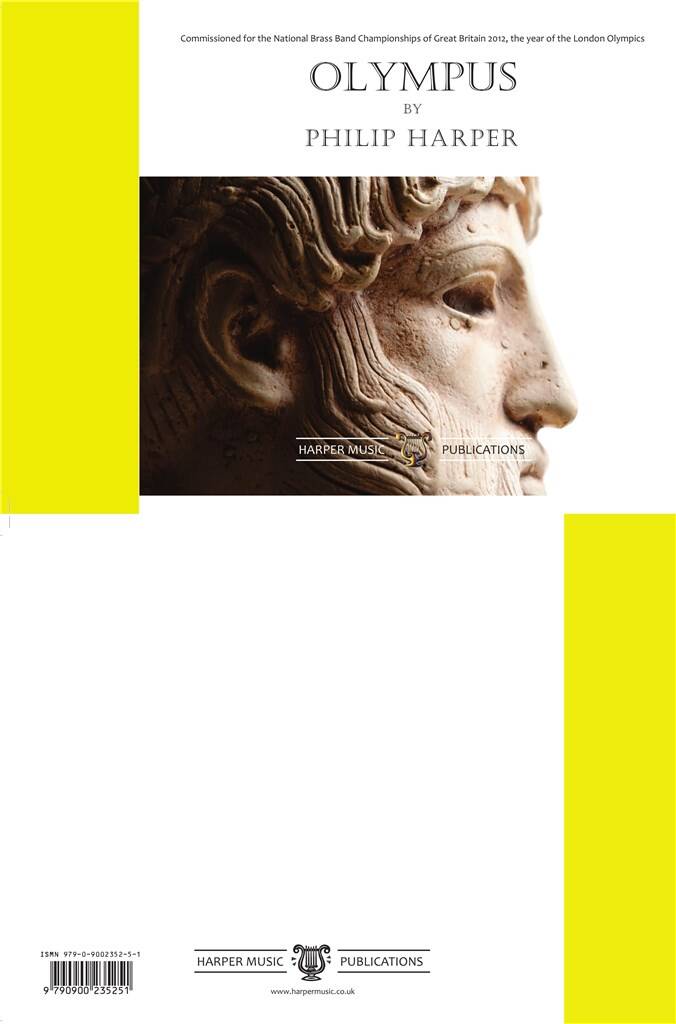
Olympus - Philip Harper
Selected as the test-piece for the 3rd Section Regional contests of the National Brass Band Championships 2012The music begins with a depiction of the exciting Opening Ceremony where noisy fanfares and sudden swells add to the cosmopolitan flag-waving clamour. Without a break the music leads to The Chariot Race, a fast compound-time gallop withthundering hooves in the basses and percussion, and a heroic melody introduced by the tenor horns. Chariot racing was the main equestrian event in the Ancient Greek Games, which were founded in memory of King Oenomaus. In the Greek legend he suffereddefeat in a chariot race to his son-in-law and Zeus' grandson, Pelops, but much of the music is bitter-sweet to symbolise the fact that Pelops had to cheat to win drawing parallels with some of the issues still facing modern-day athletics. A slow, mystical passage follows, describing The Temple of Zeus at Olympia. The statue of Zeus, who was honoured throughout the Ancient Games' history, was housed inside the temple and was one of the Seven Wonders of the Ancient World. Themusic depicts this period of the dawn of one of mankind's most ancient civilisations and there is a series of solo passages above a drone. The next section is called The Olympic Flame and a broad and lyrical anthem-like melody develops slowly in the euphoniums, which gradually ascends until the horns can take it over before passing upwards again to the cornets (Higher). The musicbursts into bright life at the lighting of the flame and the regular rhythmic pattern which has been established goes through an accelerando (Faster). The final section is called The Olympic Truce and aims to capture the cooperative spirit of the ancient practice of ending wars for the duration of the games. The anthem-like melody makes an affirmatory return (Stronger) and the work ends asit began with a blaze of colour and a real sense of optimism and global celebration. "Citius, Altius, Fortius" (Faster, Higher, Stonger)NOTES ON PERFORMANCEPercussion requirements: 1 to 3 players (3 Timpani, Snare Drum, Tenor Drum, Cymbals, Glockenspiel, Triangle)
Estimated dispatch 5-14 working days
-
 £29.88
Coventry Carol (Brass Band) Traditional arr. Stephen Tighe
VIEW SCORE PDF The Coventry Carol is an English Christmas carol dating from the 16th century. The carol was traditionally performed in Coventry as part of a mystery play called The Pageant of the Shear Men and Tailors. The play depicts the Christmas story from chapter two in the Gospel of Matthew: the carol itself refers to the Massacre of the Innocents, in which Herod ordered all male infants under the age of two in Bethlehem to be killed, and takes the form of a lullaby sung by mothers of the doomed children. Stephen Tighe has here given this well loved tune an update to allow it to appeal to a broad audience. Sheet music available from: UK - www.brassband.co.uk USA - www.solidbrassmusic.com Difficulty Level: 4th Section + Instrumentation: Soprano Cornet Eb Solo Cornet Bb Repiano Cornet Bb 2nd Cornet Bb 3rd Cornet Bb Flugel Horn Bb Solo Horn Eb 1st Horn Eb 2nd Horn Eb 1st Baritone Bb 2nd Baritone Bb 1st Trombone Bb 2nd Trombone Bb Bass Trombone Euphonium Bb Bass Eb Bass Bb Percussion 1-3
In Stock: Estimated dispatch 1-3 working days
-
 £59.77
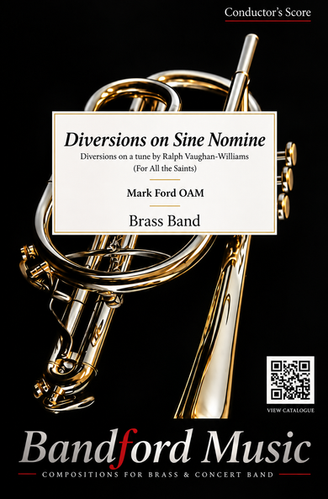
Diversions on Sine Nomine (Brass Band) Vaughan Williams arr. Mark Ford
Diversions on Sine Nomine is a substantial concert work for brass band, derived entirely from Ralph Vaughan Williams' celebrated hymn tune For All the Saints. Rather than a conventional set of variations, the work unfolds as a sequence of contrasting diversions, each reimagining aspects of the melody's character, harmony, and rhythmic potential. The opening establishes the noble and timeless quality of Sine Nomine before leading into episodes that explore a wide expressive range - from reflective and lyrical writing to passages of rhythmic energy and grandeur. Fragments of the hymn are continually transformed and re-contextualised, allowing the music to progress with clarity and purpose while maintaining a strong sense of structural coherence. Scored specifically with 3rd and 4th Section bands in mind, the work combines musical substance with practical playability. Idiomatic brass writing, transparent textures, and effective use of traditional band colours ensure musical impact without excessive technical demand. The final section brings the work to a broad and affirmative conclusion, reaffirming the dignity and enduring strength of Vaughan Williams' original melody. To view a rolling score video of the work please visit www.youtube.com/watch?v=Sth69ate-Cs Duration: 11.00 minutes Difficulty Level: 4th Section + This PDF download includes the full score and parts. Sheet music available at www.brassband.co.uk (UK) or https://satradecentral.org(USA) Instrumentation: Soprano Cornet Eb Solo Cornet 1&2 Bb Solo Cornet 3&4 Bb Repiano Cornet Bb 2nd Cornet Bb 3rd Cornet Bb Flugel Horn Bb Solo Horn Eb 1st Horn Eb 2nd Horn Eb 1st Baritone Bb 2nd Baritone Bb 1st Trombone Bb 2nd Trombone Bb Bass Trombone Euphonium Bb Bass Eb Bass Bb Timpani Percussion 1-2 Tuned Percussion
In Stock: Estimated dispatch 1-3 working days
-
 £44.83
Summit (Brass Band) Andrew Batterham
Summit is a powerful descriptive work, lifting from broad beginnings to an exciting climax. It was written for the Hyde Street Youth Band in Melbourne's west, for the 2023 Australian National Band Championships. The piece was designed to give the band a chance to display their credentials. It will be an ideal choice for youth bands and above for both concert and contest programmes. To view a video of Hyde Street Junior Band performing the piece please visit www.youtube.com/live/G9klW3mhyI8?feature=share&t=7397 (the performance commences at 2:03:17) PDF download includes score and parts. Sheet music available from: UK - www.brassband.co.uk USA - https://satradecentral.org Difficulty Level: 4th Section + Instrumentation: Soprano Cornet Eb Solo Cornet Bb Repiano Cornet Bb 2nd Cornet Bb 3rd Cornet Bb Flugel Horn Bb Solo Horn Eb 1st Horn Eb 2nd Horn Eb 1st Baritone Bb 2nd Baritone Bb 1st Trombone Bb 2nd Trombone Bb Bass Trombone Euphonium Bb Bass Eb Bass Bb Percussion 1-3
In Stock: Estimated dispatch 1-3 working days
-
£50.00
A Festive Overture - Kenneth Hesketh
A Festive Overture received its world premire on 23rd March 2002 at the BASBWE International Conference, Royal Northern College of Music, Manchester by the Central Band of the RAF, conducted by Wing Commander Rob Wiffin. The outer sections are busy and colourful, framing an expansive middle section, where Hesketh introduces a typically broad melody.Brass Band Grade 6: ChampionshipDuration: 7 minutes
In Stock: Estimated dispatch 1-3 working days
-
 £39.99
The Egg Travels - Main Theme from Walt Disney's 'Dinosaur'
ABOUT THIS PIECE: Bring the cinematic grandeur of Walt Disney's animated film: Dinosaur to your programme with this powerful arrangement of The Egg Travels--the main theme from the film. Composed by James Newton Howard, this sweeping orchestral piece captures the wonder and majesty of prehistoric life, blending lush harmonies with soaring melodies that evoke both adventure and emotion. This arrangement translates the dramatic intensity of the original score into a compelling showcase for band, making it an excellent choice for concerts and even entertainment contests. With its memorable theme and rich musical textures, The Egg Travels provides an opportunity for the band to explore a broad dynamic and emotional range. ENSEMBLE: Standard British Brass Band WHEN YOU BUY THIS PRODUCT, YOU GET: High-quality printed score and parts LEVEL: 2 LISTEN: Click here DURATION: 3-minutesEXAMPLE SCORE: Click here LEVEL GUIDE: Level 1- Accessible to all Level 2 - c. UK third section and higher Level 3 - c. UK second section and higher Level 4 - c. UK first section and higher Level 5 - c. UK championship section level
Estimated dispatch 5-7 working days
 View Music
 Watch video