Results
-
 £15.00
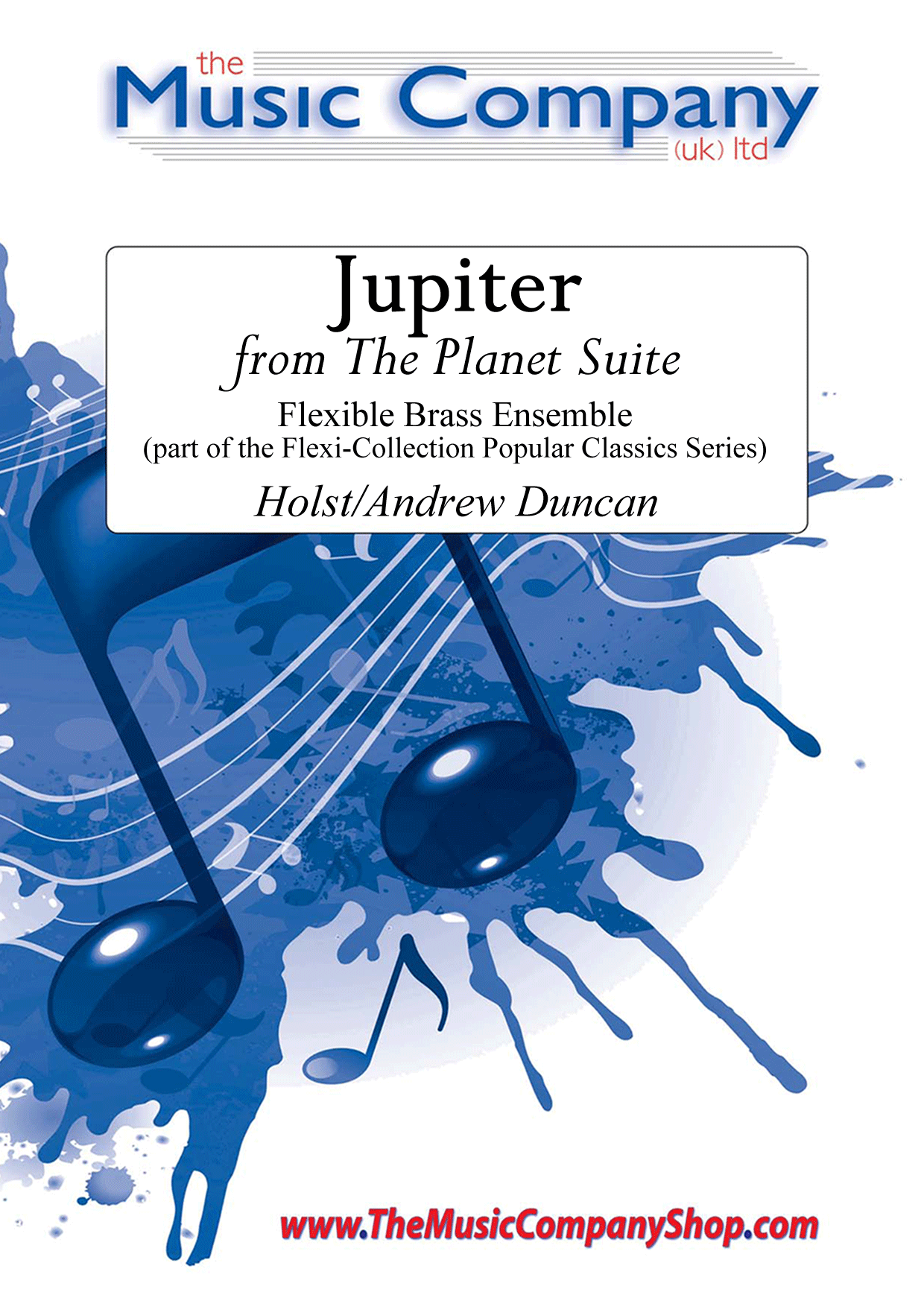
Jupiter from the Planet Suite - Holst
Programme notes:The hauntingly beautiful theme from Jupiter, from The Planets Suite has a rare qualityexpressing both optimism and dignity which makes it a popular choice for many formalpublic events such as opening and award ceremonies.The tune is originally found in the Jupiter movement from the large-scale work fororchestra called 'The Planets Suite'. Written by the English composer Gustav Holt ThePlanets Suite is thought to be his finest work.The theme has a steady 3/4 rhythm which provides a contrast in terms of tempo andmeter to the rest of the movement, and has been made popular as a patriotic song called'I vow to Thee My Country'.Performance notes:This arrangement makes use of a gradual increase in dynamics, beginning p and ending ff.With this gradual increase in dynamics is a gradual increase in the scoring starting offwith only the lower instruments playing p and ending up with everyone playing ff.The percussion part is very minimal in this arrangement (only 2 notes for the suspendedcymbal) and is an optional part.Just before the final chord there is a cut off marked in the parts. This may be a newconcept for some inexperienced players so it should be fully explained by the conductor.The Flexi-Collection ApproachFlexible scoring tailored to your needs - A perfect solution for expanding the repertoire of training and junior brass bands. The Flexi-Collection currently offers two series - Popular Classics and World Tour. Based on four-part harmony, these collections provide groups with the advantage of complete flexibility when they may not be balanced. If players or instruments are missing, the show can still go on!The Flexi-Collection - Popular Classics Series, encapsulates all that is great about the wonderful range of musical styles produced by Holst, Elgar, Handel, Verdi, Tchaikovsky, Grieg, Bizet and Parry.The thoughtful scoring and arranging by Andrew Duncan now means that groups of all abilities have access to a truly flexible set of music for their needs. With world parts, rudimentary theory, terminology translations and large format typesetting, The Flexi-Collection ticks all the boxes when it comes to bringing interesting music to the training and junior band/brass group environment.Available individually or as part of the money-saving Flexi-Collection Popular ClassicsAlbum.Scored for Brass Band and supplied with additional Easy Bb, Easy Eb and world parts - The Flexi-Collection offers flexibility in every sense of the word.
In Stock: Estimated dispatch 3-5 working days
-
 £33.08
Finale - Suite No.3 (Brass Band) Tchaikovsky arr. Ruben Schmidt
This arrangement by Ruben Schmidt is the exciting polonaise finale from the last movement of Tchaikovsky's thrilling Suite No.3 in G Major for Orchestra. This was first performed in Saint Petersburg on January 12th, 1885, at the fifth symphony concert of the Russian Musical Society, conducted by Hans von Bulow. The suite also was Tchaikovsky's first American success when it was performed by the New York Symphony Society at Carnegie Hall on May 7,1891. First intended as its own symphony, it became the most played and most successful of Tchaikovsky's four suites. The finale of the last movement is an invigorating polonaise dance to finish the suite. Tchaikovsky often enjoyed conducting this final movement as an independent work himself. To view a rolling score video of the work please visit www.youtube.com/watch?v=M-Ht80Lnk-c Duration: 4.00 minutes Difficulty Level: 1st Section + PDF download includes parts and score. Sheet music available here. Instrumentation: Soprano Cornet Eb Solo Cornet Bb Repiano Cornet Bb 2nd Cornet Bb 3rd Cornet Bb Flugel Horn Bb Solo Horn Eb 1st Horn Eb 2nd Horn Eb 1st Baritone Bb 2nd Baritone Bb 1st Trombone Bb 2nd Trombone Bb Bass Trombone Euphonium Bb Bass Eb Bass BbTimpani Percussion (Tambourine, Suspended Cymbal & Bass Drum)
In Stock: Estimated dispatch 1-3 working days
-
 £55.00
A Phantom Menace Suite
Recommended for - Championship to 2nd Section bands Andrew Duncan has brought together three of the greatest themes from the first two Star Wars prequels, Star Wars: The Phantom Menace and Star Wars: Attack of the Clones, into this exciting suite for brass band - A Phantom Menace Suite.
-
£125.00
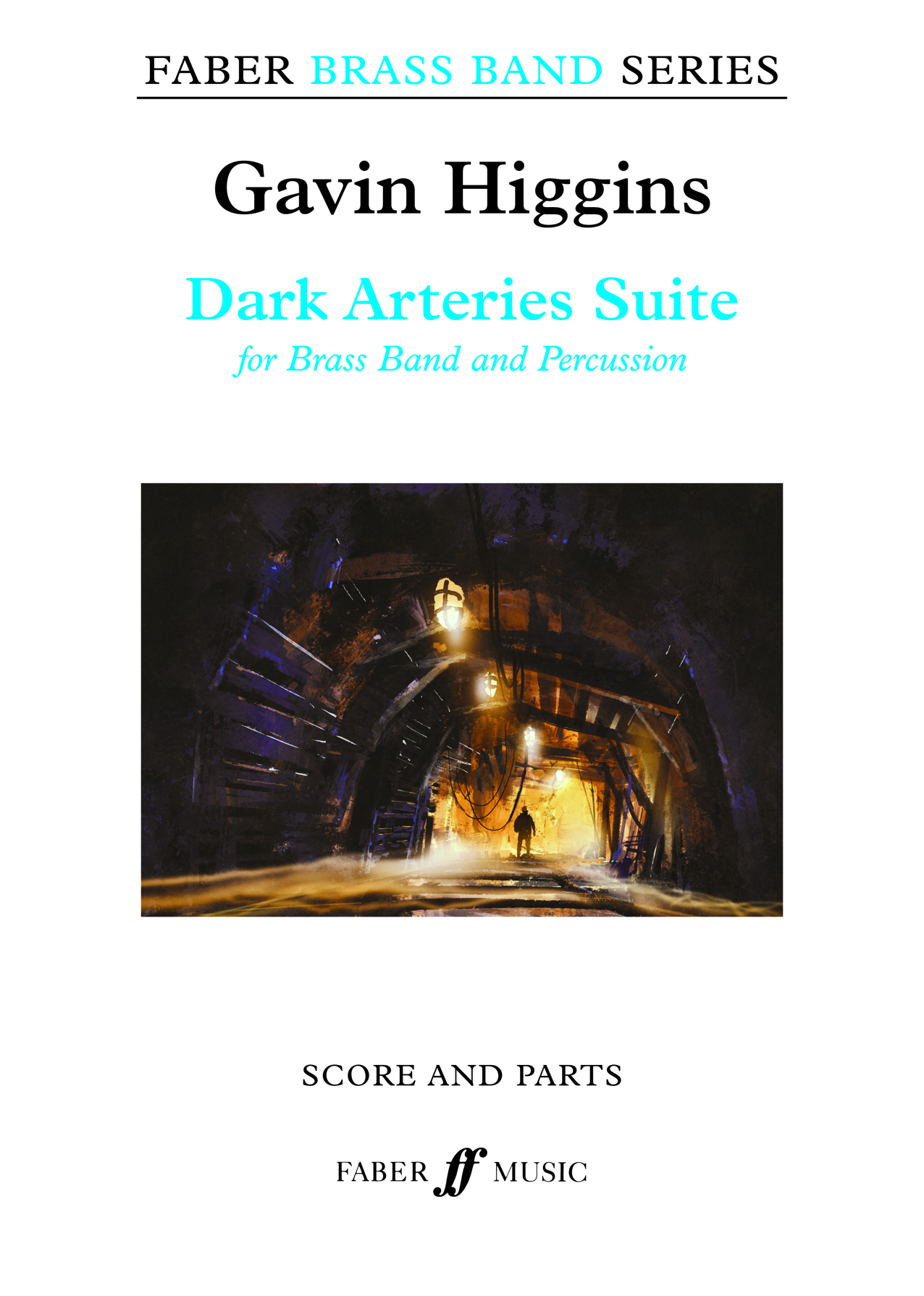
Dark Arteries Suite - Gavin Higgins
Dark Arteries was commissioned by Rambert Dance Company and first performed in May 2015 with the Tredegar Town Band sharing the stage with Rambert dancers. Dark Arteries is a personal and at times highly wrought response to the Miners Strike and its aftermath. It is in three movements, the first and last are expansive, with widely contrasting sound worlds, from dark, brooding melodies and the haunting sounds of solo flugel horn to wild syncopations on cornets, suggestive of an imposing, but often bleak mining landscape.In 2016 Higgins re-worked Dark Arteries into a virtuoso concert suite, which captures the essence of the work in three connected movements.Dark Arteries Suite was premiered by the National Youth Brass Band of Great Britain, conducted by Bramwell Tovey at the Barbican Centre, London, 22 April 2017.
In Stock: Estimated dispatch 1-3 working days
-
£75.00
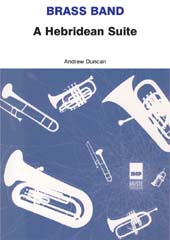
A Hebridean Suite - Andrew Duncan
A colourful and light-hearted musical journey through the evocative Scottish islands, Andrew Duncan's A Hebridean Suite is in four concise movements: Stornaway, The Old Shepherdess and the Norse Maiden's Spirit, Mouth Music and Ceilidh-Rondo. It is suitable both as a concert suite for more advanced adult and youth bands and has also been used as a test piece in the First Section at the 2010 Butlins Mineworkers Open Championship.Brass Band Grade 5: 1st SectionDuration: 11 minutes
In Stock: Estimated dispatch 1-3 working days
-
 £29.41
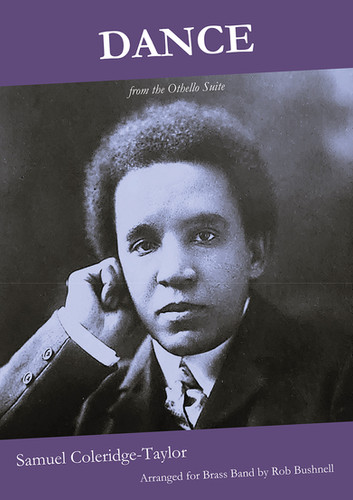
Dance from the Othello Suite (Brass Band) Coleridge-Taylor arr. Bushnell
Samuel Coleridge-Taylor is a British composer, who, from a young age, showed talent on the violin and entered the Royal College of Music, studying with Charles Villers Standford. His music become so popular that his Hiawatha trilogy was the second most performed choral piece (joint with Mendelssohn's Elijah, and only beaten by Handel's Messiah) with choral societies up and down the British Isles. In fact, Hiawatha was arranged by Charles Godfrey as a test-piece for the 1902 National Brass Band Championship of Great Britain, held at Crystal Palace.Commissioned by the theatre impresario Herbert Beerbohm, Coleridge-Taylor composed incidental music for His Majesty's Theatre London production of the Shakespeare play, Othello, in the West End, in 1909. In 1912, the play opened to the public, with a suite of five movements put together soon afterwards. The Dance, arranged here by Rob Bushnell, makes a great concert opener.This arrangement is for the British-style brass band, with alternative parts for horns in F and bass-clef lower brass. A recording of the original composition can be found at www.youtube.com/watch?v=OQeO_Ij9CV8 Duration: approx. 2.30 minutes Difficulty Level: 3rd Section + PDF download includes parts and score. Sheet music available at www.brassband.co.uk (UK) or https://satradecentral.org (USA) Instrumentation: Soprano Cornet Eb Solo Cornet Bb Repiano Cornet Bb 2nd Cornet Bb 3rd Cornet Bb Flugel Horn Bb Solo Horn Eb 1st Horn Eb 2nd Horn Eb 1st Baritone Bb 2nd Baritone Bb 1st Trombone Bb 2nd Trombone Bb Bass Trombone Euphonium Bb Bass Eb Bass Bb Timpani Percussion - Triangle, Cymbal & Bass Drum
In Stock: Estimated dispatch 1-3 working days
-
 £33.08
Menuet (Brass Band) Ravel arr. Rob Bushnell
Le Tombeau de Couperin (The Grave of Couperin) was written by Maurice Ravel between 1914 and 1917, originally a suite of piece for solo piano. Based on what was considered a traditional Baroque suite, Ravel wanted to pay homage to Baroque French keyboard music, whilst retaining his 20th-century chromaticism, making the work neoclassicist. Each movement is dedicated to the memory of a friend of the composer who died fighting in World War I. Ravel produced an orchestral version in 1919, omitting two of the original six movements. The Menuet was written in memory of Jean Dreyfus; Ravel had recuperated at his home. This arrangement is for the British-style brass band, with alternative parts for horns in F and bass-clef lower brass. A recording of the original composition can be found here: www.youtube.com/watch?v=jnNwEcBTSmk. Duration: Approx. 4 minutes Difficulty Level: 2nd Section + Duration: 4 minutes (depending on tempo and without any cuts) PDF download includes parts and score. Sheet music available at www.brassband.co.uk (UK) or https://satradecentral.org (USA) Instrumentation: Soprano Cornet Eb Solo Cornet Bb Repiano Cornet Bb 2nd Cornet Bb 3rd Cornet Bb Flugel Horn Bb Solo Horn Eb 1st Horn Eb 2nd Horn Eb 1st Baritone Bb 2nd Baritone Bb 1st Trombone Bb 2nd Trombone Bb Bass Trombone Euphonium Bb Bass Eb Bass Bb Timpani Percussion - Vibraphone & Glockenspiel
In Stock: Estimated dispatch 1-3 working days
-
 £47.79
The Nutcracker Suite - Brass Band (Tchaikovsky arr. Keith Wilkinson)
VIEW SCORE PDF Step into the enchanting world of Tchaikovsky's beloved The Nutcracker with this exciting brass band arrangement which features March, Trepak and Waltz of the Flowers. Expertly adapted for brass band by Keith M. Wilkinson, this suite captures the festive spirit and magical charm of the original score, while showcasing the full power and brilliance of brass and percussion. To view a rolling score video featuring the Amsterdam Staff Band performing Trepak please visit www.youtube.com/watch?v=ur8p2d8nZ3A To view the other movements please click on the videos attached to this product. PDF download includes score and full set of parts. Sheet music available from: UK - www.brassband.co.uk USA - www.solidbrassmusic.com To purchase individual movements, please visit: March - click here Trepak - click here Waltz of the Flowers - click here Difficulty Level: 2nd Section + Instrumentation: Soprano Cornet Eb Solo Cornet Bb Repiano Cornet Bb 2nd Cornet Bb 3rd Cornet Bb Flugel Horn Bb Solo Horn Eb 1st Horn Eb 2nd Horn Eb 1st Baritone Bb 2nd Baritone Bb 1st Trombone Bb 2nd Trombone Bb Bass Trombone Euphonium 1-2 Bb Bass Eb Bass Bb Timpani Percussion 1-2
In Stock: Estimated dispatch 1-3 working days
-
£55.00
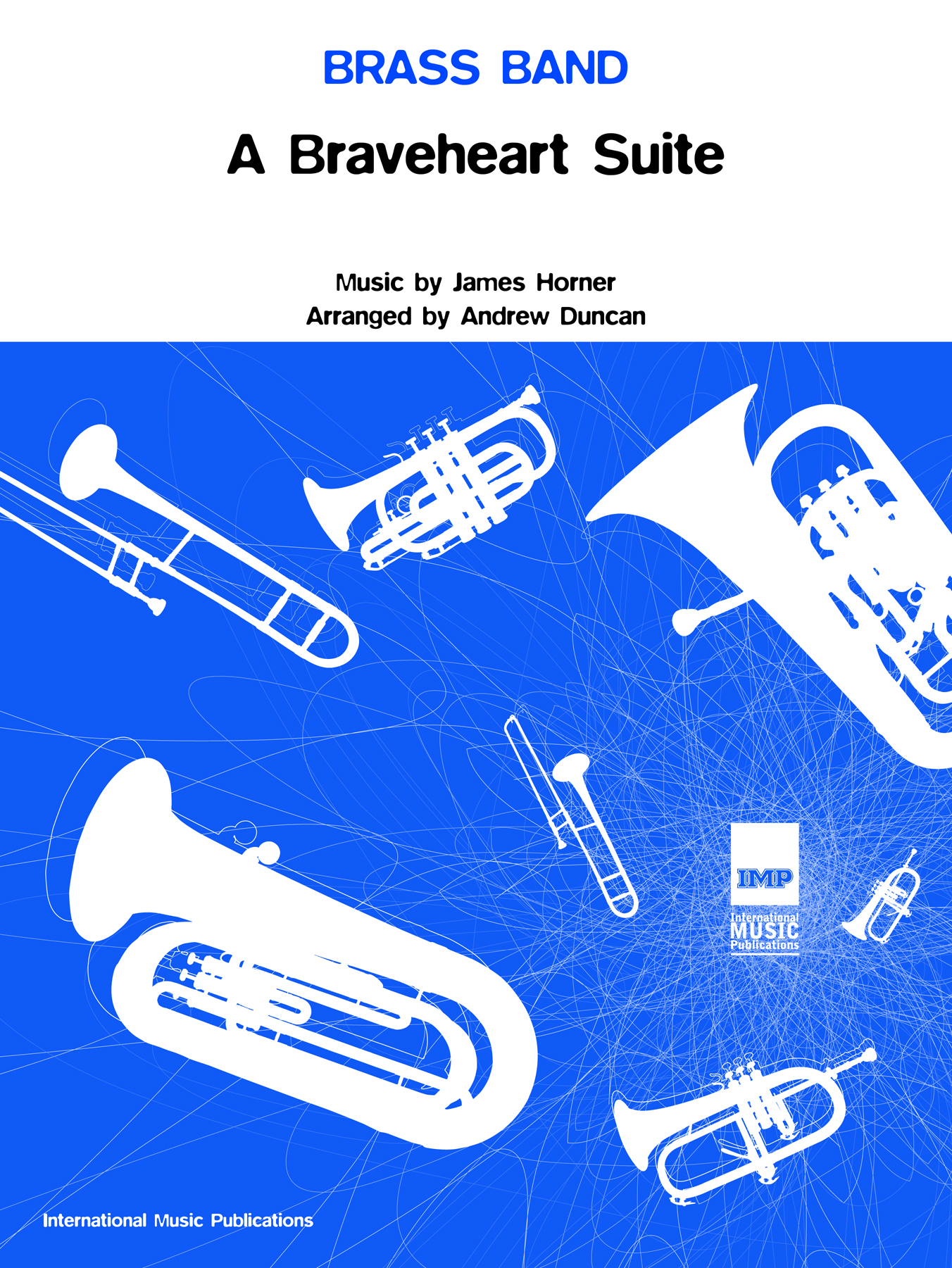
A Braveheart Suite (Brass Band Score & Parts) - James Horner
Mel Gibson's epic film Braveheart was a cinema hit and the music by James Horner was incredibly memorable. Andrew Duncan has taken some of these themes and created A Braveheart Suite for brass band.Brass Band Grade 4: Advanced Youth and 3rd SectionDuration: 7 minutes
In Stock: Estimated dispatch 1-3 working days
-
 £44.11
Following the Star - A Christmas Suite for Brass Band (Ivan Andrews)
This attractive suite for brass band by Ivan Andrews will be accessible to the majority of bands and features several well known carols - Good King Wenceslas (in a slightly unfamiliar form being set in compound time), Here we come a-wassailing, The Three Kings, and We Three Kings of Orient Are in swing time. Set for a slightly smaller band than is traditional, it will be playable by a minimum of 20 players. To view a follow-the-score video of the work please visit: www.youtube.com/watch?v=AYsLf5T144Y PDF download includes score and parts. Sheet music available from: UK - www.brassband.co.uk USA - www.solidbrassmusic.com Difficulty Level: 4th Section + Instrumentation: Soprano Cornet Eb 1st Cornet Bb 2nd Cornet Bb Flugel Horn Bb 1st Horn Eb 2nd Horn Eb 1st Baritone Bb 2nd Baritone Bb 1st Trombone Bb 2nd Trombone Bb Bass Trombone Euphonium Bb Bass Eb Bass Bb Glockenspiel Drum Set
In Stock: Estimated dispatch 1-3 working days
 Watch video