
Results
-
 £59.95
Fire in the Blood (Brass Band - Score and Parts) - Lovatt-Cooper, Paul
!!!!
Estimated dispatch 7-14 working days
-
 £59.70
Havana Fire! (Brass Band - Score and Parts) - Fernie, Alan
Duration: 3.15
Estimated dispatch 7-14 working days
-
 £59.70
Latino Fire! (Brass Band - Score and Parts) - Smith, Sandy
Sandy Smith has expertly arranged traditional Latin tunes into this firey number!
Estimated dispatch 7-14 working days
-
 £45.00
 -
 £38.95
Unity Series Band Journal - Numbers 558 - 561, October 2026
558: Jesus is the winner! (Samuel Ekong)Jesus is the Winner is the publishing debut of Samuel Ekong, Band Secretary at Abuja Central Corps in the Nigeria Territory. Based on a popular song associated with renowned worship leader Ron Kenoly, this arrangement centres on the infectious chorus, "Jesus is the winner man". While the original song was performed in a reggae style, Ekong has reimagined it with a lively swing feel, creating a joyful and accessible work for brass band. Full of rhythmic energy and uplifting spirit, the arrangement encourages a light, buoyant approach throughout and offers an engaging concert item that is sure to be enjoyed by performers and audiences alike.559: Festival Arrangement - Hearts Ablaze (Marcus Venables)Written at the request of Jonathan Evans for Sale Salvation Army Band, Hearts Ablaze is based on the popular contemporary worship song Build Your Kingdom Here that has become especially significant within the corps. The music captures the passion, prayer and enthusiasm of its message, combining bold opening statements with lyrical moments and energetic rhythmic drive. After introducing the familiar melody, the work develops into a vibrant celebration built around the song's call: "Set your Church on fire... Build your kingdom here, we pray." Uplifting and engaging throughout, the piece offers both performers and audiences a joyful and inspiring musical experience.560: Cornet Solo - Soul Saver (Ian Robinson)Based on the well-known chorus Thank You, Lord, for Saving My Soul by Seth and Bessie Sykes, this solo is a heartfelt expression of gratitude for God's gift of salvation. The familiar melody is presented in an expressive setting that allows the soloist to communicate the simple yet powerful message of the song. Contrasting lyrical passages, rich harmonic colours and moments of gentle brilliance combine to create an engaging musical journey. Throughout, the focus remains on the chorus's timeless theme of thanksgiving, making this a moving and devotional addition to the brass band solo repertoire.561: Chorus Selection - God's Presence (Howard Davies)God's Presence by Major Howard Davies combines three well-known songs that explore the believer's walk with God. The selection includes Philip P. Bliss's Let the lower lights be burning, Charles H. Fillmore's O I love him, and the familiar Salvation Army chorus God is with us all the time (S.A.S.B. 1028). Each melody expresses a different aspect of Christian faith, from witness and devotion to the assurance of God's presence. Suitable as both a concert item and a congregational feature, this accessible arrangement offers warmth, variety and a clear spiritual message for performers and audiences alike.
Estimated dispatch 7-14 working days
-
 £14.95
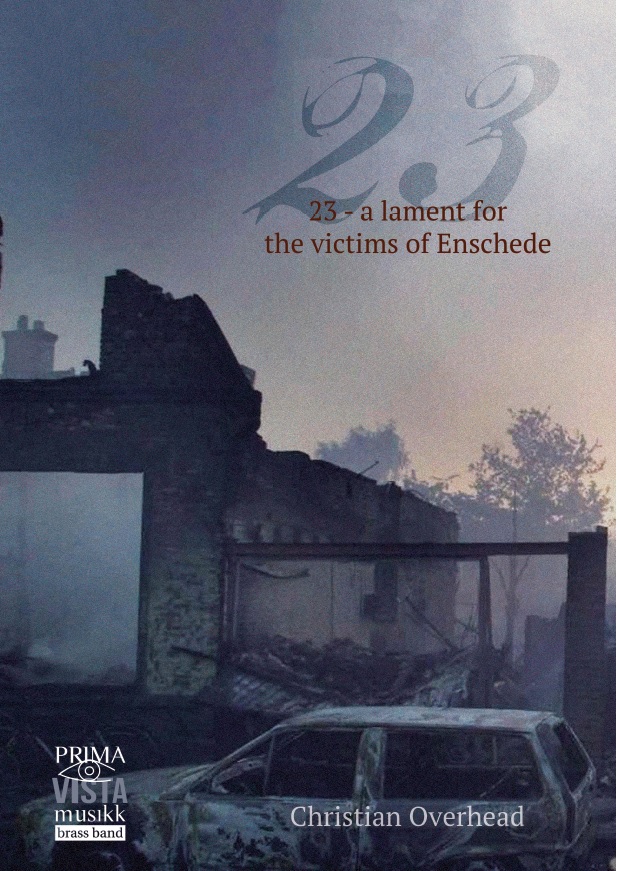
23 - A Lament for the Victims of Enschede (Score Only)
23 was composed for Brass Band Schoonhoven, and used as part of their programme for Brass in Concert in November 2016.On the 13 th May 2000, the Netherlands was shocked by an explosion in Roombeek - a district of Enschede, near the German border - after a fire broke out at a local fireworks depot. 23 people lost their lives in the tragic events. This piece pays tribute to their memory.The numbers 2 and 3 form the basis of the piece. The use of 5/4 allows the music to flow, alternating between 2 + 3 and 3 + 2; there are frequent passages where triplet quavers clash with straight quavers; and the tuned percussion make use of a scale composed of alternating intervals of 2 and 3 semitones.
Estimated dispatch 7-14 working days
-
 £14.95
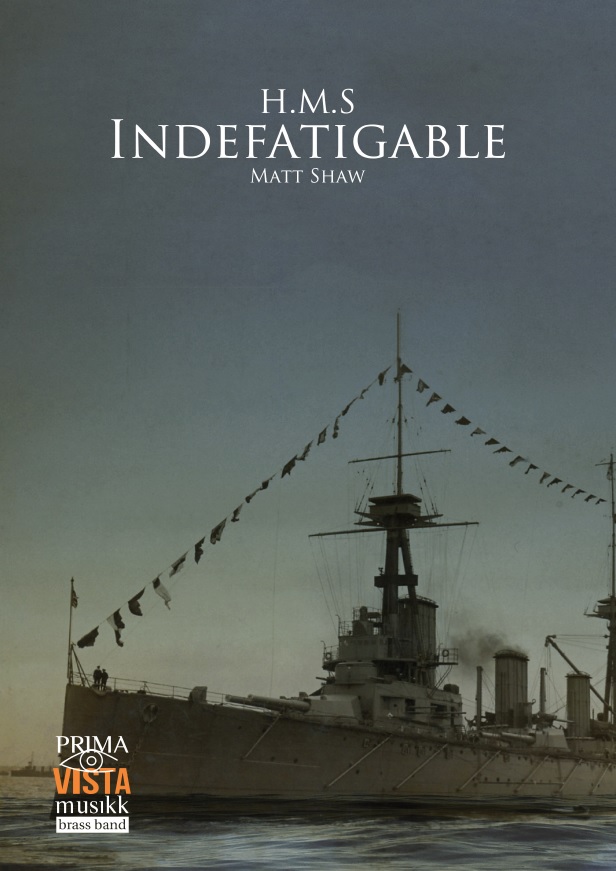
HMS Indefatigable (Score Only)
HMS Indefatigable is a contest march, composed for the Virtuosi GUS Band, under the direction of Adam Cooke, and used as part of their programme for Brass in Concert in November 2016.The march is named after the battlecruiser HMS Indefatigable; an ill-fated ship of the British fleet that fell victim to German Bombardment in the Battle of Jutland, in 1916. During the initial 30 minutes of the battle, the Indefatigable sustained heavy fire from the German battleship SMS Von der Tann, which struck Indefatigable's armoury and caused the ship to suffer a catastrophic explosion, resulting in the ship sinking, with all but two lives lost. 1,017 souls perished.This piece aims to capture the might and power of the great ship at sea, incorporating a touch of menace, hinting at the unfortunate end awaiting the HMS Indefatigable, whilst serving as a fitting tribute to the ship and her crew.
Estimated dispatch 7-14 working days
-
 £45.00
Elemental (Score and Parts)
The opening number in Cory Band's 2015 'Four Elements' themed Brass in Concert programme, this piece sets out a mysterious introduction transporting us back to the time of the Greek Philosophers, after which it presents short musical depictions of Fire, Air, Water and Earth. Designed to start your concert with a bang.
Estimated dispatch 7-14 working days
-
 £30.00
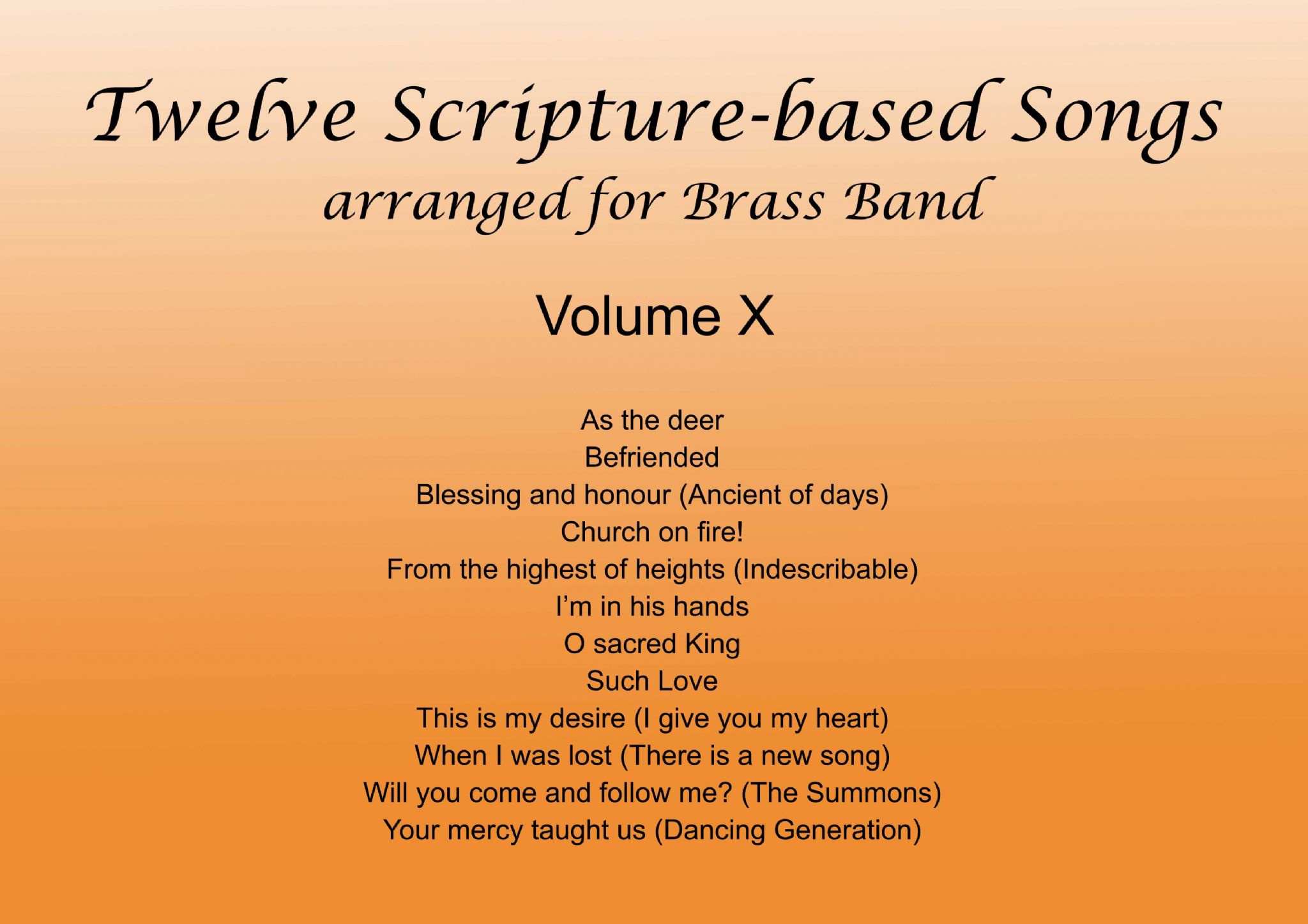
Twelve Scripture-Based Songs Volume X
Twelve scripture-Based Songs arranged for Brass Band (Volume X) are packaged and marketed in complete sets which include a full score and a set of master parts. It is intended that these parts be used as 'masters', for the purpose of photocopying a quantity of parts to accommodate the precise instrumentation needs of the band for which this has been purchased.As the deerBefriendedBlessing and honour (Ancient of days)Church on fire!From the highest of heights (Indescribable)I'm in his handsO sacred KingSuch LoveThis is my desire (I give you my heart)When I was lost (There is a new song)Will you come and follow me? (The Summons)Your mercy taught us (Dancing Generation)
Estimated dispatch 7-14 working days
-
 £30.00
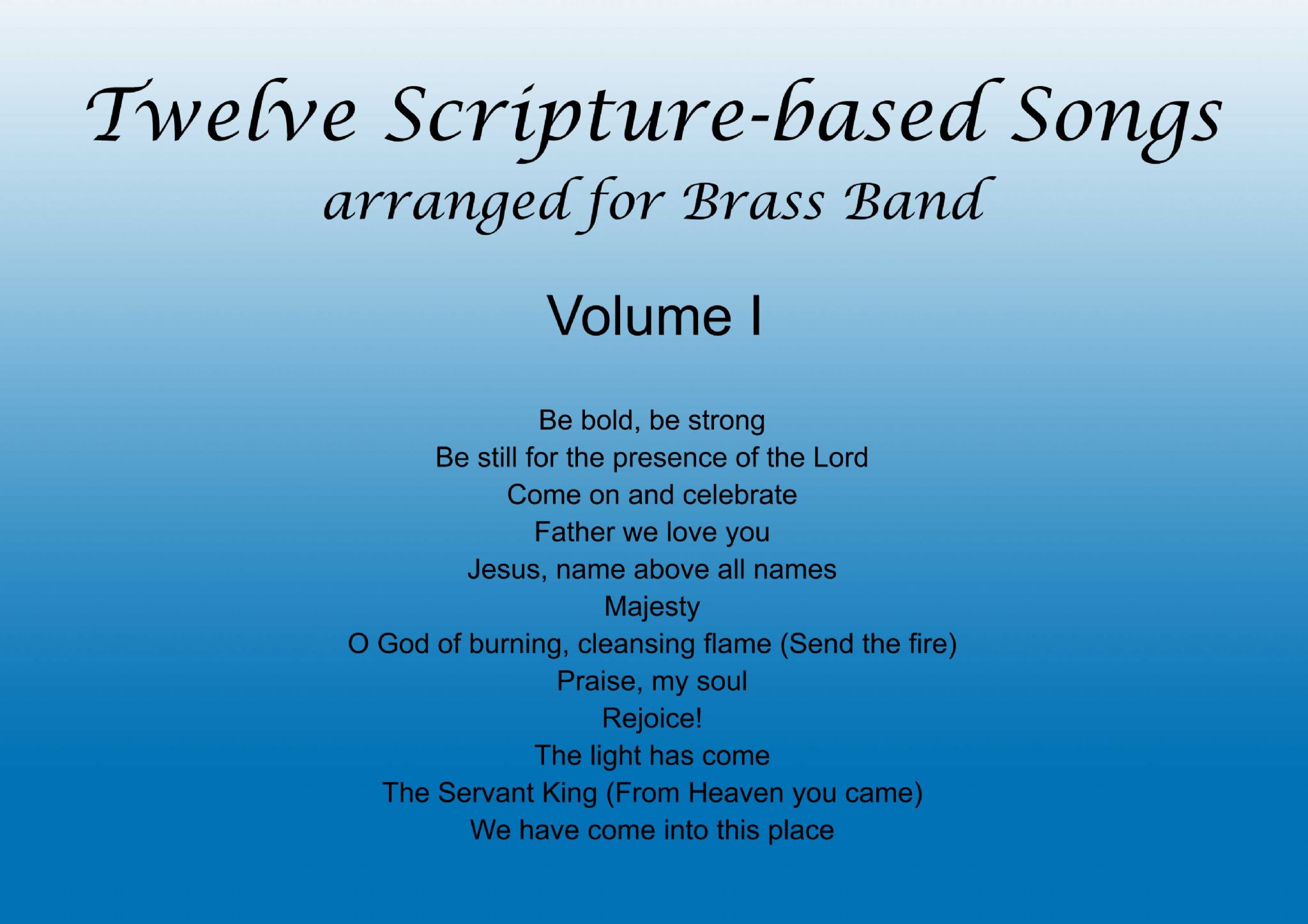
Twelve Scripture-Based Songs Volume I
Twelve scripture-Based Songs arranged for Brass Band (Volume I) are packaged and marketed in complete sets which include a full score and a set of master parts. It is intended that these parts be used as 'masters', for the purpose of photocopying a quantity of parts to accommodate the precise instrumentation needs of the band for which this has been purchased. Be bold, be strongBe still for the presence of the LordCome on and celebrateFather we love youJesus, name above all namesMajestyO God of burning, cleansing flame (Send the fire)Praise, my soulRejoice!The light has comeThe Servant King (From Heaven you came)We have come into this place
Estimated dispatch 7-14 working days
 View Music