
Results
-
 £27.50
FOUR CLASSICAL PIECES FOR BRASS (score & parts) - Frederick, Mike
The score shows brass band scoring & percussion.Contents / Comments:
In Stock: Estimated dispatch 1-3 working days
-
 £49.95
An Age of Kings (Mezzo-Soprano Solo with Brass Band and optional choir - Score only) - Gregson, Edward
Brass Band Score. Brass Band Parts available separately. Optional TTBB available separately.
Estimated dispatch 7-14 working days
-
 £57.95
BARITONE CONCERTO (Ellerby) (Brass Band - Score only) - Ellerby, Martin
Brass Band parts available separately. Dedicated to and recorded by Katrina Marzella.
Estimated dispatch 7-14 working days
-
 £44.95
Triumphant (Brass Band - Score and Parts)
Triumphant was written as the opening work for the 2024 Future All-Stars final concert. Based on the well-known hymn Victory in Jesus (S.A.S.B. 464), the piece reimagines the familiar melody and words with energetic drumline-inspired rhythms and driving Bass groove.O victory in Jesus, my Saviour, for ever!He sought me and bought me with his redeeming blood;He loved me ere I knew him, and all my love is due him -He plunged me to victory beneath the cleansing flood.Musically speaking, the rhythmic pulse should remain confident and consistent throughout, with the percussion establishing the groove and the band locking in with precision. Take time to find a tempo that allows the Bass and Percussion parts to remain clear and accurate. A slightly steadier pace will produce a stronger, more convincing groove. However, a slower tempo can result in the band's playing becoming too heavy. Melodic lines should be played on the longer side, allowing phrases to sing over the rhythmic accompaniment that can be more defined and articulated. As the work builds, be patient and disciplined with dynamics, saving the band's fullest sound for the climactic moments, maximising their impact.
Estimated dispatch 7-14 working days
-
 £34.95
By Trevone Bay (Flugel Horn Solo with Brass Band - Score and Parts))
By Trevone Bay was composed for Flugel Soloist Zoe Hancock and the Black Dyke Band to celebrate both their Double Champion Victory at the British Open and National Championships 2014 and Zoe's unique achievement in winning the Best Soloist Award in both contests - an accomplishment never done before. The world premier was performed by Zoe and the band at Birmingham's Symphony Hall on February 8th 2015.By Trevone Bay is a lovely lyrical slow melody that utilises the full range and colour of the flugel horn. Starting with an atmospheric opening the soloist performs the main theme, which repeats with more colour in the accompanying parts and solo line. After introducing a second theme from the ensemble, the solo cornets perform the main melody with the soloist enjoying a lyrical counter melody. The piece develops with a tranquil middle section from the soloist that builds for the second theme to return, performed by the ensemble while the soloist soars over the top. Ending as it starts, the piece dies away to leave the soloist performing the opening melodic phrase to a tranquil close.As for the title: Trevone Bay is a beautiful tiny bay in Cornwall, close to Zoe's home town of Roche. Its tranquil waters lead out to the Celtic Sea and provide a picturesque landscape. The views there can be enjoyed all year round but they are particularly beautiful at sunset.
Estimated dispatch 7-14 working days
-
 £24.00
We Wish You a Merry Christmas (Choir with Brass Band - Score and Parts)
This traditional carol is arranged for band and chorus with optional bell choir. It was designed - and has been used effectively in this way - as a short encore to a Christmas concert. It is possible to invite the audience to join the final chorus (letter C).The publisher permits the user to copy as many Choir and Bell Choir parts as necessary.
Estimated dispatch 7-14 working days
-
 £96.99
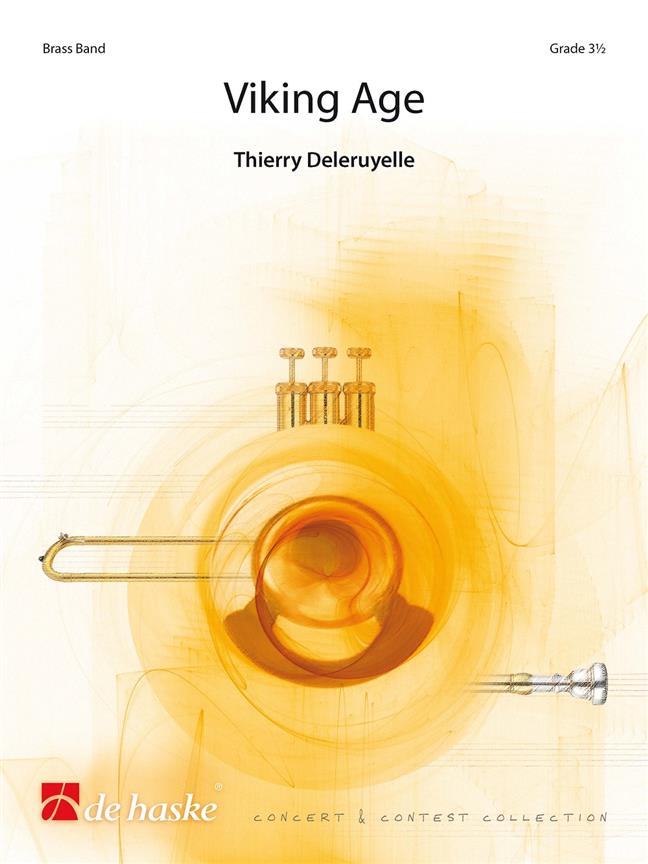
Viking Age (Brass Band - Score and Parts)
The Viking age lasted from the late eighth, to the middle of the eleventh century. During this period, Scandinavian warriors and merchants explored, plundered and left their mark on numerous territories. This work is based on a series of four notes that appear in different forms, consisting of 4 movements: Northern Men, Explorer, Raids and Heritage. It is an impressive and spectacular piece, with lots of interesting and playful parts for all sections. This is a perfect contest piece or an outstanding work for thematic concerts.Duration: 10.40
Estimated dispatch 7-14 working days
-
 £54.20
La Verbena (Brass Band - Score and Parts)
This series is for Brass Bands with a reduced number of playersThis series is without Repiano, 2nd Horn in Eb and 2nd TromboneParts included for:1 Eb Soprano Cornet5 Solo Bb Cornet3 2nd Bb Cornet2 3rd Bb Cornet1 Bb Flugel Horn1 Solo Eb Horn2 1st Eb Horn1 1st Bb Baritone2 2nd Bb Baritone (2nd Bb Trombone)1 1st Bb Trombone1 Bass Trombone2 Bb Euphonium2 Eb Bass2 Bb Bass1 Timpani2 Percussion/Drum SetOptional parts also included for:1 1st Trombone BC1 2nd Trombone BC1 Bass Trombone TC
Estimated dispatch 7-14 working days
-
 £54.20
Four Christmas Carols (Brass Band - Score and Parts)
This series is for Brass Bands with a reduced number of playersThis series is without Repiano, 2nd Horn in Eb and 2nd TromboneParts included for:1 Eb Soprano Cornet5 Solo Bb Cornet3 2nd Bb Cornet2 3rd Bb Cornet1 Bb Flugel Horn1 Solo Eb Horn2 1st Eb Horn1 1st Bb Baritone2 2nd Bb Baritone (2nd Bb Trombone)1 1st Bb Trombone1 Bass Trombone2 Bb Euphonium2 Eb Bass2 Bb Bass1 Timpani2 Percussion/Drum SetOptional parts also included for:1 1st Trombone BC1 2nd Trombone BC1 Bass Trombone TC
Estimated dispatch 7-14 working days
-
 £50.90
A Christmas Medley (Brass Band - Score and Parts)
This series is for Brass Bands with a reduced number of playersThis series is without Repiano, 2nd Horn in Eb and 2nd TromboneParts included for:1 Eb Soprano Cornet5 Solo Bb Cornet3 2nd Bb Cornet2 3rd Bb Cornet1 Bb Flugel Horn1 Solo Eb Horn2 1st Eb Horn1 1st Bb Baritone2 2nd Bb Baritone (2nd Bb Trombone)1 1st Bb Trombone1 Bass Trombone2 Bb Euphonium2 Eb Bass2 Bb Bass1 Timpani2 Percussion/Drum SetOptional parts also included for:1 1st Trombone BC1 2nd Trombone BC1 Bass Trombone TC
Estimated dispatch 7-14 working days