
Results
-
 £99.95
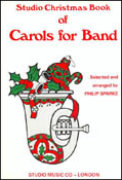
Carols for Band (Brass Band Set) - Sparke, Philip
Designed to be playable by any combination from quartet to full brass band, wind band or orchestra, the arrangements in this book with provide a practical solution to all your carolling needs. Parts are divided into Soprano, Alto, Tenor and Bass so that any suitable instrumentation will sound well, providing an equal balance of players per voice is maintained. The carols are printed in alphabetical order so they are easy to find, and comprehensively indexed under both first line and name of tune.Score, Timpani and Percussion parts are available separately.Instrumentation is as follows: Brass BandWind BandStringsSopranoEb Soprano CornetSolo Bb CornetBb Repiano & Flugel1st Flute & Piccolo2nd FluteOboe1st Bb Clarinet1st Bb Trumpet/Cornet1st ViolinAlto2nd & 3rd Bb CornetSolo Eb Horn1st Bb Trombone2nd & 3rd Bb ClarinetsEb Alto Saxophone2nd Bb Trumpet/Cornet1st F Horn2nd ViolinTenor1st & 2nd Eb Horns1st & 2nd Bb Baritones2nd Bb Trombone1st Bb EuphoniumEb Alto ClarinetBb Tenor Saxophone2nd F Horn1st & 2nd TrombonesViolaBassBass Trombone2nd Bb EuphoniumEb BassBb BassBassoonBb Bass ClarinetEb Baritone SaxophoneBass TromboneEuphoniumTubaCello/BassTitles included:Angels from the Realms of GloryAs with Gladness Men of OldAway in a MangerBrightest and BestChristians AwakeCoventry CarolDeck the HallsDing Dong, Merrily on HighFirst NowellGod Rest ye Merry, GentlemenGood King WenceslasHark the Glad SoundHark, the Herald Angels SingHolly and the IvyI Saw Three ShipsIn Dulci JubiloIn the Bleak Mid-WinterInfant HolyInfant KingIt Came Upon a Midnight ClearJingle BellsLo, He Comes with Clouds DescendingLove Came Down at ChristmasO Come, All ye FaithfulO Come, O Come, EmmanuelO Little Town of BethlehemOf the Father's Love BegottenOnce in Royal David's CitySans Day CarolSee Amid the Winter's SnowSilent NightSussex CarolThou Didst Leave Thy ThroneUnto Us is Born a SonWe Wish You a Merry ChristmasWhile Shepherds WatchedThe Brass Band Set consists of 25 Parts:1 x Eb Soprano Cornet4 x Solo Bb Cornet2 x Bb Repiano & Flugel4 x 2nd & 3rd Bb Cornet1 x Solo Eb Horn2 x 1st & 2nd Eb Horn2 x 1st & 2nd Bb Baritone1 x 1st Bb Trombone1 x 2nd Bb Trombone1 x Bass Trombone1 x 1st Bb Euphonium1 x 2nd Bb Euphonium2 x Eb Bass2 x Bb Bass
Estimated dispatch 7-14 working days
-
 £15.00
Symphony in Two Movements (Brass Band - Study Score) - Gregson, Edward
Selected as the Championship Section test piece for the National Brass Band Championships of Great Britain 2025This work was jointly commissioned by the National Youth Brass Band of Great Britain (NYBBGB) and the National Youth Brass Band of Wales (NYBBW), the latter with funding from T Cerdd (Music Centre Wales), to celebrate their 60th and 30th anniversaries respectively. The first performances were given at Cadogan Hall, London, in April 2012, by the NYBBGB, conducted by Bramwell Tovey; and at the Great Hall, Aberystwyth University, in July 2012, by the NYBBW, conducted by Nicholas Childs.When I was approached about a joint commission to write a new work to celebrate the anniversaries of these two outstanding youth bands I was delighted to accept, and decided to respond by writing a work apposite for the magnitude of these special occasions, namely a 'symphony for brass'.Through a long journey of writing music for brass band, which commenced with Connotations (1977), and continued with Dances and Arias (1984), Of Men and Mountains (1991), The Trumpets of the Angels (2000) and Rococo Variations (2008), I arrived at what I regard as the most important work of the cycle to date, combining as it does serious musical intent with considerable technical demands. It is perhaps my most abstract work for brass band, avoiding any programmatic content.The symphony lasts for some 19 minutes and is structured in two linked movements. The form is based on that used by Beethoven in his final piano sonata (Op.111), which is in two movements only: a compact sonata-form allegro, followed by a more expansive theme and four variations. Prokofiev also adopted this model in his 2nd Symphony of 1925.The opening Toccata of this Symphony is highly dramatic but compact, whilst still retaining the 'traditional' structural elements of exposition, development and recapitulation; indeed, it also has the 'traditional' element of a contrasting second subject - a gentle, lyrical modal melody first heard on solo cornets.In contrast, the longer and more substantial second movement Variations is built around a theme and four variations. The slowly unfolding chorale-like theme accumulates both added note harmony and increasing instrumentation, whilst the four variations which follow are by turn mercurial (fast, starting with all the instruments muted), march-like (menacing, with short rhythmic articulations underpinning an extended atonal melody), serene (a series of 'romances' for solo instruments alongside echoes of the chorale) with an emerging theme eventually bursting into a climax of passionate intent; whilst the final variation is a dynamic scherzo (concertante-like in its series of rapid-fire solos, duets, trios and quartets) with the music gradually incorporating elements of the main ideas from the first movement, thus acting as a recapitulation for the whole work. It reaches its peroration with a return to the very opening of the symphony, now in the 'home' tonality of F, and thus creating a truly symphonic dimension to the music.Most of the melodic material of the symphony is derived from the opening eleven-note 'row', which contains various intervallic sets, and although the work is not serially conceived it does use some typical quasi-serial procedures, such as canons, inversions, and retrogrades. The symphony uses somewhat limited percussion, in line with a 'classical' approach to the sound world of the brass band, alongside a use of multi-divisi instrumentation, whereby each player has an individual part rather than the traditional doubling within certain sections of the band.- Edward GregsonDuration: 19.00
Estimated dispatch 7-14 working days
-
 £69.95
Heroes of the North (Brass Band - Score and Parts) - Graham, Peter
Heroes of the North was commissioned by Henning Annundsen for Skodvin Skulemusikk and pays tribute to the development of brass band activity in the Nordhordland region of Norway.The music is a set of character variations based upon personalities long associated with both the band and the region. The opening 5 note motif (C D E F G) might be considered the starting point for beginner brass students, and this mini-theme is developed throughout the work.Five variations follow: Mr Brevik's Galop (representing Tom Brevik, a key figure in Norwegian brass band music); Frode's Dance (with apologies to Edvard Grieg), portraying soprano cornet player Frode Rydland, one of Skodvin Skulemusikk's most famous "old boys"; Mr Bjrge's Walk representing Viggo Bjrge, "Mr Eikanger Bjrsvik Band"; Hymn for Knut-Harald, known as "Mr Skodvin Skulemusikk" having over many years played a central role in the teaching and training of the band, and finally Maestro Snell's Russian Adventure features music with more than a hint of Russian (Khachaturian to be precise) and calls to mind Howard Snell whose arrangements and presence have made such a huge contribution to Norwegian Brass Banding over many years.Heroes of the North is playable by 4th section bands.Duration: 10.00
Estimated dispatch 7-14 working days
-
 £29.95
Heroes of the North (Brass Band - Score only) - Graham, Peter
Heroes of the North was commissioned by Henning Annundsen for Skodvin Skulemusikk and pays tribute to the development of brass band activity in the Nordhordland region of Norway.The music is a set of character variations based upon personalities long associated with both the band and the region. The opening 5 note motif (C D E F G) might be considered the starting point for beginner brass students, and this mini-theme is developed throughout the work.Five variations follow: Mr Brevik's Galop (representing Tom Brevik, a key figure in Norwegian brass band music); Frode's Dance (with apologies to Edvard Grieg), portraying soprano cornet player Frode Rydland, one of Skodvin Skulemusikk's most famous "old boys"; Mr Bjrge's Walk representing Viggo Bjrge, "Mr Eikanger Bjrsvik Band"; Hymn for Knut-Harald, known as "Mr Skodvin Skulemusikk" having over many years played a central role in the teaching and training of the band, and finally Maestro Snell's Russian Adventure features music with more than a hint of Russian (Khachaturian to be precise) and calls to mind Howard Snell whose arrangements and presence have made such a huge contribution to Norwegian Brass Banding over many years.Heroes of the North is playable by 4th section bands.Duration: 10.00
Estimated dispatch 7-14 working days
-
 £107.95
Symphony in Two Movements (Brass Band - Score and Parts) - Gregson, Edward
Selected as the Championship Section test piece for the National Brass Band Championships of Great Britain 2025This work was jointly commissioned by the National Youth Brass Band of Great Britain (NYBBGB) and the National Youth Brass Band of Wales (NYBBW), the latter with funding from T Cerdd (Music Centre Wales), to celebrate their 60th and 30th anniversaries respectively. The first performances were given at Cadogan Hall, London, in April 2012, by the NYBBGB, conducted by Bramwell Tovey; and at the Great Hall, Aberystwyth University, in July 2012, by the NYBBW, conducted by Nicholas Childs.When I was approached about a joint commission to write a new work to celebrate the anniversaries of these two outstanding youth bands I was delighted to accept, and decided to respond by writing a work apposite for the magnitude of these special occasions, namely a 'symphony for brass'.Through a long journey of writing music for brass band, which commenced with Connotations (1977), and continued with Dances and Arias (1984), Of Men and Mountains (1991), The Trumpets of the Angels (2000) and Rococo Variations (2008), I arrived at what I regard as the most important work of the cycle to date, combining as it does serious musical intent with considerable technical demands. It is perhaps my most abstract work for brass band, avoiding any programmatic content.The symphony lasts for some 19 minutes and is structured in two linked movements. The form is based on that used by Beethoven in his final piano sonata (Op.111), which is in two movements only: a compact sonata-form allegro, followed by a more expansive theme and four variations. Prokofiev also adopted this model in his 2nd Symphony of 1925.The opening Toccata of this Symphony is highly dramatic but compact, whilst still retaining the 'traditional' structural elements of exposition, development and recapitulation; indeed, it also has the 'traditional' element of a contrasting second subject - a gentle, lyrical modal melody first heard on solo cornets.In contrast, the longer and more substantial second movement Variations is built around a theme and four variations. The slowly unfolding chorale-like theme accumulates both added note harmony and increasing instrumentation, whilst the four variations which follow are by turn mercurial (fast, starting with all the instruments muted), march-like (menacing, with short rhythmic articulations underpinning an extended atonal melody), serene (a series of 'romances' for solo instruments alongside echoes of the chorale) with an emerging theme eventually bursting into a climax of passionate intent; whilst the final variation is a dynamic scherzo (concertante-like in its series of rapid-fire solos, duets, trios and quartets) with the music gradually incorporating elements of the main ideas from the first movement, thus acting as a recapitulation for the whole work. It reaches its peroration with a return to the very opening of the symphony, now in the 'home' tonality of F, and thus creating a truly symphonic dimension to the music.Most of the melodic material of the symphony is derived from the opening eleven-note 'row', which contains various intervallic sets, and although the work is not serially conceived it does use some typical quasi-serial procedures, such as canons, inversions, and retrogrades. The symphony uses somewhat limited percussion, in line with a 'classical' approach to the sound world of the brass band, alongside a use of multi-divisi instrumentation, whereby each player has an individual part rather than the traditional doubling within certain sections of the band.- Edward GregsonDuration: 19.00
Estimated dispatch 7-14 working days
-
 £57.95
Symphony in Two Movements (Brass Band - Score only) - Gregson, Edward
Selected as the Championship Section test piece for the National Brass Band Championships of Great Britain 2025This work was jointly commissioned by the National Youth Brass Band of Great Britain (NYBBGB) and the National Youth Brass Band of Wales (NYBBW), the latter with funding from T Cerdd (Music Centre Wales), to celebrate their 60th and 30th anniversaries respectively. The first performances were given at Cadogan Hall, London, in April 2012, by the NYBBGB, conducted by Bramwell Tovey; and at the Great Hall, Aberystwyth University, in July 2012, by the NYBBW, conducted by Nicholas Childs.When I was approached about a joint commission to write a new work to celebrate the anniversaries of these two outstanding youth bands I was delighted to accept, and decided to respond by writing a work apposite for the magnitude of these special occasions, namely a 'symphony for brass'.Through a long journey of writing music for brass band, which commenced with Connotations (1977), and continued with Dances and Arias (1984), Of Men and Mountains (1991), The Trumpets of the Angels (2000) and Rococo Variations (2008), I arrived at what I regard as the most important work of the cycle to date, combining as it does serious musical intent with considerable technical demands. It is perhaps my most abstract work for brass band, avoiding any programmatic content.The symphony lasts for some 19 minutes and is structured in two linked movements. The form is based on that used by Beethoven in his final piano sonata (Op.111), which is in two movements only: a compact sonata-form allegro, followed by a more expansive theme and four variations. Prokofiev also adopted this model in his 2nd Symphony of 1925.The opening Toccata of this Symphony is highly dramatic but compact, whilst still retaining the 'traditional' structural elements of exposition, development and recapitulation; indeed, it also has the 'traditional' element of a contrasting second subject - a gentle, lyrical modal melody first heard on solo cornets.In contrast, the longer and more substantial second movement Variations is built around a theme and four variations. The slowly unfolding chorale-like theme accumulates both added note harmony and increasing instrumentation, whilst the four variations which follow are by turn mercurial (fast, starting with all the instruments muted), march-like (menacing, with short rhythmic articulations underpinning an extended atonal melody), serene (a series of 'romances' for solo instruments alongside echoes of the chorale) with an emerging theme eventually bursting into a climax of passionate intent; whilst the final variation is a dynamic scherzo (concertante-like in its series of rapid-fire solos, duets, trios and quartets) with the music gradually incorporating elements of the main ideas from the first movement, thus acting as a recapitulation for the whole work. It reaches its peroration with a return to the very opening of the symphony, now in the 'home' tonality of F, and thus creating a truly symphonic dimension to the music.Most of the melodic material of the symphony is derived from the opening eleven-note 'row', which contains various intervallic sets, and although the work is not serially conceived it does use some typical quasi-serial procedures, such as canons, inversions, and retrogrades. The symphony uses somewhat limited percussion, in line with a 'classical' approach to the sound world of the brass band, alongside a use of multi-divisi instrumentation, whereby each player has an individual part rather than the traditional doubling within certain sections of the band.- Edward GregsonDuration: 19.00
Estimated dispatch 7-14 working days
-
 £29.95
The Invincible Army (Brass Band - Score and Parts) - Leidzen, Erik
When the New York Staff Band toured England in 1960 they featured much new music written for them by Erik Leidzen, including this march. The trio section is in the unusual key (brass band pitch) of Db major, a major third away from the opening key of F major, rather than the more predictable subdominant of Bb major. This presents a technical and mental challenge to the players but provides a particularly brilliant sonority when played in tune!
Estimated dispatch 7-14 working days
-
£14.95
The Invincible Army (Brass Band - Score only) - Leidzen, Erik
When the New York Staff Band toured England in 1960 they featured much new music written for them by Erik Leidzen, including this march. The trio section is in the unusual key (brass band pitch) of Db major, a major third away from the opening key of F major, rather than the more predictable subdominant of Bb major. This presents a technical and mental challenge to the players but provides a particularly brilliant sonority when played in tune!
Estimated dispatch 7-14 working days
-
 £69.95
Concerto for Horn (Horn Solo with Brass Band - Score and Parts) - Gregson, Edward
Horn in F with Brass BandComposed in 1971 for Ifor James, the Concerto for French Horn and Band revealed some of those elements that have made Gregson's music so popular with audiences (and not just brass band audiences) worldwide: the boldness of his melodies, with the interval of the fourth revealing his admiration for the music of Paul Hindemith; his incisive rhythms, betraying the influence of another favourite composer, Bla Bartk; an admirable economy of means; and the clarity of his scoring.Each of the Concerto's three movements displays a different facet of the French Horn's character. The first is serious, symphonic in impulse, the rising fourths of the opening gesture giving the music an almost Germanic weight. In the slow movement, the soloist becomes the first among equals, sharing with the cornet soloist some typically haunting melodies. The lyrical flow is interrupted at the mid-point by mysterious, fleet-of-foot cadenzas. A rondo finale brings the concerto to a light-hearted conclusion. The rising fourths here are the impulse for a jaunty theme which reveals another of Gregson's early influences - William Walton, and in particular that composer's Partita for orchestra.Duration: 18.00
Estimated dispatch 7-14 working days
-
 £199.95
Tunes and Toasts for all Times (Brass Band Value Set) - Barsotti, Roger
Brass Band set includes:Eb Soprano Cornet x1Solo Bb Cornet x4Repiano Bb Cornet x12nd Bb Cornet x23rd Bb cornet x2Bb Flugel Horn x1Solo Eb Horn x11st Eb Horn x12nd Eb Horn x11st Bb Baritone x12nd Bb Baritone x11st Bb Trombone (TC) x12nd Bb Trombone (TC) x1Bass Trombone x1Bb Euphonium (TC) x2Eb Bass x2Bb Bass x2The Piano Conductor Score and Drums are available separately.Titles:ENGLISH AIRSA fine old English GentlemanA-hunting we will goBritish GrenadiersCherry ripeClementineCome, lassies and ladsDrink to me onlyDulce DomumDrunken sailor (The)For he's a jolly good fellowFarmer's boy (The)Floral DanceFrothblowers' AnthemGirl I left behind me (The)Here's a health to all good ladiesHere's a health unto her MajestyHere's to the maidenJohn PeelKeel row (The)Love's old sweet songMarch of the Fire BrigadesMistletoe bough (The)On Ilkla MoorPrincess Royal's Red Cross marchRoast beef of old EnglandSir Roger de CoverleySee the conquering hero comesSoldiers of the QueenThere is a tavern in the townNAUTICALHeart of oakHornpipeLife on the ocean waveShenandoahRed, white and blue (The)Rule, BritanniaSCOTTISH AIRSAnnie LaurieAuld lang syneBonnie banks of LochBonnie DundeeBlue-bells of ScotlandCampbells are coming (The)Charlie is my darlingFlowers of the forestHundred pipers (The)Highland LaddieRobin AdairScotch ReelScots wha haeWill ye no come back againYe banks and braesIRISH AIRSCome back to ErinDanny boy (Londonderry air)Harp that once through Tara's hallIrish Washerwoman (The)KillarneyMinstrel boy (The)Oft in the stilly nightOff to PhiladelphiaSt. Patrick's DayWELSH AIRSAll through the nightAsh grove (The)Bells of AberdoveyDavid of the white rockLand of my fathersMen of HarlechAMERICAN AIRSCarry me back to old VirginnyDixieGood-night (shine, shine, moon)John Brown's bodyMarching thro' GeorgiaOld folks at home (The)Star Spangled BannerTramp, tramp, tramp, the boys are marchingWhen Johnny comes marching homeYankee doodleCANADA AlouetteMaple leaf (The)O CanadaAUSTRALIAWaltzing MatildaSACRED AIRS & CAROLS Abide with meEternal Father strong to saveO God our help in ages pastFirst Nowell (The)Good King WenceslasO come all ya faithfulWhile shepherds watchedJerusalemSupreme sacrifice (The)Dead march in SaulPARADES (All organisations)General saluteSlow march or troop "Scipio"Troop "May-blossom"FANFARES, etcDeclamatory No. 1Occasoinal Fanfare No. 2"Reveille""Retrear""Last Post"Galop from "Orpheus in the Underworld"God save the Queen (in B flat)God save the Queen (in F)
Estimated dispatch 7-14 working days
 View Music