
Results
-
 £39.95
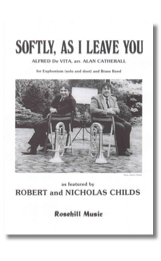
Softly, As I Leave You - Alfred de Vita arr. Alan Catherall
Made popular by many singers over the years, this lovely song was first arranged for the Childs brothers as a solo, and later a duet, by Alan Catherall. It was first performed in the duet version at the Royal Albert Hall, London, in October 1985, conducted by their late father, John Childs. Also available with piano Brass Band Set comprises: Detailed condensed conductor score Solo B-flat Euphonium B-flat Euphonium Duet (2) E-flat Soprano Cornet Solo B-flat Cornet (4) 2nd B-flat Cornet (2) 3rd B-flat Cornet (2) B-flat Flugelhorn* Solo E-flat Horn* 1st E-flat Horn* 2nd E-flat Horn 1st B-flat Baritone 2nd B-flat Baritone 1st B-flat Trombone 2nd B-flat Trombone Bass Trombone B-flat Euphonium (2) E-flat Bass (2) B-flat Bass (2) 1st Percussion 2nd Percussion 3rd Percussion (Drum Kit) * Alternative parts for use as solo or duet provided. There is no Repiano Cornet part.
Estimated dispatch 7-9 working days
-
 £39.99
Amid the Cold Of Winter- The Rose ("Es ist ein Ros entsprungen")
ABOUT THIS PIECE: Introduce a touch of elegance to your Christmas programme with Amid the Cold of Winter - The Rose, a beautiful arrangement of the traditional carol Es ist ein Ros entsprungen (Lo, How a Rose E'er Blooming). This cherished melody dates back to the late 16th century and has been celebrated for its gentle beauty and profound sense of reverence. Its origins in German sacred music have made it a favourite across centuries, embodying the spirit of hope and renewal. This arrangement, crafted for quartet with brass band accompaniment, enhances the carol's delicate charm while providing a fresh, rhythmic and gentle take on the accompaniment and overall feel. Perfect for seasonal concerts, or gentle and reflective moments in your programme, this piece allows a quartet of soloists to shine. ENSEMBLE: Quartet (soprano cornet, repiano cornet, solo tenor horn & solo baritone) with Standard British Brass Band. For information: As only two solo cornets are required, it is suggested that remaining cornet player play additional percussion. Soprano part available in Bb to be played by Bb cornet. Solo Horn part available in Bb to be played by trombone (trombone part available in Eb to be played by tenor horn in this scenario). WHEN YOU BUY THIS PRODUCT, YOU GET: High-quality printed score and parts LEVEL: 1 LISTEN: DURATION: c. 4-minutes EXAMPLE SCORE: Click here LEVEL GUIDE: Level 1- Accessible to all Level 2 - c. UK third section and higher Level 3 - c. UK second section and higher Level 4 - c. UK first section and higher Level 5 - c. UK championship section level
Estimated dispatch 5-7 working days
-
 £15.00
My Love is Like a Red, Red Rose - Helen Douthwaite
Robert Burns' beautiful melody is brought to life as a euphonium solo with brass band accompaniment in this simple, yet highly effective, arrangement by Helen Douthwaite.Originally arranged by Helen for the Kirkintilloch Youth Band, the piece not only features the soloist with a carefully crafted, accessible solo line, but also enables the rest of the band to shine through the tutti elements.Set includes score and parts for:Solo CornetRepiano Cornet2nd Cornet3rd CornetFlugelhornSolo Eb Tenor Horn1st Eb Tenor Horn2nd Eb Tenor Horn1st Baritone2nd Baritone1st Trombone2nd TromboneBass TromboneEuphoniumEb BassBb Bass (optional)GlockenspielPercussionAdditional world parts also provided include F Horn 1/2/3, Baritone 1/2 in bass clef, Trombone 1/2 in bass clef, Euphonium in bass clef, Tuba.
In Stock: Estimated dispatch 3-5 working days
-
Trumpet Tune and Air - Clarke, Purcell - Len Jenkins
Wobbleco Music is pleased to offer a new arrangement of the famous 'Trumpet Tune in D' for full brass band featuring a soprano cornet solo. The tune is often attributed to Henry Purcell, but in fact was the result of a joint musical production by Jeremiah Clarke and Daniel Purcell (Henry Purcell's younger brother), hence the confusion. For bands that do not have a soprano cornet player, we also include an alternative solo part written for Bb cornet. To complement this, we also include a soprano cornet part in Eb, for use when the band has a soprano player but who is not the featured soloist. Recognising its popularity for weddings and special occasions, where a full band may be impractical for space or availability reasons, we have also produced a quintet edition, which is available as a separate publication from Wobbleco Music.
-
 £30.00
Neruda - Johann Baptist Georg Neruda
Johann Baptist Georg Neruda was an 18th century Czech violinist and composer. Classical trumpet players include his Concerto in Eb for Trumpet & Strings as one of their favourite solos, which is often performed on an Eb Soprano Trumpet. My son Jon, a fine trumpet and cornet player, has played it often. Soprano Cornet player Simon Morgan asked me if it could be done with a brass band. I have taken the lively 1st movement, and adapted it as a soprano cornet solo. Ideal as a concert item, part of a CD, or part of an entertainment programme."Tim, many thanks for this, a great arrangement and a great solo". Simon Morgan
In Stock: Estimated dispatch 3-5 working days
-
 £35.00
Bumble Beecroft - Alan Morrison
The upbeat, ragtime cornet solo with brass band, composed by Alan Morrison and featured on his solo CD Memorable Melodies.It's a lively number with a great lilt to it from the solo line. A highly listenable piece which spotlights the talents of the cornet star and takes the audience on a wonderful little jaunt of toe-tapping musicality.
In Stock: Estimated dispatch 3-5 working days
-
 £30.00
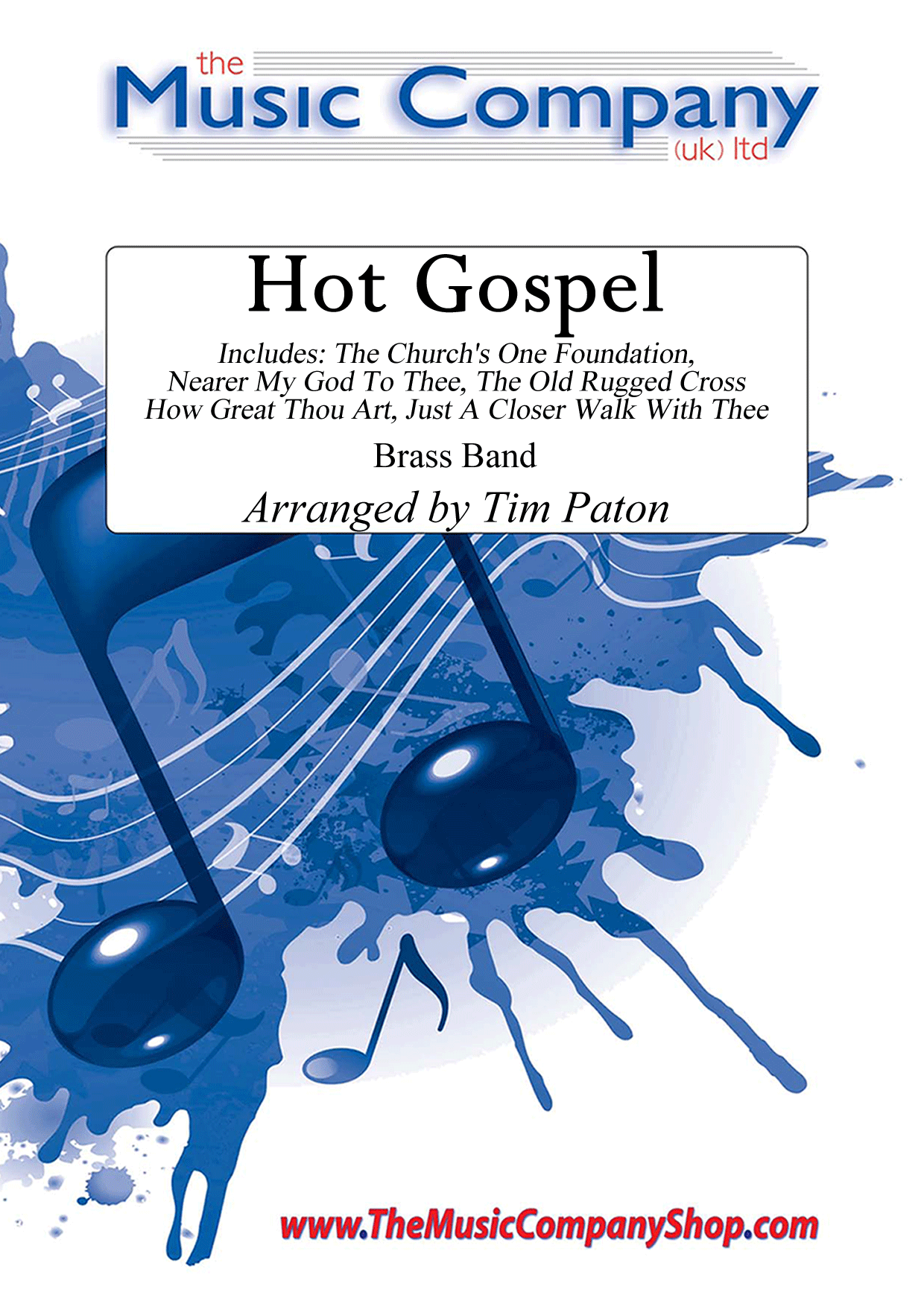
Hot Gospel - Various
Tim Paton has creatively arranged for brass band this selection of familiar hymns/religious songs to create a 5-movement, gospel-styled work. With features for soloists across the band and a great mix of styles including swing, traditional jazz, blues, and calypso, this makes for a versatile concert feature either as a complete piece piece (9 minutes); using the alternative optional cuts (4.5 minutes); or simply by cherry-picking the individual movements in order to spotlight the different styles/melodies/soloists of your choice.With solo features in each section, the piece includes:The Church's One Foundation - Swing version with Tenor Horn soloNearer My God To Thee - Traditional jazz style with Cornet soloThe Old Rugged Cross - Bluesy with Flugel soloHow Great Thou Art - Calypso with Euphonium soloJust A Closer Walk With Thee - Finale with jazzy Trombone soloTim comments:The community gospel choir sound has become very popular in recent years. "Hot Gospel" is my attempt to capture this charismatic experience in a medley of well known sacred music. Each of the five songs chosen follows a similar pattern - a verse for full band followed by a solo, and all solos are intended to sound like improvisation.I've included Optional Cuts which would reduce the play length from c. 9 minutes, down to approximately 4.5 mintues, should your concert programming not allow for the full version. The optional cuts simply side-step the solo section of each song.However you wish to perform Hot Gospel, it will definitely bring variety to programme choice.Also available for wind/concert band.
In Stock: Estimated dispatch 3-5 working days
-
 £55.00
Italia
ABOUT THIS PIECE: Romance. Elegance. This is an exquisite arrangement of the song originally performed by Chris Botti and Andrea Bocelli: Italia. Composed by Chris Botti and David Foster, Italia is a heartfelt tribute to the beauty and passion of Italy, blending lush melodies with a sense of timeless sophistication. The original, featuring Botti's soaring trumpet lines and Bocelli's rich tenor voice, is celebrated for its emotional depth and breathtaking lyricism. This arrangement adapts those qualities for solo cornet, solo trombone, and brass band, offering a wonderful opportunity to explore the piece's expressive range and captivating musicality. ENSEMBLE: Cornet and Trombone with British Brass Band Accompaniment WHEN YOU BUY THIS PRODUCT, YOU GET: High-quality printed score and parts - DUE TO COPYRIGHT LAW THIS WORK IS ONLY AVAILABLE IN THE UK AND EUROPE LEVEL: 2 LISTEN: DURATION: 3-minutesEXAMPLE SCORE: Click here LEVEL GUIDE: Level 1- Accessible to all Level 2 - c. UK third section and higher Level 3 - c. UK second section and higher Level 4 - c. UK first section and higher Level 5 - c. UK championship section level
Estimated dispatch 5-7 working days
-
 £45.00
This is the Moment
ABOUT THIS PIECE: Capture the drama and passion of Broadway with this stunning arrangement of This Is the Moment from the musical Jekyll and Hyde. Originally composed by Frank Wildhorn with lyrics by Leslie Bricusse, this powerful ballad has become a defining anthem of triumph and self-realisation, performed by countless artists around the world. This arrangement brings the emotional intensity of the original, offering a rich and rewarding experience for both players and audiences. With an unforgettable melody, This Is the Moment is a perfect choice for concerts, entertainment contests, or special occasions where you want to make an unforgettable impact. Whether you're a fan of musical theatre or simply looking for a piece that showcases the full expressive range of your band, this arrangement of This Is the Moment is sure to inspire and captivate. ENSEMBLE: Standard British Brass Band (with adaptations) WHEN YOU BUY THIS PRODUCT, YOU GET: High-quality printed score and parts LEVEL: 2 LISTEN: Click here (Cornet Solo Version) DURATION: 4 minutesEXAMPLE SCORE: Coming soon Looking for the cornet solo version of this piece? Click here. LEVEL GUIDE: Level 1- Accessible to all Level 2 - c. UK third section and higher Level 3 - c. UK second section and higher Level 4 - c. UK first section and higher Level 5 - c. UK championship section level
Estimated dispatch 5-7 working days
-
 £35.00
The water is wide. Trad. Arr Andrew Duncan
Recommended - Championship to 3rd Section The Water is Wide or, Oh Wally Wally, is an arrangement for brass band of the popular and hauntingly beautiful traditional song. This arrangement is a feature for the Solo Cornet section of the band, beginning with just one solo cornet then adding another until all four are playing the melody line together. Includes Score & Parts