
Results
-
 £44.95
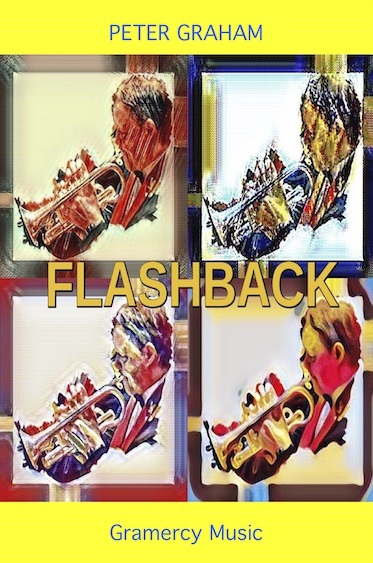
Flashback (Brass Band - Score and Parts) - Graham, Peter
Flashback was written for Lee Rigg and the Wardle Academy Youth Band and opened their winning programme at the 2022 European Youth Championships (Development Section) in Birmingham England.Prior to his transition to the conductors podium Lee was a long serving member of the Black Dyke Band and considered by many (including myself) to be perhaps the world's greatest repiano cornet player!In many respects our careers have run in parallel and a number of my works over the years have included solos with Lee in mind. In its short span Flashback makes references to some of these plus my first forays into band writing Dimensions and Prisms, both of which have featured on occasion at the European competition.- Peter GrahamDuration: 2.30
Estimated dispatch 7-14 working days
-
 £28.95
Hopak (Brass Band - Score and Parts) - Wiffin, Rob
An extended fanfare/opener, A New Beginning is a joyous and exuberant outburst, an affirmation of the eternal hope of the human spirit. It starts and ends with the drama and splendour of a simple fanfare and the sections in between are full of energy, drive and purpose.The musical language is typically American in style with its typical feel of openness, space and grandeur. There are plenty of big moments but players and conductors are asked to pay careful attention to the various layers to prevent it all being performed at full volume.Duration: 4.30
Estimated dispatch 7-14 working days
-
 £28.95
A New Beginning (Brass Band - Score and Parts) - Wiffin, Rob
An extended fanfare/opener, A New Beginning is a joyous and exuberant outburst, an affirmation of the eternal hope of the human spirit. It starts and ends with the drama and splendour of a simple fanfare and the sections in between are full of energy, drive and purpose.The musical language is typically American in style with its typical feel of openness, space and grandeur. There are plenty of big moments but players and conductors are asked to pay careful attention to the various layers to prevent it all being performed at full volume.Duration: 4.30
Estimated dispatch 7-14 working days
-
 £54.95
Cornish Pastiche (Brass Band - Score and Parts) - Wiffin, Rob
A three movement suite depicting aspects of Cornish life and culture.The first movement, Sea Shanties, uses two contrasting call-and-response melodies. The second of these is playful in nature and appears in a number of guises, some more discordant than others, reflecting the crew's use of the shanty to let the captain know what they thought of him! Having passed by, the ship disappears into the sea mist. Laments were traditionally reserved for occasions of the death of a member of the clan. In forming the melody for Celtic Lament I had in mind the type of sorrowful song that would suite the elegiac nature of such an occasion.The last movement of the suite attempts to catch the spirit of the Furry Dance, the ancient dance that heralds the coming of spring. It resembles a farandole but is probably better described as an unashamed romp.My intention was to make Cornish Pastiche readily accessible to both players and listeners. The language is unashamedly tonal but is treated with some harmonic twists to add occasional piquancy. The technical demands on the players are meant to be moderate but conductors and players are asked to observe the different layers, especially in the Basse Dance, and not overload the texture with over-zealous weight on the melodic line.- Rob WiffinDuration: 11.15
Estimated dispatch 7-14 working days
-
 £34.95
Choose Freedom (Brass Band - Score and Parts) - Downie, Kenneth
Choose Freedom is largely derived from the composers' own setting of Richard Slater's words, 'Yes, there flows a wondrous river' for SATB choir which was published in The Salvation Army's Choral Festival Series under the title 'The mighty river'.After many allusions to the song, it is eventually stated in full in the trio section. Downie's effective use of varying harmonic colours, unusual instrumental voicings and modal harmonies stand out in this rhythmically diverse march. There are quite a few loud passages in the march so conductors should savour the quieter ones!
Estimated dispatch 7-14 working days
-
£17.50
Choose Freedom (Brass Band - Score only) - Downie, Kenneth
Choose Freedom is largely derived from the composers' own setting of Richard Slater's words, 'Yes, there flows a wondrous river' for SATB choir which was published in The Salvation Army's Choral Festival Series under the title 'The mighty river'.After many allusions to the song, it is eventually stated in full in the trio section. Downie's effective use of varying harmonic colours, unusual instrumental voicings and modal harmonies stand out in this rhythmically diverse march. There are quite a few loud passages in the march so conductors should savour the quieter ones!
Estimated dispatch 7-14 working days
 View Music